Kaua‘i’s Robinson Family Seeks To Evict Major Hawaiʻi Farm
Gay & Robinson has filed a lawsuit demanding nearly $700,000 in unpaid rent from Aloun Farms.
When O‘ahu-based produce company Aloun Farms signed a lease with Kaua‘i’s largest private landowner in 2022, the partnership was seen as a major step toward establishing food security on the island.
Today, that relationship appears to be in free fall.
Gay & Robinson, the business arm of Kaua‘i’s Robinson family, filed suit against Aloun Farms this January seeking more than $687,000 in unpaid rent and an eviction order against their tenant. In the court filing, Gay & Robinson claims that Aloun Farms missed a series of rent and property tax payments over the course of 2024 and 2025.

Aloun Farms President and General Manager Alec Sou declined to comment on specifics of the case, but said that Aloun had voluntarily exited the lease due to issues with Gay & Robinson management.
“I have the highest respect for the Robinson family,” Sou said. “They are very committed to ag. But I think they put a layer in their administrative team that doesn’t manage property and relationships very well.”
A Gay & Robinson representative declined to comment on the suit. At a Feb. 23 hearing, attorneys for Aloun entered a general denial and said it has possible counterclaims. The court ordered that both sides attend mediation set for March 23.
Matthew Shimabukuro, an attorney representing Gay & Robinson, told the court that “they don’t think mediation will be beneficial because they just want possession as soon as possible.”
Aloun Expands On Kaua‘i
In the early 2020s, facing pressure from high rents on O‘ahu, Aloun Farms embarked on a major expansion into Kaua‘i’s West Side. Founded in the 1990s, Aloun had at this point grown into one of the state’s largest vegetable producers. Sou said Aloun is now only farming 700 acres on Oʻahu, down from 2,700.
Any effort at establishing large-scale agriculture on Kaua‘i’s West Side is likely to run through the Robinsons. The family is the island’s single largest private landowner, controlling 55,000 acres on Kaua‘i, along with the entire 45,000-acre island of Ni‘ihau, which they purchased from the Hawaiian Kingdom in the 1860s. Most of their Kaua‘i lands are located on the West Side and zoned for agriculture.
Gay & Robinson shuttered its sugarcane plantation in 2009 and now makes the bulk of its income leasing ag lands, selling electricity from its hydro facility and running cattle, according to an internal document obtained by Civil Beat.
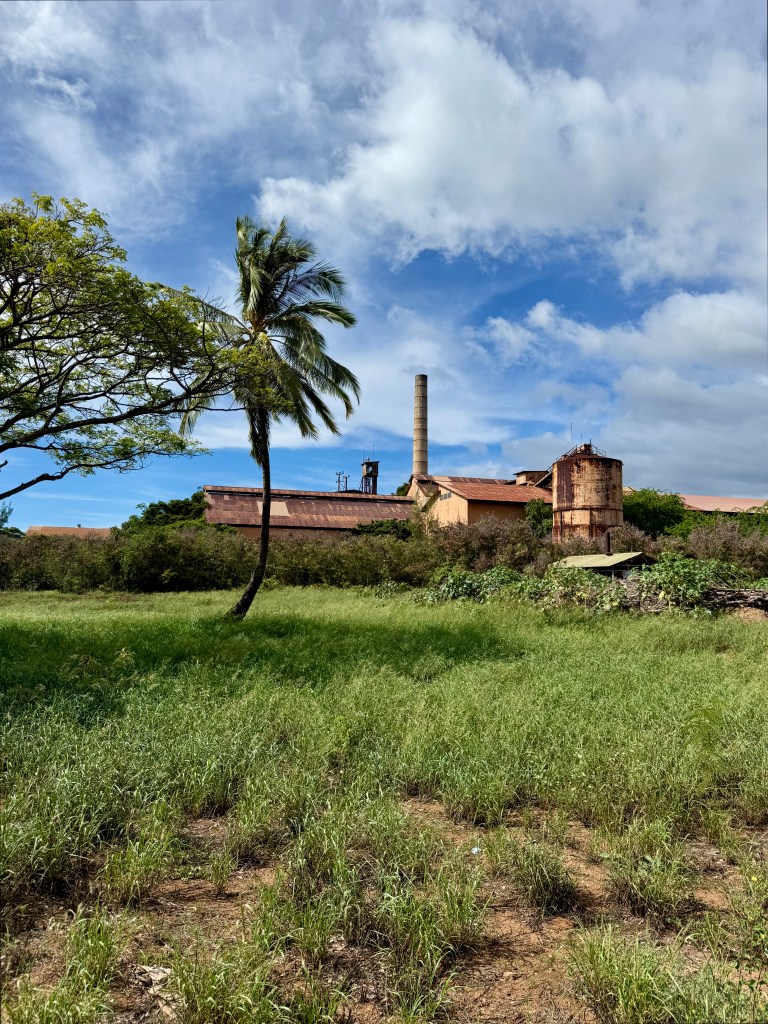
In August 2022, Aloun signed a lease with Gay & Robinson for up to 4,000 acres of agricultural land, at a price of $600 per acre, along with an industrial building for $120,000 per year. The Robinsons agreed to make 4,000 gallons of water per acre available to Aloun each day.
The lease also included a confidentiality clause, court filings show, in which Aloun agreed it would “not disclose, discuss, disseminate or copy any information, data, findings, communications, conclusions and reports regarding the environmental condition of the premises” without Gay & Robinson’s permission.
As a Hawai‘i-based company growing produce at scale, Aloun was a different sort of tenant for Gay & Robinson, which throughout the 2010s had leased lands mainly to multi-national corporations in the genetically modified seed industry. The Aloun partnership was expected to be a boon for Kaua‘i’s agricultural industry broadly, attracting infrastructure investment and introducing opportunities for small farmers to reach bigger markets.
“From a food security standpoint, this is huge,” Kaua‘i Mayor Derek Kawakami told Civil Beat at the time.
Along with boosting local food production, large-scale cultivation can help with wildfire mitigation, reduce the risk of invasive species spread, Hawaii Farm Bureau Executive Director Brian Miyamoto said.
He expressed concern about the potential for decreased agricultural production as a result of the suit. Large farms like Aloun are an important piece of reaching the goal set by former Gov. David Ige of doubling food production statewide by 2030. Currently, Hawai‘i imports between 80% and 90% of food consumed across the islands.
“Any loss of production is not what we’d like to see,” Miyamoto said. “Once land is out of active production there’s always pressure for other uses.”
The relationship initially appeared fruitful. Aloun planted pumpkins, watermelon, eggplants, zucchini and other produce across 2,000 acres of Robinson lands. As its O‘ahu footprint declined, its Gay & Robinson lands came to comprise a majority of Aloun’s cultivated acres statewide. In 2023, Aloun exported its first 10 containers of sweet onions to O‘ahu.
Over the ensuing years, Aloun’s Kaua‘i footprint continued to grow. In 2023, it purchased 10 acres of land by the Kekaha sugar mill where it hoped to build housing. The next year, it acquired Kauai Shrimp from Netherlands-based corporation Hendrix Genetics. And in early 2025, the company proposed a dairy facility on 500 acres of Gay & Robinson land. Today, it has 55 employees.
An internal Gay & Robinson budget document obtained by Civil Beat shows that, by 2024, Aloun was projected to become the plantation’s largest source of land rent income. It was expected to pay $916,000 in rent in 2025, making up 55.8% of all G&R land rent revenue that year. Gay & Robinson’s other large tenants include Island Helicopters and Corteva Agriscience, which pay $454,000 and $91,000, respectively.
Aloun also faced struggles with logistics, as transportation issues limited its exports to 10 containers per week. “As the production scale increases we hope to get to the capacity where logistics get a little more efficient,” Sou said. “Because there has not been the capacity for production at scale, things are fairly costly and inefficient.”
The company was further squeezed financially late last year when Young Brothers hiked its interisland shipping rate by 25%.
Sou said that despite the dispute with Gay & Robinson, the company plans to continue operations on Kaua‘i, possibly on state lands through the Agribusiness Development Corporation. It currently has active farming operations on 550 acres of ADC land in Kekaha.
“We see Kaua‘i as the breadbasket for Hawai‘i,” he said. “It’s a setback but we are very committed.”
Kaua‘i Coffee Negotiations Continue
Kaua‘i’s agricultural industry faced another challenge earlier this year, as lease negotiations between Kauai Coffee Company and its landlord, Brue Baukol Capital Partners, turned ugly.
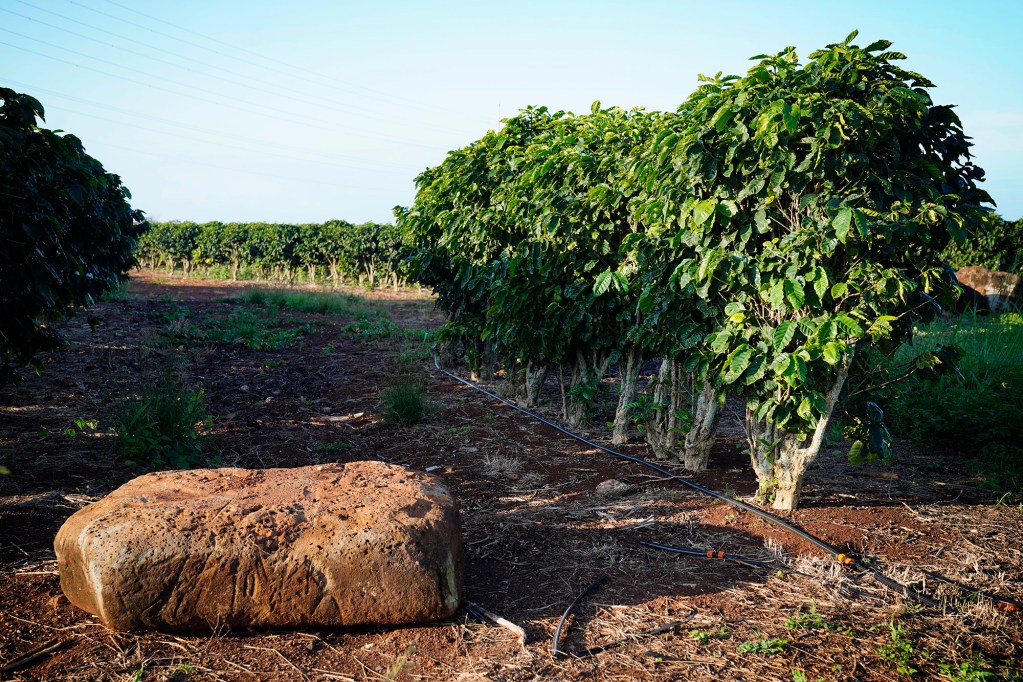
Kauai Coffee is the largest coffee grower in both Hawai‘i and the United States, with over 4 million coffee trees across 3,100 acres. Brue Baukol, a Colorado-based private equity firm, bought the land it operates on from Alexander & Baldwin in 2022.
Amid the lease negotiation, Kauai Coffee issued a Worker Adjustment and Retraining Notification Act notice this January, which warned state and county officials that it would permanently cease all operations and lay off 136 employees between March 14 and March 28. Companies are required by law to file these notices 60 days in advance of mass layoffs and plant closures.
Last week, Kauai Coffee issued another WARN notice pushing the date of the “contemplated closure” to sometime between April 18 and May 2.
In a statement to Civil Beat, Kauai Coffee General Manager Brian Kubicki said that lease negotiations are ongoing. Despite the notices, he said Kauai Coffee remains open to the public and has no plans to close operations.
“We continue to engage in active discussions with the landowner,” Kubicki said, “and remain hopeful that these conversations will lead to a positive outcome that allows us to continue farming this land for many years to come.”
Civil Beat’s reporting on Kauaʻi is supported in part by a grant from the G. N. Wilcox Trust. “Hawai‘i Grown” is funded in part by grants from the Stupski Foundation, Ulupono Fund at the Hawai‘i Community Foundation and the Frost Family Foundation.
Read the lawsuit below.