

Locals Were Crowded Out Of This Kauaʻi Beach. That May Change Soon
Years in the making, the transfer of Hā‘ena Beach Park from the county to the state is intended to alleviate longstanding parking issues and reclaim access for residents.
Decades ago, Hā‘ena Beach Park on Kaua‘i’s North Shore was a gathering spot for Native Hawaiian and local families. During the summer months, keiki learn how to swim and surf in the turquoise waters, and the expansive grassy area provided ample camping grounds.
But that became rare as visitor arrivals increased. Today, the parking lot often fills quickly. Rental cars at times spill over, clogging the narrow and winding highway. Residents regularly say they no longer try to go there.
That’s one step closer to changing now that the state Board of Land and Natural Resources unanimously voted to support the acquisition of the 5-acre park, as well as the 3-acre Maniniholo Dry Cave, which have been owned by Kaua‘i County since 1925.
The acquisition is still not final and the timeline is uncertain. More due diligence by the state and county must be completed and the land board will need to vote on the matter again.
But the intention is that the parcels will eventually join Hā‘ena State Park, less than a mile away. The state park operates under a community management system overseen by two nonprofits, Hui Maka‘āinana o Makana and The Hanalei Initiative, that caps the number of visitors and provides designated space for resident parking.

Chipper Wichman, vice president of Hui Maka‘āinana o Makana, said the BLNR’s support last week was a major step forward.
“I think everyone realizes how important that opportunity is and (the transfer to the state) just may take a little longer than we all wanted,” said Wichman, a fifth-generation Hā‘ena resident.
Once the transfer is complete, a community master planning process will determine issues like how many people the park should admit, how residents will have guaranteed access and how the beach park will fold into the state park’s existing management system.
‘Intolerable For Our Community’
Hā‘ena Beach Park, a gateway to popular snorkeling and surfing spots at Mākua Beach, has roughly 40 parking spots, yet it saw 1,400 visitors a day during the Christmas holiday, according to Joel Guy, executive director of The Hanalei Initiative. The surf is strong during the winter months, so people tend to stay for 15 or 20 minutes.
But during the summer, when the waves are calmer, they’ll stay nearly all day. While there may be fewer people visiting — roughly 800 a day, according to The Hanalei Initiative — their longer stays lead to more congestion on the highway.
Guy said the backup from cars waiting for an open spot makes it difficult for local people to get to work and is another friction point between visitors and residents.
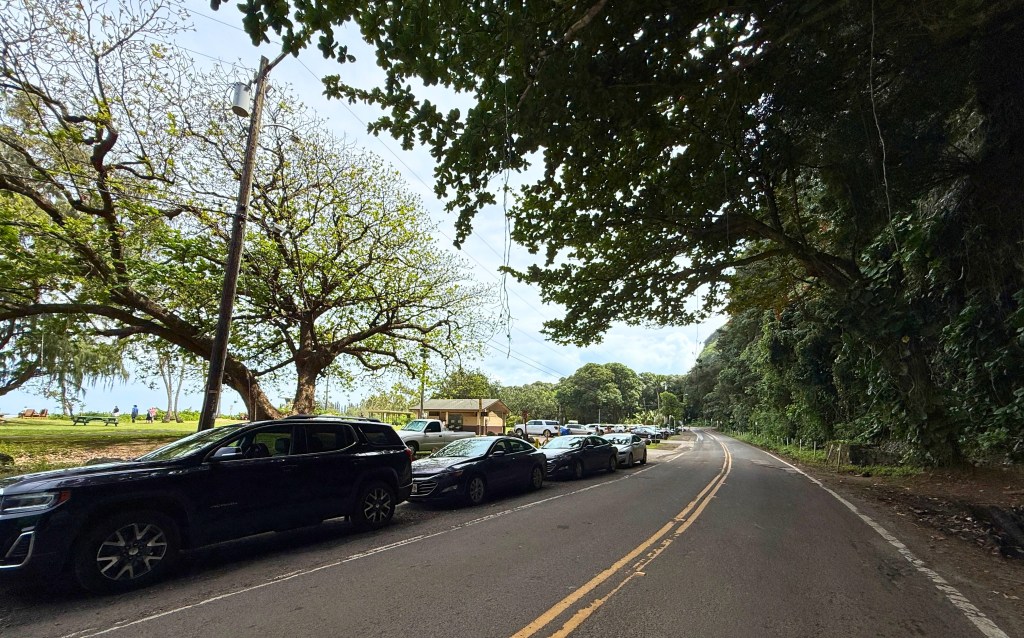
“If you’re a local, you know what’s causing it, but it’s too dangerous to pass them because it’s a blind curve,” said Wichman, whose family home is next to the beach park. “So it became intolerable for our community.”
The Kaua‘i Police Department issued 170 traffic citations at Hā‘ena Beach Park in 2024 and 81 in 2025. It responded to 106 calls for service in 2024 and 92 in 2025.
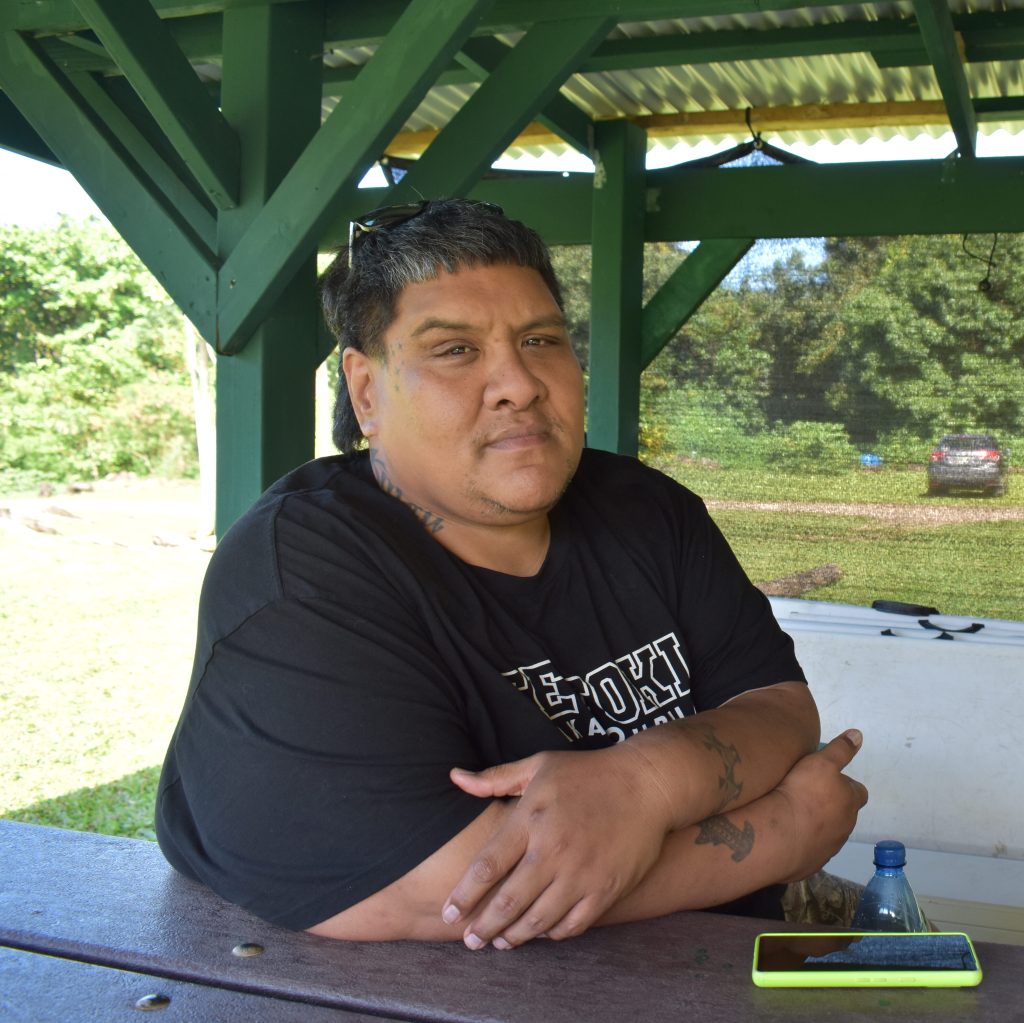
Over the summer, The Hanalei Initiative stationed traffic guards at Hā‘ena Beach Park to keep the highway clear as part of a 90-day, $40,000 grant. While it did help community members needing to drive down the highway, Guy felt it was only a Band-Aid fix to a broken system because residents still can’t access that beach like they could in past decades.
“When you push community out of these places that are so special, you know, that breaks up a community,” said Guy, who grew up next to the beach park.
Billy Kinney, assistant director of Hui Maka‘āinana o Makana and a lineal descendant of Hā‘ena, said his family participated in hukilau, a traditional Native Hawaiian communal fishing method, at the beach park. Community members would use a giant net to catch akule, ‘ōpelu and ‘ō‘io (bigeye scad, mackerel scad and bonefish).
Wichman recalled how uncrowded the beach park was growing up in the late ‘60s, and how local families really enjoyed it.
Striking A Balance
While discussed for years, the idea of transferring Hā‘ena Beach Park received a renewed push after Kaua‘i Mayor Derek Kawakami, who is serving the last year of his second term, committed to seeing it through before he leaves office. The Kaua‘i County Council unanimously approved the transfer of the beach park and cave parcels in November.
The county has struggled to manage the large number of visitors and traffic congestion at the beach. Kawakami has repeatedly said that the county felt the state could manage it better because of its community-led management model at Hā‘ena State Park. The county will continue to provide lifeguard and maintenance services for one year.
“Managing Hā‘ena requires balancing the protection of our natural resources, meaningful resident access and responsible destination management,” Kawakami said in a statement. “For several years, the county has been in discussions with the state and is committed to supporting a thoughtful transition that returns long-term stewardship of this special place back to the community.”
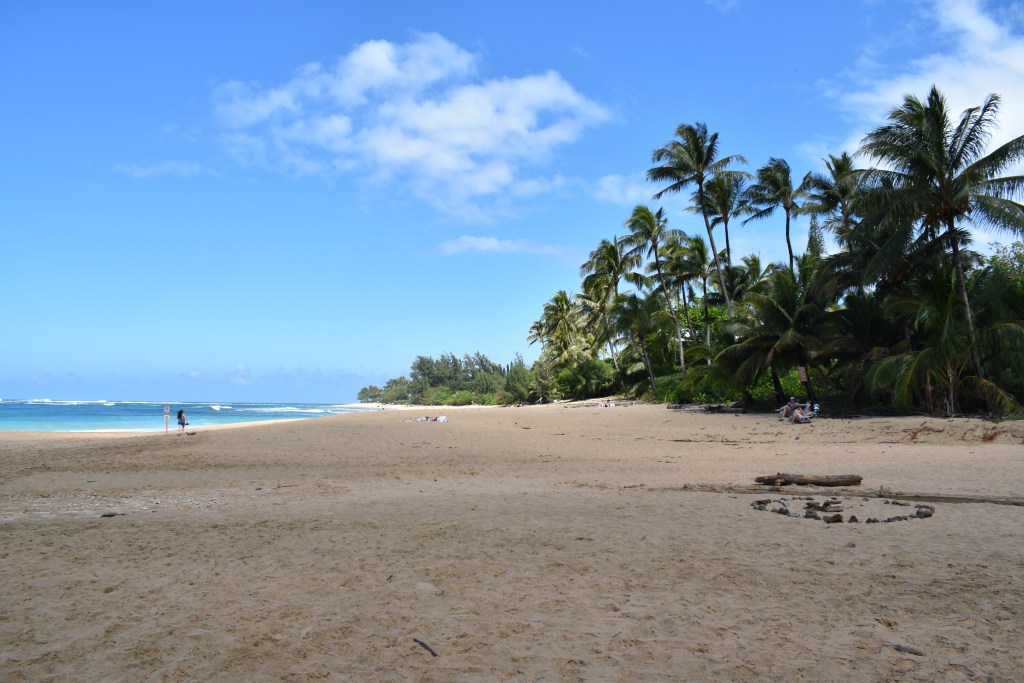
Alan Carpenter, acting state parks administrator, said in a statement that Hā‘ena Beach Park remains under the county until an official transfer is completed. According to the Division of State Parks’ request to the BLNR, no burial sites or environmentally hazardous materials are present on the beach park and cave parcels. And while rockfall hazards are present at the cave, no injuries or deaths have occurred there.
Once Hā‘ena Beach Park is officially added to Hā‘ena State Park, the Division of State Parks will fund a community planning process. Hā‘ena State Park underwent one almost a decade ago.
One of the major discussion points will be determining the number of people the beach park can sustainably support. Hā‘ena State Park, for example, used to see up to 3,000 visitors a day, but the planning process determined that the area’s environmental resources, such as its marine ecosystem and the Nāpali Coast, could sustain 900.
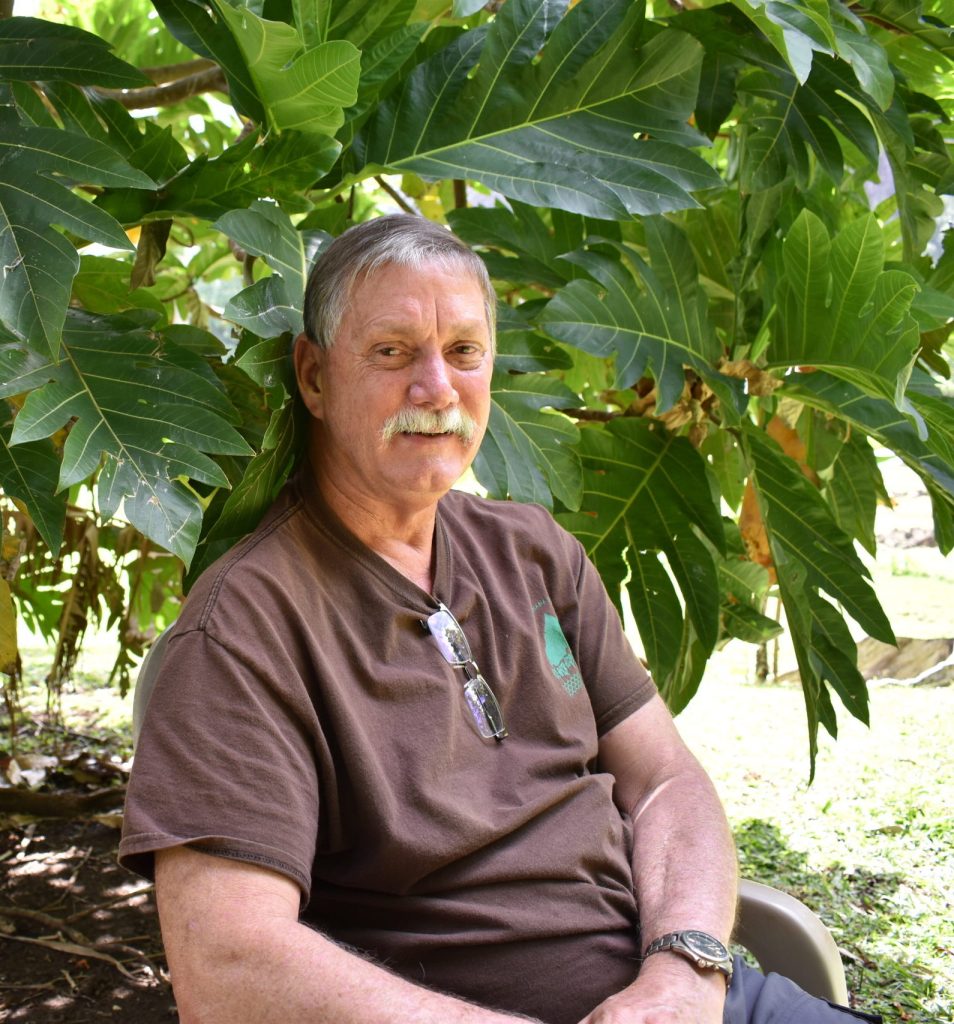
“It’s not about the amount of people that pull in that parking lot, it’s the amount of impact it has on the resource,” Guy said.
The planning process is also expected to help shape how to find a balance between visitor and residential access, whether visitors will be charged to park at the beach park, whether camping will once again be permitted, and how fishing access will be handled, according to Wichman and Kinney.
Some community members, though, worry that implementing a visitor management system at Hā‘ena Beach Park will only push visitors to other beaches, which may not have lifeguards or bathrooms. Launching the visitor management system at Hā‘ena State Park, for example, contributed to some of the access, parking and traffic challenges at Hā‘ena Beach Park.
Wichman said many share that concern, but he believes the island will continue to have a problem so long as the number of visitors increases. He thinks the solution is to begin developing regional plans, in addition to the place-specific ones.
“We’ve got to develop some mechanisms,” he said, “to be able to control visitor members with support of the state.”
Civil Beat’s reporting on Kauaʻi is supported in part by a grant from the G. N. Wilcox Trust.

