People In Crisis Still Keep Their Guns. Can Hawaiʻi Change That?
Lawmakers want to raise awareness about the state’s red flag law, which has been virtually unused in the last six years — despite a significant increase in gun deaths.
Not enough people know that there is a way to temporarily take guns away from people in crisis in Hawaiʻi — something lawmakers are now trying to change.
Gun deaths in Hawaiʻi have increased by 40% over the last decade, but a gun violence protection order, also known as a red flag petition, has been used only 13 times since the state’s red flag law took effect roughly six years ago.
Anyone with a close connection to someone in crisis — family members, roommates, coworkers, medical professionals — can file a red flag petition if they are concerned that a gun owner poses a threat to themselves or others, though experts say law enforcement officers are often best-positioned to request such an order.
The Honolulu Police Department has never filed a red flag request and, as of last year, wasn’t training all officers on how and when to use the petitions.
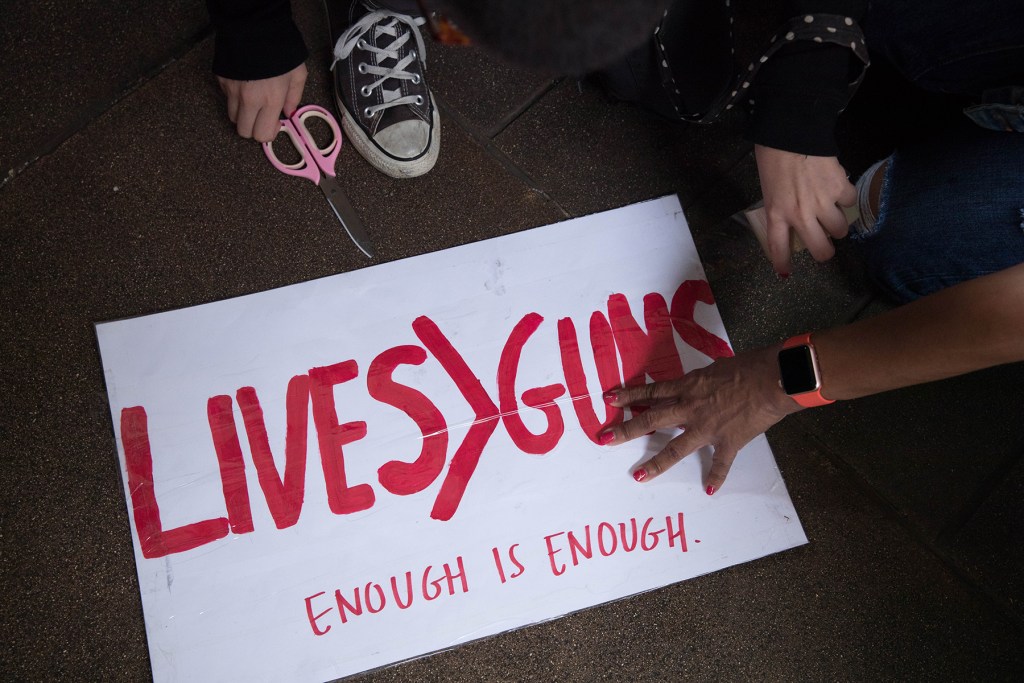
A proposed bill in the state House would give money to the state’s Department of Law Enforcement to increase public awareness about the orders and provide support to the state judiciary to make the process more efficient.
While gun violence and suicide prevention experts are supportive of a public awareness campaign, they say that’s just part of what’s needed to address gun deaths in the state.
“We need lots of tools in our toolbox. This is a tool. It’s not the only one,” said Kelly Drane, who leads research at the Giffords Law Center, a nonprofit working on gun control issues. “If people aren’t using the tools in their toolbox, then we’ve got a problem.”
Hundreds Have Died Since Law Was Passed
Suicides make up the majority of firearm fatalities in Hawaiʻi. Thirty-one people died by suicide involving a gun in 2024, according to the latest data from the Centers for Disease Control and Prevention. That’s a decrease from 2023, when firearm-related suicides reached a peak with 50 deaths statewide.
About 230 people have died from firearm-related suicides since Hawaiʻi’s red flag law went into effect in 2020. In total, more than 430 people were killed by guns in Hawaiʻi between 2018 and 2024, according to CDC data.
Unlike other means of restricting someone’s access to firearms, such as a temporary restraining order or domestic violence protection order, gun violence protective orders can be filed before someone has acted on a threat to harm themselves or others.
Gun violence protective orders could be playing a role in suicide prevention — but even law enforcement officers seem confused about what the orders are supposed to do. The process is supposed to be simple: If a gun owner is exhibiting signs of a crisis — including a mental health issue — people around them can file a petition in the courts to have their firearms temporarily removed for a year and bar them from purchasing a new one.
House Bill 2062 would fund awareness campaigns about the orders and other gun violence prevention initiatives. The proposal would also allocate money to help courts across the state to efficiently process gun violence protective orders and temporary restraining orders.
Another substantial proposal to address gun violence before lawmakers this year – Senate Bill 3040 – would create a statewide Office of Gun Violence Prevention. This would replace the Gun Violence and Violent Crimes Commission, which hasn’t met in over a year.

Tim Huyke, a retired law enforcement officer who testified in support of the House proposal, told Civil Beat there’s value in temporarily removing guns from people in crisis.
“I prefer to err on the side of caution,” said Huyke, who served on the police force at Marine Corps Base Hawaiʻi in Kaneohe and has decades of experience in civilian and military police departments around the country. A protective order, he said, can serve as “a cooling off period.”
In some states, only law enforcement can petition the court to remove guns from someone in crisis. Hawaiʻi’s law is more expansive and also allows petitions from a range of people connected to the gun owner, including roommates and coworkers.
While there are reasons people may not want to involve law enforcement, Drane said officers are trained to write reports and testify in court, making them well-equipped to navigate the system. Research shows gun violence protective orders are more likely to be granted when they are filed by a police officer. Some departments in places like Broward County, Florida and King County, Washington, have specific task forces that evaluate whether a specific circumstance is a good fit for one of these petitions, Drane said.
Police in Honolulu and Kauaʻi counties have never filed a red flag petition, according to court records. Only six petitions have been filed by law enforcement across the state, including five by police on the Big Island and one on Maui.
Representatives from the Honolulu Police Department did not comment on the proposed House bill. Last year, Maj. Carlene Lau, who oversees the records and identification division that includes the firearms section, told Civil Beat that not all staff receive training on these types of protective orders and information about how to file them can be hard to find, even for police.
As a former law enforcement professional who trained officers in the field, Huyke expressed surprise that police aren’t using the orders and don’t appear well-versed in them.
“What do you mean you’re not aware of it?” he said. “It’s the law.”
In order for the process to be effective, he said, there needs to be more widespread awareness of how gun violence protective petitions work.
“If the whole point is to get guns out of the hands of somebody who could use it to hurt themselves or others, the public needs to be aware,” he said. “And then if it’s the police department that’s actually enacting this, they need to know what to do.”
Educating The Public
HB 2062 says nothing about what the public awareness campaigns should look like or how much money will be allocated. Funds will go to the Department of Law Enforcement and the Judiciary, rather than the Department of Health, which leads suicide prevention, or the Attorney General’s office, which leads other gun violence initiatives.
Drane cautions that public awareness campaigns about gun violence protection orders aren’t as simple as sticking up a billboard. There needs to be more of an effort to explain not just that this option exists but how to use it. Messaging, she said, should also assuage concerns loved ones might have about filing these orders by being clear about what these orders do and do not do.
“It is a different process than calling the police on a loved one or reporting that they’ve committed a crime,” she said.

Gun violence and suicide prevention experts say that training and awareness campaigns should also target the mental health professionals who might already be engaging with people in crisis.
“This is a group of people that should be presenting a menu of options to people that call and are concerned, and this is on the menu,” Drane said. “It’s not going to work in every case, but in a lot of cases, it might be a good solution.”
It’s unclear how much money will go toward this effort, but the Department of Law Enforcement asked for $500,000 spread across two years, according to Ernie Robello, the department’s deputy director of administration. In the first year, the plan is to spend roughly $100,000 on public awareness campaigns targeting the public and law enforcement and $150,000 on gun buybacks.
“We want to educate the public, educate the law enforcement personnel, and then also remove some of these firearms that are unwanted or unneeded, to take them out of the hands of these people that might have access to it because they weren’t removed from the community,” he said.
Plans for awareness campaigns are still preliminary, but Robello is interested in town halls with community groups that work with vulnerable populations, public service announcements on social media and television and potentially meetings with county police departments.
More Needs To Be Done
Preventing gun-related suicides needs to be more expansive than just removing people’s access to firearms, said Jeanelle Sugimoto-Matsuda, a professor at the University of Hawaiʻi Mānoa and co-chair of the Prevent Suicide Hawaiʻi Task Force.
“This is a great immediate emergency step,” she said. “But from a public health standpoint, is that all we’re going to do for that person or the family who’s being impacted?”
If a court orders someone’s firearms to be temporarily removed, Sugimoto-Matsuda thinks there’s an opportunity to also point people in the direction of the task force or other mental health groups for more resources.
Often, these issues come up when a person at risk of suicide is working with professionals and loved ones to develop a plan to keep them safe, including restricting access to lethal means. Ideally, a gun violence protective order would occur alongside a coordinated effort to ensure people have access to therapy or crisis intervention.
“It’s one piece of a more comprehensive approach to keeping that person safe,” Sugimoto-Matsuda said.
Gun violence protective orders can help someone in an urgent crisis, but they don’t address the root causes of suicide risk or mental health challenges. Sugimoto-Matsuda would also like to see a focus on earlier interventions and awareness about indicators that someone is at risk of suicide and resources like the 988 mental health crisis phone line.
“We really should be talking more about help seeking,” she said. “Getting people screened earlier, getting them help earlier, breaking down barriers to mental health resources.”
If you or someone you know is struggling with thoughts of suicide, you can dial or text 988 to be connected to help.