

Hawaiʻi School Contract Failures Triggered Holdup Of $30M+ For Meals
Scrutiny of Hawaiʻi school contracting comes as lawmakers raise more questions about the costs of producing school lunches.
The Hawaiʻi Department of Education’s decision to grant millions of dollars worth of no-bid contracts to technology companies in recent years put more than $33 million in federal funding for school meals at risk and set back efforts to track food costs.
The education department, which is now starting to receive the funds, broke numerous procurement rules, according to a recent report from Hawaiʻi Child Nutrition Programs, including hiring three companies without soliciting competing bids. One of those companies received nearly $4 million to roll out a software program and provide training that the nutrition agency determined was duplicative and which some cafeteria managers refused to use.
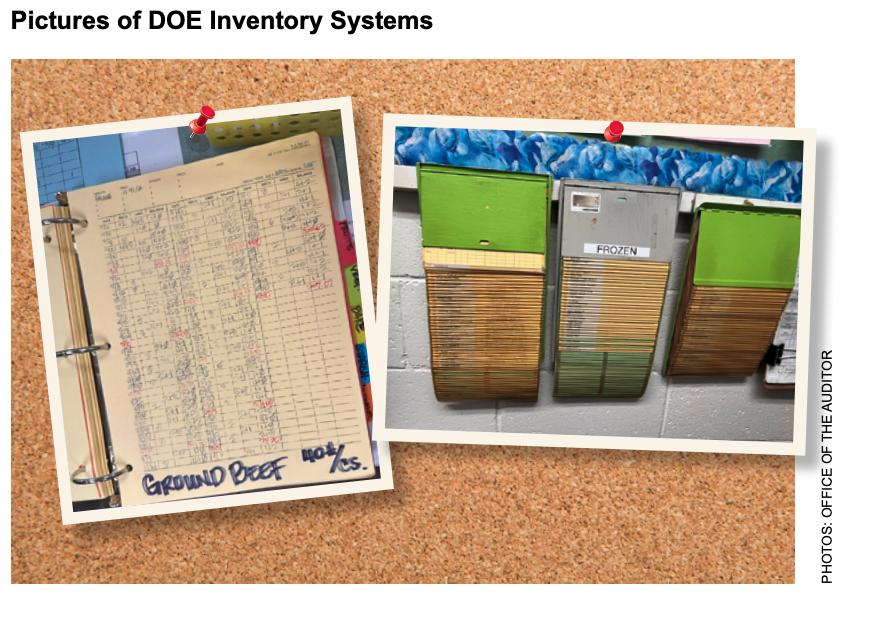
As a result, Hawaiʻi Child Nutrition Programs — an agency within the education department that oversees state compliance with federal regulations — temporarily withheld roughly half a year’s worth of federal funding for school meals in 2024 and 2025. And efforts to track and control the school system’s food spending were significantly set back: Cafeteria managers had to return to using handwritten index cards and ledgers to track food purchases.
“That’s a substantial amount of funds to have bypassed formal procurement procedures,” said Rep. Amy Perruso, a former teacher.

The nutrition agency’s report comes amid greater scrutiny over the state’s school meal program. School leaders revealed last year that it takes $9 to produce a school lunch — much more than the federal government will reimburse — and struggled to justify the costs. The software and training services the education department purchased were supposed to help school cafeteria managers collect more data on their meal programs, including tracking local food purchases and their inventory of groceries.
In response to the nutrition agency’s findings, Hawaiʻi schools cut ties with two technology companies last year.
The education department has since addressed the nutrition agency’s concerns by improving its procurement processes and submitting relevant documents, Communications Director Nanea Ching said in an emailed statement. The nutrition agency is in the process of releasing at least some of the federal funds for the school meal program, Ching said, although she didn’t specify how much.
Hawaiʻi Child Nutrition Programs plays a key role in overseeing school meal programs and regularly reviews the state education department’s compliance with federal regulations around nutrition and finances. The agency is also responsible for releasing federal funds to schools for their meal programs.
When the education department doesn’t provide companies the opportunity to bid on some of its contracts, it limits competition and detracts from the public’s confidence in its school meal program, Perruso said.
As the school system embarks on an ambitious goal of buying substantially more local food, it needs to get the fundamentals right. That includes fair and transparent purchasing procedures, Perruso said.
“That doesn’t instill a lot of confidence in our ability to move towards farm to school,” Perruso said. “That foundation has to be solid.”
‘It Is What It Is’
The department has sought out a host of technologies in recent years to track its progress toward purchasing more local food and modernizing a meal program criticized for its ballooning costs.
One software company, called Nutrislice, was hired around 2022 to help schools communicate nutrition and allergy information about meals in different languages to families. Another program, Titan, was brought on around the same time to help cafeteria managers track inventory and plan menus. Titan was also supposed to allow managers to track local ingredient purchases — a key component of the DOE’s push to source 30% of its food locally by the end of the decade.
The modernization initiative began crumbling as the nutrition agency started raising questions about the validity of the department’s contracts with the companies.
The education department failed to publish a competitive bid for Nutrislice, which cost $72,285 in the 2023-24 academic year, and instead relied on options offered through a pre-set vendor list, according to the report. Nutrislice was also not one of the software companies approved by the U.S. Department of Agriculture to analyze meals and determine if they meet federal nutrition standards, a requirement to receive federal funding.

Hawaiʻi Child Nutrition Programs also found the department failed to properly procure Titan, the menu planning and inventory software that cost the education department more than $2 million. As a result, the nutrition agency withheld more than $20 million from the meal program starting in November 2024, according to a recent report from the state auditor.
Randy Tanaka, who oversaw school meals and facilities when DOE was purchasing the software, said he recalls the department issuing a bid for the menu planning software before awarding the contract to Titan. But, Tanaka said, he wasn’t involved in the process of bidding for the software and awarding the bid.
Tanaka was fired from DOE in late 2023 after his office proposed forfeiting nearly half a billion in state funds for school construction.
Civil Beat filed a public records request for DOE’s contracts and bid solicitations for its nutrition software on March 27 but has not yet received the documents.
The high costs of DOE’s meal program caught the attention of lawmakers last spring, and they pushed school leaders for more details about the growing expenses.
“I’m assuming there is no analysis of how the money is spent at this point,” Sen. Troy Hashimoto said in a March 2025 hearing about the high costs of producing school meals. “You are just saying, ‘OK, the money’s spent; it is what it is.'”
A Prolonged Agreement
The education department’s meal program drew greater scrutiny from the Hawaiʻi Child Nutrition Programs as it turned to eWorld Enterprise Solutions.
The company had worked with the education department on a technology-related contract since 2019, and the department added the school meals work onto the existing contract in 2021. The company was tasked with rolling out new school meal software and training cafeteria managers on the new system, eWorld Vice President Steve Sakata said.
The education department said the project with its food services branch was urgent, Sakata said, since federal civil rights laws require schools to provide information about their meal program in languages other than English. The department wanted to roll out the Nutrislice software and its menu translations as soon as possible, and Titan would improve cafeterias’ menu planning and tracking of their grocery purchases, Sakata said.

But the education department’s decision to repeatedly extend its agreement with eWorld to cover more projects, rather than putting a new contract out to bid, violated federal procurement regulations, the nutrition agency said in its report. It also may have been unnecessary. The department was already paying another company to provide training on Nutrislice.
The education department’s contract with eWorld started at roughly $241,000 in 2019. By fall 2024, the contract had been modified eight times to cover nearly $7.2 million worth of work. Roughly $4 million went toward eWorld’s work implementing the Titan and Nutrislice software and training cafeteria staff on the two programs.
The Hawaiʻi Child Nutrition Programs directed the education department to stop using eWorld as the cost and scope of the contract grew, but the department refused, arguing that ending the company’s services would disrupt school meal programs.
The company’s chief executive officer, Pankaj Bhanot, said he can’t explain why the education department chose to extend eWorld’s original contract, rather than starting a new one for the school meal software. But eWorld’s work on school meals fell under the professional services the company agreed to provide the department back in 2018, he said.
“For us, it was properly procured because DOE offered it, we accepted it, and there was consideration for it,” he said. “We agreed on payment and scope of delivery of outcomes that they needed to see, and we did our part in doing all of that.”

While Titan and Nutrislice could have provided their own training to cafeteria managers, it seemed important for the education department to have a local company that could provide real-time, hands-on support to employees, Sakata said. Titan’s parent company is located in Austin, while Nutrislice is based in Colorado.
Sakata said eWorld was a year out from finishing implementing the Titan software and training staff when the company began sensing trouble. The education department wasn’t receiving federal reimbursements for its meal program, he said, and department leaders asked eWorld to pause some of its work at the end of 2024.
By May 2025, the department terminated eWorld’s contract to work on the school meal software. By that time, the nutrition agency had withheld $3.4 million in federal dollars that the department intended to help cover eWorld’s contract, leaving the state to pay the costs on its own, according to the nutrition agency’s report.
The department cut ties with Titan in the same month.
What Comes Next?
After the education department ended its agreement with eWorld and Titan, cafeteria managers returned to where they started: using index cards to manually track inventory and grocery purchases.
The department issued a bid for a new meal software last summer that would have many of the same capabilities as Titan, including menu planning and inventory management. The two-year contract was awarded to a Canada-based company called N. Harris Computer Corp.
Some cafeteria staff are familiar with N. Harris, since the company has partnered with the education department to track the number of meals purchased at schools, said Marlow DeRego, treasurer of the Hawaiʻi School Nutrition Association. But it’s challenging for staff to transition between software programs every few years, she said, especially when there’s inadequate training on new computer programs.
Not all cafeteria managers were happy with the training they received through eWorld for the Titan software, she said. Only 130 of 200 cafeteria managers fully used Titan to keep track of their meal production and inventory, and the education department later decided the software wouldn’t be mandatory for cafeteria managers after receiving pushback from their union, according to a recent state auditor’s report.
It’s also frustrating to have repeated false starts with software that’s intended to provide more accurate data about the education department’s meal program, said Genevieve Mumma, food equity policy analyst at Hawaiʻi Appleseed.
The department has cited different numbers and justifications for the size of its budget and how much it would cost to provide free school meals to more students, creating confusion and frustration among lawmakers and advocates, she said.
“It would be so much easier if we just had consistency from the department,” Mumma said about the proposals for free school meals. “And the more they come with inconsistent numbers, the harder it is to believe them.”
Civil Beat’s education reporting is supported by a grant from Chamberlin Family Philanthropy.

