ʻŌhiʻa Trees, Invasive Species: Years Of Research Could Be Lost
The Forest Service is looking to close its Big Island labs — the only ones of their kind, researchers say, that help protect the Pacific’s unique tropical forests.
Efforts to save Hawaiʻi’s ʻōhiʻa trees from a deadly fungal disease, stop invasive plants from spreading out of control and keep island forests healthy are threatened by plans to possibly shutter the U.S. Forest Service’s only research and development facilities in the Pacific, local partners of the agency say.
The Hilo-based Institute of Pacific Islands Forestry headquarters and a biocontrol lab in Volcano are among at least 57 Forest Service facilities targeted for closure across the country in an agency restructuring plan rolled out by the Trump administration late last month.
The plan looks to move employees at those research facilities closing across the country to other offices nearby. But it’s unclear how that would work in Hawaiʻi, where many of the Forest Service researchers have spent years studying the island’s ecology several thousand miles from the closest office on the mainland.
“We get so much science from them, and this is devastating,” said Franny Brewer, program manager for the Big Island Invasive Species Committee, whose staff often does field work based on Forest Service research. “People don’t know how impactful this is going to be for Hawai‘i.”
There are no backup facilities, Brewer and others say, that could replace the Forest Service’s specialized Big Island laboratories and greenhouses used to study tropical Pacific plants and the diseases and invasive species that threaten them.
When the Hilo headquarters close, they add, the community will lose a hub used to collaborate on forest protection for the past 20 years.
“This is going to leave a huge gap,” Brewer said, “in our ability to respond to these threats to our watersheds.”
The Big Island closures, for instance, could abruptly end years-long Forest Service efforts to develop vital new biocontrol agents, such as moths and beetles, that aim to slow the spread of invasive weeds and trees across an island chain that’s long been dubbed the endangered species capital of the world, she said.
No other labs are equipped, she said, to transfer, store and cultivate those potential solutions that aim to give Hawaiʻi’s slower-growing native forest plants a fighting chance to catch up. Hawaiʻi’s native fauna is especially critical, researchers say, because they allow island forests to capture and store more water. That’s increasingly important as climate change threatens to cause more intense droughts.
Some of the Forest Service’s potential biological agents, including a butterfly from Mexico that could slow the spread of invasive miconia plants through Hawaiʻi’s native forests, have been waiting for about two years to get final permits from a state Department of Agriculture that’s stretched thin with a heavy workload.
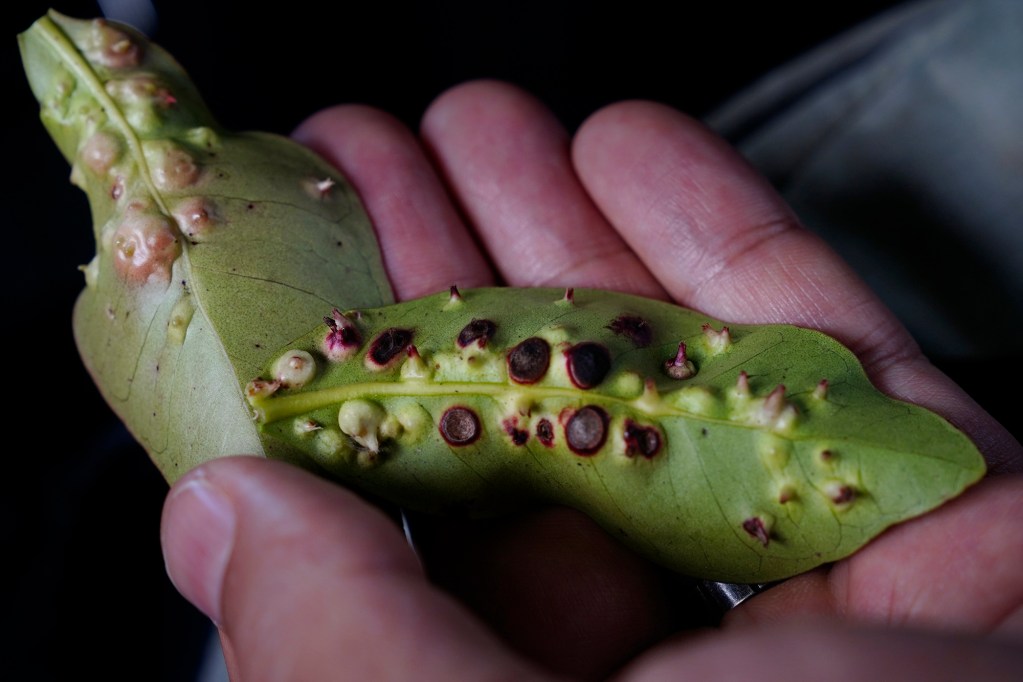
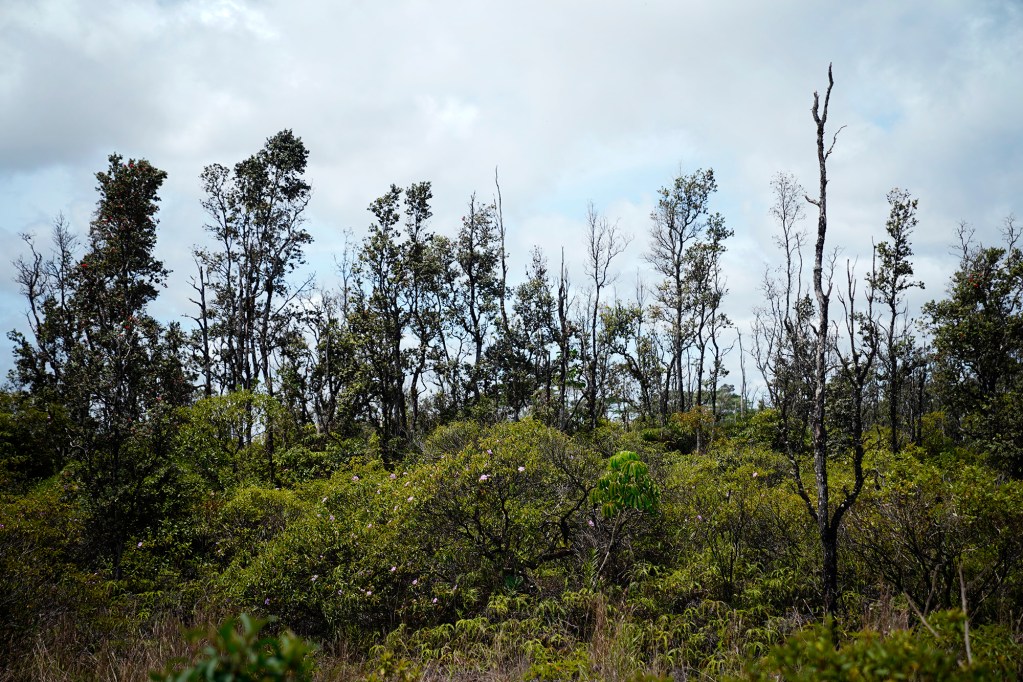
“They have it. It’s ready,” Brewer said last week as she and her invasive cpecies council colleague, Dustin Swan, surveyed Puna’s growing patches of miconia and other aggressive plants threatening to overwhelm the forest understory there. “It’s a pretty yellow butterfly, ready to release. They did 20 years of work on that.”
It’s not clear when those permits might come through. By the time they do, Brewer said, it will be too late to proceed with the Volcano lab closed.
Hilo’s Gathering Place
U.S. Forest Service officials were not available last week to discuss how their consolidation plans would affect Hawaiʻi’s tropical forest research. The agency says on its website that the reorganization aims to “streamline operations” and “transition to a state-based leadership model.”
Initially, the Forest Service portrayed all 57 research facility closures as a done deal and said it would consider adding more closures to the list. However, the agency changed its tune after Forest Service Chief Tom Schultz received pushback during a congressional budget hearing Thursday.
Now, it describes the list as possible closures. Schultz shed some light during that hearing on why Hilo was included. He told lawmakers the Institute of Pacific Island Forestry was targeted because only 15 of the 80 or so personnel based there are Forest Service employees.
The rest are tenants with other land-management agencies, university research arms, conservation groups and educational programs.
“We have not charged rent commensurate with what the operating expenses are,” Schultz said in his testimony. The Forest Service, he said, is looking into whether it might sell its Hilo headquarters for state use instead.
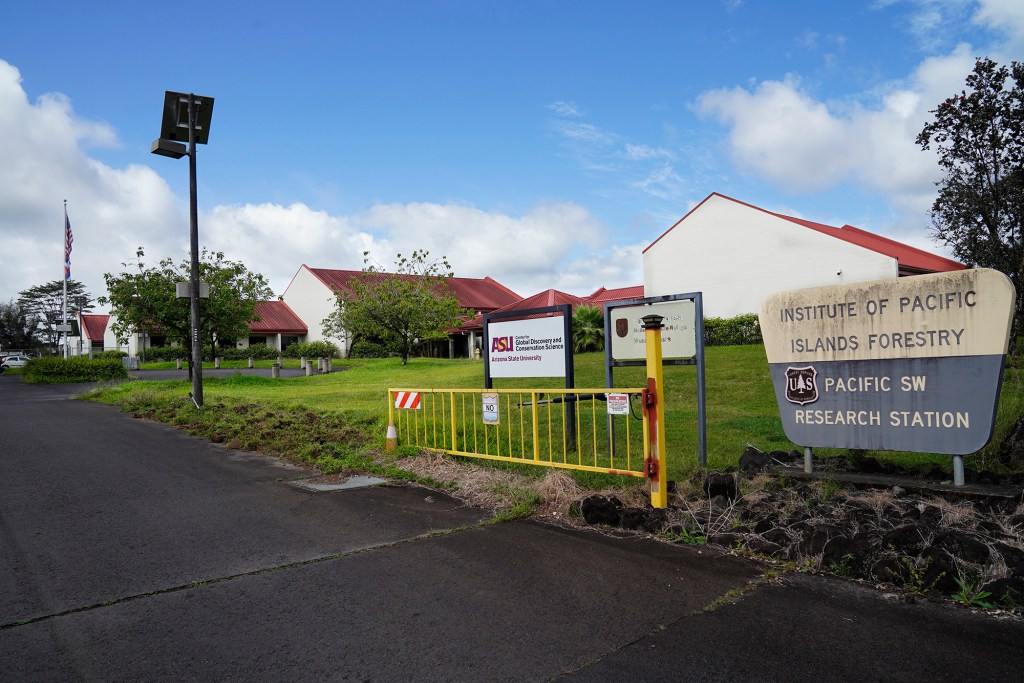
But having all those ecology groups under one roof is one of the main reasons the Forest Service headquarters has become such an important community science hub, University of Hawaiʻi Hilo professor Rebecca Ostertag said.
“So much of what we do in Hawai‘i is (based on) sense of place,” Ostertag said. “How can you take this away from the place and have it be successful?”
Various programs used to train thousands of local students interested in conservation and land management were developed at the Hilo headquarters, said Leila Dudley, a program coordinator with one of the Forest Service’s tenants there, Pilina ʻĀina. Those programs, she said, stemmed from partnerships within the building.
Hawaiʻi lost at least nine Forest Service employees to early retirement last year, Ostertag said, amid the Elon Musk-led Department of Government Efficiency effort to purge thousands of federal workers.
Last Tuesday, the grass landscaping surrounding the Hilo building was noticeably overgrown. Brewer said Forest Service staff who maintained the building and grounds left in last year’s cuts, leaving the researchers who remain to clean and tend the area as best they can.
Local Forest Service employees declined to comment because they weren’t authorized to speak on the situation. Several of their colleagues at other agencies said the looming closures have caused a lot of uncertainty about whether those employees would be able to continue their research in Hawaiʻi.
Leading The Way To Stop The Spread
Closing the labs and greenhouses would also upend the race to better understand rapid ʻōhiʻa death, commonly called ROD.
The fungal disease has killed 1 million to 2 million of the native trees that form the backbone of Hawaiʻi’s tropical forests. If the disease continues unchecked, researchers say, significant pockets of the Big Island’s ʻōhiʻa forests could disappear in the next 20 years.
The Forest Service’s Institute of Pacific Islands Forestry handles about three-quarters of that ROD research, said J.B. Friday, an extension forester with the University of Hawaiʻi.

Specifically, he said, the institute’s pathologists have led the years-long effort to identify disease-resistant ʻōhiʻa strains at a sprawling greenhouse in the closing Hilo facility so those strains might one day help restore disease-ravaged forests.
Friday’s UH research team keeps several rows of colorful ʻōhiʻa seedlings inoculated with ROD by the Forest Service at its own sun-drenched greenhouse several miles away, behind an aging university building on Komohana Street. The team watches for any of the young trees that appear resistant to the disease.
They’re keeping the overflow seedlings there for the Forest Service, Friday said, because the agency’s own greenhouse up the road is already full. If that facility closes, he added, he doesn’t know where all those young trees, representing years of research, could go.
The institute leads the effort, he said, to identify where ROD is taking hold in forests across Hawaiʻi. It’s played an integral role in local wildfire prevention projects, plus drought forecasts.
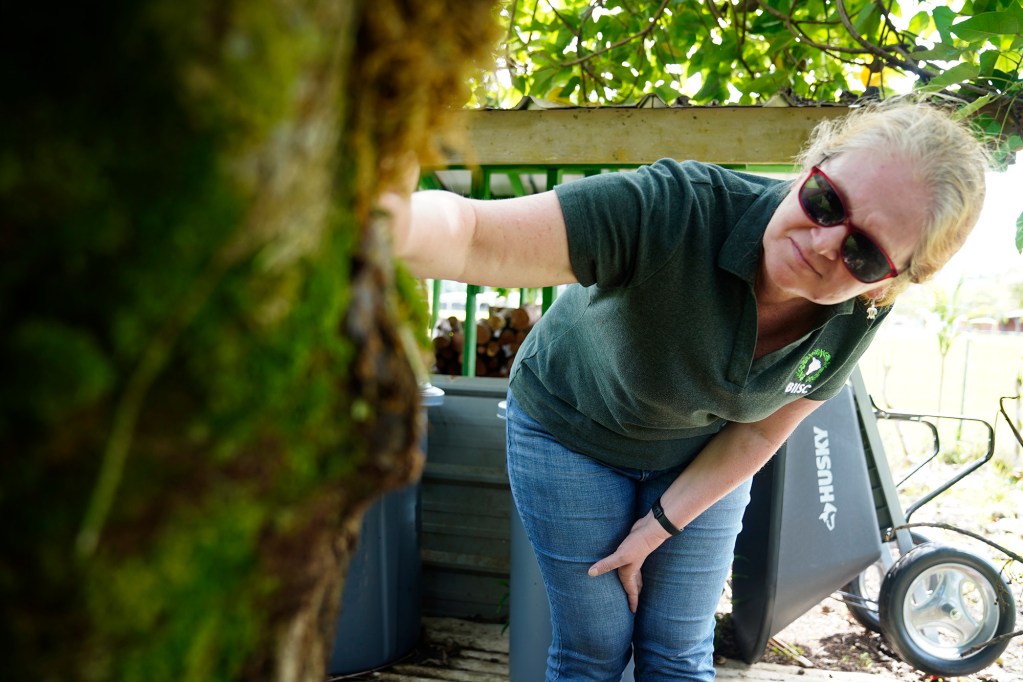
As Brewer and Swan drove across Puna’s rural roads last week, they took note of new spots where devil weed, miconia, Christmas berry and other invasive, noxious weeds had appeared along the roadside.
In some places, including stretches of Puna’s scenic, coastal Red Road, the Christmas berry has grown so tall that it’s blocked out what used to be a clear view of the ocean.
They also took stock of the albizia tries that continue to spread rampantly there, consuming at least 5,000 acres of land across Puna.
The Forest Service, Swan said, developed a method to use low-cost, salt-based herbicide called Milestone that Big Island community members now apply to kill the fast-growing invasive trees, particularly the ones that threaten to fall on homes and power lines in heavy storms.
Swan spotted a young albizia not far off the road that would make an easy target. He pulled over, walked into the forest pasture with a small axe and palm-sized bottle of Milestone. He chipped into the tree’s bark in a couple of spots and applied a few squirts of the herbicide.
It’s enough, Swan said, to kill the tree within a couple of weeks. Patches of large, dead albizia killed with the Forest Service’s Milestone dot the Puna landscape.
In some cases, Swan said, property owners made a calculated choice to kill trees near their homes while they were small rather than let them continue to grow into bigger threats that could do even more damage if they topple in a storm.
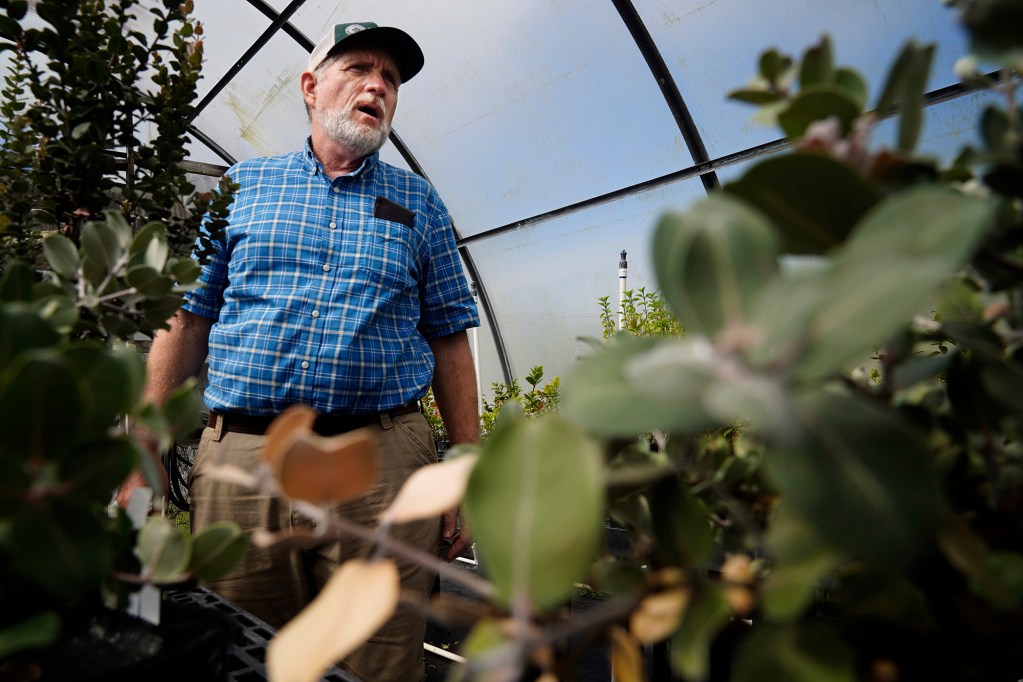
The agency is working on a biocontrol agent at the Volcano lab, Swan said, to help slow the trees’ spread.
Meanwhile, at the Hawaiʻi Academy of Arts and Science in Pāhoa, elementary and high school students regularly inject nematodes, locally sourced microscopic worms, into a kukui tree in the school’s garden that’s been infested by Queensland longhorn beetles.
The biocontrol process the students use to contain that beetle — which could have devastating effects across Hawaiʻi if it spreads — was developed by U.S. Department of Agriculture researchers. The Forest Service is working on a second method that would trap the beetles using pheromones.
The Institute of Pacific Islands Forestry “has been instrumental in making sure that students find pathways they’re interested in,” Dudley said, “because it makes science more approachable in a Hawaiʻi way.”
CORRECTION: An earlier version of this story misstated who developed the Milestone blend and which agency originally developed the Queensland longhorn beetle nematodes.
Civil Beat’s coverage of climate change and the environment is supported by The Healy Foundation, the Marisla Fund of the Hawai‘i Community Foundation and the Frost Family Foundation; coverage of environmental issues on Hawaiʻi island is supported in part by a grant from the Dorrance Family Foundation.