Hawaiʻi Families Need Preschool. Who Will Fund It?
Families and advocates are wondering what the future of preschool could look like amid funding shortfalls and Lt. Gov. Sylvia Luke’s recent departure from office.
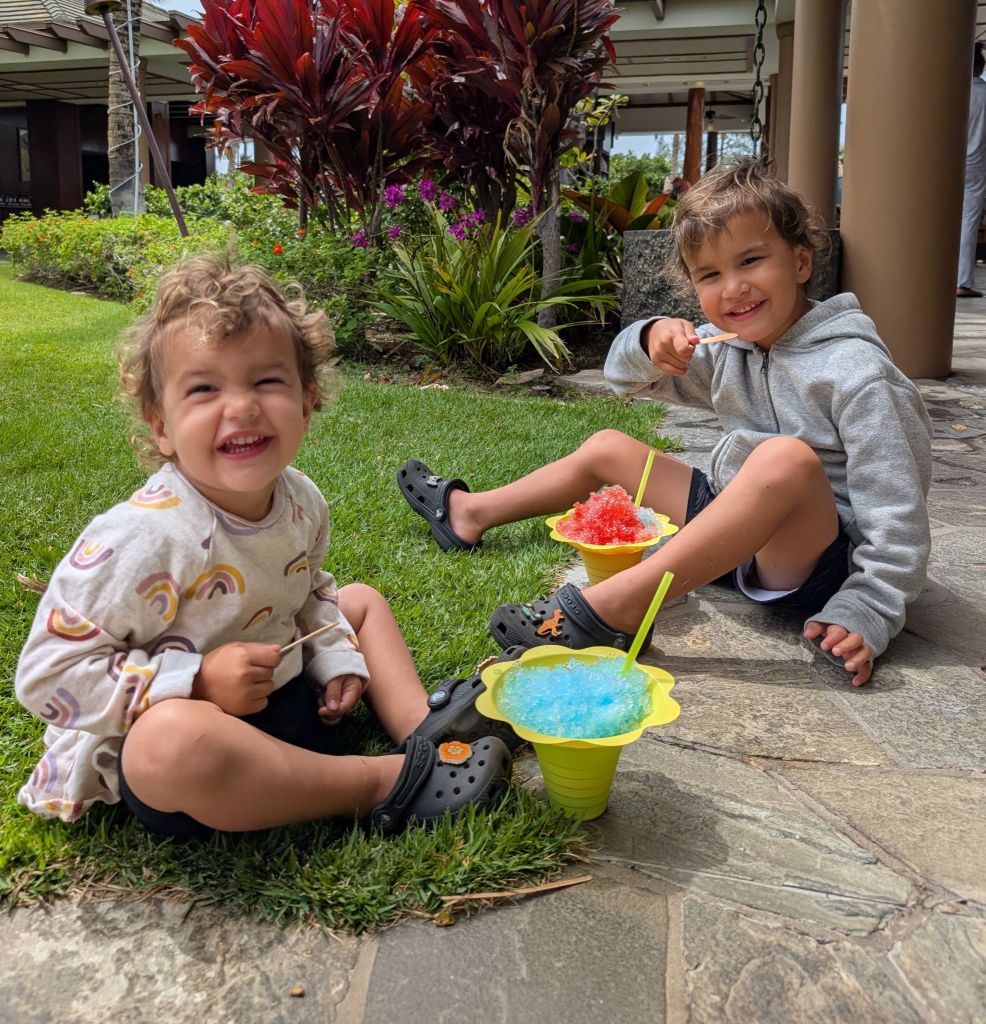
Affordable preschool options are few and far between for Hannah Miller, a Waikōloa mom of a 2- and 4-year-old.
For more than three years, Miller has relied on a free early learning program run out of a church in Waimea.
The program has taught her two children new skills, like counting to 10 in Hawaiian and socializing with other kids, Miller said, while also introducing her to a community of other parents. But the program is set to close in the fall as federal funding runs dry for up to 17 early learning sites across the state.
“We feel like we have nothing for him, so he’s just going to be home with us,” Miller said about her son, who still has another year before he’s eligible for kindergarten. “We’re heartbroken.”
Across the state, early learning programs are struggling to stay afloat amid potential federal funding cuts and reluctance from state lawmakers to fund preschool and child care initiatives this year. While the state faces an ambitious goal to provide preschool to all 3- and 4-year-olds by 2032, the future of the initiative remains unclear as one of its champions, Lt Gov. Sylvia Luke, takes a leave of absence amid a state investigation.
Most early learning bills this year requested state funding to build the teacher workforce or keep child care and preschool programs afloat. But nearly all the proposals died as lawmakers faced significant budget constraints from federal funding cuts and Kona low storm damages amounting to $1 billion mid-way through the session.
“They’re supposed to vote their priorities, and it was just not a priority this year,” said Malia Tsuchiya, early childhood policy and advocacy coordinator at Hawaiʻi Children’s Action Network.
But failing to invest in early learning programs could have significant consequences for working families and the state’s economy as a whole, Tsuchiya said. High-quality preschool and child care not only prepare kids for school, she said, but they also allow parents to reenter the workforce and maintain stable employment.
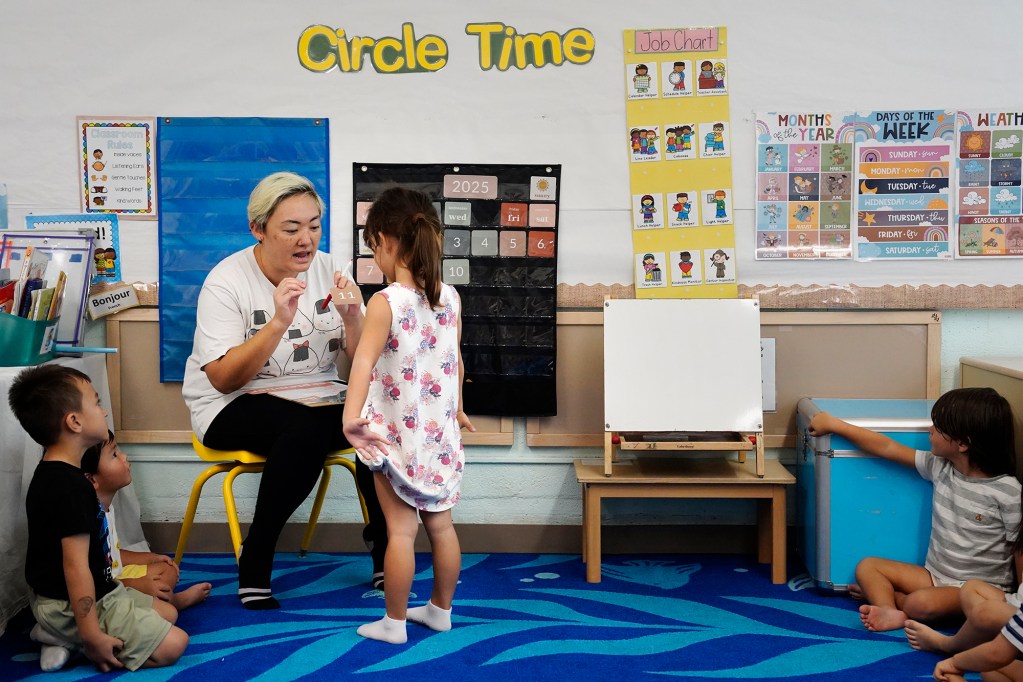
While Hawaiʻi runs some of the highest quality public preschools in the nation, it ranks among the worst states for 4-year-old children’s access to these programs, according to a recent report from the National Institute for Early Education Research.
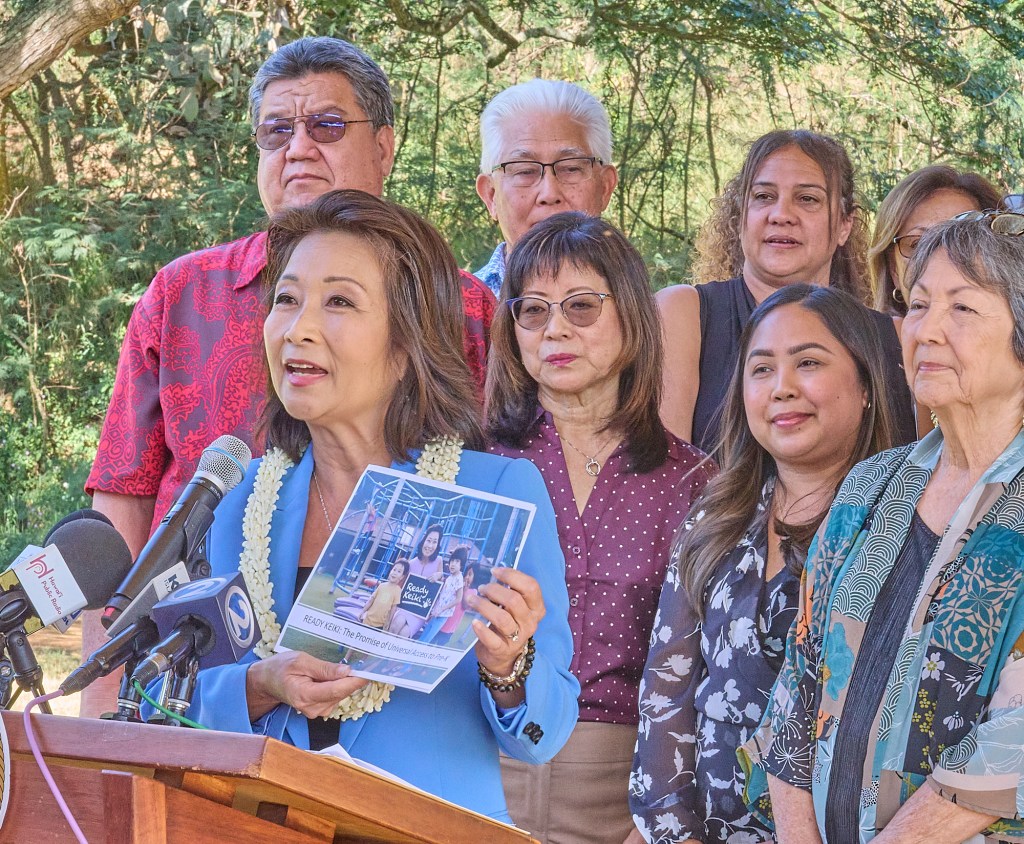
Coming off a challenging legislative session, advocates worry that momentum around universal preschool could further stall as Luke steps away from office. Luke led lawmakers in appropriating hundreds of millions of dollars for preschool classrooms in 2022, but investments may slow unless lawmakers continue to make early learning access a top priority, Tsuchiya said.
“We’re going to need our lawmakers to support that investment,” Tsuchiya said. “Our priorities shouldn’t come and go because one person goes.”
Funding Shortfalls
Oʻahu parent Danielle Alefosio faced multiple roadblocks when she tried to enroll her 4-year-old daughter in preschool last summer. Some programs had waitlists, she said, while others required $200 to $300 deposits that her family couldn’t afford.
But Alefosio found another option: Parkway Village Preschool in Kapolei, which opened as the state’s first-ever charter preschool last year. Since starting school, Alefosio said, she’s seen her daughter progress from speaking in gibberish to talking in full sentences and develop a love for learning.
“They’re top tier,” she said.
Parkway Village is one of two preschool-only charter schools in the state, which serve a total of roughly 180 students and are tuition-free. The two schools receive $171,000 per classroom in state funds, but advocates say it’s not enough to run high-quality programs and entice others to join the charter school model.
Providers need roughly $275,000 to $285,000 to run a charter preschool classroom, said Caroline Hayashi, president of the Waikīkī Community Center. The center works as a nonprofit partner with Waikīkī Community Preschool, which serves nearly 100 students.
Charter schools can work with their nonprofit partners to raise money to cover funding gaps, Hayashi said. But it’s not possible for nonprofits to cover such significant shortfalls, she said, and insufficient funding from the state could discourage other people from starting their own charter preschools.
“There’s more sites where this could really work,” Hayashi said. “But in order to make that a reality, the key is making it more financially sustainable.”
Parkway Village Preschool faces a budget shortfall of roughly $100,000 per classroom — or $400,000 for the entire year, said Trisha Kajimura, vice president at Parents and Children Together, which serves as the preschool’s nonprofit partner. House Bill 2399 would have helped to close the gap by raising state funding to $250,000 per classroom, which is closer to the true costs of operating charter preschools, Kajimura said.
The bill passed through the House but died when it failed to receive a hearing in the Senate Education Committee, chaired by Sen. Donna Kim. The bill did not have an appropriation amount, although the Hawaiʻi State Public Charter School Commission estimated the proposal would cost $790,000 in addition to the existing funds charter preschools receive.
“The impact is really devastating.”
Shawn Kanaiaupuni, CEO of the Partners In Development Foundation, on funding cuts
Funding shortfalls are also affecting early learning programs targeting low-income, rural communities.
A handful of nonprofits across the state run a network of family and child interaction learning centers, which provide free educational programs to infants and toddlers and their caregivers. The programs have historically relied on roughly $20 million from the federal Native Hawaiian Education program.
But one of the primary nonprofits, Partners in Development Foundation, is in the last few months of its three-year grant, and there have been no opportunities to reapply for federal funding, said president and chief executive officer Shawn Kanaiaupuni.
Nonprofit leaders like Kanaiaupuni asked state lawmakers to fill the funding gap earlier this year, warning that dozens of sites could close if the federal government stopped awarding grants through the Native Hawaiian Education program. House Bill 2019 would have set aside an unspecified amount of state funding to support the programs, but the bill died when it failed to receive a hearing in the Senate Education Committee.
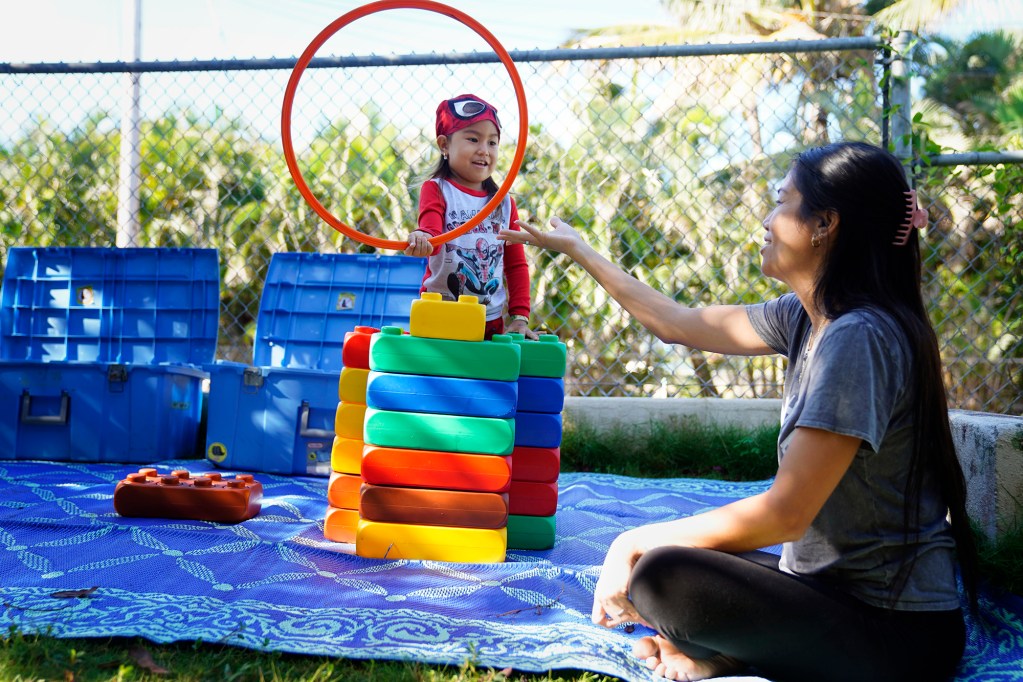
Partners in Development was able to find other sources of funding to keep 19 of its locations open, but it plans on closing 17 family learning sites in the fall, including all four of its Kauaʻi programs. The closures will affect more than 1,000 children and 1,000 caregivers, Kanaiaupuni said, although she’s hopeful some county funding will come through to save four sites on Maui.
“How much can our families sustain?” Kanaiaupuni said. “The impact is really devastating.”
Other nonprofits operating similar family learning programs are able to keep their sites open for now, but the future of federal funding remains uncertain. The proposed version of the 2027 federal budget eliminates funding for the Native Hawaiian Education program entirely, and there’s no guarantee that the federal education department will award grants in a timely manner even if Congress appropriates the money, U.S. Rep. Jill Tokuda said.
“It’s a huge impact on our communities,” Tokuda said. “We need to continue to make sure that this funding is available and that it’s awarded and it gets to where it needs to go.”
Pre-K Needs A Champion
Despite a tumultuous session for early learning programs, Tsuchiya said she’s still optimistic the state can reach its goal of providing preschool to all 3- and 4-year-olds by 2032. The state has renovated and constructed 81 preschool classrooms in the past three years and plans on opening another 26 this summer, according to the School Facilities Authority, the agency tasked with building new preschools.
As of October, the state projected it needed to build 295 more classrooms to provide universal access to preschool by 2032.
But the state needs continued investments in preschool expansion to maintain its progress and hit its 2032 goal, Tsuchiya said. While the School Facilities Authority requested $31 million for preschool construction, lawmakers set aside $20 million in the most recent version of the budget.
Early learning providers have also raised concerns that the teacher workforce can’t keep up with the state’s demand for new classrooms. One bill aimed to address the problem by setting aside state funds for an apprenticeship program, which would allow prospective teachers to work in early learning classrooms and get paid while earning their early educator credentials.
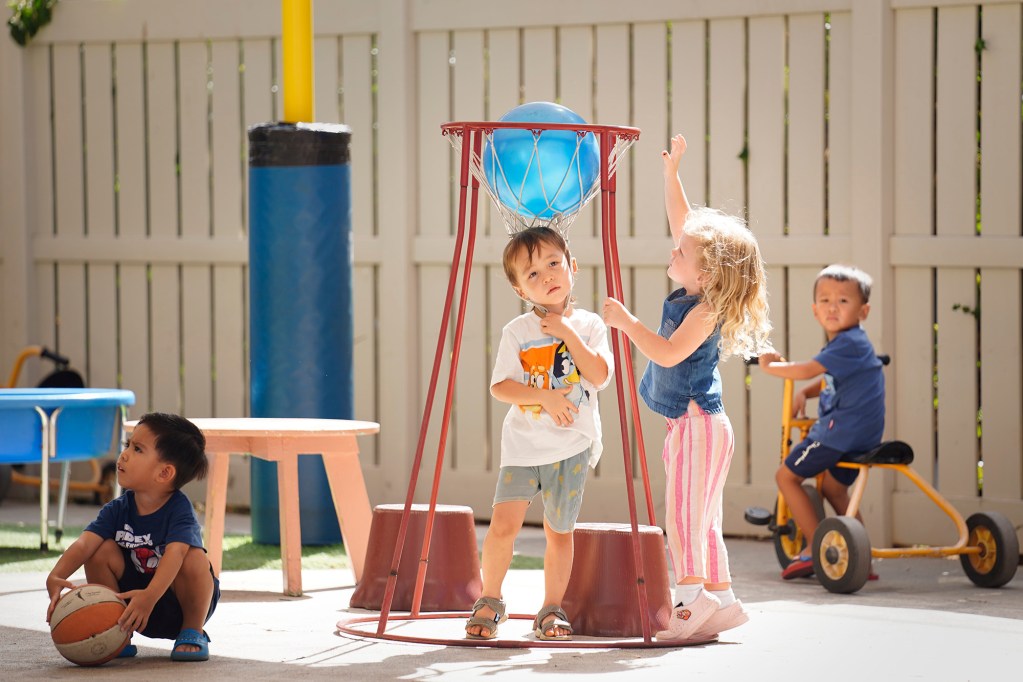
“My desire here is to focus more on the workforce pipeline to make sure we have these early childhood education workers ready to fill these buildings as they get built out,” said Rep. Andrew Garrett, who introduced the bill. He estimates the program would cost roughly $8 million.
The bill failed to pass out of conference committee.
Moving forward, it’s critical for preschool access to remain a top priority for state officials, said Kerrie Urosevich, executive director of Early Childhood Action Strategy. While Luke has pushed for the aggressive expansion of preschool access in recent years, Urosevich said, she’s worried progress could stall unless the governor or next lieutenant governor continues to champion the issue.
“I don’t think it has enough momentum on its own,” Urosevich said. “I think it’s going to require a champion.”
Civil Beat’s education reporting is supported by a grant from Chamberlin Family Philanthropy.