Health Officials Are Perplexed By Hawaiʻi Snorkeling Deaths
Snorkeling claims the lives of dozens of tourists each year. Some who lost loved ones or nearly drowned themselves say not enough is done to warn people of the risks.
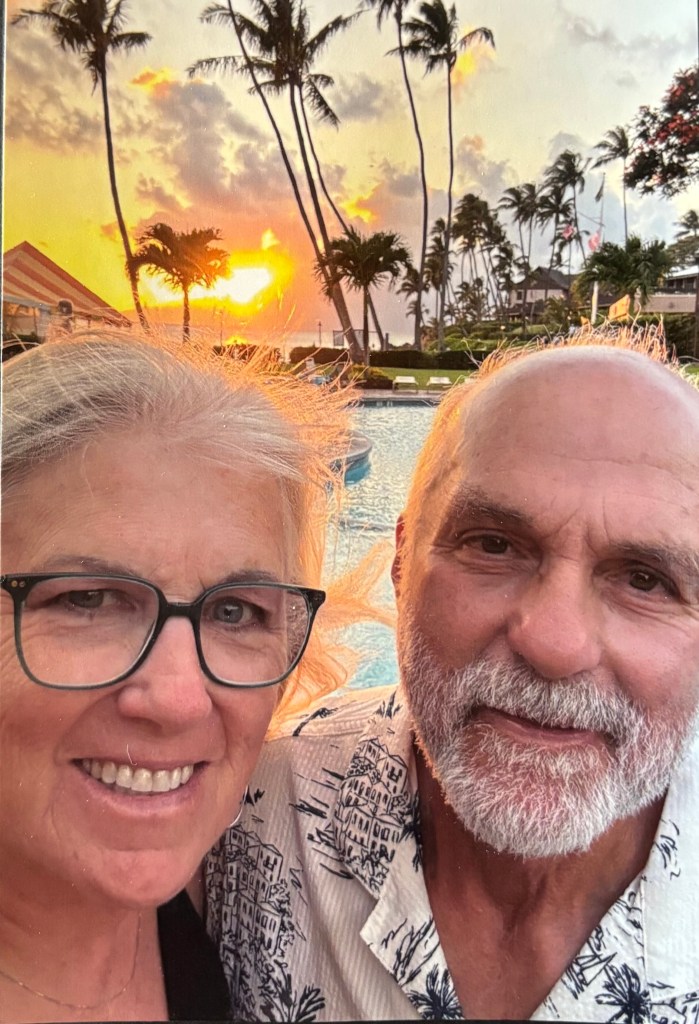
The water was colder than Carrie Millan and her husband Dave expected as they waded out into the calm bay near the Napili Kai hotel on Maui in June 2024.
“Don’t put your fins on beforehand,” Millan teased her husband, “you don’t want to be a duck.”
The couple had just arrived the day before to celebrate their 45th wedding anniversary. Laughing and joking, they splashed around in the waves as they donned their rented masks and snorkels. Masks down and mouthpieces in, Dave Millan motioned for his wife to lead the way.
“OK, rule is we stay together,” she told him. He gave her a thumbs up and the two took off in search of turtles.
A lifelong bodysurfer from Huntington Beach, California, Dave Millan was a strong swimmer and adept at navigating ocean currents. It was Carrie Millan who was ready for a break first. After about 20 minutes and several turtle sightings, the pair agreed to head to shore. As Millan touched her feet to the sand and removed her gear, she looked around for her husband. But he was nowhere to be found.
“He was right behind me until he wasn’t,” she said. “I can still remember myself yelling, ‘I can’t find my husband.’”
People floating nearby found Dave unmoving in the water and pulled him to shore. Carrie Millan, a pediatric nurse, started CPR. Their doctor from California was on the phone with the emergency room sending his EKG results before the ambulance even got to the hospital.
He never recovered. The cause of death: accidental drowning.
It didn’t make sense to Carrie Millan or the couple’s doctor. The 68-year-old masonry contractor was strong and active, he never smoked and he’d stopped drinking alcohol more than 15 years ago. He had just undergone an extensive physical, including an EKG, that showed he was exceptionally healthy.
In the months since, Carrie Millan and her doctor have come to believe that Dave Millan’s fatal accident was a case of an underresearched and underemphasized risk for snorkelers called rapid-onset pulmonary edema, or ROPE. It happens when the lungs fill up with liquid — not from accidentally inhaling seawater, but from the body’s own fluids, which causes a lack of oxygen in the blood that leads to weakness, confusion and a loss of consciousness.
Some medical experts have speculated that long flights might increase the risk, and some people online are even saying they’ve canceled snorkeling tours shortly after their arrival in Hawaiʻi out of concern. Preliminary studies do not show a correlation between air travel and pulmonary edema in snorkelers, but it’s something that health officials say needs more data and further study.
In a state where drowning is the leading cause of injury-related deaths for tourists — and nearly half those deaths are from snorkeling — families of drowning victims and survivors of near misses are asking why more isn’t being done to save lives.
Health officials say more data is needed and that the limited research conducted thus far about pulmonary edema and the risks of travel is inconclusive. But a growing chorus of people are asking why there aren’t more warnings about the risks of snorkeling, particularly after long flights.
“Sure, study it,” Carol Wilcox, a water safety advocate and near-fatal drowning survivor who worked on a snorkel study, said. “But right now, warn people.”
‘No Warnings Out There’
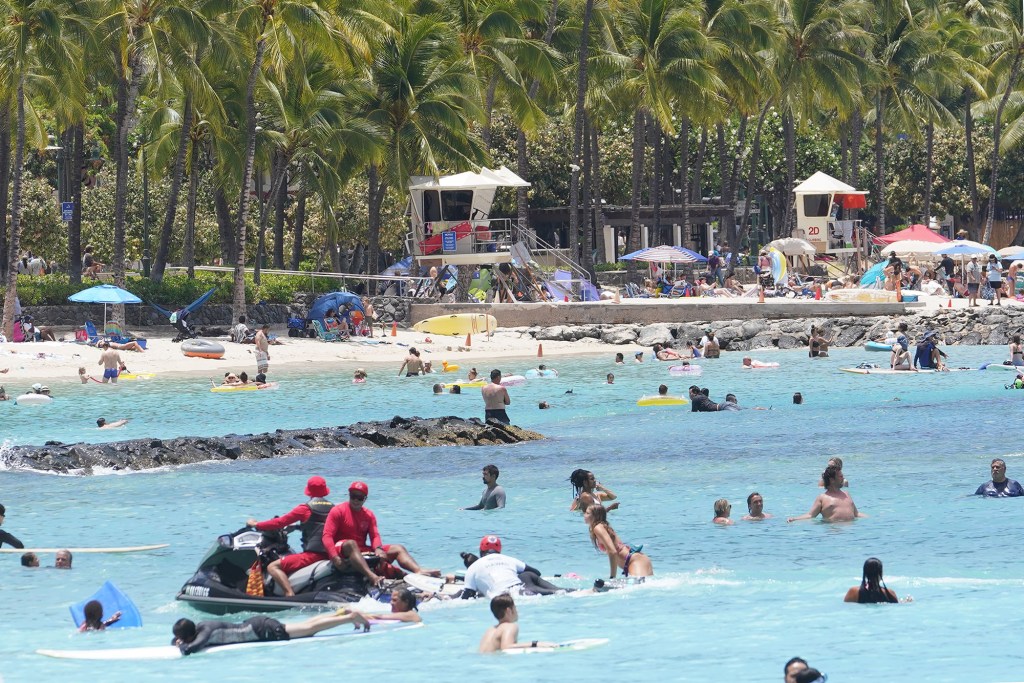
About 42 tourists drown in the oceans off the Hawaiian islands on average each year, many of them while snorkeling. More than 200 visitors to Hawaiʻi have died while snorkeling in the last decade. Snorkeling tourists account for a quarter of all ocean drownings in the state between 2015 and 2024, according to the most recent data from the state Department of Health.
What precisely is driving these drownings is a matter of debate. Often, the circumstances are perplexing. People drown in calm waters and without visible signs of distress.
In 2017, the Department of Health formed a subcommittee on snorkel safety to examine some of the common theories. With funding from the health department and the Hawaiʻi Tourism Authority, local pulmonologist Dr. Philip Foti and the group of ocean safety experts and advocates tested 50 types of snorkels, read medical examiner’s reports and spoke with survivors who had close calls with drowning. Foti died in 2024.
The Snorkel Safety Study, released in 2022, found that the type of snorkel matters significantly and that pulmonary edema was a factor in “many, if not most,” of snorkeling fatalities.
Pulmonary edema has been more thoroughly researched among divers, swimmers and high altitude mountain climbers. The danger occurs when the lungs fill with bodily fluid, causing the person to run out of oxygen and drown, not by inhaling water but from the inside. Experts attribute the cause to multiple contributing factors, including overexertion.
The occurrence among snorkelers has been relatively understudied. Using records from the medical examiner’s office from 2017 and 2019, Foti’s study found that pulmonary edema was likely or very likely in 29 of the 32 snorkeling deaths.
The type of snorkel impacted the risk of pulmonary edema, Foti’s study found. If a snorkel has a high level of resistance that makes it harder to breathe in, it can reduce the pressure in the lungs and lead to fluid in the lungs. The more physical exertion, the more resistance from the snorkel and the higher the risk of pulmonary edema. Simpler snorkels generally create less resistance, and factors like the size of the narrowest opening or the design of the valves can all make a difference.
“It’s risky because of the snorkel,” Wilcox said.
Preexisting heart problems and increased exertion during swimming were also risk factors, according to the study.
However, the study had its drawbacks. It was a small sample size, and it wasn’t possible to conclusively determine from autopsies whether a drowning victim’s lungs were filled with fluid because of pulmonary edema or an accidental inhalation of water.
Not everyone is convinced. Amanda Allison, who joined the health department last December as a public health educator focused on drowning, says there isn’t enough research to know how significant a role rapid-onset pulmonary edema plays in snorkeling fatalities.
“I don’t know that it’s pulmonary edema. All I know is that it’s (a) fatality,” she said.
There hasn’t been much research since Foti’s study.
“We just don’t know what it is we don’t know,” Allison said. In order to drill down on what’s happening, she said, there needs to be better data.
For survivors of near-fatal drownings like Wilcox, the lack of action is frustrating.
Wilcox, who lives on Oʻahu, had just gotten off a plane the day before when she nearly drowned while snorkeling off the Kaimana Beach. This happened more than 20 years ago. Snorkeling was part of a routine workout for her, but she made it about half as far as usual – less than five minutes – before she realized she was in trouble.
“I was completely out of breath and very worried,” she said.
As the muscles in her arms started to freeze up, she swam back to shore, making it to the beach just before she fell unconscious. The doctor ruled out a heart attack and diagnosed her with pulmonary edema, which occurs when the lungs rapidly fill up with bodily fluid.
Wilcox wants to see more signs up on beaches, in airports and in hotels informing people to choose their snorkel carefully, consider not partaking if they have a heart condition and take their mask off if they become short of breath.
“It’s just so upsetting to me that there’s no warnings out there,” she said. “Risk factors should be everywhere.”
Does Flying Increase Risk?
Foti’s study pointed to a specific area where further study was needed: whether recent air travel played a role in the risk of pulmonary edema. That task fell to a health department epidemiologist Dr. Dan Galanis a few years later.
Using records from the medical examiner in 23 cases of fatal snorkeling accidents, Galanis examined the length of time between someone’s arrival and their fatal drowning while swimming or snorkeling.
About 48% of victims drowned less than three days after landing in Hawaiʻi. Another 26% drowned within three to four days of getting off the plane. About 26% drowned five or more days after arriving in the state.
But the results were not statistically significant, meaning researchers couldn’t determine a correlation between drowning and recent plane travel. The medical examiner’s records also didn’t indicate whether pulmonary edema was a factor.
Allison is hesitant to read too much into the numbers, in part, because of the small sample size.
“As the state entity, it is not responsible of us to say … five to six hours of travel causes ROPE. Because we don’t know that,” she said. “It’s something that we just have to continue to look into.”
But further study is limited by a lack of data, she said. The health department is working on modernizing its emergency medical services data, allowing it to more easily get at crucial numbers to drive research.
Galanis, the epidemiologist who for years was tasked with tracking drowning statistics and spearheading research on the issue in Hawaiʻi, recently retired. Funding from the CDC Foundation, an independent nonprofit that facilitates collaboration between the CDC and others, allowed the health department to bring on his replacement for about a year, and that person started this month.
Allison expects one of the new epidemiologist’s goals will be to dig into whether recent plane travel increases the risk of pulmonary edema among snorkelers.
“We don’t want to make people too afraid, but we want to make them aware,” she said. “There is a sense that if you make it too stark, you’re going to maybe scare people into not coming here.”
The health department is working on messaging about ocean safety to display at places like airport baggage claim to catch tourists before they get in the water.
While she wants more education about ocean safety, “providing catastrophizing warnings is also oftentimes not effective,” she said.
But some would rather play it safe than wait for more research.
Millan’s doctor, Dr. Hendrick Breytenbach, is now warning his patients in California to wait a few days after getting off the plane to pick up a snorkel and jump in the water.
“Go have a great time in Hawaiʻi,” he tells patients. “But my job is to give you information, at least bring some things to light that you might not have thought about. And who knows, that may save a life.”
Millan considers herself a cautious person, the type to research a ziplining company’s safety record before putting on a harness. Had she known that there was even a chance that snorkeling shortly after flying might cost her husband his life, she said they never would have gone that day.
“I was not one to take risks, and neither was Dave,” she said.
The couple had a snorkeling tour scheduled for a few days later. On their first day in town, they would have stuck to hiking and sightseeing.
“We would have played in the water,” she said. “But we would not have gone snorkeling.”
Correction: A previous version of this story misspelled the name of a resort.