

Teens Suing Kamehameha Didn’t Have Scores To Get In, Lawyer Says
Attorneys for the plaintiffs say race preference permeates the process.
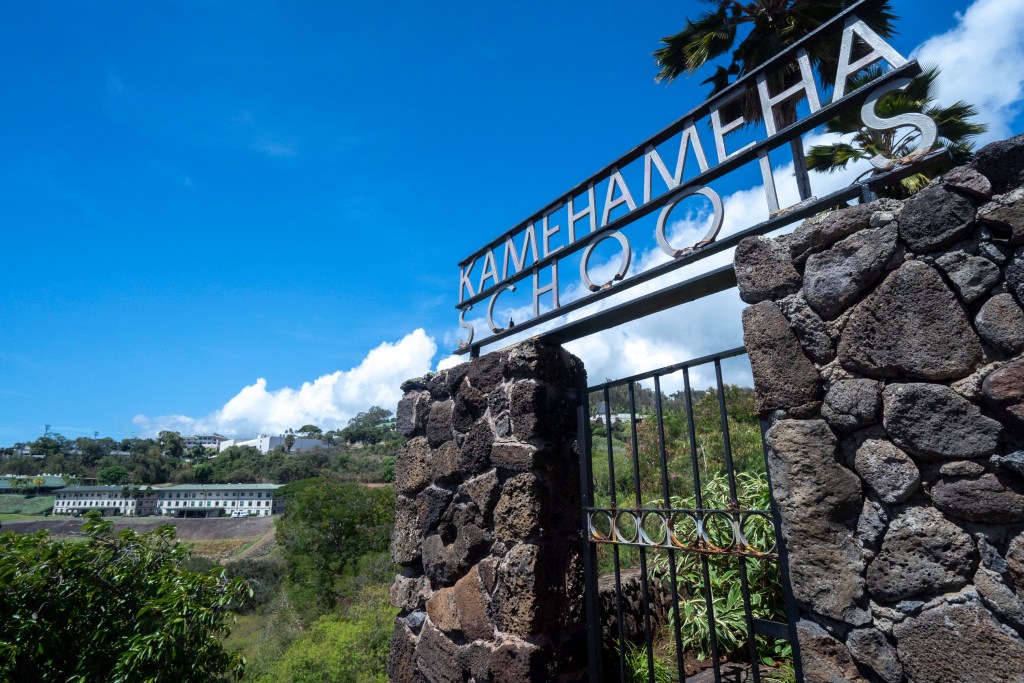
Two people suing Kamehameha Schools over its admissions policy giving preference to Native Hawaiians weren’t ranked high enough to advance to a stage where their race would even be considered, a school attorney said Wednesday.
That’s important because it may determine whether the plaintiffs — identified as I.P. and E.S. — can even proceed in the lawsuit if they never had a chance of attending Kamehameha based on their application scores.
But a lawyer with Students for Fair Admissions, which brought the lawsuit, said the group would want to conduct an analysis to determine if there is a bias against non-Native Hawaiians throughout the admissions process.
Those arguments came out during a hearing Wednesday over how best to proceed with the lawsuit, which was first filed in October.
There are currently four plaintiffs, including E.S. and I.P., who both applied and were rejected and parties identified only as Families A and B. They all allege that the school’s Native Hawaiian admissions preference is discriminatory.
In addition to determining if E.S. and I.P. should be able to proceed in the lawsuit, school lawyers also want to evaluate whether other groups identified as Family A and Family B actually intended to attend Kamehameha. According to the lawsuit, they never applied.
Cam Norris, an attorney for the group suing Kamehameha Schools, argued that it’s futile for non-Native Hawaiians to apply at Kamehameha because they stand little chance of getting in.
“If there’s a ‘White’s Only’ sign on the door, you keep walking,” Norris said. “You don’t have to call. You don’t have to ask … discrimination is clear.”
‘Fundamental Misunderstanding’
Earlier in the hearing, Joachim Cox, a lawyer for Kamehameha, said that the fair admissions group has a “fundamental misunderstanding” of how the admissions process actually works.
Generally, applicants submit grades, teacher references, undergo testing and take part in interviews — steps that are completed “without regard to whether the applicant is Native Hawaiian,” according to a court declaration from Heather Park, who oversees the admissions process at Kamehameha.
Based on that first stage, the application is given a score. The school then identifies qualified applicants and ranks them based on their scores. The school doesn’t consider whether an applicant is Native Hawaiian until it decides whether he or she could be offered admission based on their rank and the number of available seats.
“When we look at the individual plaintiffs … they never got to that point,” Cox said.
Norris said his understanding was that they were put on a waitlist and deemed qualified. On rebuttal, Cox said that doesn’t matter because, generally, everyone who isn’t admitted gets put on a waitlist.
The hearing on Wednesday was to sort out how to proceed with discovery in this case — the stage in a lawsuit where both sides investigate each other’s claims by requesting documents and conducting interviews.
Kamehameha wants to examine whether I.P and E.S., the two teens, have standing to sue the school. In lawsuits, plaintiffs need to demonstrate they have actually been harmed — in this case, that they were discriminated against based on race and not just weeded out from the crop of applications for academic reasons.
Kamehameha proposed a limited discovery process that examines some documents and takes depositions of the plaintiffs. This could speed up the process because, if the plaintiffs never had a chance at admission or didn’t actually intend to attend Kamehameha, the case could end early.
Norris raised the possibility that Kamehameha’s proposal is actually stalling the process and could prejudice E.S., who is of an age where they could reapply to attend the school if the admissions policy is overturned.
Time is of the essence because the fair admissions group has indicated it intends to appeal the case all the way to the U.S. Supreme Court. Even if it wins, Norris said, it would still need to re-argue the case here in Hawaiʻi under a new legal standard.
U.S. District Judge Micah Smith said he needed to weigh the outcomes of granting Kamehameha’s discovery request or proceeding under the normal course as suggested by the SFFA.
“Which of these routes ensures the case stays on track?” he said.
Smith took the matter under advisement, meaning he will issue a ruling on the discovery issues at a later date.

