

One Of Hawaiʻi’s Most Lucrative Crops Might Surprise You
Millions of pounds of Hawaiʻi-grown basil are exported to Canada and the U.S. mainland. The herb is now more profitable than some of the state’s most iconic crops.
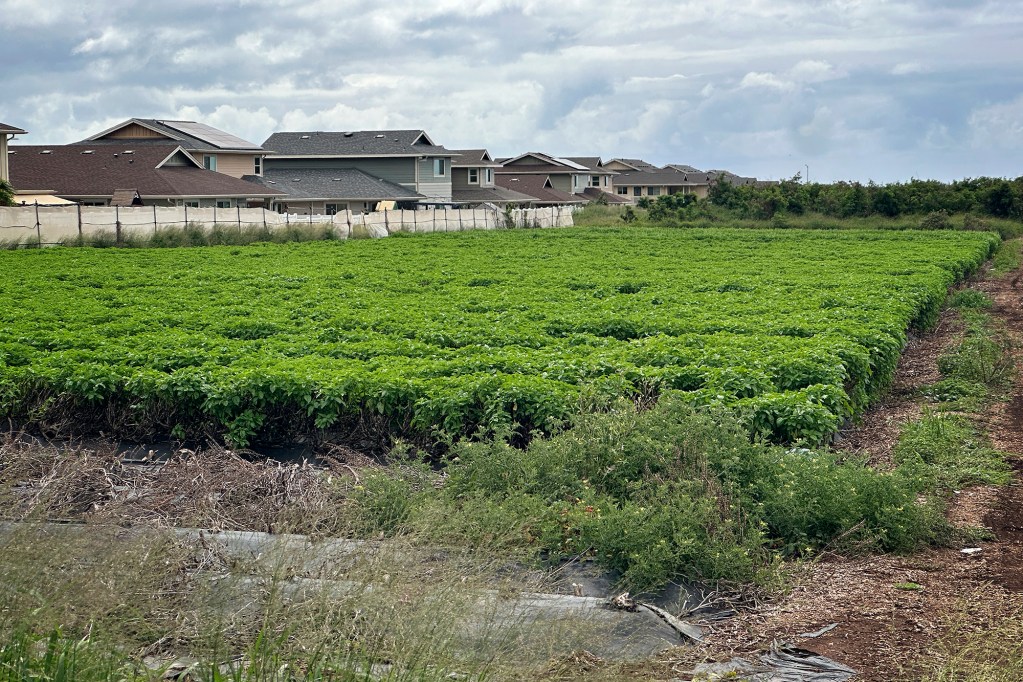
Hawaiʻi’s basil industry is bigger than it has ever been, three times larger than the local banana and papaya industries combined. It’s now the state’s fifth most valuable agricultural commodity.
Local farmers harvested almost 18 million pounds of the popular herb in 2024, according to recently released data from the state agriculture department, worth just shy of $43 million — a more-than 50% increase in value since 2019.
The state’s basil growers are far outpacing the island’s other agricultural commodities, from local eggs and macadamia nuts to orchids and other lei flowers. And the crop’s footprint is still less than 500 acres statewide, far smaller than the 16,000-acre, $30 million macadamia industry.
Basil now sits behind algae, coffee, cattle and seed crops on the list of Hawaiʻi’s most lucrative crops.
An overwhelming majority of the state’s basil crop is exported. Of the 2024 harvest of 18 million pounds, just 0.5%, or 92,000 pounds, was sold locally. Most of the fragrant leaves were shipped to the U.S. mainland and Canada for sale.
The tropical islands’ warm climate makes it ideal for year-round basil cultivation. Seasonal demand, according to the state Department of Agriculture and Biosecurity, often outpaces local supply, driving the price up.
“It has always been a money maker,” former state agriculture director Scott Enright said. “They were killing it back in 2012 too.”
Both Italian and Thai varieties are grown in Hawaiʻi, with exports typically fetching at least 40 cents more per pound than what the local market has paid for the past five years, according to the state agricultural statistics branch.
Italian sweet basil has proven to be the islands’ most lucrative variety, fetching $2.71 per pound for export, compared to the $1.91 for Thai basil. The Italian leaves were worth more than $28.3 million in 2024, almost double the Thai variety’s value, which earned about $14 million.
The industry is not immune from controversy.
The U.S. Department of Labor fined Fat Law’s Farm on Oʻahu $460,000 in 2014 for failing to meet health and safety regulations and for paying workers less than the federal minimum wage, in cash. The following year, Waiʻanae farm Wong Hon Hin was ordered to destroy its crops when the state Department of Health found unacceptable levels of pesticide residue on the operation’s Thai basil.

The numbers show a year-over-year increase in value and production of the aromatic plant, despite a modest increase in how much land is used to grow the crop statewide. Its footprint increased from 466 acres to 493 acres between 2019 and 2024.
During the same period, the value increased from $28 million to almost $43 million, and production soared from 6,350 tons to more than 9,000 tons.
“Data Dive” is supported in part by the Will J. Reid Foundation. “Hawai‘i Grown” is funded in part by grants from the Stupski Foundation, Ulupono Fund at the Hawai‘i Community Foundation and the Frost Family Foundation.


