Attention Divers! Hawaiʻi’s Reefs Need Your Help After Destructive Storms
Early reports support fears of widespread damage, but without more monitoring the picture remains incomplete.
The few divers who have managed to get in the water after the recent Kona low storms are finding areas hit hard by coral bleaching, as well as damage to some of Hawaiʻi’s most ecologically important reefs.
However, the true scope of the marine damage remains murky, state aquatic officials say, because brown-water conditions and heavy swells have mostly kept divers on shore. Plus, they add, there’s a limited pool of state employees to work on the post-Kona low assessment.
To get that fuller picture, they’re calling on more volunteer divers from across the islands to help assess Hawaiʻi’s reefs once it’s safe by posting their photos and reports to the Eyes of the Reef Hawaiʻi website.
“We are still in this holding pattern,” state Aquatic Resources Division Rapid Response Coordinator Eric Dilley said. “But we are receiving reports of impacts in different parts of the state, particularly on O‘ahu.”

The community-driven Eyes of the Reef has become essential for an understaffed aquatic division trying to keep outbreaks of coral disease and invasive species in check, he said, and to fix at least some of the damage left by heavy storms. That monitoring is crucial in the effort to maintain healthy coral reefs across Hawaiʻi against the challenges of runoff, pollution and warming waters related to climate change.
“Researchers (and) community members that are out using the ocean for fishing or recreation or snorkeling, whatever it may be – their observations are critical for us,” Dilley said. That especially goes for Lānaʻi and Molokaʻi, where the division’s presence is extremely limited and there’s no sense yet of the damage left by the Kona low storm.
“There’s not as many people that live there and we have far less resources out there,” Dilley said, “which is something I hope to build on with Eyes of the Reef going forward.”
There’s also a huge gap in post-storm reporting data, he said, on Hawaiʻi island.
So Far, Not Great
Some of the worst bleaching found so far, according to those Eyes of the Reef reports, is on the North Shore, not far from where the storms’ worst damage on land occurred in Waialua and Haleʻiwa.
Several divers there took advantage of rare, favorable water conditions not long after the storms to document widespread bleaching of cauliflower, antler, rice and branching corals off Pūpūkea and Haleʻiwa Beach Park and send it to the site.
Typically, Hawaiʻi sees such bleaching events when extreme heat warms water temperatures beyond what corals can endure, Dilley said. But temperatures currently aren’t that warm, he added, so the storm-driven blasts of sediment and fresh water into the ocean likely are causing the new bleaching.
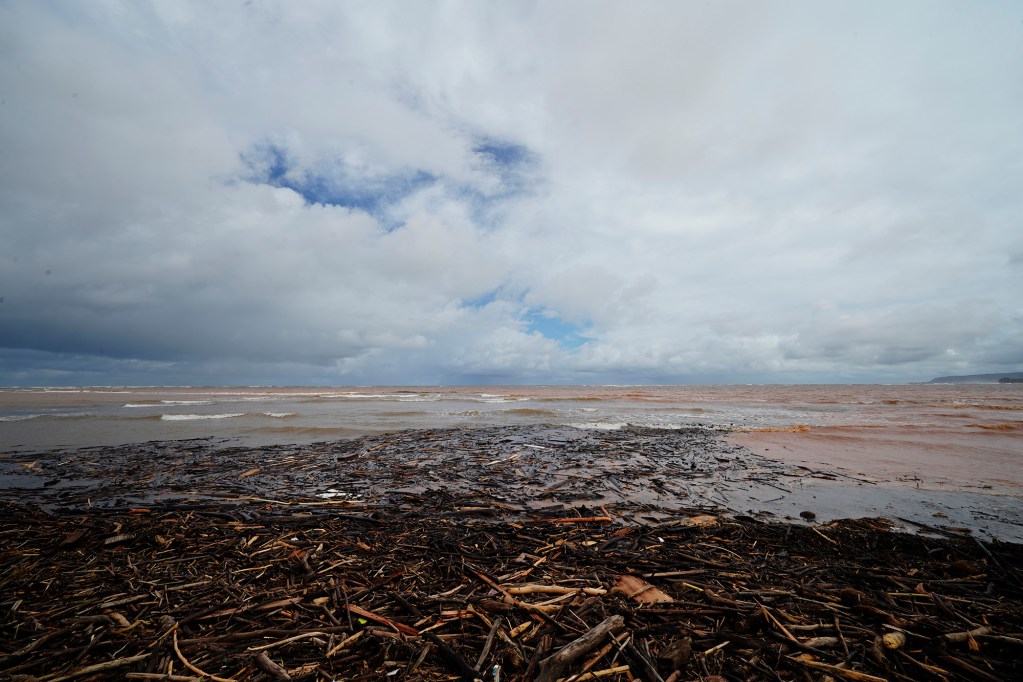
“Considering the context and considering the time of year,” he said, “it is quite compelling as to the level of confidence that there’s a cause and effect here.”
There’s also been limited reports of corals broken off the southern and western-facing shores of Oʻahu and Maui, Dilley said, including Maui’s sprawling Olowalu reef, which helps populate nearby reefs. Those shores were hit by fierce winds and surf during the Kona lows.
The nonprofit Kuleana Coral Restoration is preparing an emergency effort to restore coral later this week on Oʻahu’s south shore, according to Executive Director Alika Garcia.
Kauaʻi was relatively spared by the storms and so were its coral colonies, Dilley said.
His division, he added, is in the process of taking over and redesigning the Eyes of the Reef site, which was created by a network of coral researchers and divers to help respond to coral disease outbreaks, invasive species, and damage after heavy storms.
The site includes training videos and a map with the recent reports of disease and damage.
Coral bleach when they’re under heavy stress due to some environmental change. Often, their color returns and they restore to health when the environment stress goes away.
In Hawaiʻi, the problem is “these types of stressors could become more frequent and therefore become more of a threat than they have in the past to corals,” Dilley said. “Ultimately, we’re trying our best to document what’s happening in the ocean as a means to inform the importance and necessity of better watershed management.”
Civil Beat’s coverage of climate change and the environment is supported by The Healy Foundation, the Marisla Fund of the Hawai‘i Community Foundation and the Frost Family Foundation.
Civil Beat’s coverage of environmental issues on Hawaiʻi island is supported in part by a grant from the Dorrance Family Foundation.