Honolulu Officials Accept Raises Without Hearing Public Opposition
Members of the public had little opportunity to comment on the raises, which are paid for with their tax dollars.
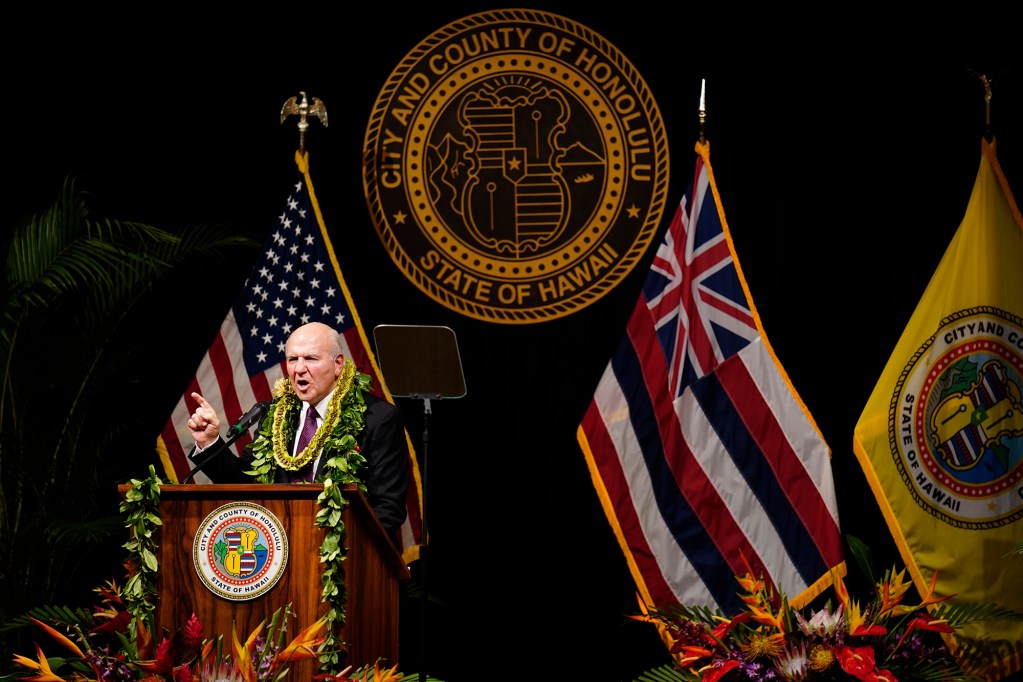
Honolulu Mayor Rick Blangiardi, city council members and other department heads are set to receive pay bumps worth thousands of dollars come July — their fourth pay raise in four years.
Blangiardi will get a $10,000 boost to $237,000, which is 27% more than he made four years ago. A similar increase for the managing director will bring his pay to $226,403, also 27% more than what the job paid in 2022.
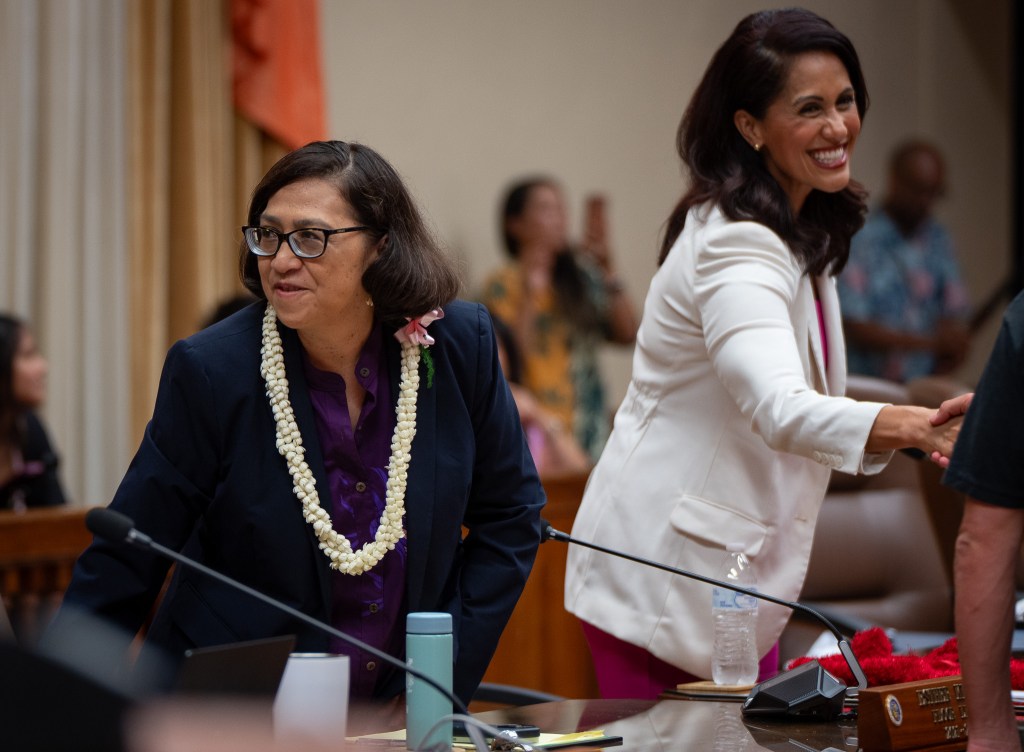
Honolulu City Council members will make $128,000 as of July 1, an 86% increase from four years ago. Their 4.7% salary raises this year follow a 64% pay bump for council members in 2023 that ignited outrage in the community. Council members can and do have outside employment.
City officials are receiving the raises without having to hear from the public.
The Salary Commission advanced the raises during an April 6 meeting in which they failed to review five pieces of public testimony from people opposing the raises — an omission a commission staffer called a “one-off” administrative mistake. The commissioners are volunteers who are appointed by the politicians who will receive the raises.
The Salary Commission officially adopted the raises on April 22.
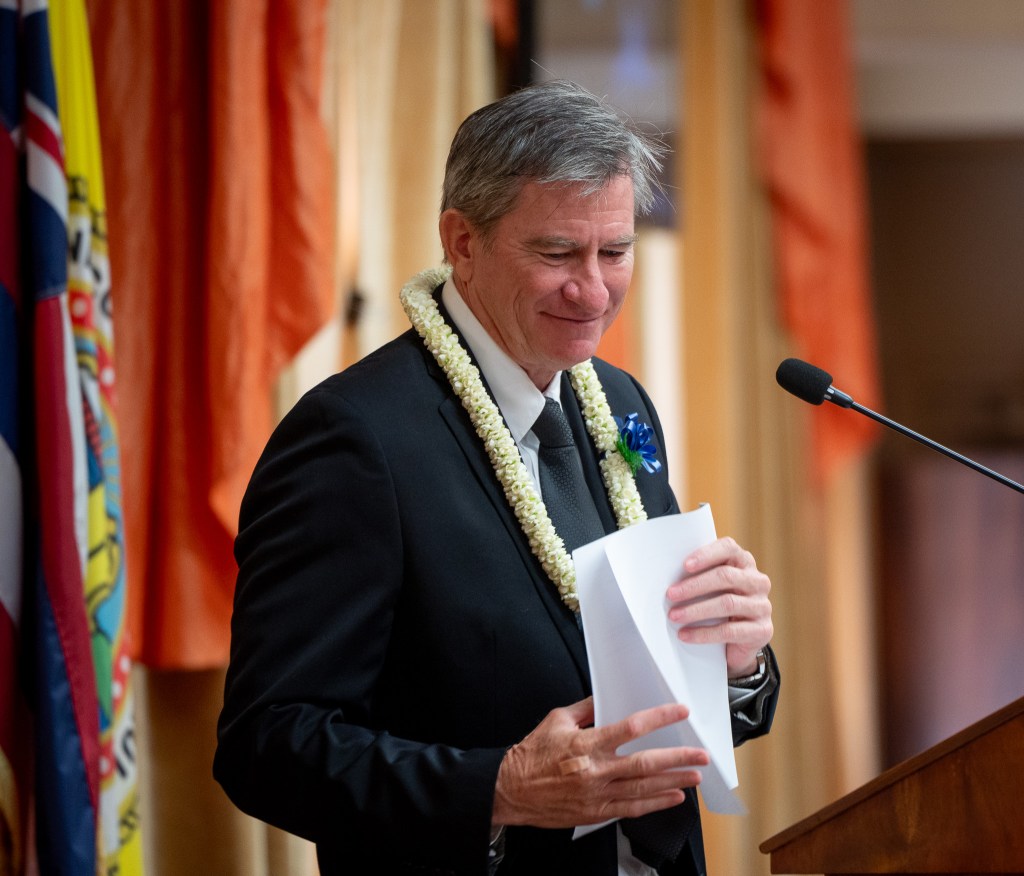
Council members used to be able to decline the commission’s proposed pay raises for the legislative branch. That changed after voters approved a charter amendment during the 2024 General Election that capped council pay raises at no more than 5% each year and prohibited council members from voting on their own pay raises.
The Honolulu City Council had until this week to put the executive branch raises on a public meeting agenda and vote on them, but opted not to. Council Chair Tommy Waters, who is running for re-election, said on Sunday that raises are important for attracting “the best and the brightest” to city positions, though he also said a lower raise might have been more palatable. Waters said he would have put the raises on the agenda if one of the other eight council members had introduced a measure to do so.
“If anyone had brought it up, I would have definitely looked at it,” he said. “But I didn’t want to lead the charge on that. I got to work with these people.”
The decision means the raises will take effect without the council or city administrators ever having to hear directly from members of the public who vehemently oppose the raises. Many such people filled social media comment sections voicing anger about the idea of additional pay raises
Pat Kelley testified in writing on April 4, “there is no way city council or the mayor should be getting another raise.”
“The economy is down, everything is expensive and getting more expensive and you are even thinking about taking raises after the last two years,” Kelley said. “This will not be forgotten come voting time. We will be watching and we will be voting.”
Council Raises Exceed Firefighter Raises
The council’s raises are set to go into effect based on the power of the Salary Commission alone.
By law, those increases are supposed to be in line with city union workers’ pay raises, but the 4.7% raises exceed what most government union workers are getting, which is generally lower than 4%.
Meanwhile, Honolulu firefighters are fighting for higher pay. They were offered annual raises of no more than 3% for four years, along with the elimination of step increases, meaning they won’t get automatic raises based on years of experience.
Andy Fukuda, Oʻahu Division Head of the Hawaii Fire Fighters Association, declined to comment on whether city executives deserved the 4.7% pay raise. But he said firefighters deserve a better pay schedule than what an arbitrator recently decided.
“When you look across the board at who does what for the community,” he said, “I believe firefighters were given a pretty bad deal.”
The median income for a single person on Oahu is just over $50,000, according to Census data.
Mayor Accepts Increases
Per the City Charter, the Honolulu Salary Commission meets every year to discuss pay increases for city officials like council members, the mayor and department heads.
The commission’s existence flew under the radar for many years. Raises were incremental, and oftentimes, council members voted to reject increases to their own salaries. But that changed in 2023, when commissioners approved the 64% pay increase for City Council members, sparking uproar from community members who said the sudden large increase was unfair.
Salary Commission meetings are not widely known and receive little testimony. Council member Esther Kiaʻāina was the only council member to testify last month, and she said additional raises for city leaders aren’t necessary right now.
“An elected official should not be expecting the same increase as the civilian employees,” she said at the April 22 meeting.
Natalie Iwasa, a frequent testifier at the council who criticized the raises three years ago and then opposed the Salary Commission’s proposal this year, said she thinks the commission has a flawed process. Her testimony against the raises was among the voices of opposition that were not heard in early April.
“Ultimately,” she said, “I think we really need to look at what the Salary Commission is doing and how they’re doing it.”
In a written statement, the mayor’s office said it respects the Salary Commission’s efforts and will follow their recommendations, which it said helps prevent subordinates from making higher salaries than department heads and deputies.
“Historically, deferred increases have accumulated over multiple years, resulting in larger adjustments later that often generate greater public scrutiny,” spokesperson Scott Humber said in a written statement. He pointed to a 12.6% salary increase for executive branch officials in 2023 after raises were deferred for four years.
Ernest Carvalho, former chair of the Downtown-Chinatown Neighborhood Board, said he’s not worried about the increase. He said he sees his council member, Tyler Dos Santos-Tam, and the mayor and his team out in Chinatown, and he credits their efforts with helping steadily improve the neighborhood’s highly visible homelessness problem.
He wasn’t happy with the council’s 64% raise a few years ago, he said, but he called this year’s smaller 4.7% raises for council members and executive branch officials “a non-issue.”
“They work very hard,” he said. “This job is just not a 9-to-5 job. It is a 24-hour job, basically.”
Council members Andria Tupola, Augie Tulba and Radiant Cordero spoke out against the raises in 2023 and opted not to take them. But all three started taking the extra money after getting re-elected.
CORRECTION: A previous version of this story mischaracterized Ernest Carvalho’s relationship with the neighborhood board. He is a former member.