A Viable Cesspool Alternative Emerges On Hawaiʻi’s Coasts
After years of research and planning, Puakō residents’ efforts to create a model for the state using a low-pressure sewer system are finally gaining momentum.
In Puakō, a coastal community on Hawai‘i island, residents have been working together for over a decade to reduce the destructive impact their wastewater has on the nearby coral reefs, and a workable alternative to cesspools is finally gaining momentum.
Puakō For Reefs, the volunteer-run nonprofit behind the effort, has drawn up plans to put in what’s called a low-pressure liquid-only sewer system, the only viable alternative to the cesspools and septic systems in low-lying coastal places. And they have been working with Hawaiʻi County on a plan to fund and build it, in hopes of creating a model that can extend far beyond Puakō.
Faced with a daunting mandate by the state to convert over 49,000 cesspools on the island by 2050, a goal Mayor Kimo Alameda has said isn’t possible, the county is in need of a solution, especially for coastal areas.
And while Alameda expressed skepticism about the value of a sewer project in Puakō last fall, the mayor and his staff at the county have now gotten on board.
“This is the most organized community right now. They have a plan. This could be the model for the state,” Alameda told Civil Beat. “After Puakō, it could be Kahalu‘u. After Kahalu‘u it could be Miloliʻi. After Miloliʻi, it could be Keaukaha or any of those kinds of Priority One coastal areas.”
Cindi Punihaole, director of the Kahalu‘u Bay Education Center, has been working closely with Puakō For Reefs in recent months to develop a similar plan for a low-pressure sewer system near Kahaluʻu. The popular snorkeling destination is located on the Southern end of Aliʻi Drive, about a quarter of a mile away from where the existing sewer line ends, and as a result, it is surrounded by cesspools. As in Puakō, the reef has suffered as a result of the nitrogen runoff.
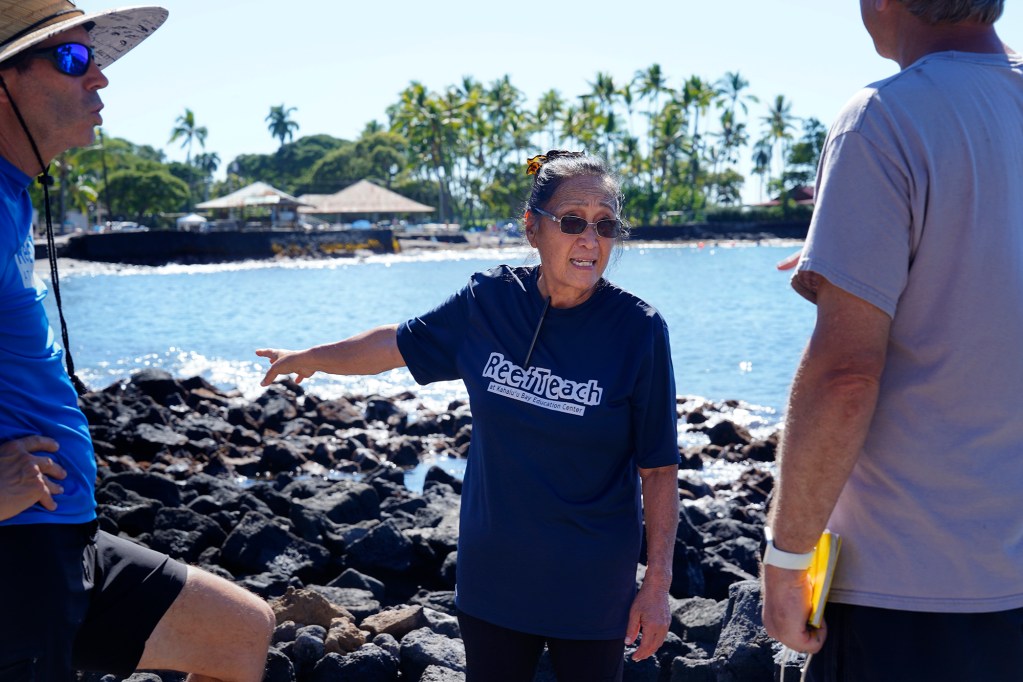
“You look at the bay, it’s beautiful,” Punihaole said. “But if you go into the bay, it’s not.”
She runs a program educating tourists about reef-safe sunscreen, and her center has succeeded at closing the beach during cauliflower coral spawning season each September. However, Punihaole said, those efforts combined won’t bring back a healthy reef without cleaner water.
“We need to remove these stressors,” she said.
Pulverizing Waste To Reduce Footprint
After several years working with nonprofit partners and University of Hawaiʻi Hilo researchers to study the impact of their effluent on the reefs, Puakō For Reefs hired an engineering firm to analyze potential solutions in the region. It came back in 2019 with a surprisingly doable solution.
Some homes in Puakō have cesspools and others have septic systems, which filter the waste through gravel leach fields. But even in the latter case, large quantities of nitrogen are still filtering to the reefs. So the group went looking for an alternative.
Removing all the wastewater through a sewer system that routes it to a water treatment plant would ensure that it gets filtered better and — ideally — gets used on land, where it is further filtered before it eventually drains into the groundwater or the ocean.

Most sewer systems use gravity to move waste through a series of very large underground pipes — up to 60 inches wide — to a centralized water treatment plant. Those large pipes are impractical in many areas of the Big Island because of how deep they would need to be buried in rocky places, and how costly it is to dig into lava.
The alternative, low pressure system on the table in Puakō would pulverize the waste with a grinder, allow the liquid to rise to the top, and move it through a relatively small, 6-inch pipe. Because of its size, the pipe can be buried much closer to the surface and costs much less to install.
The bulk of the waste can travel through the pipe, and the remaining waste will be held in a small tank that will need to be pumped out every five to eight years, much like a septic tank. Unlike a gravity system, low-pressure systems keep all the waste contained in a way that won’t be impacted by surges of rain or ocean water during king tides and storms that cause flooding.
“They compared a low-pressure system to a gravity-fed system, and not only would the traditional gravity-fed not work, but it was 10 times more expensive than the low pressure system — $120 million versus $12 million,” said Karen Anderson, president of Puakō For Reefs.
Since then, the group has worked to share information with their community, engaged dozens of experts and planned a route for the sewer using public input. In the meantime they have engaged three different county administrations.
Now, they may finally have a funding model that can work and buy-in from the county.
Creating a Model
Low-pressure systems have existed since the 1980s, but Puakō would be an early adopter in Hawaiʻi. The developers behind Kohanaiki, a high-end development surrounding a golf course on the Kona coast, installed a low-pressure system for its 400 planned homes. And members of Puakō For Reefs — and Punaheole’s new spinoff group, Kahaluʻu For Reefs — also met with planners from Vero Beach, a community on the east coast of Florida that installed such a system in 2015.
The Puakō sewer system, which will serve around 200 homes, has a planned route and a destination for the wastewater: the American Water Plant in the neighboring Mauna Lani resort. And Anderson said the group recently had a kickoff meeting with Hawaiʻi County Department of Environmental Management about the design. The group is hoping to wrap up the planning and permitting process by the end of 2027 so they can start construction in 2028.
Meanwhile, the Kahaluʻu group is working with Honolulu-based Limtiaco Consulting Group on a project design for a low-pressure sewer system for between 50 and 70 of the 300 homes that need to be converted in the immediate area. It’s a big step, but Punihaole emphasized that having a design doesn’t guarantee funding.
Indeed, it will cost an estimated $40,000 to connect each home with a cesspool to the sewer system in Puakō. Those with septic systems will pay less because connecting to the sewer will require a smaller modification to their existing systems.
The community group has applied to become a designated Community Facilities District, which would involve having the county create a bond that provides seed funding for the sewer and then pays it back through a special tax paid by the property owners over several decades. That approach could help ensure that lower-income residents don’t get unfairly hit with high upfront fees in an area that is home to both high-end vacation rentals and long-time local residents.
“We want to make sure that everyone can afford the connection for their home,” Anderson said. “Our goal is that it can all be financed through a special revenue bond that can be paid off over 40 years.”
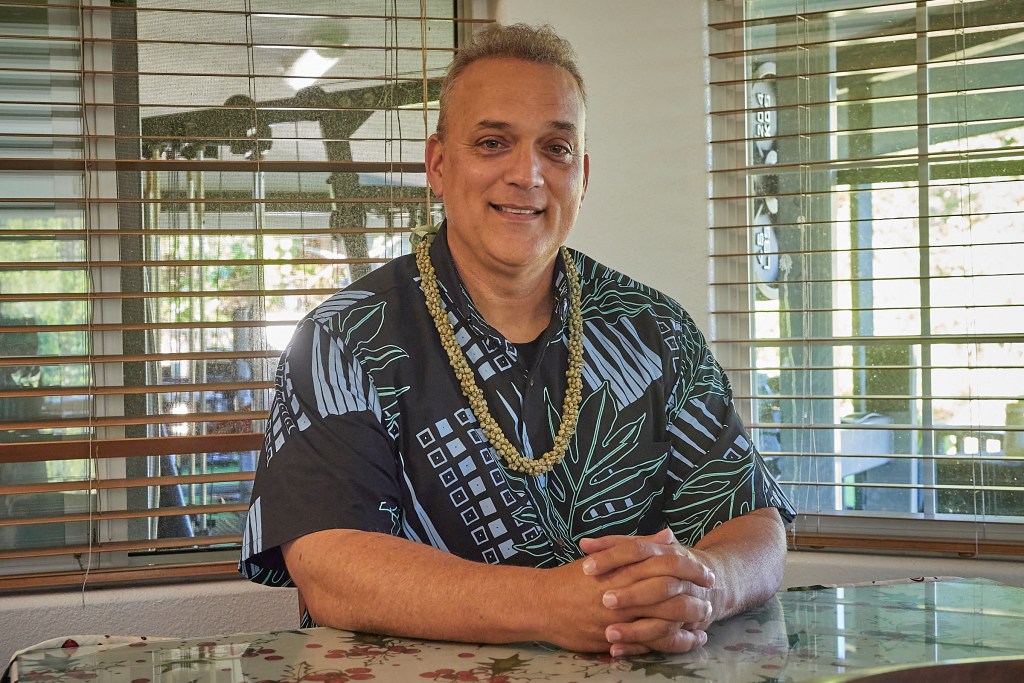
The group also hopes to raise money from local donors and philanthropists who want to see the reef bounce back. If that happens, they said, the ideal would be to roll the funds from one coastal community to another — so that as one project gets paid back, the funds get used to seed the next. Other communities looking toward low-pressure systems include the fishing village of Miloliʻi and a small cluster of houses in Hōnaunau, immediately north of Puʻuhonua o Hōnaunau National Historical Park.
“It’s a model that’s never been tried,” Alameda said, “but I give them credit because anything is better than nothing.”
The county’s departments of finance and environmental management are both working closely with Puakō For Reefs, at Alameda’s request. He also signed an Memorandum of Understanding with the group to move this project forward.
Alameda said he has some concerns about prioritizing one coastal community over others, but he acknowledged that creating a model is valuable and should make it easier for other communities who want to take similar steps — and that can benefit the whole island, not to mention the reefs, which are a vital shared resource.
Alameda also stressed that the homeowners will still be on the hook to pay a portion of the cost.
“At the end of the day, it’s not going to be free to either transfer to a septic system or to connect to a sewer line,” he said. “And everybody wants it to be free. I mean, I would like that for my house too.”
Changing The Industry
Rick Gaffney, a former member of the county’s Environmental Management Commission, started a community working group focused on keeping wastewater out of the ocean. It meets once a month, includes Punihaole and members of Puakō For Reefs and has helped keep the conversation front and center for the county.
Gaffney said he is optimistic about the chain reaction the Puakō group envisions.. He added that while most wastewater projects are executed by one of two or three large companies, Puakō For Reefs is playing a very different numbers game.
“They have reached out to 98 different contractors for pre-bids. The more people who bid, the more likely that you’re going to get a realistic price,” he said.
Gaffney takes that aspect of the effort as a good sign about the future of community-scale sewer development in Hawaiʻi. Working with smaller companies also has the potential to help build the industry — an important piece of the overall cesspool conversion puzzle.

Stewart Coleman, executive director of Wastewater Alternatives and Innovations, sees low-pressure liquid-only sewer systems as vital to keeping high-nutrient wastewater out of the ocean. The systems, he says, can aid in building a circular system for waste, water and nutrients — most of which are currently being wasted — but would do much more good on land.
Smaller systems allow the water to be used locally, because it wouldn’t need to be transported or piped out to other locations.
“If you’re going to go to all that effort to treat water, let’s reuse it and keep it on land,” Coleman said. “And especially in leeward areas across the state, use it to irrigate a green belt, which also serves as a fire break and a sediment break.”
Luke Gianni, a spokesperson for American Water, said the company is not currently using the water from the Mauna Lani plant at the surrounding resorts.
Smaller, decentralized sewers and treatment plants, Coleman added, allow you to turn waste into a resource and keep it in communities where it can be used instead of drinking water.
“That way, you’re keeping it local,” he said, “not spending all that energy and money pumping or transporting it.”
Punihaole is collaborating with scientists at UH Hilo and the Reef Check Foundation, a community science nonprofit, to survey the reef and document the state of the coral and the fish in the bay, “so that we have a true baseline of that area, and as we do the conversion of the cesspools, then we can do another survey,” she said.
At age 75, after decades of studying and nurturing the reef, Punihaole seems convinced that a real turning point is just around the corner. And the fact that so many people are meeting regularly — in Gaffney’s working group — and that the homeowners in Puakō have “taken her under their wing” gives her hope, she said.
“I’ve gone through times when people didn’t want to share information with one another. But I think we’re past that now,” Punihaole said. “We need to create momentum so that all of us together can make a difference.”