Empty Homes Tax: Oʻahu Voters Blocked From Weighing In
The decision may mark the end of a protracted battle over how to handle the island’s thousands of empty homes in the midst of a severe housing crisis.
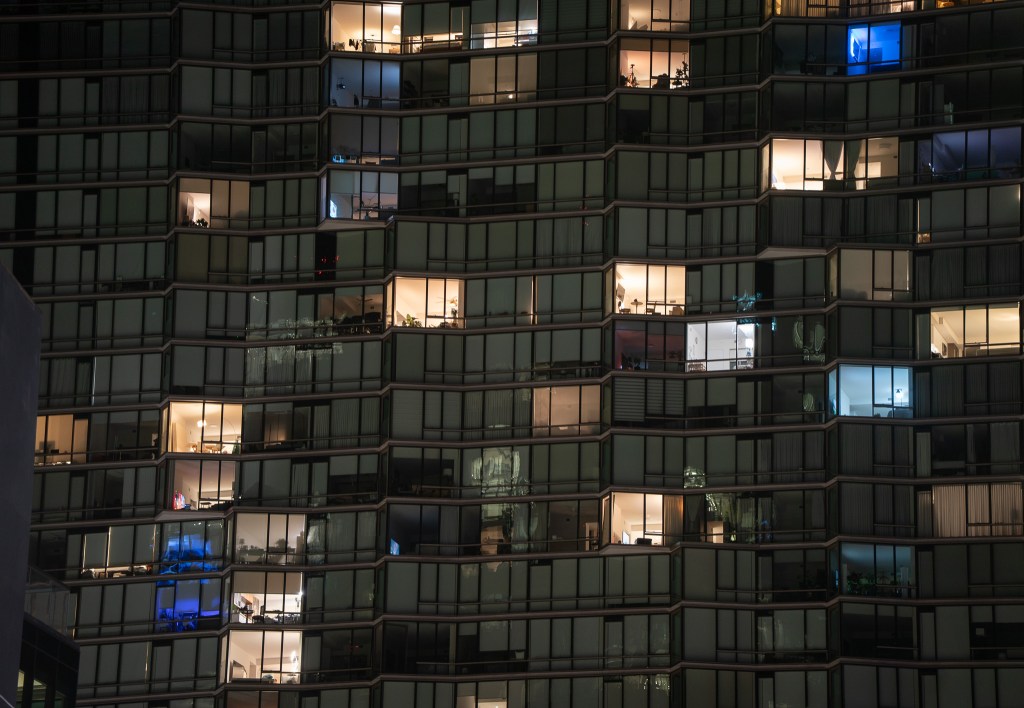
Oʻahu property owners with empty units could help ease the island’s housing crisis by selling or renting their properties, and a proposed empty homes tax could’ve pushed them to do so.
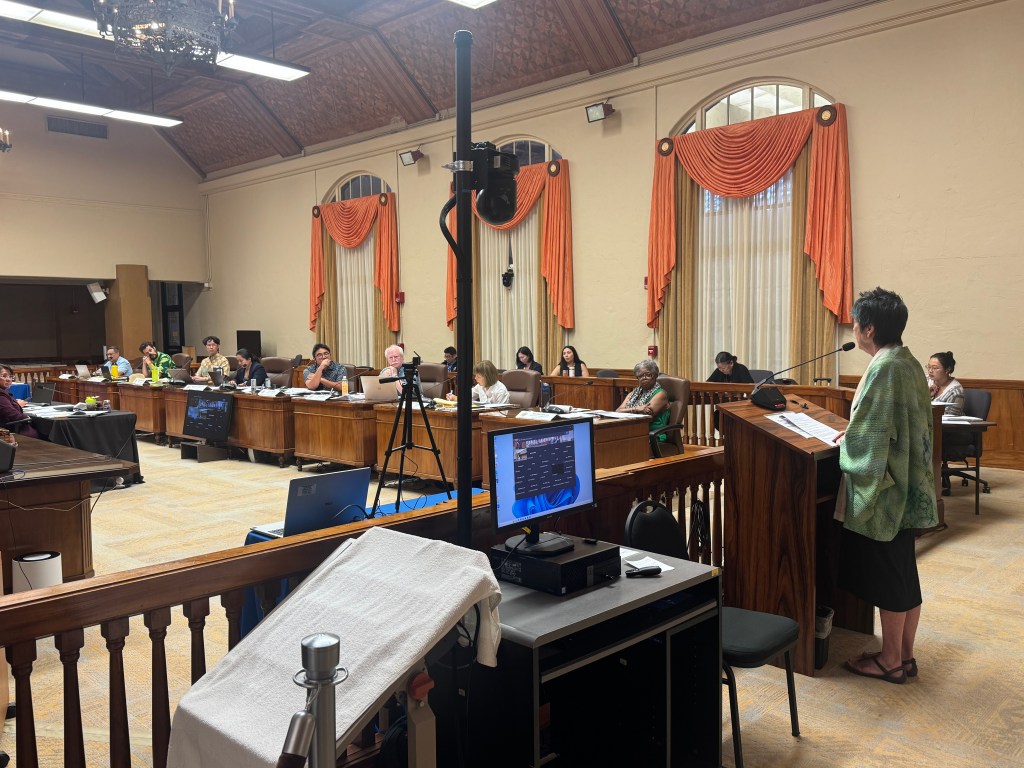
But on Monday, a measure aimed at putting the idea to Honolulu voters in November was shot down by the Honolulu Charter Commission. The group, which assesses proposed changes to the city charter and decides which questions should be printed on ballots, voted the empty homes tax question down. With eight votes in support and five in opposition, the measure was just one vote shy of the supermajority — nine votes — needed to make it to the ballot.
The decision marks the possible death of the proposal, at least for now, unless Honolulu City Council Chair Tommy Waters schedules a meeting this week for the council to vote on it.
The Charter Commission members said the ballot is not an appropriate venue for the proposal.
“My opposition to this proposal has nothing to do with my blindness to the fact that we need solutions for housing,” Commissioner Diane Kawauchi said Monday afternoon before she voted against the proposal. “This is a matter that rests with the City Council in its enactment of an ordinance.”
But the council may have already made up its mind.
City lawmakers have been weighing the highly controversial question for years, culminating in a cliffhanger at the end of 2024 when they decided to postpone a final vote on the bill. Waters has promoted an empty homes tax for years but has been unable to secure enough support on the council and from Mayor Rick Blangiardi’s administration to get it over the finish line. Despite vowing to schedule a July vote for Bill 46, he has not done so, and the bill is set to die on Aug 1.
The charter commission’s vote on Monday was a loss for Ellen Godbey Carson, a retired attorney and longtime supporter of the tax who submitted the charter amendment proposal as part of her Housing Now! coalition.
“I think we’re in a very bad situation regarding our lack of housing,” Carson said after Monday’s vote. “And we don’t have a solution yet … I’m disappointed (the city) hasn’t at least tried to pursue this one.”
The proposal was one of 295 that were initially submitted to the Charter Commission, a volunteer group tasked with whittling the list down to a few proposals that will appear on the ballot during this year’s General Election. All City Council appointees on the commission voted in support of the proposal, while all but two of Mayor Rick Blangiardi’s appointees voted against it.
It’s unclear exactly how many units are empty on Oʻahu, which is part of the argument raised by opponents. The U.S. Census estimates 34,000 homes are vacant, while a more recent consultant study estimates fewer than half of that.
City Opposed New Tax
The Charter Commission split vote on whether to advance the empty homes tax proposal is a microcosm of the controversy that has followed the proposal since its introduction.
Details about how it would be implemented have shifted over the months and years, but the general idea is that properties without a home exemption, which is given to properties that are owner-occupied, would be presumed vacant. Owners would then tell the city whether the unit is, in fact, vacant or whether they qualify for an exemption, which could mean they are undergoing long term medical treatment elsewhere or that a long term tenant is renting the space, for example.
Drafts of Bill 46 varied in how much of the revenue would go towards the city’s Affordable Housing fund, what circumstances would qualify for an exemption and what the exact rate of taxation would be. The proposal at the Charter Commission’s Monday meeting would have set up a broad structure and then left council members and the administration to decide the details.
On one side are supporters who say a higher tax on vacant homes will tamp down overseas investment in Honolulu real estate, which drives up the city’s high cost of housing. Because the city is not in charge of the school system, Honolulu’s current property tax rates are some of the lowest in the nation, making real estate an appealing investment in a place branded as paradise.
Supporters say the tax would encourage owners to put their empty homes back on the market for people to live in, increasing the housing supply on an island that desperately needs it but has little available land for urban sprawl. Those who choose to keep their homes empty would pay higher taxes than owner occupants, and that revenue could go towards city affordable housing efforts.
Opponents say the tax would be too logistically complicated to administer and that local families could be hurt by it, since some families own additional homes that they keep vacant and because others – whose homes would be exempt from the tax – might be confused by the paperwork.
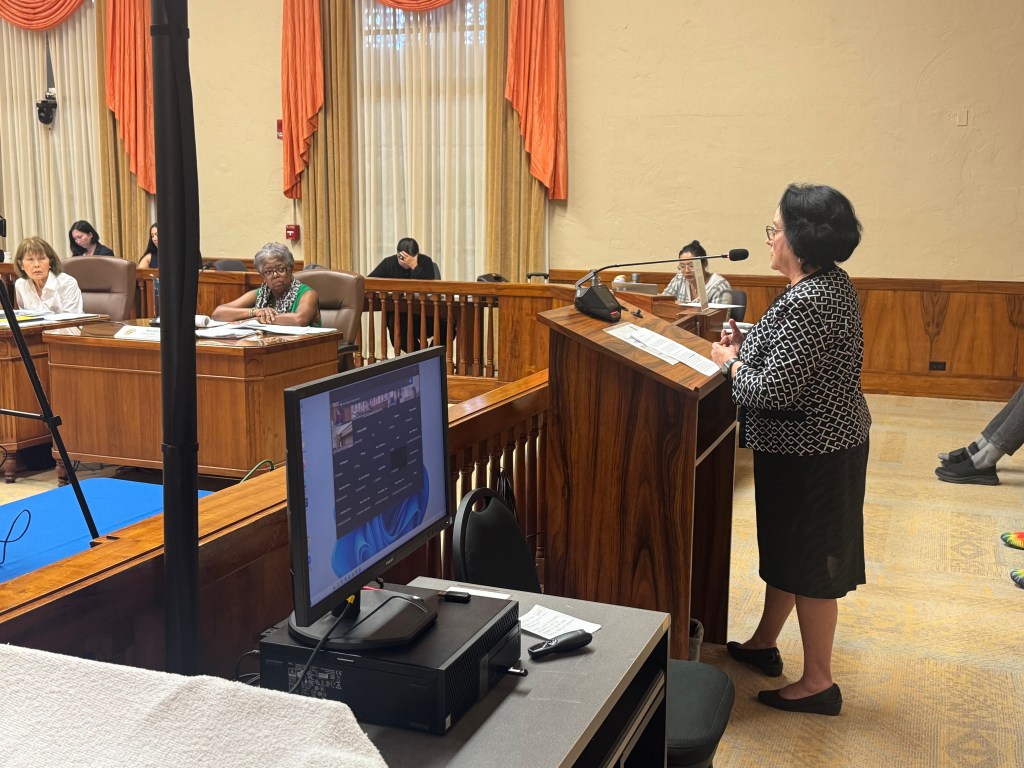
“I think it’s going to cause a lot of pain,” city budget director Andy Kawano told Charter Commission members at a meeting last week. “And we’re going to have to do a lot of cleanup if we don’t start it off right.”
Kawano said kūpuna especially might have trouble filling out the appropriate paperwork, and that they make up half of Oʻahu’s tax base.
“Just working with kūpuna on the phone, we’re going to have a lot of misses,” he told commissioners.
Carson feels there already is societal hurt with the status quo.
“I think we have tens of thousands of residents hurt in major ways,” she said in a recent interview, “many of whom don’t even have a single house – at all – who live and die on our streets.”
Kawano said in an interview that he’s also worried an empty homes tax would have compliance issues.
“People would cheat,” he said.
Kawano said over one hundred thousand homes on Oʻahu are not occupied by their owners, exposing them to new tax liability under an empty homes tax.
Owners of these properties who don’t want to pay the tax would need to prove they are exempt, if for example, they are hosting a long-term renter or are away on military leave. Kawano said it would be difficult to sift through these to see who’s telling the truth.
But empty homes tax supporter Rebecca Soon, part of the unincorporated nonprofit Housing Now! Coalition, said this shouldn’t be a concern.
Soon, who worked in the city’s community services department in Mayor Kirk Caldwell’s administration, explored the possibility of an empty homes tax during her time with the city.
The city’s homeowner exemption is already something that is self-declared, Soon said in an interview, and the department has the ability each year to monitor a small sample of these self-declarations and make sure they’re accurate.
“There’s a similar capacity here,” she said about monitoring compliance for a proposed empty homes tax.
Opponents also raise legal concerns, pointing to a similar tax that passed in San Francisco but was ruled unconstitutional by a judge in late 2024. San Francisco appealed, and a decision is pending.
Carson, a retired attorney who was once president of the Hawaiʻi State Bar Association, said she’s not worried about legal challenges. She said at Monday’s meeting that there are reasonable legal opinions on either side of the issue, and that it’s the job of courts – not the Charter Commission – to make that determination.
A Canceled Study
The city hired the consultant group Ernst & Young to study the feasibility and implementation of an empty homes tax in 2024. That study cost about half a million dollars of federal aid money and was supposed to last one year.
Council members were waiting on its results to inform a bill they were working on, and initial findings presented in April 2025 showed the city could expect between $30 million and $55 million in revenue each year. Estimated administrative costs would be around $5 million each year, the consultant found.
The firm estimated between 640 and 2,000 homes could return to the market over the course of a decade, through sales and new rentals. The exact amount would depend on exemptions and the exact tax rate, which is often proposed in the range of 1% to 3% of a home’s tax-assessed value.
But Kawano quietly canceled the study shortly before it was supposed to end, surprising the bill’s co-introducers, who said they only learned about the cancelation when Civil Beat asked them about it.
Kawano said last year he canceled the study because the bill lacked political support on the council, which was split was 5-4. He also said no council member reached out to ask how the study was going.
On Thursday, he said another reason for canceling the study was that its data collection seemed imprecise. To estimate the number of Oʻahu’s empty homes, Ernst & Young consultants looked at water usage data for individual housing units, which is accurate for single-family homes but practically impossible to determine for multi-family apartment buildings, limiting its scope, he said.
Initial findings – specifically the number of homes that were expected to become occupied as a result of the tax – didn’t seem beneficial enough to continue the study, according to Kawano.
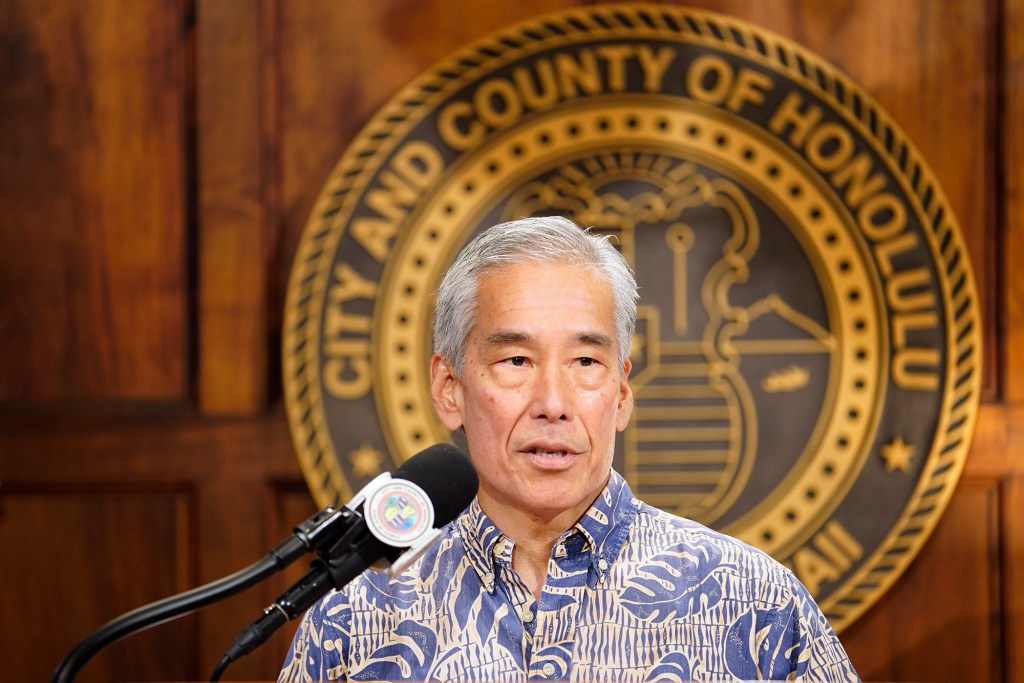
“It wasn’t earth-shattering,” he said, explaining that he didn’t want city workers to devote more time to evaluating the results.
Kawano said Mayor Blangiardi decided to instead focus on other city initiatives such as reforming the Department of Planning and Permitting and land purchases for future developments at the Department of Housing and Land Management.
Some Charter Commission members agreed with Kawano that the tax would be too big a hassle. Others, such as commission Vice Chair Sommerset Yamamoto, a former chief of staff for Waters who supports the proposal, did not.
“The fact of the matter is that this does address the housing crisis,” Yamamoto said at last week’s meeting. “Will there be an administrative burden? Absolutely. There’s an administrative burden to running a city.”
‘I’m Not Going To Let It Die’
Council Chair Tommy Waters has fought for an empty homes tax for most of his time on the City Council. He introduced Bill 9 in 2022, and then, with council member Radiant Cordero, he introduced Bill 46 in 2024, which was substantively similar.
The state estimated Hawaiʻi needs 25,000 additional housing units, Waters said in late 2024 at an empty homes tax press conference. The conference, held outside Honolulu Hale, was attended by supportive students from the University of Hawaiʻi Mānoa who cheered him on.
“We can’t build all those units all at once. We have to be creative,” Waters said. “We have to figure out a way to get people housing. We can build, but we also have to fill – filling means filling these empty homes.”
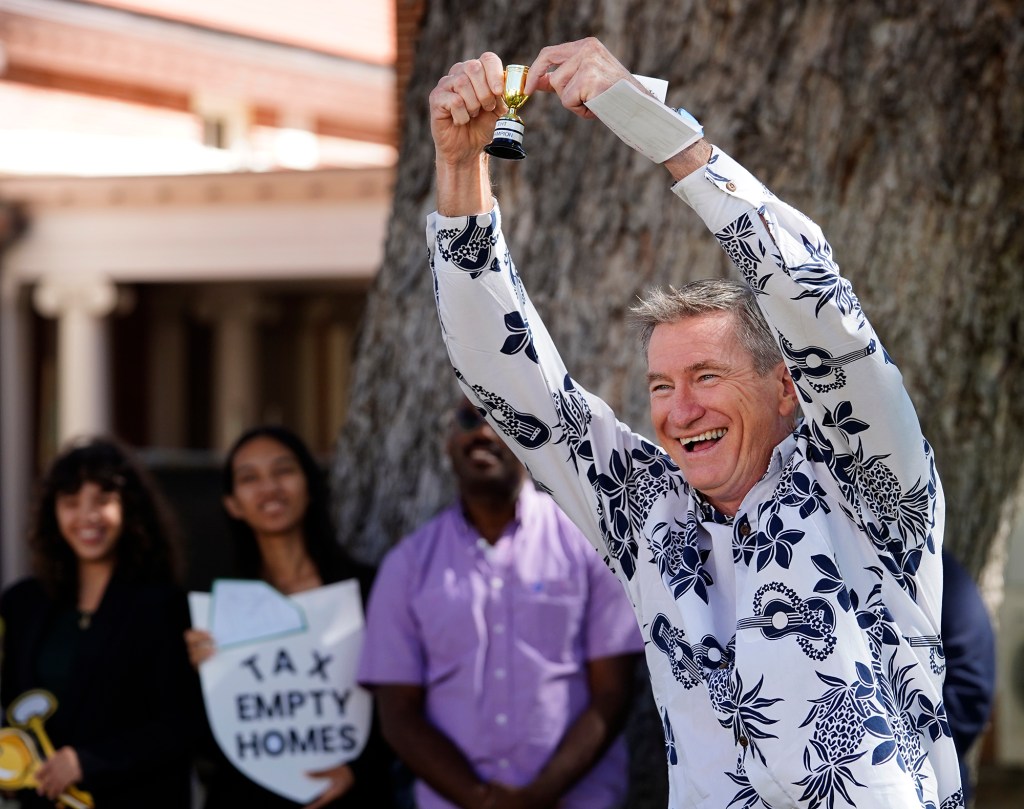
Bill 46 made it to a final round of voting in December 2024. Waters thought he had support from a majority of the council, but then realized council member Calvin Say – who he expected would vote in support – was actually poised to vote against the bill.
Holding a vote on the bill only for it to die would mean losing all progress on it. But another option was to withdraw the bill and hold the final vote at a future meeting, with the idea that there might be more political will by then.
“I didn’t have the votes, so I withdrew it,” Water said in an interview in late May, “hoping that the community who was advocating for it would go out there and get me that fifth vote.”
The community of advocates tried. Eight neighborhood boards passed resolutions supporting an empty homes tax, including Downtown-Chinatown, Makakilo-Kapolei, Ala Moana-Kakaʻako, Pearl City, McCully-Mōʻiliʻili, Makiki-Punchbowl, Mililani Mauka and Kailua.
Waters hoped Kailua’s support could help sway his floor leader council member Esther Kiaʻāina, who has opposed the idea, into becoming the crucial fifth vote. And with limited time until the bill automatically dies on Aug. 1, Waters said in May he would schedule a final vote on it for the July 8 monthly council meeting. He said he had nothing left to lose.
“I’m not going to let it die,” he said.
But when the meeting agenda came out, the empty homes tax bill was nowhere to be found. Waters had decided to not schedule it for a vote after all.
On Thursday, Civil Beat waited for Waters after a committee meeting to ask why he changed his mind. He said he wouldn’t talk about it, then he turned around and walked away.
“Should the Charter Commission advance the Empty Homes Tax concept, it would not be subject to a mayoral veto,” Waters said afterwards in a written statement. “Its future would rest directly with Oʻahu voters, the clearest expression of the public’s will.”
Waters still has the power to schedule a final vote on Bill 46 before it dies. He can call for a special council meeting with six days’ notice, giving him until the end of this week. Contacted Monday late afternoon, Waters and his team did not respond to an email, phone call and text message.