

Hawaiʻi Teachers Take Learning Outside In Summer Workshop
A workshop for Mānoa educators highlighted how schools can incorporate more games and outdoor activities to teach their students about the environment.
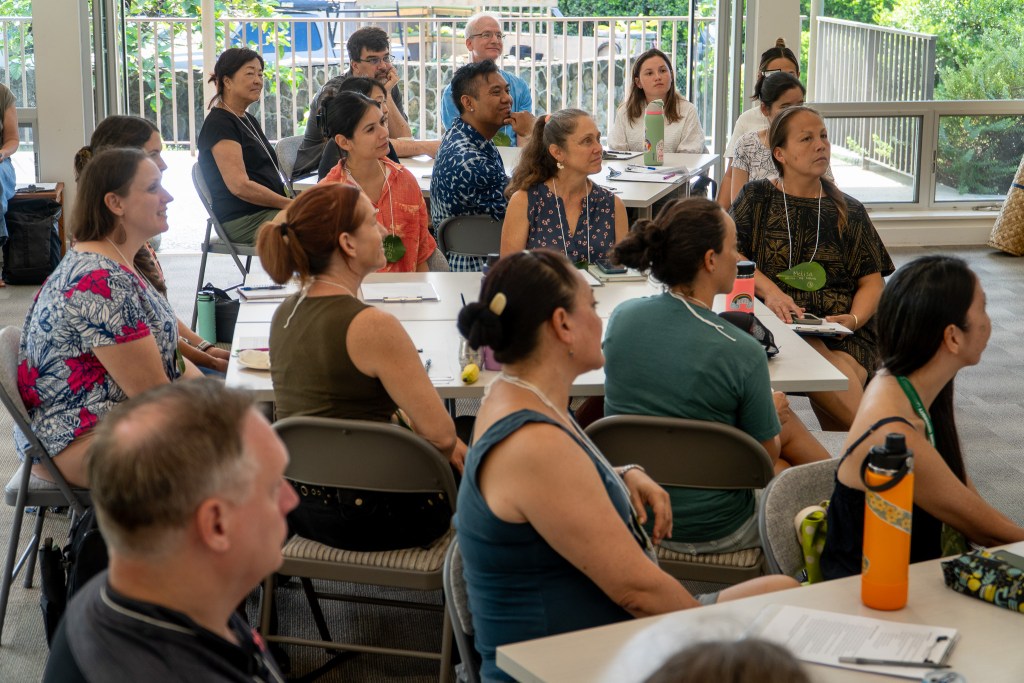
During the school year, Mānoa Heritage Center hosts students of all ages learning about native plants, Hawaiian culture and history. But on a recent summer morning, teachers donned name tags, explored the gardens and diligently took notes as they became students for the day.
On Thursday, 20 educators gathered for a professional development workshop, spending the morning learning new games they could use to teach their students about native and invasive plants, climate change and natural resources. The workshop was hosted by Trees for Honolulu’s Future, Mānoa Heritage Center and Hanafuda Hawaiʻi, an organization dedicated to teaching a Japanese card game to local communities.
Mālama Mānoa, a nonprofit dedicated to preserving the heritage of Mānoa Valley, covered the costs of hosting the workshop and providing learning materials to teachers. Teachers received a $100 stipend courtesy of Mānoa Heritage Center.
The morning started with a lively game of Kumulāʻau – a card game named after the Hawaiian word for tree. The game requires participants to collect the right combination of cards representing the resources they need to grow trees like ʻulu or kukui.
Some cards, pulled at random, provided valuable nutrients, like water or soil. Others described worst case scenarios and natural disasters, like wildfires, that could set players back and hinder their trees’ growth.
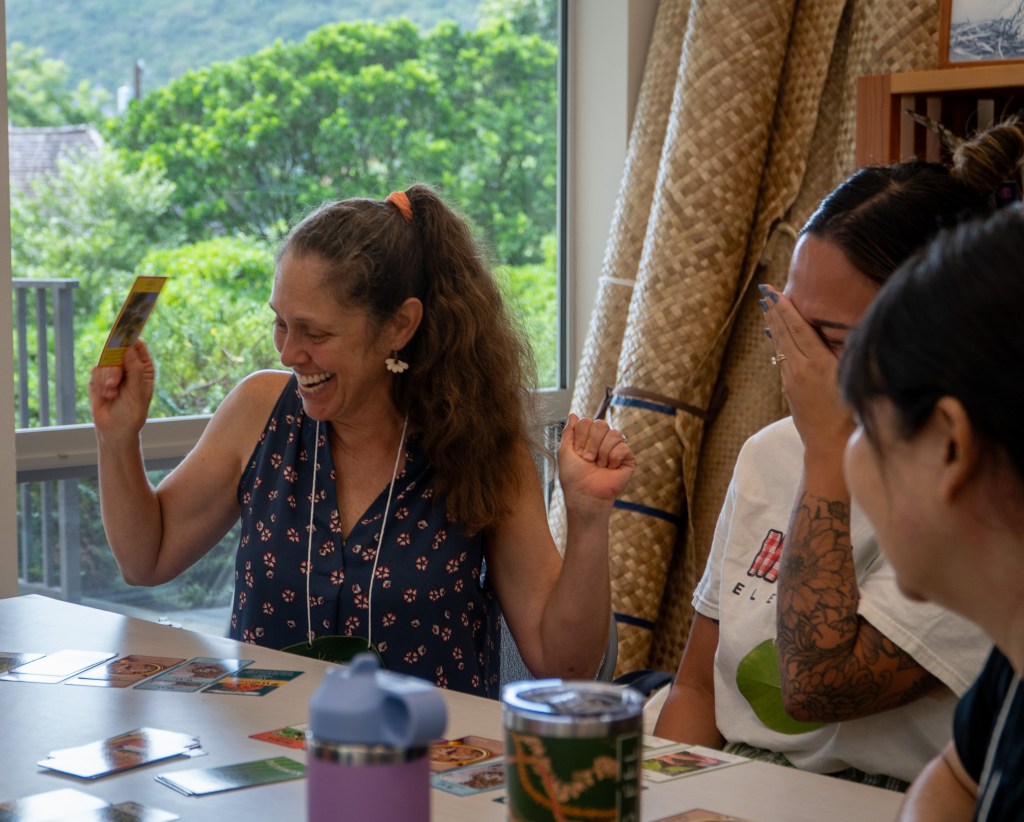
“I’m learning that it’s hard to grow a tree!” one teacher said with a laugh as she drew a card informing her that she planted a tree too close to a building, leaving it with less sun to grow.
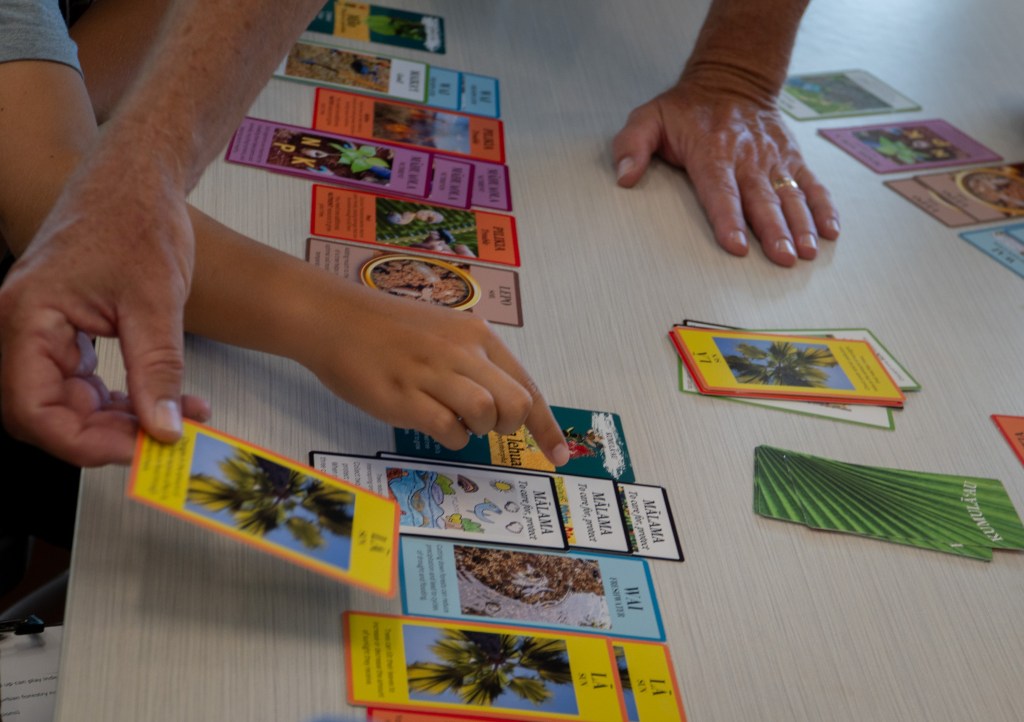
The game moves quickly and typically takes five to 10 minutes, but it’s meant to spark deeper conversations among students, said Daniel Dinell, president of Trees for Honolulu’s Future. For example, he told teachers, students might reflect on how the coconut rhinoceros beetle is threatening native plants or practice using the Hawaiian vocabulary printed on the cards – like wai for water or lā for sun.
Game time continued as participants rotated to another station, where teachers scattered brightly colored Hanafuda cards across the table. The cards included illustrations of both native and invasive plants and animals to teach participants about Hawaiʻi’s ecosystem. For the next 30 minutes, teachers diligently worked to match similar cards, laughing as they accumulated points during the game and marveled at the detailed illustrations.
Phillippe Fernandez-Brennan, a teacher at Hālau Ku Mana Public Charter School, said he’s excited to introduce the games into his classroom. It’s important for students to see native plants and the Hawaiian language represented in card games – and it’s a valuable opportunity to get kids off their phones so they can interact with one another, he said.
“There’s joy in learning,” he said.
Mānoa Elementary School teacher Danielle Montano said she takes her fourth grade students to Mānoa Heritage Center every year to learn about native plants and invasive species. But attending the workshop has inspired her to incorporate new games in her lessons for the upcoming school year, she said.
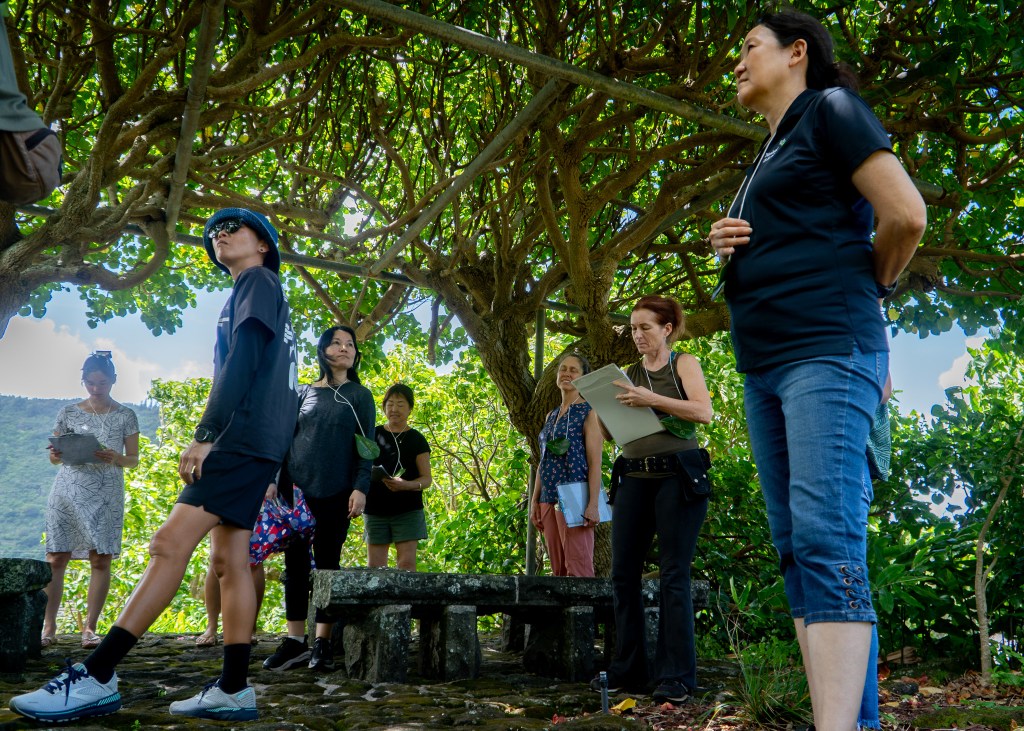
For example, Montano said, she’s interested in using parts of the kukui tree as a natural dye for some of her students’ projects after taking a tour of the center’s garden and learning more about the use of different plants. Students are eager to learn more about the environment and native plants, especially those that are growing in their own communities, she said.
“They know what’s in their area,” she said. “It’s not just something far out of reach.”



Civil Beat’s education reporting is supported by a grant from Chamberlin Family Philanthropy.


