Maui Council Candidates Haul In Campaign Cash Ahead Of Primary
Money has flowed strongest to a progressive candidate who is running to replace a member of the council’s conservative-leaning majority.
As primary ballots hit mailboxes this week, Maui County Council candidates are out campaigning in force, waving signs, taking out advertisements and doing what they can to secure a top-two finish in their district to advance to the November general election.
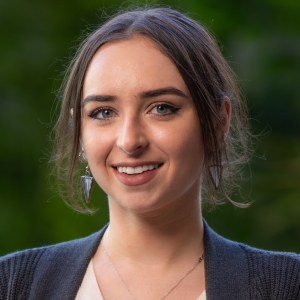
Bobby Pahia, a first-time candidate and prominent Native Hawaiian kalo farmer who is running to represent Upcountry, led the money race during the first half of this year among those who reported their latest contributions with the state Campaign Spending Commission.
He raked in more than $55,000, including a $10,000 loan to himself, between Jan. 1 and June 30, far more than any of the other council candidates appearing on the Aug. 8 primary ballot. He spent nearly $20,100 during the same period and had about $37,000 cash on hand at the end of last month, campaign finance records show.
His challengers — Hana tour bus driver Derrick Cabiles, business owner Jon Yokouchi and real estate agent John Guard — have pulled together only a fraction of that. Cabiles raised $7,500, including $5,000 he loaned himself, and spent just under $4,000, leaving him with roughly $3,550 cash on hand. Yokouchi raised and spent $2,614 of his own funds, campaign finance records show. Guard indicated that his contributions and expenditures totaled under $1,000, so was not required to disclose his campaign finances.

Pahia is running to represent a seat which has for 10 years been represented by Councilwoman Yuki Lei Sugimura, who is running for mayor this election. She’s part of the five-member, conservative-leaning majority that includes council members Alice Lee, Kauanoe Batangan, Nohelani U‘u-Hodgins and Tom Cook. If elected, Pahia would likely join the more progressive voting bloc, currently composed of Keani Rawlins-Fernandez, Gabe Johnson, Tamara Paltin and Shane Sinenci.
The campaign war chest that Pahia has managed to amass ahead of the primary could be a sign that progressive contributors see his candidacy as critical to their efforts to redefine the council’s power dynamic, according to Colin Moore, a political analyst at the University of Hawai‘i Mānoa.
“There’s a lot at stake, so it makes sense for both sides to invest in these campaigns,” Moore said. “This election will decide whether the moderates or the progressives control the council. It’s always a very narrow majority, so it’s worth it for both sides to make big contributions.”

Pahia drew support from a wide range of sources, including members of the progressive faction on the council — $312 from West Maui council member Paltin and $1,000 from Molokaʻi council member Keani Rawlins-Fernandez — as well as current and former progressive members of the Legislature: $208 from former state Sen. Gary Hooser and $2,000 from state Rep. Kim Coco Iwamoto.
His support also included labor groups such as the International Longshore and Warehouse Union Local 142 and United Food & Commercial Workers Local 480 — both of which gave $2,000, the maximum contribution allowed under state law — and members of Mayor Richard Bissen’s administration, receiving $156 from county spokesperson Laksmi Abraham and $484 from East Maui Water Authority Director Gina Young.
In the coming years, council members are likely to address high stakes and controversial issues such as the ongoing recovery of Lahaina, implementation of Bissen’s plan to phase out thousands of short-term vacation rentals, the approval of new housing developments and the effort to reclaim public control of water rights, Moore said.
“It’s just a very polarized political environment,” Moore said. “So there is a lot of money because there’s a lot of issues that people feel very passionately about.”

Candidates running for the Central Maui seat, which has long been held by current council chair Alice Lee, have also raised large amounts of money.
Alan Lloyd, an established progressive community advocate, pulled together $29,420, including about $18,000 of his own money, and spent $7,237 during the first half of this year. Marvin Moniz, the longtime airports manager for the state Department of Transportation and Lee’s pick to replace her, raised $26,500 and spent $19,148, campaign finance records show.
Arborist and pastor Randy Konohia reported receipts of $12,070, including $5,371 of his own funds, and expenditures of just under $780. Ashley Awakea Lindsey, who has experience in planning and development, raised about $4,377 and spent just under $1,380. Environmental lawyer James Forrest pulled together $3,600 and spent $753, according to campaign finance records.
Moniz, who received the most money in contributions from outside sources, received the maximum amounts from ILWU Local 142, the Plumbers & Pipefitters PAC Fund and the Hawaiʻi Realtors PAC. Other contributions between $1,000 and $2,000 included: Jim Falk, the prominent local businessman and car dealership owner; Maui Skydiving; Terrance Gomes, the owner of frequent county contractor T.J. Gomes Trucking Co.; David Ward, president of development company Frampton and Ward Land Company; and Alexander Fergus, the owner of the real estate investment and development firm Fergus & Company.
Council member Kauanoe Batangan —who was appointed to fill the Kahului seat after the death of former council member Tasha Kama — has raised $22,500 for his first council campaign and spent $9,900, according to campaign finance records. Carol Lee Kamekona, who lost to Kama by 9 percentage points in 2024, raised about $2,800 and spent $2,200. Jason Ababan, the third challenger in the race, has raised $500 and spent $343, campaign disclosures show.
Candidates such as Kelly King and Cook for South Maui, Paltin and Mark Tillman for West Maui, and U’u-Hodgins and Stevie Chung for Makawau-Pā‘ia, automatically advance to the general election since they’re the only two candidates in their district’s races. They also didn’t have to report their campaign contributions through June 30 as a result; their next filling deadline is Oct. 1.
Moore said he did not expect fundraising to slow down after the primary election. There are many well-resourced groups and individuals on both sides who are extremely interested in the outcome of council elections.
“This is a lot of money for a council race, but $55,000 may not be all that much money in the grand scheme of things,” he said. “If an investment like this can help potentially win your side the majority for the next two years, that’s worthwhile.”
Learn more about the candidates in Civil Beat’s Candidate Q&As here.