This Hawaiian Waterbird Is Making A Comeback. Should It Still Be Endangered?
Most agree efforts to save the aeʻo have succeeded so far, but some worry about lifting its ‘endangered’ status in a Trump era with looser conservation rules.
Federal wildlife officials have eased protections for Hawaiʻi’s feisty yet vulnerable native stilt bird, the aeʻo, after a promising, decades-long effort helped rescue it from the edge of extinction. But some say the feds are moving too fast.
The U.S. Fish and Wildlife Service earlier this month changed the aeʻo’s official status from endangered to the less-severe threatened. About a century ago, overhunting and depleted coastal wetlands left Hawaiʻi with only 200 or so aeʻo stilts.
The bird, one of a handful of native waterbird species remaining in the islands, was listed as endangered in 1970. Since then, conservation groups and researchers have worked to restore core wetlands for the aeʻo to nest in and protect them from predators such as rats, cats, mongoose and other birds.
In recent years, researchers have estimated the aeʻo’s numbers have increased nearly 10-fold — now hovering near 2,000.
“They’re really beautiful, really adorable birds. And they’re feisty, you know?” said Melissa Price, a University of Hawaiʻi associate professor who helped analyze the aeʻo’s population trends. “If you get too close, they’ll dive-bomb you protecting the nests. They’re a lot of fun to get to know.”
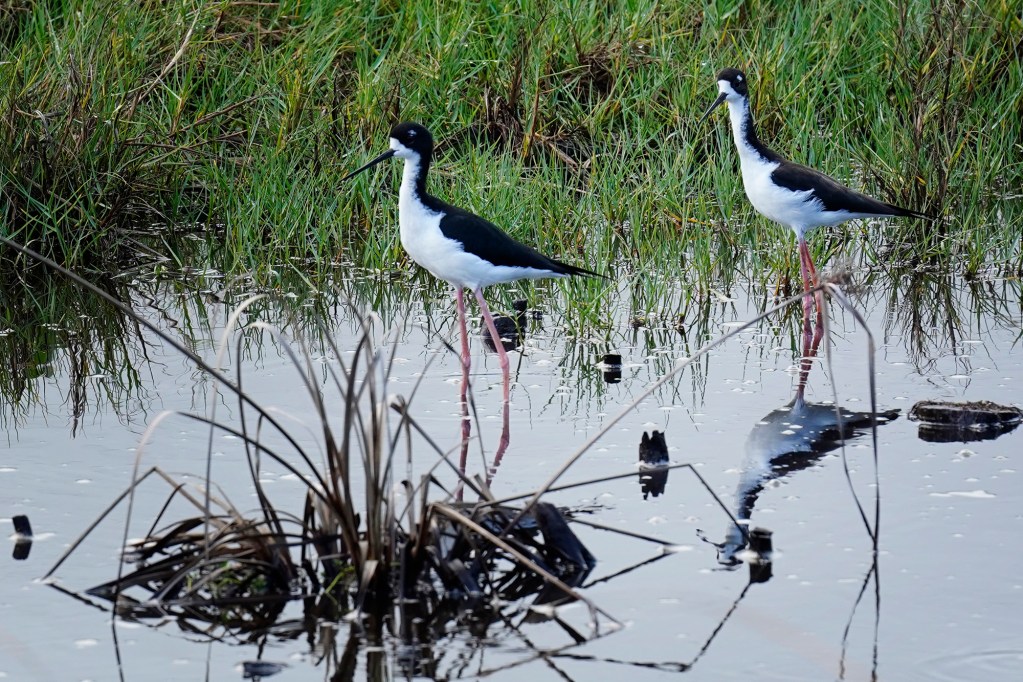
The aeʻo’s rebound so far offers a rare ray of hope, Price and others say, in an island chain that’s come to be known as the endangered species capital of the world.
Hawaiʻi still has nearly 500 plant and animal species on the Endangered Species Act, with many in clear decline. Price said more species could be added to the list but researchers often don’t have the time and resources to pursue their inclusion.
She and others could only think of two other local native species besides the aeʻo – the nēnē, or Hawaiian goose and ʻio, or Hawaiian hawk – to have their endangered status either improved or removed entirely in recent years.
Jonee Peters, executive director of the prominent Conservation Council for Hawaiʻi, is encouraged by the aeʻo’s success so far. The population growth, she said, shows that the system for protection set up under the Endangered Species Act is working.
Still, her group worries that the federal government acted prematurely in upgrading the aeʻo to threatened. It still faces significant threats from climate change, habitat loss and invasive predators, she said, that warrant preserving the stronger protections.
The council and other conservationists, she added, also worry about the federal government’s less stringent rules under President Donald Trump’s administration to safeguard newly designated threatened species such as the aeʻo. She pointed to the Fish and Wildlife Service’s recent decision to end a long-standing rule that gave all species newly upgraded to threatened the same general protections as endangered ones.
In a press release this month, the Fish and Wildlife Service called that blanket rule burdensome and “incorrect” to apply, but Peters said it was needed to help keep threatened species from slipping back into the endangered status.
Under Trump, federal officials also must now consider the economic impacts of keeping land off-limits to development for endangered species habitats.
Price supports the aeʻo’s designation change and while she said that pro-development policy change could do serious harm to other endangered species in Hawaiʻi, she didn’t think it would affect the aeʻo under its new threatened status.
Everyone Gets Along
The aeʻo’s numbers shrank dramatically early last century largely because the islands’ streams were diverted for industrial agriculture, draining much of the birds’ coastal wetland habitat.
Further, loʻi patches the birds used for nesting disappeared when so much of the Native Hawaiian population, which had tended those traditional farming areas, perished after Western contact and exposure to disease.
Today, Price said, the birds have shown a knack for coexisting with the farmers and community groups that work to restore loʻi patches and other agricultural wetlands across Hawaiʻi.
Sometimes, the birds follow behind workers as they pull weeds and fast-growing invasive grasses out of the wet soil, kicking up insects for them to eat. Price said some recent studies suggest the aeʻo are more comfortable hanging around the regular loʻi workers than other visitors who stop by.
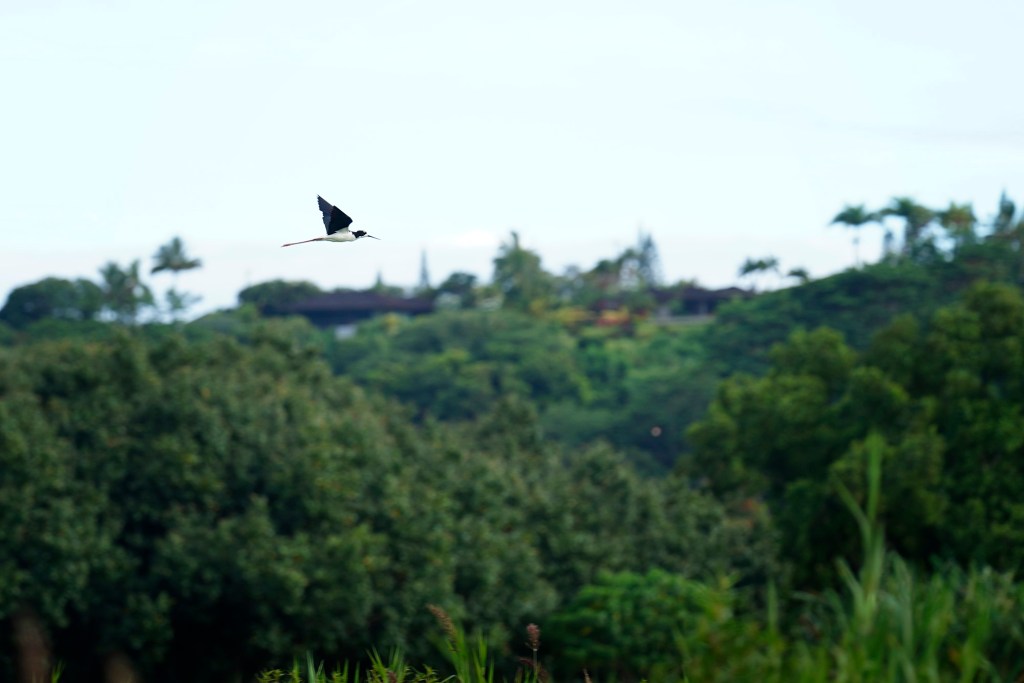
Easing the aeʻo’s endangered status, she added, lifts restrictions that can hamper those farmers and other groups from managing the loʻi patches and fields whenever the birds are nesting there.
“I actually see the downlisting as a good thing,” she said, “because it does provide that flexibility where they don’t have to be as stressed about activities potentially harming the birds.”
Under endangered status, those farmers and groups “might not be allowed to go in and pull weeds if a stilt chooses to nest in the middle of the loʻi,” she added. “And so we’ve had to spend a lot of time demonstrating that no – they can coexist just fine.”
The aeʻo, Price said, will also continue to benefit from core protected wetland habitats managed on public lands that aren’t affected by the Trump rule changes. They include the Hanalei National Wildlife Refuge on Kauaʻi; the James Campbell National Wildlife Refuge, plus the Hāmākua and Kawainui marshes on Oʻahu; and the Kanahā Pond State Wildlife Sanctuary on Maui.
A recent study led by Eben Paxton of the U.S. Geological Survey’s Pacific Islands Ecosystem Research Center found the aeʻo population averaging as high as 1,932 birds, just shy of 2,000.
Meanwhile, a federal recovery plan for the aeʻo and several other endangered waterbirds recommended the Hawaiian stilt be upgraded to threatened once it showed a “stable or increasing” population that didn’t dip below 2,000 individuals, among other criteria.
However, the plan also offers the flexibility of “an alternative target” other than 2,000 based on an “updated population viability analysis.” The plan also calls for all the birds’ core wetland habitats and at least half of its smaller, supporting wetland sites to be protected from development and other threats.
Peters said the Conservation Council felt the government’s move was premature because the aeʻo had not reached all of the benchmarks laid out in that plan, although she didn’t specify which ones.
Racing Against Time
A key factor in the aeʻo’s outstanding success, Price said, is that it’s more prolific and flexible than some other local, vulnerable bird species. The aeʻo typically takes about two years to reach breeding age. It produces four eggs in a nest per year, Price said, and if the nest fails, it’ll start a new one.
Other threatened birds such as the Newell’s shearwater, take closer to five or six years to reach their breeding maturity.
When the Fish and Wildlife Service removed the ʻio from the endangered list, it cited stable population counts for the hawk over a 30-year period. However, both Price and Peters questioned whether the service had sufficient information to remove the hawk.
Five years ago, nine other Hawaiʻi species were removed from the endangered species list when they were declared extinct, including eight forest bird species and one plant.
“For the waterbirds, it’s straightforward. You’ve got to restore habitat and control the predators.”
Melissa Price, University of Hawaiʻi associate professor
The aeʻo is among four native waterbird species left in Hawaiʻi that depend on wetlands for survival, researchers say, along with the kōloa maoli, or Hawaiian duck, the ʻalae keʻokeʻo, or Hawaiian coot, and the ʻalae ʻula, or Hawaiian gallinule.
All four remain on the federal endangered list.
“For the waterbirds, it’s straightforward. You’ve got to restore habitat and control the predators,” Price said. “If you do those two things, you can save the waterbirds.” For other endangered Hawaiʻi species, she added, the steps to their survival are often more complicated.
“I don’t want to act like this is the only story of hope,” she said of the aeʻo. “There are pathways forward for all of our species, but it’s going to take investment and community support to get all of it done.”