

Want To Plant A Community Garden in Honolulu? Get Ready To Wait A Decade
Waitlists are growing for Oʻahu’s community garden program as residents seek green spaces for food, fun and friends.
If you want to grow your own food on a 12-by-15-foot plot at Ala Wai Community Garden, get ready to wait about 25 years. The line now stands 294 people deep, according to City and County of Honolulu data, making it the longest waiting list for the island’s 10 community gardens.
For five others, it’s not much better, with a more than a decade-long wait, the data shows. Demand for community garden space on Oʻahu appears to be as high as ever. More than 1,200 gardening plots are filled by paying hobbyists wanting to put their green thumbs to work, socialize and subsidize their monthly grocery bills.
The county is edging closer to opening a new community garden at Asing Community Park in ʻEwa Beach, a first for Oʻahu’s Westside. But for most of the others, the plots are hard to come by.
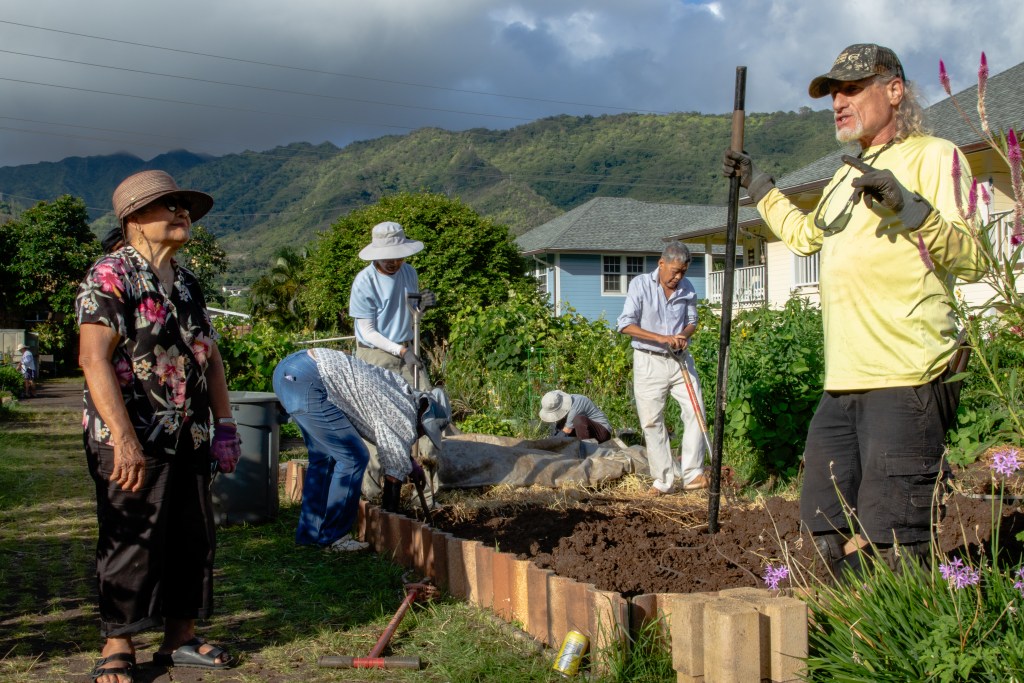
The county has run the Honolulu Recreational Community Gardening Program for more than 50 years, starting with plots at Makiki District Park and growing to 10 gardens, predominantly in urban Honolulu. Residents grow everything from bittermelons to tomatoes, flowers and curry leaves on their plots, adorning them with signs, statues and keeping them under lock and key.
Sue Harada’s 10-by-20-foot plot at Mānoa Community Garden is one of 92. She’s been gardening there since at least as far back as 1999, though she is not entirely certain.
People share seeds, water each other’s gardens and help weed as part of a community effort. And that’s not just on the community work days, a compulsory facet of membership.

“We’ve had so many people come and go, all nice people.” Harada said. “That’s why I never left his place… Everyone helps each other out.”
A majority of gardens are kept as a hobby, according to a 2025 survey of approximately 30% of the community gardening population. More than 40% of the 398 respondents were 65 or older, and slightly more gardeners are women.
A majority of the island’s approximately 1,500 community gardeners are cultivating plants as a hobby, while many are also growing food for themselves to eat, according to a 2025 county survey. For the county, the gardens help foster a greater feeling of community.
That’s according to several county studies conducted in recent years, which have illustrated that while community gardens are not a cure-all for food insecurity, they support public wellbeing.
“It’s not the calories produced,” said food systems planner Hunter Heaivilin. “It’s the connections.”
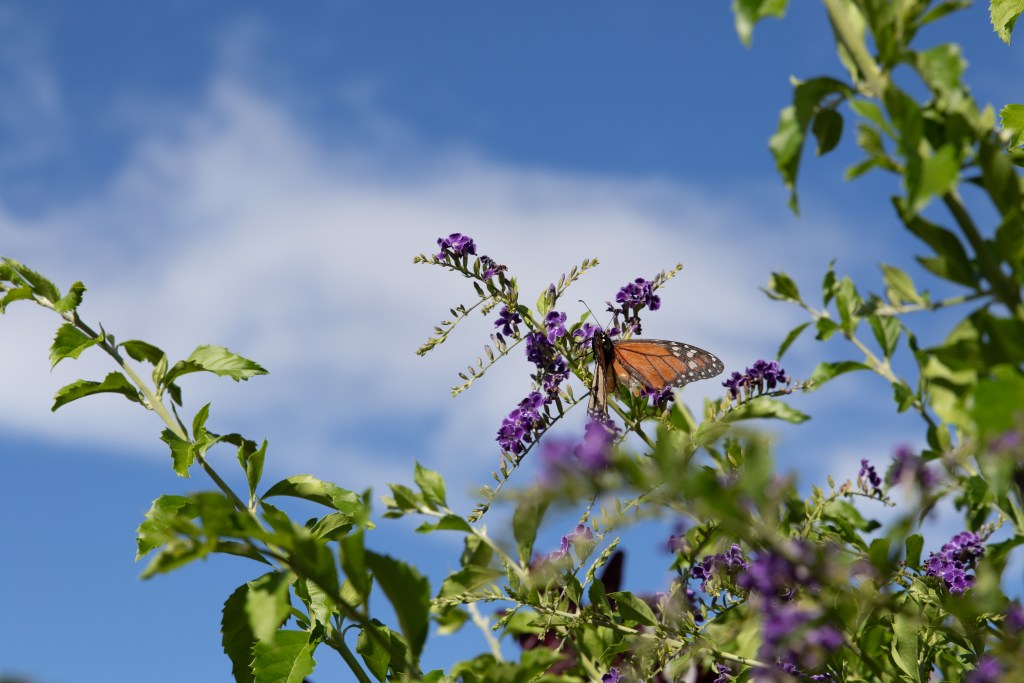
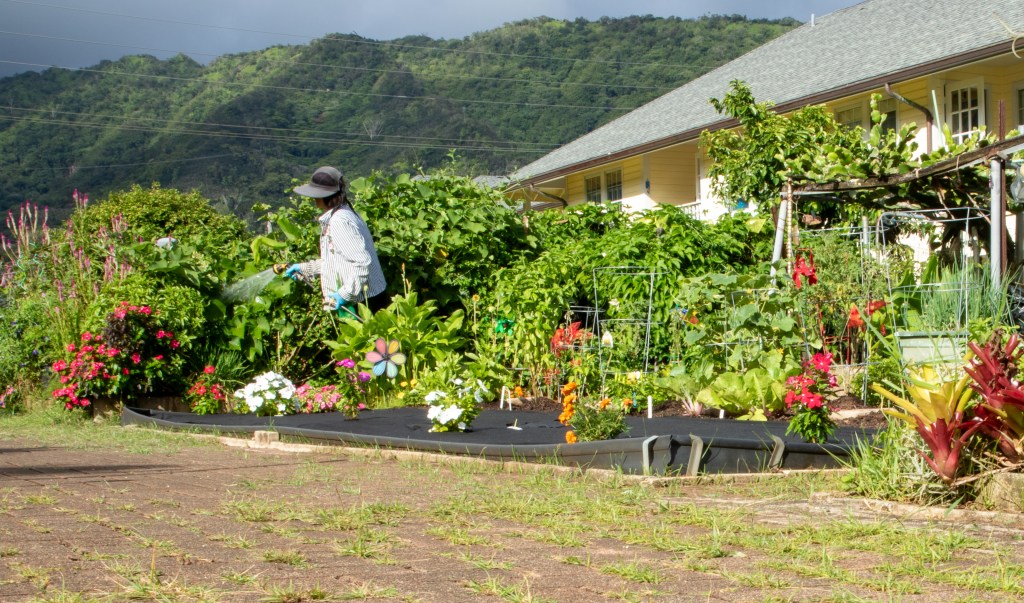
At the Mānoa garden, community members grow for fun, food and friends. The garden has six new members this year from its 167-strong waitlist, Mānoa garden board vice president Craig Ball said.
The garden board runs twice-weekly community work days, where gardeners help each other and tend common spaces. That means dealing with the “deep-rooted issues,” Ball said, including the grass growing from the brick paths. On Tuesday, half-a-dozen gardeners prepared a fallow plot for a new community member.
“It’s been marvelous,” Ball said.
Making Space
Honolulu’s Department of Parks and Recreation announced in November that it would build a new community garden in ʻEwa Beach at Asing Community Park. The county allocated $500,000 towards the effort this month.
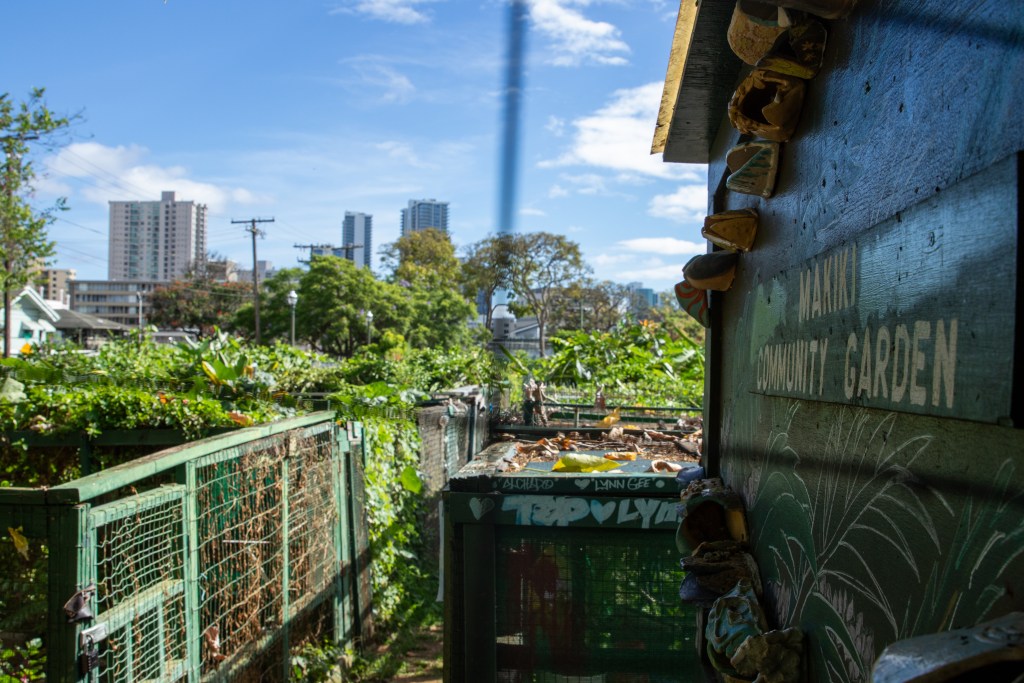

It will be Leeward Oʻahu’s first-ever county community garden, with up to 60 100-square-foot plots and will take up approximately 10,000 square feet of the park.
The county has seen the demand increase for community gardening space. That includes almost 150 garden plots across seven affordable housing developments. Officials have also eased longheld restrictions on publicly planted food trees, including certain species of fruit trees in recent planting efforts along the Skyline railway stations. The county also revised its rules and regulations for community gardens last year.
But the county hasn’t added a community garden since the 1990s, so the ʻEwa project feels new, Community Gardens Project Manager Anna Mines said.

Community garden sites were previously built in response to communities’ demand, leaving many communities outside urban Honolulu underserved.
This time, the county used geospatial data analysis to assess where would be best for the new garden, followed by months of engaging the community to see if it would be a good fit.
“Asing consistently was the best because it does have all these park attributes – it’s large enough, it has bathrooms, it has parking,” Mines said. “What’s even better is the parks staff out there are really enthusiastic about it.”
“Hawai‘i Grown” is funded in part by grants from the Stupski Foundation, Ulupono Fund at the Hawai‘i Community Foundation and the Frost Family Foundation.”Data Dive” is supported in part by the Will J. Reid Foundation.

