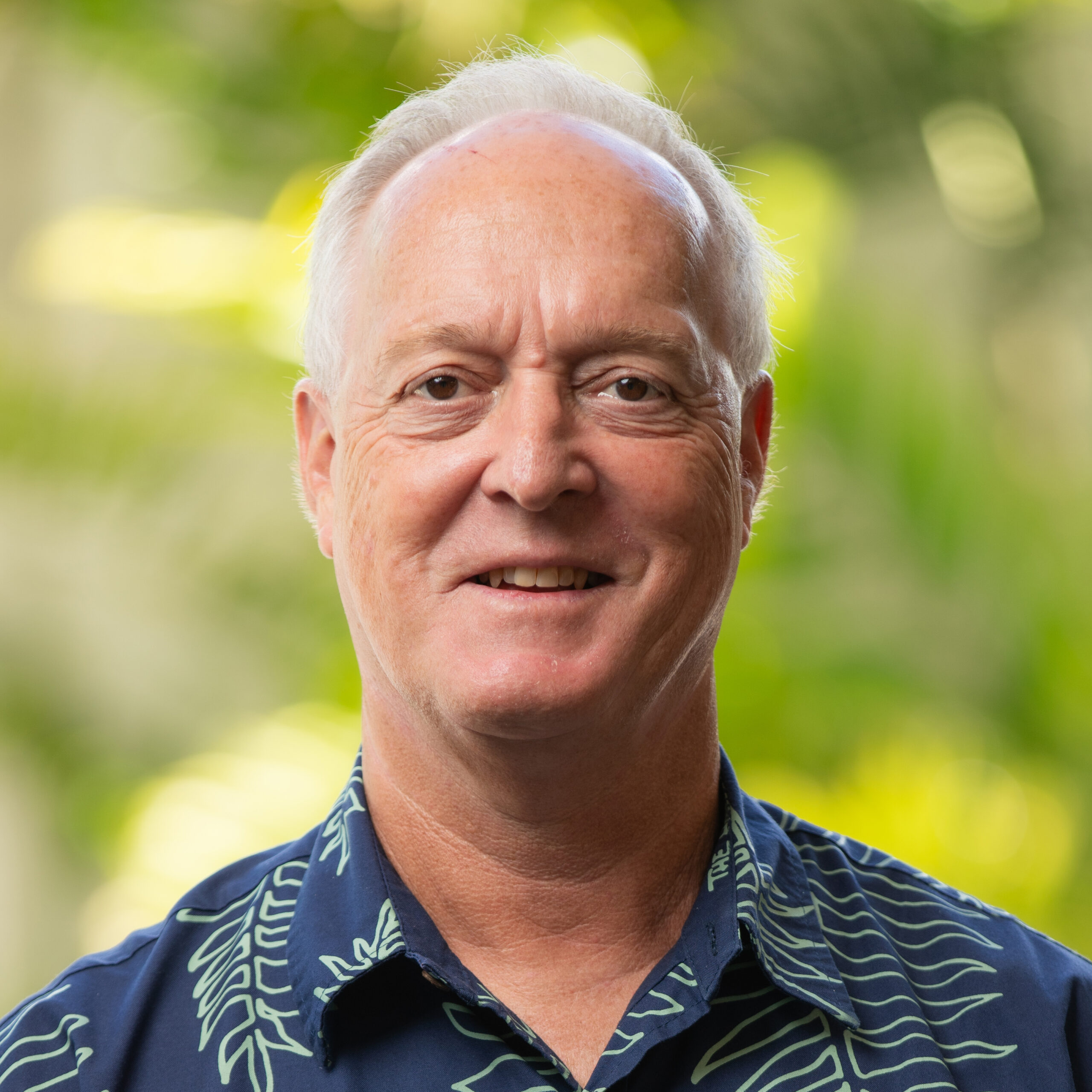
Why Hawaiʻi Gov. Josh Green Is Getting A Free Ride In This Year’s Primary
The three little-known Democrats running against Green as he seeks a second term have not reported raising or spending any money on the race.
The Democratic gubernatorial primary in Hawaiʻi is normally a messy political battleground with more than one viable candidate because it almost always decides who will be governor.
But this year is different. This election marks the first time in decades a Democrat was so formidable — or so lucky — that he could breeze through the gubernatorial primary with only token opposition.
Most people have never heard of the three Democrats running against Gov. Josh Green this year, and it appears none of his primary opponents has the political heft or the money necessary to pose a serious challenge to the governor. None of the three reported raising or spending any money on the race as of June 30, while Green has raised nearly $3.5 million.
“What I believe is I told people what we intended to do, and I did my very best to do it,” Green told Civil Beat in an interview. “We said we’d go after housing solutions and affordability and homeless solutions, and we stayed very focused on that.”
Green also cited his administration’s response to two major crises during his time as governor, which were the deadly Lahaina wildfire in 2023 and flooding from the Kona low storms in March.
“We were very present and I think pretty competent and compassionate in our response,” he said, “and we heard from a lot of people — both politicians and just, people — that they appreciated that.”
“It just didn’t create a scenario in which another Democrat thought it made sense to run against us,” Green said. “I didn’t set out to get into fights with people, I really just tried to do this job. So, It didn’t create the usual opening where there was a big divide where people would come after me.”
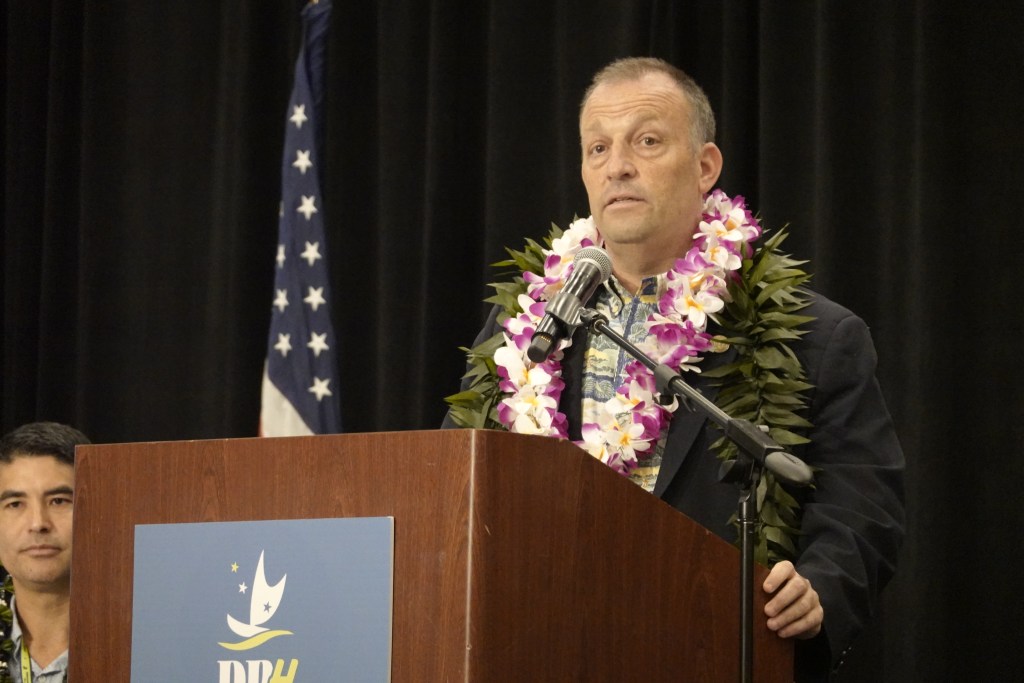
John Hart, communication professor at Hawaiʻi Pacific University, said the simplest explanation for why Green has no opposition from any well-known political figures this year can be seen in the governor’s polling data.
“He’s got great approval ratings,” Hart said, “and that makes it tough to run against him.”
Green agreed his poll numbers may be the single most important reason he has little opposition in the primary. He cited an assortment of polls from 2024 to this year that suggested his favorable rating among voters has been consistently running well above 60%, with job approval ratings that are even a bit higher.
“Political people, at least, take note of that,” Green said.
“His policies have been fairly popular, there hasn’t been anything he’s done that’s really created a pushback,” Hart said. “So, why would you throw your hat in the ring on a suicide run when there are other offices that are more achievable?”
The Opposition
Green said he does not recall ever meeting any of his opponents who are running this year — not the three other Democrats, not the two Republicans, or the four nonpartisan candidates. But he said he will treat the race this year “like a full tilt campaign. You will see ads, you will see me talking story and sharing my vision for Hawaiʻi.”
His primary opponents include David “Duke” Bourgoin, who ran unsuccessfully for Honolulu mayor in 2020 and 2024, and for governor in 2022. Bourgoin received 590 votes in the Democratic primary for governor four years ago, while Green received 158,161.
The other Democrats in the primary race are Big Island resident George Lucas-Tadeo and Kailua resident Lauren Kapoliahi’iaka Shim. Republicans Gary Cordery and Ken Fujiyama are competing with one another in the GOP primary.
There are also four nonpartisan candidates running for governor this year — Calvert Williamson, John Giuffrey, Bu Laia Hill and Clyde Lewman. However, it will be extremely difficult for those candidates to advance past the primary. To reach the general election nonpartisan candidates must win at least 10% of the total votes cast in the primary or receive at least as many votes as one of the winning partisan primary election candidates.
Of the 10 candidates running for governor this year, only Green and Cordery reported raising or spending any money on their campaigns as of June 30. Cordery reported raising about $313,000, or less than one-tenth of the campaign cash Green has raised.
That field of candidates is strikingly different from 2018, when then-Gov. David Ige survived a hard-fought challenge from fellow Democrat former U.S. Rep. Colleen Hanabusa, and from 2014 when Ige ousted former Gov. Neil Abercrombie in the Democratic primary.
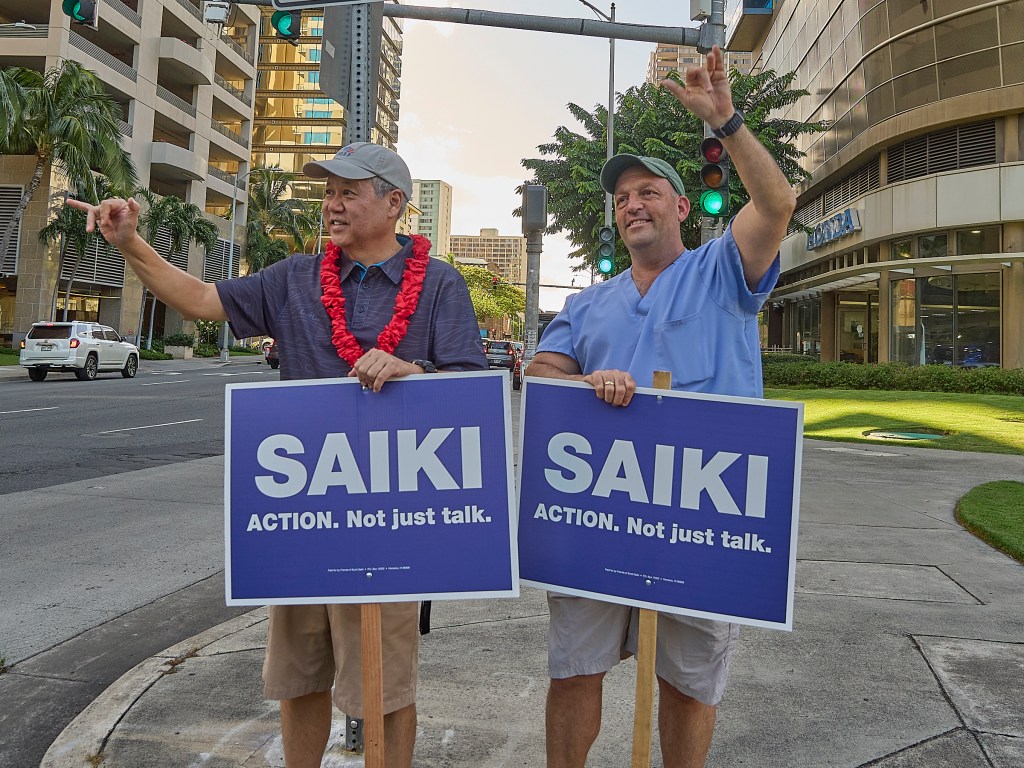
Longtime Hawaiʻi political strategist Chuck Freedman said any potential challenger to Green has sized up the financial resources at the governor’s command and concluded “it’s going to be very hard because he has so much money.”
“If you go downtown and talk to the people who are being hit up the most for fundraising,” Freedman said, “they scratch their heads when the Green campaign reaches out for more money, which it continues to do, and raises money for a campaign that has no competition.”
The governor also has some powerful allies, Freedman said, including major political players such as Pacific Resource Partnership. PRP is a consortium made up of the 6,000-member Hawaiʻi Carpenters Union and the more than 250 contractors that employ them, and PRP is a longtime Green supporter.
PRP and other unions can create political action committees that have profound influence on campaigns, and that scares off potential candidates, Freedman said. “More than ever I think the power that an incumbent has is a threat — a big threat — to anybody who’s thinking about their future.”
Another problem, Freedman said, is exciting and hard-fought races are what drives voter turnout. What motivates voters “is a hot and competitive campaign with issues and personalities,” he said, “and a little bit of a feel that it’s professional wrestling, you know?”
This year the most competitive races are for the offices of lieutenant governor and Hawaiʻi’s 1st Congressional District. “Those secondary races will have to drive turnout, and it probably won’t drive turnout much. We’ll see,” he said.
People complain that Hawaiʻi is a one-party state, Freedman noted, but “less and less people are involved because there are fewer and fewer choices, and we tend to get out of that exactly what people are complaining about, which is that there’s only one party and one candidate. It’s a vicious circle, so it’s bad.”