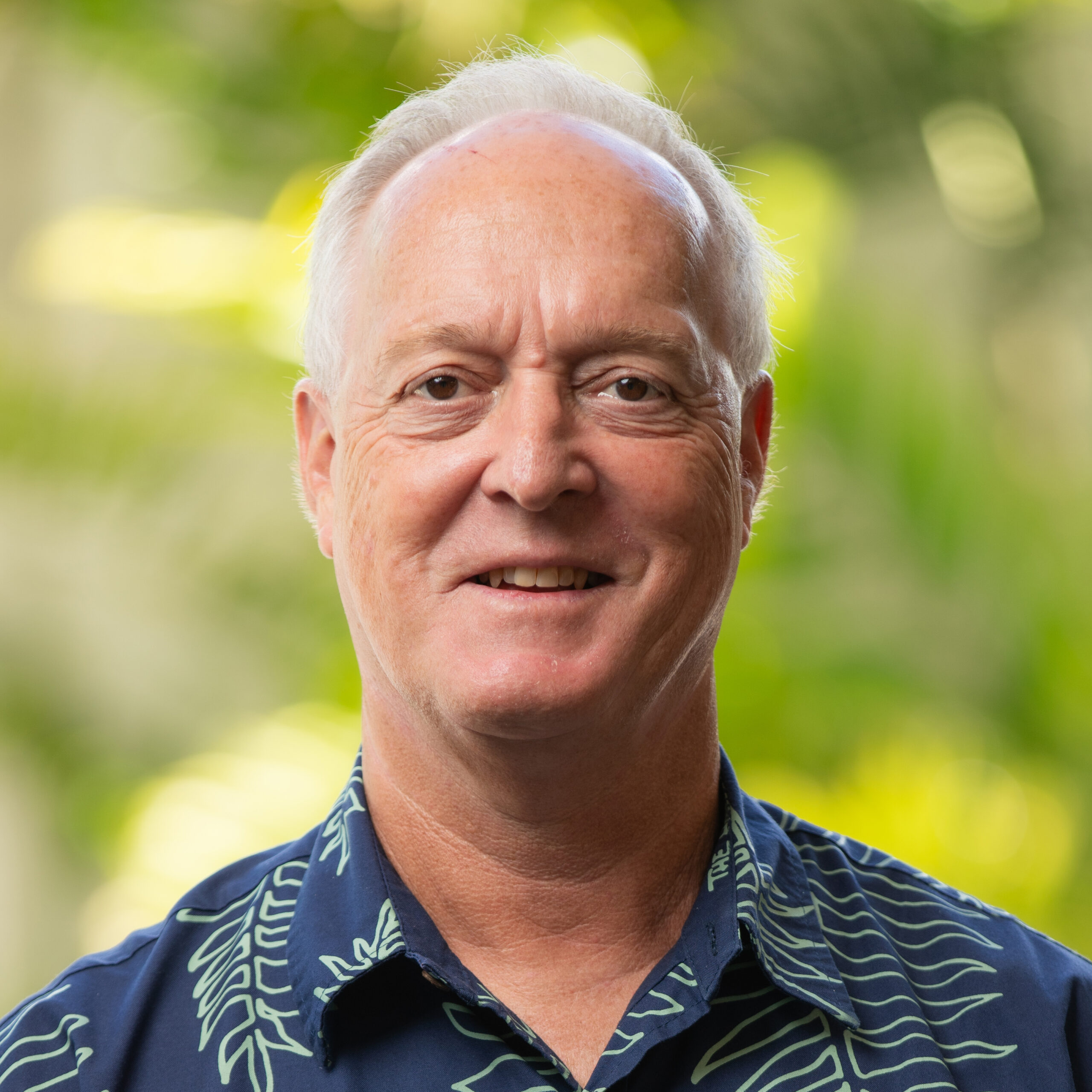
The Race For Lieutenant Governor: A Coveted Political Stepping Stone
While the job itself doesn’t amount to much, it helped elevate four politicians who later became governors, and two others who eventually became U.S. senators.
With Gov. Josh Green facing no formidable opposition to his reelection, attention is focused this year on the race for Hawaiʻi’s lieutenant governor because it offers a well-traveled path to real power.
Democratic Lt. Gov. Sylvia Luke had appeared to be a shoo-in for another four-year term until questions about unreported campaign contributions and an ongoing public corruption investigation derailed her campaign. She acknowledged errors in her campaign finance reporting, and also received a target letter from the state Attorney General’s Office.
With that cloud hanging over Luke, Kauaʻi Mayor Derek Kawakami announced in March he would challenge Luke in the Democratic primary, and Luke finally abandoned her bid for reelection in April. That set off a chain of events in which longtime Democratic state Rep. Della Au Belatti canceled her campaign for U.S. Congress in May, and jumped into the lieutenant governor’s race. Also running in the Democratic LG primary is Honolulu lawyer John Choi.
The prize at the center of that chaotic political scramble is the political leg-up the lieutenant governor’s office offers. Four lieutenant governors — George Ariyoshi, John Waiheʻe III, Ben Cayetano and Green — went on to become governors, and former LG’s Mazie Hirono and Brian Schatz became U.S. senators.
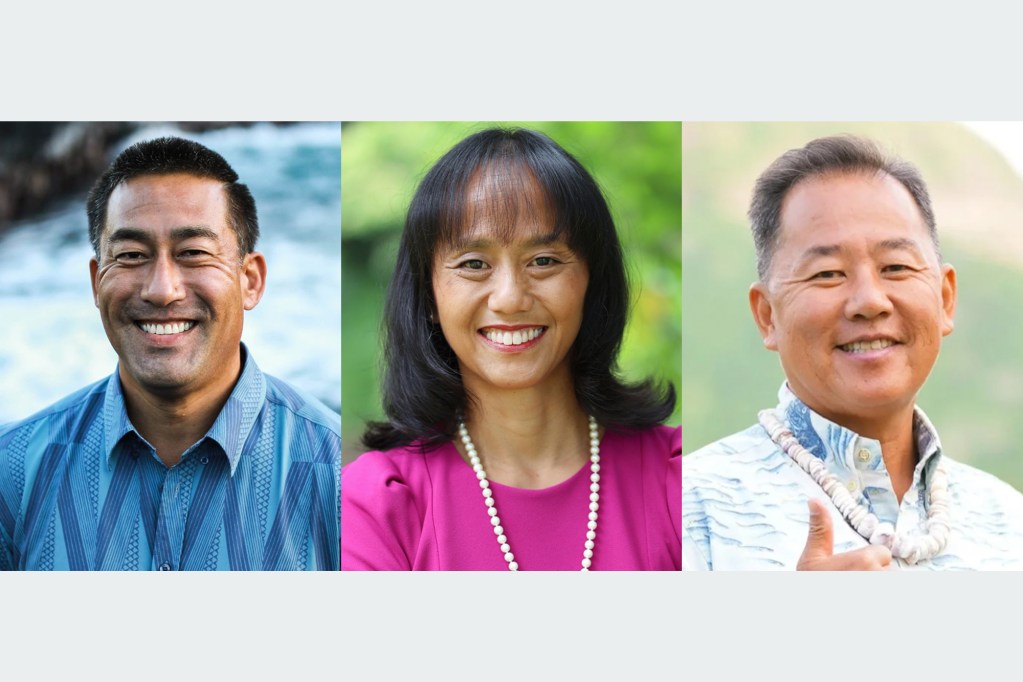
Pacific Resource Partnership, a major player in Hawaiʻi politics, quickly seized the initiative in the race this year by pumping money into a super PAC that fielded a barrage of television advertising in support of Kawakami. PRP is a consortium made up of the 6,000-member Hawaiʻi carpenters union and the more than 250 contractors that employ them.
Chuck Freedman, a longtime Hawaiʻi political strategist, said he encounters advertisements burnishing Kawakami’s image every time he turns on his television. “It’s really, really hard to overcome that much money in this short a time, but she’s working hard,” he said, referring to Belatti.
That massive advertising spend by the PRP super PAC For A Better Tomorrow doesn’t sit well with some people, including Freedman.
“It’s no longer about the character of the candidate,” he said. “She’s a good candidate, and he’s a good candidate. It isn’t about the quality of the candidate, it’s about how much dark money is coming in. It’s not a fair test of anything.”
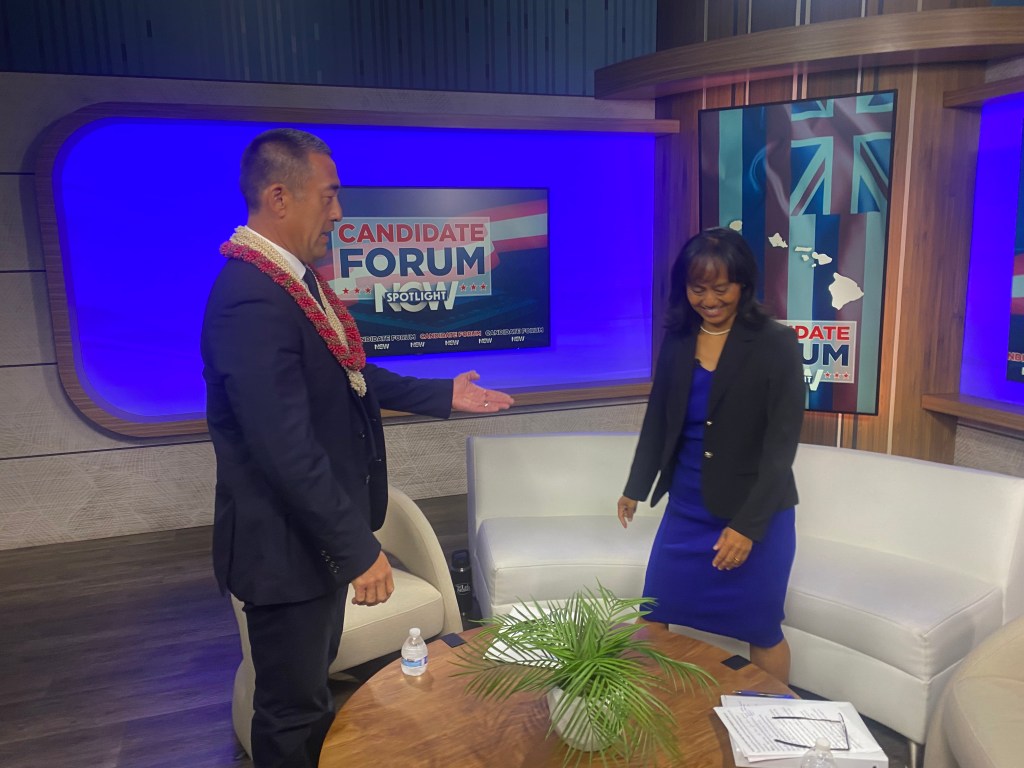
Kawakami did not respond to requests for an interview and has declined to participate in a candidate forum at Civil Beat Wednesday alongside Belatti and Choi, but when asked last week during a Hawaii News Now “Spotlight Now” segment about the surge of super PAC advertising on his behalf, he replied: “We’re proud to accept support as long as it’s positive, and I get support from a very broad, diverse backing of many different organizations and and individuals.”

The Democratic Contenders
Kawakami, 47, stresses his accomplishments as mayor of Kauaʻi, noting he is the only candidate in the race with executive government experience. He also highlights his willingness to listen, deliberate and collaborate.
“Hawaiʻi needs leaders that can bring people together to tackle the biggest issues,” he said in his “Spotlight” appearance, “and from Hilo to Hanalei, the issues I hear about most are the cost of housing, affordability cost of living, and our quality of life.”
Belatti emphasizes her independence, and has been campaigning on her efforts to stop the “corrupting influence” of political action committees. She has served almost 20 years in the state House and is a former House Democratic majority leader, a top-ranking position.
Belatti, 52, cites her key role in rallying community support for Act 11 this year as one of her most important accomplishments at the Legislature. That measure aims to curb the flow of so-called “dark money” by limiting the impact of the 2010 U.S. Supreme Court ruling known as Citizens United, which allowed unlimited contributions by corporations to political action committees.
Choi is a former deputy attorney general now in private law practice in Honolulu, and is campaigning on a pledge to “end the pay-to-play culture in Hawaiʻi politics, move the state to publicly funded elections, and bring down a cost of living that is pushing local families off these islands.”
Choi also promises to increase funding for in-home care services for the elderly, support family caregivers and increase training for health care workers to help address the needs of Hawaiʻi’s aging population.
Kawakami has raised far more campaign money than his opponents, and had nearly $154,000 on hand and available to spend heading into the final five weeks of the primary. Belatti had about $57,000 in cash on hand as of June 30, while Choi had about $10,500.

A Mayor With Deep Political Roots
On “Spotlight,” Kawakami warns that Hawaiʻi is “at a crossroads where many of our young people have given up hope because of the cost of housing.”
“They don’t see a future for themselves in Hawaiʻi,” he said, “which is tragic because what is Hawaiʻi if we don’t have people from Hawaiʻi here anymore?” He said his administration on Kauaʻi has focused on affordable housing, and built over 500 affordable homes.
Kawakami’s campaign website describes him as the son of “a schoolteacher and a JC Penney manager,” which far undersells his family’s deep business and political connections across Kauaʻi.
His uncle Richard Kawakami represented Kauaʻi in the Legislature for 18 years, and was speaker of the House when he died suddenly in 1987. Richard’s wife Bertha was appointed to replace her husband, and held that same House seat until 2006.
Derek Kawakami’s father Charles was president of Big Save Inc., a sizable family-owned chain of retail stores on Kauaʻi, and Derek himself was a manager with the family company before he entered politics. The Kawakami family later sold Big Save to Times Supermarkets.
Community leaders began talking about Derek Kawakami as a promising candidate nearly 20 years ago during a hot debate over Walmart’s plans to open a “superstore” in Līhuʻe, according to former Kauaʻi Rep. James Tokioka. Kawakami spoke eloquently against the project, Tokioka said, and the Kauaʻi County Council eventually passed an ordinance banning big-box stores larger than 75,000 square feet.
Kawakami was elected to the board of directors of the Kauaʻi Island Utility Cooperative board of directors in 2006, and helped develop a strategic plan that steered KIUC into aggressively adopting renewable energy. Last year nearly 53% of KIUC’s electricity came from renewable sources, and “he was the spokesman for that vision,” said longtime Kauaʻi journalist Jan TenBruggencate, who worked on the KIUC strategic plan as a consultant.
Kawakami went on to win a seat on the Kauaʻi County Council in 2008 at age 31, and was easily reelected to a second term there. Then in 2011 Gov. Neil Abercrombie appointed Kawakami to the state House, where he served two full terms. Generally viewed as a centrist Democrat, Kawakami aligned himself with former House Speaker Calvin Say’s political faction.
In 2016, Kawakami said he wanted to spend more time on Kauaʻi with his family, and returned home to win a seat back on the Kauaʻi council. From there, he went on to easily win election as mayor two years later, and was reelected mayor in 2022 with more than 70% of the vote in both the primary and general elections.
“As mayor, I have built a reputation of performing well under pressure, being decisive and making tough decisions,” Kawamaki wrote in his Civil Beat Candidate Q&A. “I have worked alongside Gov. Josh Green for the past eight years navigating a global pandemic, natural disasters and other tough issues.”
Many voters may recall Kawakami from early in the pandemic in 2020, when the mayor declared that “Kauaʻi is on vacation,” and announced tourists should not go there. He imposed an islandwide curfew from 9 p.m. to 5 a.m. — with exceptions for essential workers and people headed to or from their jobs — and established roadblocks to enforce his edicts. Hawaiʻi National Guard troops were deployed to help police staff the checkpoints and enforce quarantine.
He also launched a series of sometimes goofy videos he dubbed “Stay Home Kauaʻi,” which he produced at home after his duties as mayor were done for the day. “People need to laugh right now,” he told columnist Lee Cataluna at the time. “And it shows that Kauaʻi’s curfew applies to me, too. And that I’m just as bored as everyone else.”
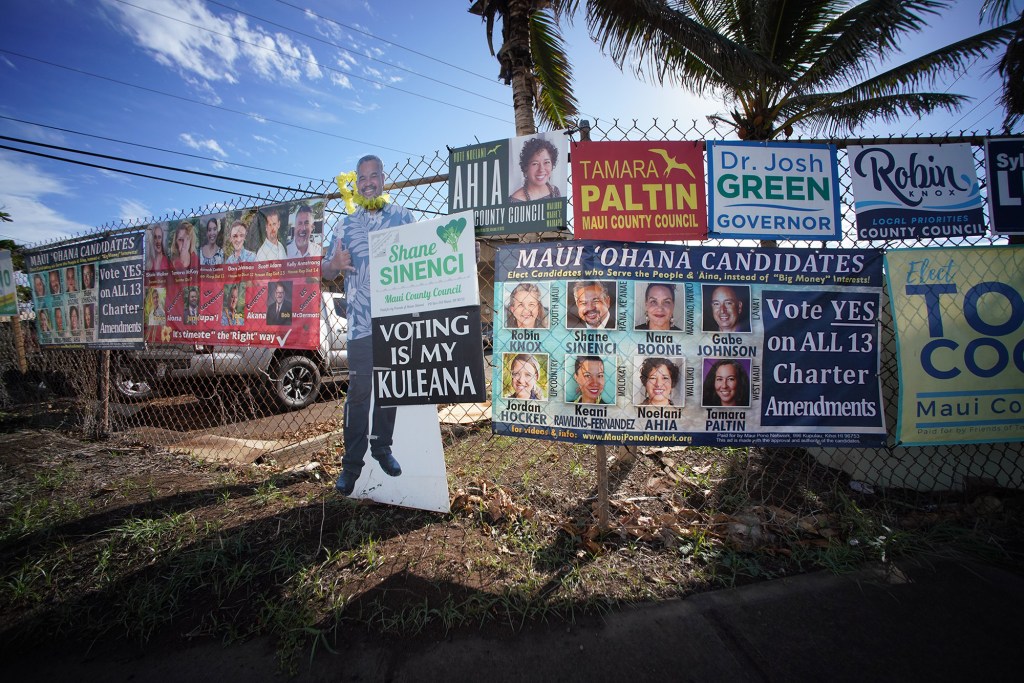
Kawakami is backed by an array of business and labor organizations, including the Hawaiʻi Realtors Political Action Committee, the Hawaiʻi State Teachers Association, State of Hawaiʻi Organization of Police Officers and the United Public Workers union.
He received sizable campaign donations from some major players in the business community. That includes $13,500 he from four employees of The Resort Group, which owns the Ko Olina Resort in West O‘ahu and the 9,000-acre Princeville Resort on Kaua‘i’s North Shore; $12,500 from five employees of the engineering firm R.M. Towill; and $12,000 from 12 employees of Bowers + Kubota Consulting.
A Longtime Lawmaker
The Hawaiʻi Government Employees Association, the largest union in the state, is backing Belatti instead of Kawakami. She also has been endorsed by the left-leaning Indivisible Hawaiʻi, which advocates for issues such as universal healthcare, the Green New Deal and a guaranteed living wage.
HGEA Executive Director Randy Perreira said the union’s relationship with Kawakami as a person is cordial, but “we just don’t feel that he is the leader our state needs.”
The union distributed campaign mailers to its members alleging Kawakami “slow walks” resolutions to grievances and investigations involving county employees, and also tried to “lowball” Kauaʻi County workers on hazard pay owed to employees who worked during the pandemic. The two sides finally reached a settlement on hazard pay in 2024.
By contrast, Belatti “has championed legislation for us over the years,” particularly on the issues related to health care, Perreira said. HGEA’s political action committee notified the state Campaign Spending Commission this month that it is committing more than $57,000 to support Belatti’s election effort.
Kawakami said in a written statement Friday that “while HGEA leadership has endorsed my opponent, we have strong support among Kauaʻi County’s HGEA members. I’m proud of what we’ve accomplished together and of the work our county employees do every day to serve our island.”
Belatti taught government and social studies at Maryknoll School for several years before attending Richardson School of Law, and has been an associate attorney at Eric Seitz’s Honolulu law firm in Honolulu for 19 years. The firm specializes in civil rights, employment and personal injury cases.
She was first elected to the state House in 2006, and is associated with the more liberal wing of the Democratic Party. She served as chair of the House Health Committee before she was elevated to the position of vice speaker in 2017 under former House Speaker Scott Saiki.
She was named House Democratic majority leader the following year — one of the top jobs in the Legislature — but shifted to chair of the House Health and Homelessness Committee in a political House reorganization in late 2022. She became the House Public Safety chair in 2024 overseeing state prisons and disaster preparedness.
Belatti cites her work helping keep lower-income Hawaiʻi residents housed during the pandemic through rental and mortgage assistance as a top achievement during her time as a lawmaker, as well as her work overseeing the implementation of the federal Affordable Care Act. She also cited her support of Act 2 in 2023 to reenforce women’s rights under Hawaiʻi law to have an abortion.
As lieutenant governor she wants to push the administration to field a “champion” to press the Legislature to finally close campaign finance loopholes that allow state contractors to funnel campaign donations to elected officials. The goal, she said, is to ban campaign contributions from state contractors including owners, family members and executives of the contracting companies.
Kawakami suggested during their joint appearance on “Spotlight” last week that campaign finance reform isn’t a top priority for Hawaiʻi voters. He contends “people are begging for elected officials to tackle the cost of housing, to address the cost of living, and to improve their qualify of life.” Belatti disagrees.
“When I’ve gone out, people are asking about corruption. They ask about bribery,” she said. “So, I don’t find the same reaction that Mayor Kawakami is talking about. I do know that people are worried about affordability … (and) I’m also deeply concerned about it, but the second other important issue that really seems to resonate when I’m out there talking with people is the lack of trust in government, largely driven by these scandals.”
Choi, 57, was born in South Korea and immigrated to the U.S. as a child with his family in 1972. He earned his law degree from Vermont Law School, and spent two years working for the Hawaiʻi Attorney General’s Office before entering private practice.
He has been a civil trial lawyer handling personal injury cases for the past 25 years, and represented Hawaiʻi County and Kaua’i County in litigation alleging three major pharmaceutical companies contributed to the national opioid crisis. Hawaiʻi’s overall share of the 2021 settlement was $78 million.
Choi said he entered the lieutenant governor’s race because “literally I couldn’t sleep at night thinking that big money has once again picked a candidate that they were pushing to be the governor, and I realized the lieutenant governor’s race would determine the next 12 years for Hawaiʻi.”
His plan is to establish an equitable system of public financing of campaigns. The critical task is to “get money out of politics, and once we do that, everything else will fall in line,” he said. “It’s not just one issue of many, it is the fundamental issue.”
Comprehensive public funding of elections would cost millions of dollars, and some people object to using tax dollars to fund campaigns. But Choi argues that “if we don’t publicly fund it, then private interests, special interest money — millions pouring in — is going to dominate.”
He also believes government should prohibit any contractor from bidding on a publicly funded contract if that contractor has made a campaign contribution in the last five years. Choi predicts government would save millions of dollars in contracting costs if campaigns were publicly funded.
Choi acknowledged he has little government experience, but “I think that’s a huge asset that I’m not a career politician. I owe nobody, I’m not part of the system that’s broken, so I can see what needs to be repaired.”
Mail-in ballots are landing in mailboxes now for the primary election, which will be held on Aug. 8.