Wildfire Fatigue? Community Support Is Dwindling For Maui Fire Survivors
While a greater number of displaced residents have found stable housing and employment, wildfire survivors continue to struggle with mental and physical health.
Maui wildfire survivors continue to report high rates of depression and anxiety, but support systems for them are showing signs of strain as the third anniversary of the 2023 fires approaches.
Roughly 54% of adult participants in an ongoing study conducted by the University of Hawai‘i said they had a high level of support from family, friends or others in the community in 2025 — down from about 62% the previous year.
The decline indicates that the island is experiencing recovery fatigue and that more needs to be done to bolster community support networks such as cultural groups, churches and schools that have helped survivors heal and manage stress, said Ruben Juarez, a health economics professor and co-director of the University of Hawaiʻi Economic Research Organization’s Maui Wildfire Exposure Study.
“People are just getting tired,” Juarez said. “At the beginning there is this peak of everything, all of these resources and the community coming together. But eventually, people are transitioning, getting busy with other things, and that’s when some people start feeling that they’re not as supported as they were in the beginning.”
Study participants who said they had a low level of social support were more than five times as likely to experience severe symptoms of depression than those who said they had a high level of social support — about 25%, compared to less than 5% — and more than twice as likely to show signs of moderate-to-severe anxiety — roughly 42%, compared to 19%.
“The data is really clear,” said Christopher Knightsbridge, who leads the mental health research team for MauiWES, “more support is needed.”
Going forward, researchers intend to ensure that participants are connected with primary care doctors, specialists or mental health care and other services whenever their screening results indicate that it might be beneficial.
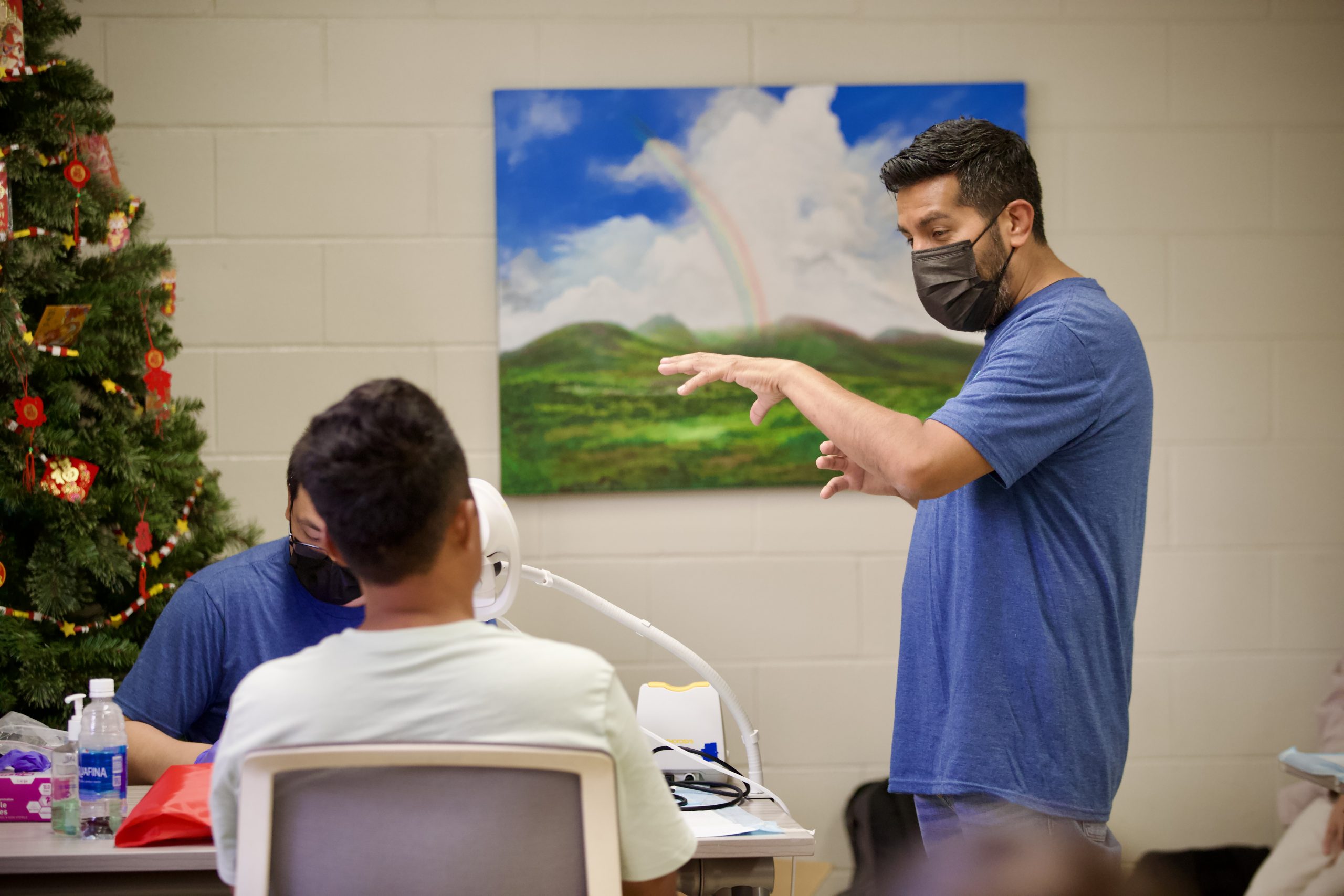
Researchers did find meaningful signs of progress in the island’s recovery, including increases in the proportion of residents impacted by the fires who said they had a job, health insurance and secure housing compared to the previous year. However, nearly 1 in 4 study participants frequently didn’t have access to food and more than 20% did not feel like they had stable housing. Those participants were far more likely to experience moderate-to-severe post-traumatic stress symptoms and signs of decreased lung and heart function, according to the report.
Alika Maunakea, MauiWES co-director and a professor at the John A. Burns School of Medicine, said the findings show how an individual’s capacity to heal is often tied to whether or not they have consistent access to food, stable housing, healthcare and human connection.
“Recovery is progressing,” Maunakea said, “but it still remains fragile and uneven at this point.”
‘If The Adults Are Not OK, The Kids Are Not OK’
Only 74 children, ages 8-17, participated in the study in the last two years — compared to 1,057 adults — and the findings related to their mental and physical health were mixed.
Researchers found that overall anxiety and mild-to-moderate depression declined among the youth surveyed, but more children showed signs of severe depression, severe PTSD and low self-esteem. Lung function screening results — while still concerning — improved, but rates of obesity and high blood pressure increased slightly.
The mental health results for youth may not fully reflect reality, as children are much less likely to self-report symptoms of depression and anxiety, and may not be able to fully understand those concepts.
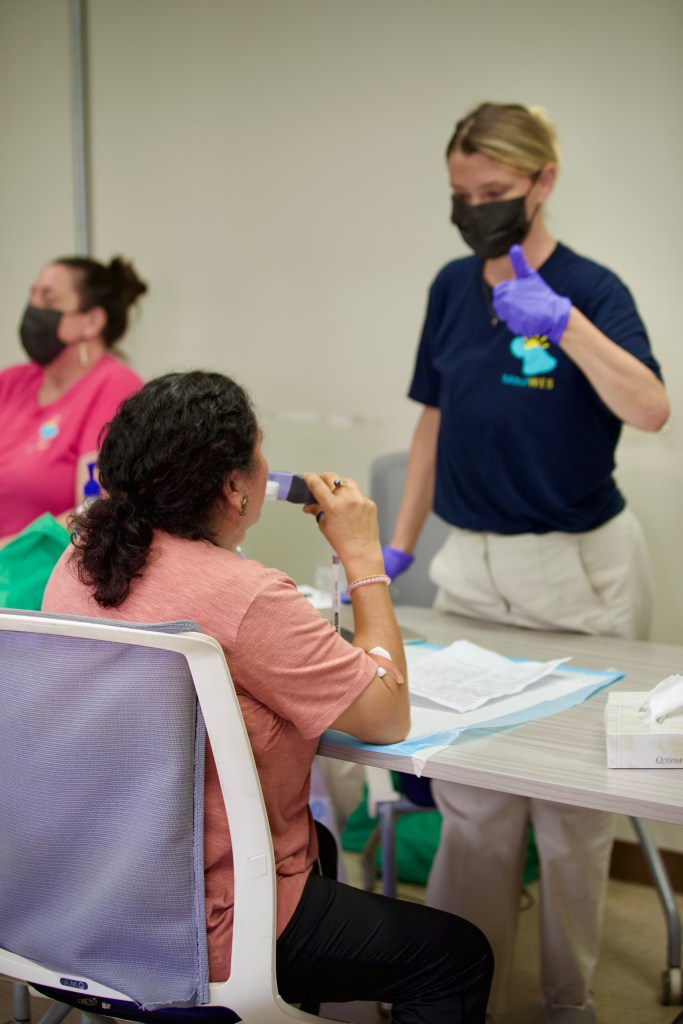
“If the adults are not OK, the kids are not OK,” Knightsbridge said. “It trickles down, and the children don’t have the vocabulary to understand what’s even happening to them.”
Juarez and Knightsbridge both said the findings emphasized the need for a coordinated recovery system that connects physical and behavioral healthcare, housing and food assistance programs, schools, insurance enrollment and trusted community organizations.
“As a disaster recedes from public view, its consequences often become less visible and more complex, with more individual rather than collective problems,” Juarez said.
He added that the next phase of recovery should involve investing strategically in programs that help families become stable, connected and healthy.
Earlier this year, lawmakers unexpectedly declined to allocate funding for the study in the state budget, which forced researchers to abandon plans to expand MauiWES and briefly called into question whether the study would be able to continue at all.
Since then, researchers have secured $500,000 per year for the next three years from the National Institutes of Health, which Juarez said will help sustain the study at its current level.
Maui County lawmakers have earmarked $2 million for a program that UH researchers plan to establish to create a more sustainable funding model and strengthen community healthcare options. Researchers hope to eventually establish an on-island clinic through the program, where they could continue research, provide care and connect participants with other resources.
The MauiWES team is also continuing to seek new funding partners to expand the study to include more kūpuna and youth participants and services for families.
“If families, neighbors and volunteers are expected to carry recovery indefinitely without sustained support,” Juarez said, “even the strongest networks will eventually experience exhaustion.”