Abortion Pill Use Has Tripled In Hawaiʻi Over Past Decade
Medication abortion has nearly tripled compared to procedural abortion over the past decade. The Trump administration is pushing to restrict access.
A decade ago, getting an abortion in Hawaiʻi usually involved going to a clinic for a procedure. Those who took medication abortion were in the minority. In the years since, the trend has reversed.
Last year, of the 2,012 abortions reported in Hawaiʻi, the use of an abortion pill accounted for more than 3 out of every 4 abortions, while the procedural abortion rate has fallen to its lowest point in at least 10 years, according to newly obtained data by Civil Beat from the Hawaiʻi State Department of Health. This comes as the Trump administration pushes to restrict access to abortion pills.
Medication abortion involves taking oral prescription medications, mifepristone and misoprostol. It is recommended as a two-part process, although it can be done with just misoprostol. Procedural or in-clinic abortion is a procedure performed by a healthcare provider.
Medication abortions surpassed the number of clinical procedures in Hawaiʻi in 2021, the year after the Covid-19 pandemic began, with 56% of total reported abortions. And it has led every year since.
Hawaiʻi was the first state to legalize abortion in 1970, three years before Roe v. Wade established a nationwide constitutional right to abortion.
Even after the Supreme Court overturned Roe in 2023 and millions of women across the nation lost the right to choose to terminate their pregnancies, Hawaiʻi maintained strong laws to protect that right.

Pills Increase Access For Neighbor Islands
The pills have increased abortion access for those living on Hawaiʻi’s neighbor islands and in rural areas. Only Oʻahu and Maui have abortion clinics.
While abortion is legal in the islands, access to it has been a challenge that disproportionately affects low-income women. They may face financial and physical barriers, such as not having the ability to take time off of work and the high costs of flights and hotels to travel to a clinic that can conduct the procedure. And that doesn’t include the cost of the procedure or medication itself.
Currently, there are only three places across the Hawaiian islands where doctors conduct in-clinic procedural abortions: The Queen’s Medical Center in Honolulu and two Planned Parenthood locations.
Planned Parenthood has a clinic on Oʻahu and another on Maui, but due to low demand and doctor shortages, the procedure is only available once a week at the Honolulu location, and once every two weeks in Kahului, according to Dr. Colleen McNicholas, an OB-GYN and chief officer with Planned Parenthood’s regional office.
She emphasized the importance of telehealth abortions, or having access to abortion providers through phone or video. Doctors can prescribe the pills, and they can be mailed to the patient’s home or picked up at a pharmacy.
“The decision to end a pregnancy is really personal, and that extends into how they choose to end that pregnancy,” McNicholas said.
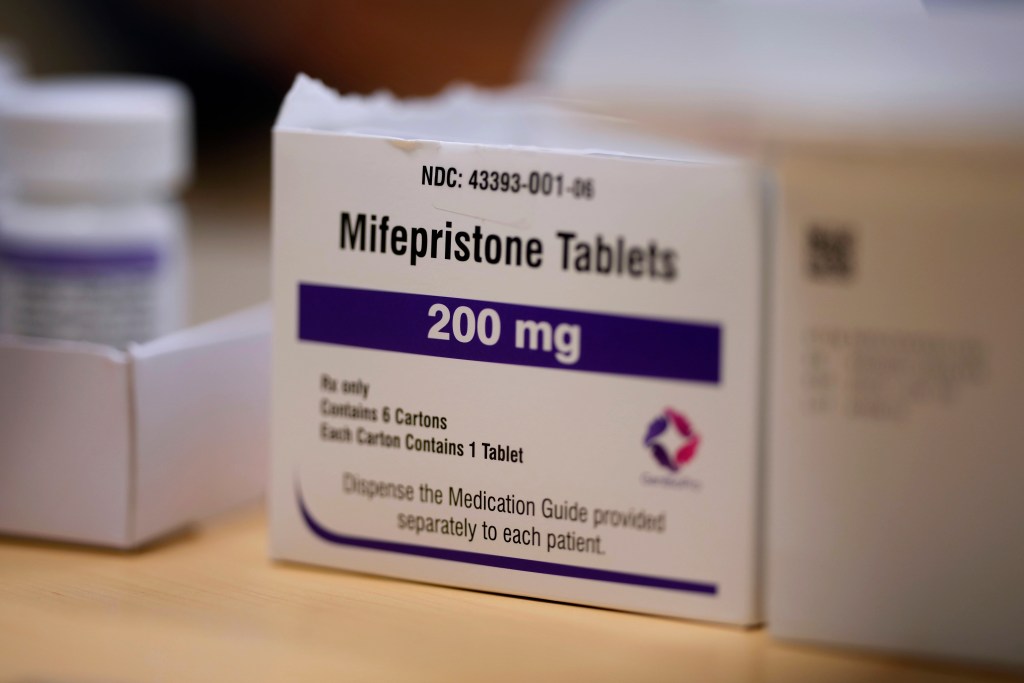
There are efforts nationwide from religious and conservative groups aiming to restrict the use of abortion pills, even in states where abortion is legal.
In 2020, amid the pandemic, a federal judge suspended a longstanding U.S. Food and Drug Administration rule that required patients to pick up mifepristone, the first in the two-pill regimen, in-person at a hospital or clinic, citing Covid risks. The change was prompted in part by a 2017 lawsuit filed by Dr. Graham Chelius, a Kauaʻi family doctor who was the lead plaintiff in the case.
That temporary suspension became permanent in 2023, when the FDA formally allowed the pill to be dispensed by mail or at certified pharmacies, further expanding access. But Republicans and anti-abortion activists are trying to undo this, with a case currently being heard in Louisiana regarding the federal government’s decision to approve mifepristone for telehealth.
Even with legal access to mail-ordered pills, they are not allowed to be used to terminate an unwanted pregnancy if they are not taken within the first 12 weeks of gestation. In most cases, in-person procedural abortions can be performed up to 20 weeks in Hawaiʻi.