Accused Of Violating Patients, A Hawaiʻi Doctor Still Practices
Nine women accused Dr. Gregory Yim of performing unnecessary breast exams that violated their sense of trust. The Hawaiʻi Medical Board has taken no action.
The woman had known Dr. Gregory Yim for many years. She had worked in his pediatric neurology office during high school, and he later became the pediatrician to her four children. He was also one of the most highly respected doctors on Oʻahu.
So when he offered to help her lose weight, court filings say, she agreed. She trusted him.
What happened next fits a pattern alleged in court records: Yim diagnosed the woman with attention deficit disorder and prescribed her Adderall for ADD and weight loss. He performed a physical exam, including a breast exam, sticking his bare hands into her bra. Even though breast exams are only recommended to be done annually, Yim — a pediatric neurologist — allegedly conducted them at every appointment.
Over the course of two years, the patient underwent 14 breast exams.
Nine patients have described in lawsuits that they were sexually violated and experienced emotional anguish when they later determined the exams weren’t medically necessary. One woman received roughly 50 breast exams over the course of six and a half years, according to court records.
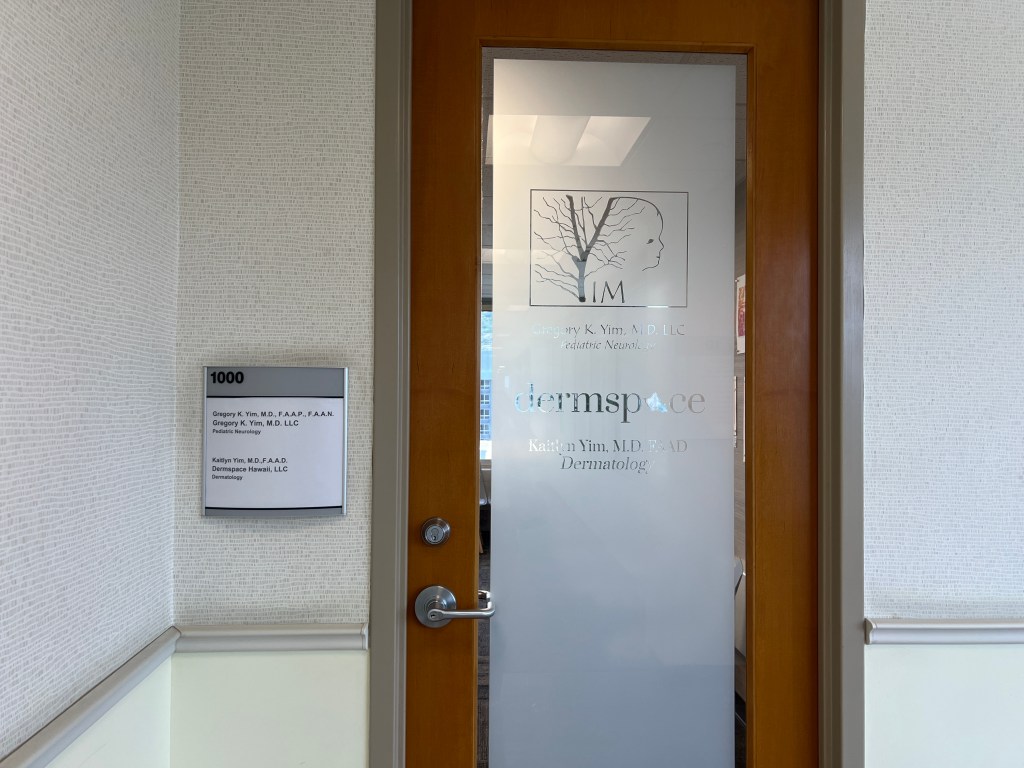
And yet, three years after the first allegations became public, Yim is still practicing. His medical license is valid and in good standing. He still has an office at Kapiʻolani Medical Center for Women & Children, which is itself being sued for Yim’s alleged conduct. And as of two months ago, the receptionist at his former practice — Windward Pediatrics in Kāneʻohe, which is also a lawsuit defendant — said he was still taking appointments. More recent calls abruptly ended without an answer. In court records filed by his attorneys, Yim has denied wrongdoing and has not been charged with a crime.

Other states like Ohio are in the practice of investigating misconduct claims in lawsuits, and Hawaiʻi requires doctors to at least disclose malpractice claims when renewing their license. But Yim’s case was met with no action by the Hawaiʻi Medical Board, a group of political appointees charged with assessing and disciplining misconduct in the medical profession.
The state received four requests to investigate Yim in recent years, according to William Nhieu, a spokesman for the Department of Commerce and Consumer Affairs, which oversees the Hawaiʻi Medical Board. But he wouldn’t specify the nature of those complaints and said they were closed with no investigation.
Meanwhile, there are two lawsuits pending: one filed in 2023 that was widely reported by two of the state’s largest news organizations and a second lawsuit with similar allegations filed earlier this year.
Nhieu declined multiple requests to explain why the agency has done nothing to examine the claims by Yim’s patients, whose names are readily available in court records. Dr. Danny Takanishi, who chairs the Hawaiʻi Medical Board, referred questions to Nhieu.
“The state medical board should investigate.”
Emily Anderson, a professor at Loyola University Chicago’s Stritch School of Medicine
As a pediatrician, Yim is “treating the most vulnerable patients,” said Emily Anderson, a professor at Loyola University Chicago’s Stritch School of Medicine with expertise in physician professionalism and misconduct. The state should at least look into allegations of misconduct.
“Are they fulfilling their duty to the people of the state of Hawaiʻi?” she asked. “The state medical board should investigate.”
In court filings, Yim has denied improper conduct toward his patients. Thomas Cook, Yim’s attorney told Civil Beat in a statement: “The allegations against Dr. Yim have been denied, in Court, and they will be addressed, in Court, at the appropriate time.”

Civil Beat attempted to reach Yim directly but did not receive a response.
Liz Chun Uyehara, spokesperson for Kapiʻolani Medical Center for Women & Children, declined to comment on the allegations against Yim but wrote via email that the hospital “takes allegations of sexual assault very seriously.” In court filings, the hospital denies any and all claims of negligence and liability.
Claire Tong, spokesperson for Hawaiʻi Pacific Health which oversees Kapiʻolani, declined to say whether Yim still practices at the hospital.
Windward Pediatrics, a private practice in Kāneʻohe started by Yim’s father in the 1970s, is now under new management and ownership, according to its website. Dr. Joseph Ward, the new owner of Windward Pediatrics according to business registration filings, did not respond to repeated questions by phone and email about whether Yim still works there. In court filings, the practice denied wrongdoing.
Hawaiʻi has faced criticism in the past for how it handles sexual misconduct complaints against physicians.
The Doctors & Sex Abuse Project, a 2017 report by the Atlanta-Journal Constitution, gave Hawaiʻi a score of 47 out of 100 when it comes to how well it protects patients against sexually abusive doctors. The authors considered transparency of physicians’ disciplinary history, duty-to-report laws, and discipline laws, among other factors.
Hawaiʻi tied at 44th out of 51 states when looking at overall factors, beating out only Oklahoma, Louisiana, Wyoming and Mississippi. An updated ranking was not available.
The trial for the first lawsuit is set for April 2027.
“Nobody is thinking, ‘Our family doctor would do this,’” said Crystal Glendon, one of the attorneys representing the plaintiffs. “There’s this level of nefarious trust that he’s establishing with all of them.”
The plaintiffs of the lawsuit declined to be interviewed. It is Civil Beat’s policy not to name alleged sexual assault victims without their permission.
Lawsuits Detail Violations Of Trust
Yim is well-connected in the island’s medical community. He has held positions on coveted boards, like the board of trustees of his alma mater, Punahou School, Make-A-Wish-Foundation Hawaiʻi and Kapiʻolani Health Foundation, the philanthropic arm of the hospital. He took over the private practice run by his father, Dr. Henry Yim, and comes from a family of doctors, now including his three adult children.
Regularly called as an expert witness in lawsuits, he was also a professor at the John A. Burns School of Medicine at the University of Hawaiʻi Mānoa. In 2021, he was one of three contenders for a trusteeship at Kamehameha Schools, one of the wealthiest and most powerful organizations in Hawaiʻi. Yim was named one of the top doctors in Hawaiʻi by Honolulu Magazine over multiple years.
Yim is one of seven pediatric neurologists in the entire state, according to a Physician Workforce Report from 2025 by the University of Hawaiʻi, where there is an estimated shortage of 37.3% across the islands in his medical specialty. Dr. Kelley Withy, who assembled the report, said that only three out of the seven pediatric neurologists work full-time.
“They’re so well established on the Windward side, that’s the pediatric practice everyone went to,” said Glendon, the plaintiffs’ lawyer. “Their position in the community, nobody really questioned him or his authority.”

Accusations span from 2015 to 2022, with the alleged misconduct occurring over the course of a year to as long as six and a half years. Some of the women knew him for decades before any alleged inappropriate conduct occurred.
In court filings, a patient of Yim’s since her birth, said that she trusted him “implicitly.” He was the only pediatrician that she had ever been to.
Another plaintiff had him as a doctor since she was 10 or 11 and was a minor at the time of the alleged first incident. He conducted a breast exam on her when she was 17, according to the lawsuit. She had gone to him to be treated for a headache.
In most instances cited in court records, he met the women at his private practice in Kāneʻohe. He then made appointments with them at his office at Kapiʻolani Medical Center, where he conducted the breast exams. Some of the alleged inappropriate behavior happened at the private practice, which was managed by his wife.
Four of the lawsuit plaintiffs are mothers of Yim’s pediatric patients. Two of the plaintiffs had been Yim’s pediatric patients since their own birth. In one case, he had been treating a woman for weight loss for over a year and only started conducting breast exams soon after she got a breast augmentation, according to the lawsuit. He never referred plaintiffs to a specialist to get a mammogram, court records state.
According to the court records, Yim provided the breast exams without proper draping or gloves. He never explained the reason he needed to check his patients’ breasts or body, which the lawsuit describes as depriving the women of their right to consent. And he never said how he, a pediatric neurologist, was qualified to conduct these exams, and why they had to happen so frequently.
“If a doctor said, ‘I’m going to recommend monthly manual breast exams,’ the question isn’t whether or not the patient said yes, but also: Was that information correct?”
Elizabeth Pendo, an expert in health law ethics
The American Cancer Society recommends that adult women in the age range of the plaintiffs and in average health get one breast exam per year.
In a 2020 policy adopted by the Federation of State Medical Boards, physician sexual misconduct includes “physical contact, such as performing an intimate examination on a patient with or without gloves and without clinical justification or explanation of its necessity, and without obtaining informed consent.”
“The idea of informed consent in medicine is that you have to be provided with truthful information necessary to help you make a determination,” said Elizabeth Pendo, a professor at the University of Washington and an expert in health law ethics who has done extensive research on physician sexual misconduct.
“For example, if a doctor said, ‘I’m going to recommend monthly manual breast exams,’ the question isn’t whether or not the patient said yes, but also: Was that information correct?”
Several plaintiffs described a sense of trust they felt towards the doctor, and that they were “misled and tricked” into thinking he was providing them with a “life-saving health service.” The court filings use the word “grooming” to describe his behavior.
In many but not all cases, the women describe a chaperone being present. But court filings describe them as nothing more than a “potted plant,” without proper qualifications to understand what would have been medically appropriate behavior. Court filings show one of the patients claimed her chaperone was always the office receptionist.
‘Selling Skinny’
Yim prescribed all the plaintiffs Adderall for weight loss, even after some expressed feeling negative side effects and felt they were becoming addicted, according to the lawsuits. Before prescribing the medication, he diagnosed some of them with ADD, according to medical files obtained by the plaintiff’s lawyers.
Yim does not publicly advertise himself as a weight loss expert, but two of the plaintiffs were referred specifically to Yim because they heard that he could help them lose weight, according to court filings.
“He was basically selling skinny,” Kelli Ponce, one of the plaintiff’s lawyers, said.
One woman was 17 months postpartum with her second child when she took one of her children to Yim at Windward Pediatrics for an appointment in 2015.
There, Yim told the woman that he could help her lose the weight that she had gained while pregnant, according to court filings.
The woman agreed, and made an appointment with him at his Kapiʻolani practice. According to court filings, her medical records for that day indicate that she was diagnosed with ADD. The woman said that she was not given any tests or asked any questions she believed were relevant to diagnosing ADD.
Yim took her weight, had her sit on the exam table fully clothed, and slipped his hands inside her top and under her bra, feeling each breast and nipple, without any gloves or draping. Afterwards, he hit her knees to examine her reflexes and used a stethoscope to listen to her breathing.
She later told Yim that she was experiencing hair loss, heart palpitations and insomnia, as side effects of the Adderrall he was prescribing her, but he did not do anything to address her concerns, according to the lawsuit. During treatment with him, at her lightest, she lost 32 pounds, court records state.

The FDA has not approved Adderall for weight loss. Instead, it’s approved to treat ADD, attention deficit hyperactivity disorder and narcolepsy. A loss of appetite is a potential side effect, which can lead to losing weight.
Doctors can and often prescribe medications off-label to treat a condition that the FDA has not officially approved, as long as it meets the standard of care and there is some evidence that it is appropriate.
Dr. Donna Mayeda, a primary care physician in Honolulu, said that generally speaking, it wouldn’t be unheard of for a doctor to prescribe Adderall to treat obesity. However, it would be “a little strange” if they did not have some special training that overlaps with obesity medicine, she said.
According to the lawsuits, none of the plaintiffs were obese or overweight when Yim was prescribing them Adderall.
Mayeda said that especially in a place like Hawaiʻi where there are not enough physicians to meet the demand, she often practices outside of her specialty, if it’s within her qualifications. Pendo, the health law ethics professor, agreed.
“It is true in many areas where there’s a physician shortage, they may provide more kinds of services and care than they might in an area where there were many more doctors available,” Pendo said.
Silence From The Medical Board
Hawaiʻi law allows the Medical Board to take emergency action and suspend a doctor’s license if it suspects the physician is “an immediate and unreasonable threat to personal safety” that can endanger the public or is committing “fraud or misrepresentation.”
In that situation, the physician must be notified of the detailed allegations and a hearing would be held within 20 days.
But that didn’t occur in Yim’s case.
The spokesman of the Department of Commerce and Consumer Affairs, or DCCA, which oversees the Medical Board, declined to explain why.

In a series of email statements, DCCA spokesman Willian Nhieu said the board “cannot suspend a license based on allegations, media reporting, or a civil lawsuit alone.”
“It needs a specific statutory trigger: a finding of imminent danger, a criminal conviction, or a completed investigation and board hearing where the licensee has had notice and a chance to respond,” Nhieu said.
But the claims against Yim were never even investigated.
Complaints about licensed professionals are assessed by the Hawaiʻi’s Regulated Industries Complaints Office, or RICO, which oversees 52 industries and approximately 170,000 licensees statewide.
That office, under DCCA, investigates complaints and brings findings and recommendations to the medical board for a final decision. While most cases are launched after a complaint is filed, RICO has the ability to open a case through other means.
RICO has received four intake reports about Yim, but according to Nhieu, they never rose to the level of an official complaint for the medical board to consider. Intake reports can be closed for a variety of reasons, including insufficient evidence, matters falling outside the board’s jurisdiction, anonymous reports, or an inability to substantiate the claims.
Nhieu declined to comment on the nature of the four reports about Yim and why they were never pursued or investigated further.
According to the plaintiffs’ lawyers, none of the women they represent filed complaints with the state about Yim. They thought the state would “see the lawsuit and initiate their own investigation,” said Ponce, one of the plaintiffs’ attorneys.
“I don’t see why they can’t do that,” Ponce said. “Relying on victims to go through a whole other process and be responsible for taking away someone’s license, that’s a tall order.”
According to the plaintiffs’ lawyers, the two-year statute of limitations for filing a criminal case for sexual assault in the fourth degree has passed.

Some other states have shown a greater willingness to probe lawsuit allegations against doctors.
Stephanie Loucka, executive director of the State Medical Board of Ohio, said when physicians there renew their licenses, they must disclose whether they are involved in any litigation or if there have been any medical malpractice claims against them.
“The minute you answer ‘yes’ on a question, that opens a complaint with us, and that complaint is evaluated for severity,” Loucka said. Those disclosures are then reviewed and can become full investigations or, in serious cases, factor into decisions about emergency suspensions.
Civil Beat requested records of Yim’s medical license renewal forms, but has not yet received them. The forms require doctors to disclose medical malpractice claims, and the Hawaiʻi board has been known to fine doctors for failing to disclose lawsuits. However, the content of the lawsuit itself doesn’t necessarily translate to a complaint to the Hawaiʻi Medical Board, like in Ohio.
Dr. William McKenzie for instance, was fined $750 in 2024 for failing to disclose a malpractice claim. But he never faced a formal complaint before the medical board for the underlying lawsuit claim: that he had used his own sperm to inseminate a fertility patient without her knowledge. McKenzie denied wrongdoing, and the case was settled. McKenzie has since retired but still holds an active medical license.
The Ohio board does not necessarily halt license renewals while its review is underway. Licenses can be renewed as the board reviews the complaint in parallel. That policy, Loucka said, is meant to avoid “breaking the healthcare system” given how frequently doctors are sued and how many of those complaints are ultimately closed without formal discipline.
Loucka said the Ohio board received nearly 7,000 complaints last year. Of those, 160 sexual misconduct complaints amounted to only 2% of total incidents, but the protocol is always for six members of staff to read through every single complaint containing a sexual misconduct allegation.
“Proportionally, we’ve taken more action on sexual misconduct than we do on other allegation types that we get more complaints on,” she said.
When it comes to sexual misconduct, she said, “we start with the assumption that people are telling the truth.”
Other states too take lawsuit claims and news reports seriously.
In Texas, the state medical board says on its website that lawsuits are “a detection system which may identify recurring patterns of unacceptable health care.” And it is welcome to pursue cases based on media reports, according to a 2019 state report.
In Kentucky, medical board members could file a memo and open an investigation into a physician based on news reports or concerns they hear about as an individual.
In Nevada, the medical board is required by law to investigate lawsuits against doctors that result in a judgment or settlement.
At the same time, there are numerous cases of medical boards across the country standing idly by while doctors who behave badly retain their licenses. In a 2021 paper called “Protecting Patients from Physicians Who Inflict Harm,” Pendo and her co-authors wrote there is a need to “improve institutional responses to reports of egregious wrongdoing by physicians.”
The paper makes several recommendations, including ensuring gender diversity on medical boards.
The 11-member Hawaiʻi board appointed by Gov. Josh Green currently consists of three women.
Pendo also said state medical boards can often be “less aggressive” and hesitant to remove one of the few specialists from practice, because doing so could leave that community without care.
And when it comes to more insulated places, internal politics or the lack of resources of the medical board may contribute to a case not being pursed. Pendo said that cases of doctors accused of sexual misconduct continuing to practice are much more common in rural communities.
She referred to the case of Robert Hadden, a Columbia University ob-gyn who sexually abused hundreds of women during routine check-ups.
“Getting the Columbia University doctor out of practice is not going to have any effect on the patients of New York City,” she said.
But in Hawaiʻi, sidelining an in-demand doctor could make a bigger impact.
From Loucka’s perspective, the medical board in Ohio takes claims of misconduct seriously because doctors occupy a position of power and authority that needs to be checked.
“There’s this huge position of trust that patients put into their providers,” Loucka said. “Our rules do a really nice job of protecting against that.”