

Dark Money Looms Over This Hawaiʻi Congressional Race
U.S. Rep. Jill Tokuda has been warning that outside money could flood into her race against Republican State Sen. Brenton Awa. He, too, says he’s wary of super PACs.
Earlier this month, U.S. Rep. Jill Tokuda’s campaign sent an email to potential voters that contained a dire warning: The GOP is gunning for her.
“We are officially two months out from Election Day and the stakes are higher than ever,” the email said. “MAGA Republicans are eyeing HI-02 and a super PAC tied to Tulsi Gabbard and George Santos has registered here in Hawaiʻi so we can’t afford to leave anything to chance.”
The campaign then pivoted to ask for donations to “keep Jill fighting for us.”
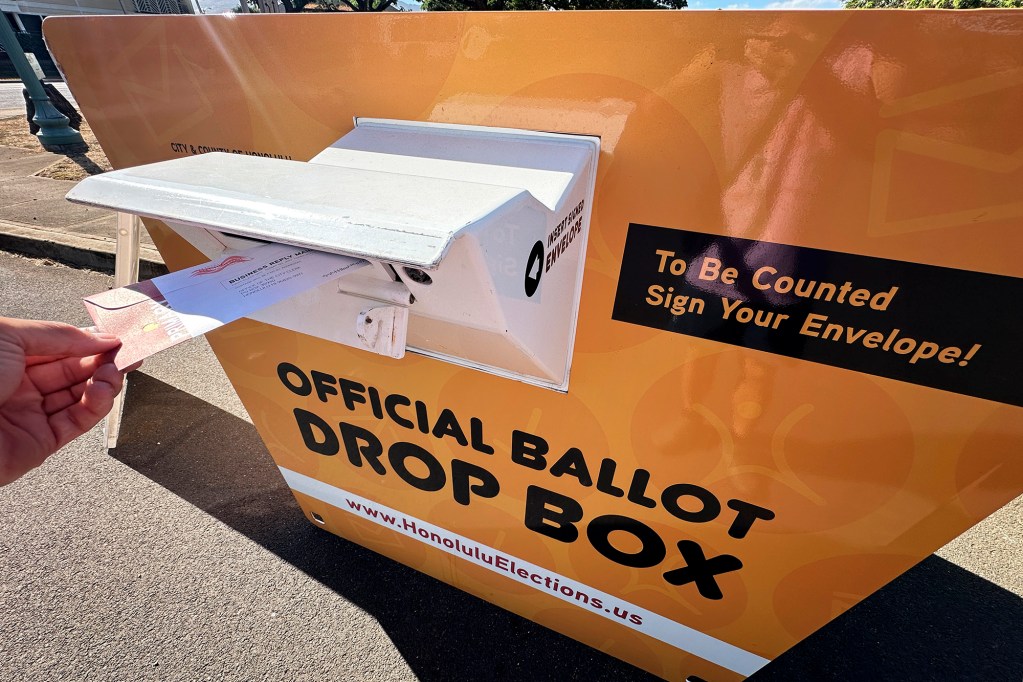
The specter of outside money entering the race for Hawaiʻi’s 2nd Congressional District looms large for Tokuda, especially given the significance of the November election and the fact that she faces a viable Republican challenger in Hawaiʻi State Sen. Brenton Awa.
Democrats are seeking to regain control of Congress to provide a check on President Donald Trump in his final two years in office.
But while polling shows Democrats have an edge in support and enthusiasm, a Trump affiliated super PAC and the GOP’s official campaign arms reported having nearly $1 billion in the bank to back Republican candidates and defend their majority. Combined that’s nearly three times more than their Democratic counterparts, which means it’s not far-fetched to see some of that Republican surplus make its way into the islands.
Tokuda admits she’s on high alert and said she believes it’s likely outside money will play at least some role in the upcoming election, especially given the outsized role it can play in a small state like Hawaiʻi.
“It’s not going to take millions and millions of dollars to make an impact on our race,” Tokuda said. “One million dollars could be a huge boost to a campaign.”
While history is on her side — no Democratic incumbent has ever lost their seat to a Republican challenger since Hawaiʻi became a state — Tokuda has reason to be anxious.

In 2018, Tokuda lost a close primary for lieutenant governor to then-state Sen. Josh Green after a super PAC linked to the Hawaiʻi carpenters union spent more than $1 million to defeat her. Green’s victory helped pave the path to him eventually becoming governor.
Then in 2022, when Tokuda first ran for Congress, she was forced to fend off attacks from mainland super PACs and outside groups backing her primary opponent. The PACs attacked her legislative record on various fronts, including criticizing her for a 2012 endorsement from the National Rifle Association when she was a state senator and for spiking legislation a few years later that would have required pesticide buffer zones around schools.
These experiences, Tokuda said, are at least partially responsible for her decision to swear off corporate PAC money and back legislation that seeks to reduce the influence of money in politics and bring more transparency to campaign finance.
Super PACs emerged after a pair of 2010 judicial decisions, including the U.S. Supreme Court’s “Citizens United” ruling that found that restrictions on independent political expenditures by corporations violate First Amendment free speech rights. That helped spur the numerous political committees that can now raise and spend unlimited sums of money from corporations, unions, and individuals.
‘We Don’t Want Your Help’
For his part, Awa said he doesn’t want to see any outside money come into the race. He’s been running a stripped down, grassroots campaign and he said he wants to carry that through to the Nov. 3 election so that he can maintain his image as a dark horse candidate who’s “moral to the core.”
Awa said he’s already talked to national party officials about not spending money on his behalf and has turned down pitches from others offering to support him, including the American Israel Public Affairs Committee, or AIPAC, which has been pumping millions of dollars into races all across the country in an attempt to unseat critics of Israel.
“We’ve already told people to stay out,” Awa said. “We don’t want your help. This is more degrading to us than anything else.”
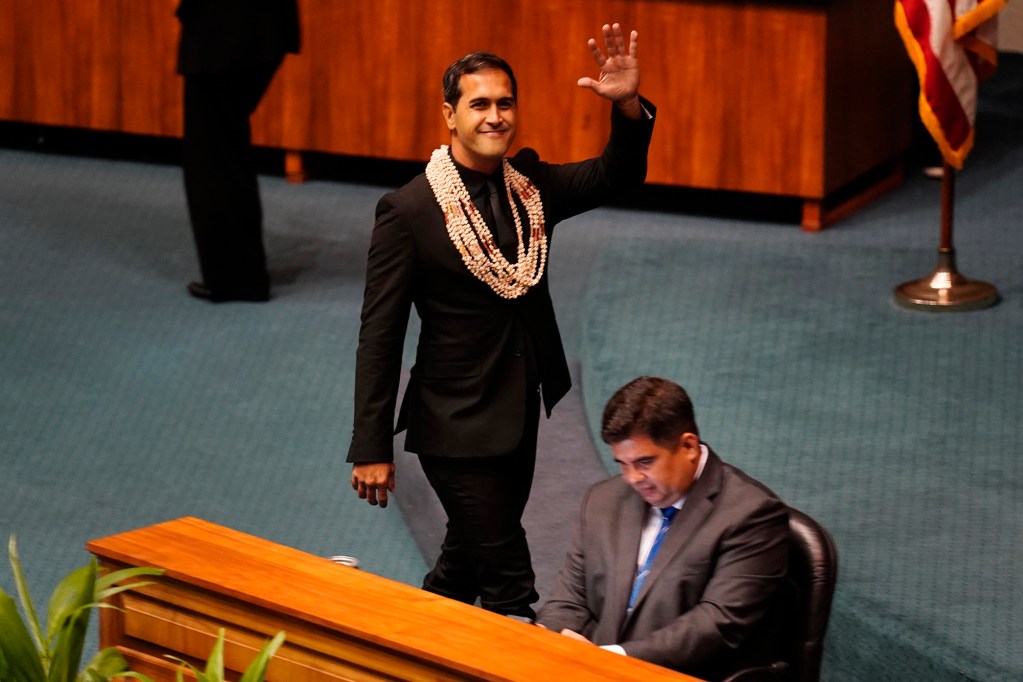
When running for state senate in 2024 Awa vowed not to accept any campaign donations yet still beat his Democratic opponent by five percentage points. His congressional campaign is taking a different tack. He’s reported raising around $122,000 through mid-July and has spent most of his money — about 90% so far — on yard signs, banners and bumper stickers.
Tokuda’s campaign, meanwhile, has reported raising more than $800,000 so far this election cycle and as of July still had more than $570,000 in the bank compared to Awa’s $16,000.
Awa said he understands that although he doesn’t want outside actors playing a part in the election he might not be able to stop it.
That appeared to be the case in the Democratic primary for Hawaiʻi’s 1st Congressional District, which pitted U.S. Rep. Ed Case against state Sen. Jarrett Keohokalole. Even though Keohokalole had spent much of his campaign denouncing the role of outside money in politics, the late entry of a super PAC into the race put him in an awkward position once it started running ads on his behalf.
Michael Beckel is a campaign finance expert at Issue One, a nonprofit that seeks to reduce the influence of money in politics. Given the political environment, he said, some Republican operatives and donors “could be looking for every opportunity to play offense.”
The super PAC Tokuda is worried about has a name — Hawaii Voter Coalition — that indicates it was set up specifically to operate in the islands. Its treasurer, Thomas Datwyler, is a longtime GOP consultant and has worked for several PACs tied to former Director of National Intelligence and Hawaiʻi congresswoman Tulsi Gabbard.
While federal records show the Hawaii Voter Coalition has sat dormant since its creation last November, just days after Awa announced his candidacy, Beckel said that might not last.
“Even if this super PAC has not yet raised or spent any money, its financial fortunes could dramatically change overnight based on the interest of just a handful of donors or even a single donor,” he said. “Because super PACs can accept unlimited contributions, a single deep-pocketed donor can rapidly make a super PAC flush with cash.”

