

HECO Knows What’s Behind Outages. It Just Won’t Tell You
The state’s consumer advocate wants the utility to provide more information about storm outages. Residents say they also deserve clearer answers about frequent outages that don’t seem tied to weather.
Shaun Peck wants to know why he keeps losing power when the weather’s fine, why the lights across Hawaiʻi Kai Marina are on while his house is dark, or why, say, his mother’s lights go out in Portlock while he’s fine just a few miles away in Kuliʻouʻou.
None of it makes sense to Peck, the co-owner of Paradise Ciders, whose training in food safety makes him all too aware of the dangers of losing power to his refrigerator. If it’s above 40 degrees for more than a couple of hours, the food needs to be thrown out.
He figures he’s lost thousands of dollars in wasted food thanks to Hawaiʻian Electric Co. Inc., which, piling on to his frustration, is hoping to raise the price he pays for power, which now amounts to about $500 a month.
“They should be giving me a refund,” he said.
Power outages are a frequent problem in East Honolulu, where anecdotes abound of people losing electricity for no apparent reason. One Hawaiʻi Kai resident pointed to her insurance company’s power outage monitor, which shows at least eight outages since Hurricane Lala brushed close to Oʻahu in the middle of August.
According to the website PowerOutage.us, there have been 146 outages within a 1-mile radius of the Hawai‘i Kai Shopping Center in the last two weeks, adding up to 58,232 “customer-impacts.” By comparison, the 1-mile radius around Civil Beat Plaza in Kaimukī saw 60 outages reported, but only 379 customer-impacts during the same period.
HECO acknowledges outages have increased and attributes a major reason to a grid whose foundation was laid out in the 1940s, decades before the building boom that began when Henry J. Kaiser began developing Hawaiʻi Kai around the Kuapā fish pond under a lease with Kamehameha Schools in the 1960s.
“If we were designing this today, we would not design it this way.”
Jim Kelly, HECO’s vice president for government and community relations and corporate communications
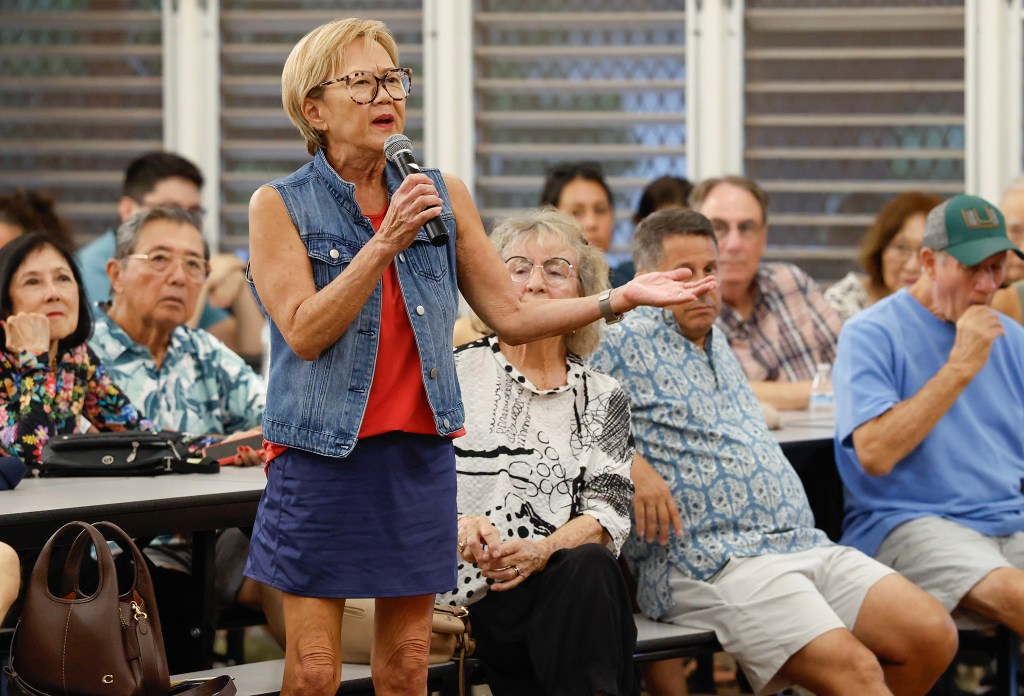
The problem is bad enough that nearly 200 residents turned up for a recent town hall meeting with questions for HECO. Fittingly, there was an outage in Hawaiʻi Kai just before the meeting, although the power at the Niu Valley school was fortunately on.
HECO has answers relating to specific outages, but hasn’t been willing to share them with the public – yet another point of frustration for customers tired of hearing HECO chalk up the outages to falling trees.
“That’s just ridiculous,” said Peck, who’s live in East Honolulu most of his life, adding that it leaves customers wondering what’s going on.

It’s not only residents of East Honolulu who want more detailed answers about power outages, which federal data shows have increased across the state in recent years.
The utility and environmental watchdog group Life of the Land is calling on Hawaii regulators to require HECO to share more details on outages related to storms, and the Office of Consumer Advocacy is backing Life of the Land’s push.
“A variety of recent natural hazards have exposed several vulnerabilities in the Hawaiian Electric Companies’ grids,” the consumer advocate wrote to the Public Utilities Commission on Monday, “and exacerbated reliability issues.”
Community Meeting Highlights Utility Challenges
Before the standing-room-only crowd at the Niu Valley Middle School meeting, company executives shared their standard explanation for why East Honolulu residents are suffering more power outages than other Oʻahu communities.
Oʻahu’s grid design means a backbone of high-voltage transmission lines must cross back and forth over the steep, heavily forested Koʻolau mountain range. That leaves miles of lines vulnerable to trees and limbs, which frequently fall, setting off chain reactions of outages in a once largely undeveloped area that’s become one of the island’s population centers, with more than 50,000 residents, according to the U.S. Census.
“If we were designing this today, we would not design it this way,” said Jim Kelly, HECO’s vice president for government and community relations and corporate communications.
Areas like Hawaiʻi Kai face the additional problem of aging underground distribution lines vulnerable to water damage. Regardless, Kelly said, the increasing outages weren’t acceptable.
“I’m sorry we haven’t done better,” he said.
HECO has solutions, Kelly said, but they all come with trade-offs: in aesthetics, community impact and increased prices in a state that already pays the nation’s highest electric rates.
For instance, Kelly said, running distribution lines on power poles along Kalanianaʻole Highway instead of underground could mitigate problems from aging conduits, but, in addition to potential cost increases, Kelly questioned how many people would want to see power lines above the highway.
Kelly mentioned a plan years ago to run transmission lines over Waʻahila Ridge, which got shot down by community opposition.
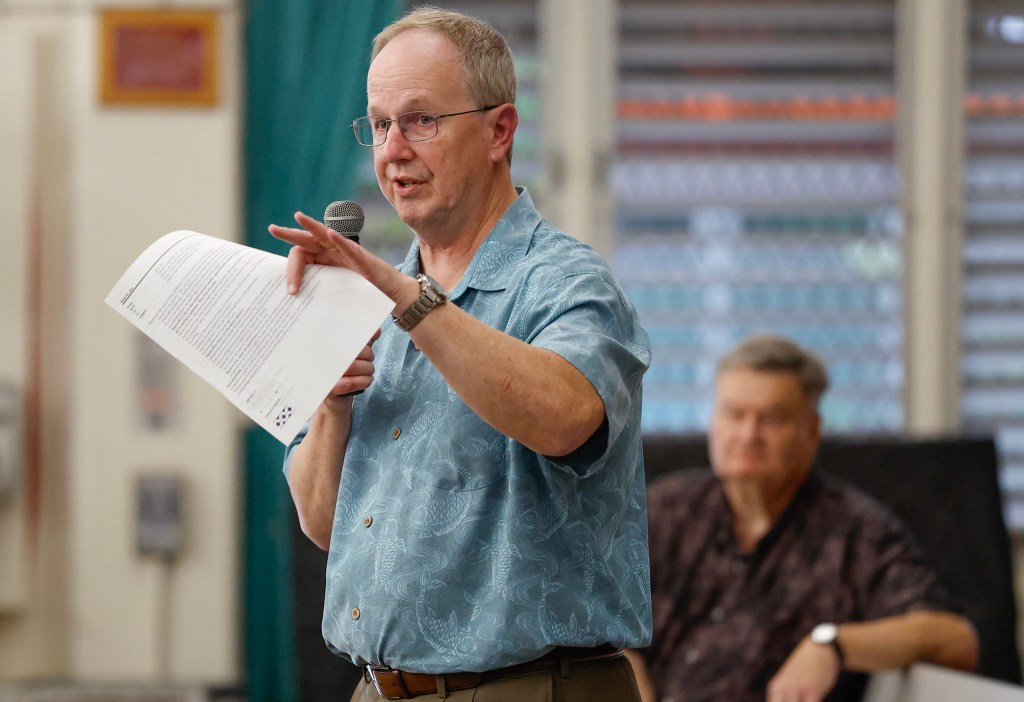
“It’s a challenge when we put a plan together and we have community meetings and everyone opposes it,” said Jim Alberts, HECO’s senior vice president and chief operating officer.
Carolyn Tanaka, an area resident frustrated that HECO hasn’t shared a comprehensive, long-term plan with the community, was among those unimpressed by HECO’s presentation. At one point during the meeting, Tanaka stood up from her folding chair in the front row and said bluntly: “You guys are not doing your job.”
Sen. Stanley Chang, who hosted the Niu Valley meeting with Rep. Mark Hashem and Honolulu City Council Chair Tommy Waters, applauded HECO’s effort to cut back trees along power lines and said he would support those efforts in the Legislature, but Chang said the company’s record in East Honolulu has been disappointing.
“East Honolulu’s electrical grid went from one of the best to one of the worst in the state in just a few years,” he said. “I’m disappointed that HECO didn’t proactively invest in keeping the grid resilient and stable, and that any true solutions will take years to complete.”
Several days after the meeting, Kelly said HECO is establishing an advisory group of East Honolulu residents to “make the connection between what we’re working on internally and what the community wants to know about and weigh in on.”
Tanaka, a retired spokeswoman for the Hawaiʻi House of Representatives, also took issue with a refrain that many HECO senior executives live in East Honolulu and are also affected by the outages. Utility executives with six- and seven-figure salaries don’t face the same financial realities as working people when the power goes out, Tanaka said.
“Losing all the food in the refrigerator” is a big deal for households living paycheck to paycheck, she said. “They can’t just go out to Costco the next day.”
Consumer Advocate Wants More Outage Details
While HECO only shared broad, oft-cited explanations for the outages during the Niu Valley meeting, the company has far more detailed information on what’s happening, including a detailed, root-cause analysis for every outage.
After the meeting, Civil Beat requested the last 10 root-cause analyses conducted for outages in East Honolulu. Kelly said key HECO executives at the time were preparing for Hurricane Nolo and could not immediately provide the analyses. On Tuesday, after Nolo had passed well south of Hawaiʻi, Kelly said HECO still couldn’t provide the documents and would not say whether it would ever provide them.
Others are trying to force the issue, asking the Hawaiʻi Public Utilities Commission to step in and require HECO to provide more detailed information on outages.
As a private company, HECO isn’t subject to open records laws requiring it to provide information when the public or media request it. HECO is, however, a regulated utility overseen by the utilities commission, which can require the company to provide information. Parties to commission proceedings involving HECO also can file information requests.
Life of the Land and the state consumer advocate are now asking the commission to demand HECO provide more details on outages as part of an ongoing grid planning effort the commission is overseeing. The purpose of HECO’s grid planning is to figure out how to bring new renewables like wind and solar onto HECO’s grids in order to meet increasing demand for electricity while also meeting the state’s mandate to produce all electricity sold in the state by 2045.
Life of the Land’s Curtis says the grid planning also needs to take a hard look at exactly why people keep losing power, especially during storms. The idea is to find out which grid-strengthening measures are working, which aren’t, how much all of this is costing, and options for doing better.
Curtis said he’s encouraged by the consumer advocate’s support.
“HECO’s under a lot of pressure right now because they gave such poor explanations in East Honolulu,” he said.
HECO Parent On The Ropes Financially
HECO is also under pressure outside of Hawaiʻi. Shares of HECO’s parent company, Hawaiian Electric Industries, have been battered on Wall Street.
HEI’s stock took a nosedive after the 2023 Maui wildfires, dropping from nearly $40 a share to about $9. HEI shares made some gains over the last three years, following a settlement of wildfire lawsuits brokered by Gov. Josh Green’s administration, which included about $800 million from taxpayers, and efforts by the Legislature to help further bolster the company. But HEI shares on Wednesday were again trading around $9.
Some say even that’s too high. The investment firm Ladenburg Thalmann earlier this month issued its first report on HEI with a sell rating and a target price of $7 per share.
The low stock price makes it harder for the company to raise cash by issuing new shares, which would further weaken the current stock price. The company’s bond rating also has lagged to below investment grade, which makes it hard for the company to borrow money.
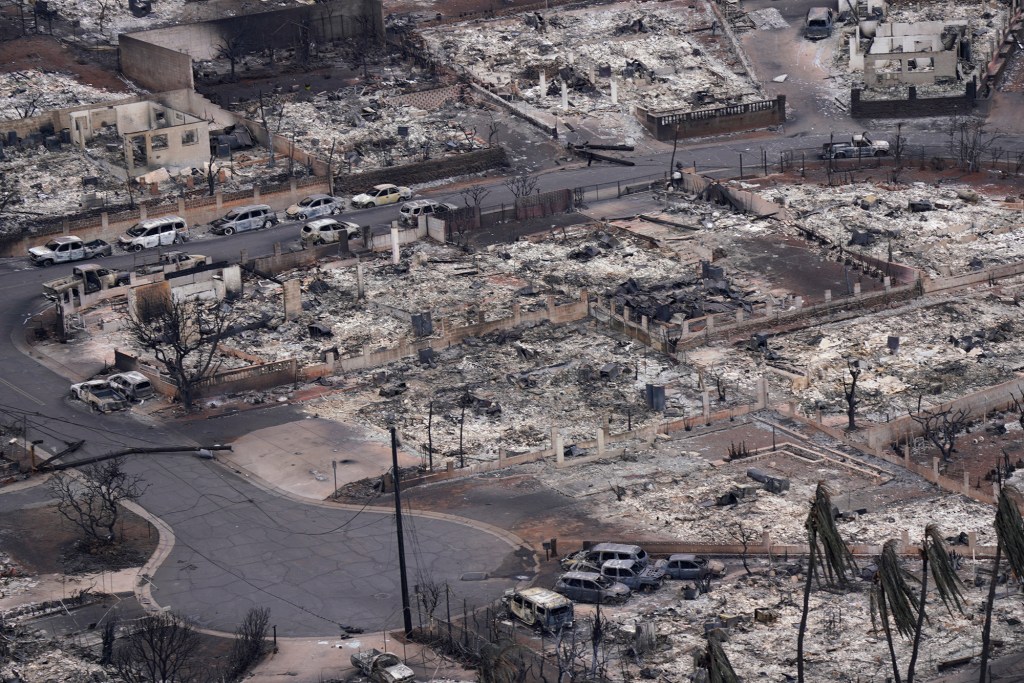
Beyond reliability issues, a major financial challenge for HEI has been raising cash to pay its $1.9 billion portion of the $4.03 billion settlement related to Maui wildfire lawsuits. The company has issued new shares and sold its subsidiary American Savings Bank to help raise money to pay the settlement, which amounts to four annual installments of about $480 million.
The company has paid its first installment but still has three more to pay, starting in 2027.
HECO, meanwhile, is still waiting for the U.S. Department of Energy to approve a $1 billion loan the company has requested to help pay for upgrades to its Waiau power plant near Pearl City to enhance reliability.
Against this backdrop, HECO is also asking the PUC to let it raise rates, which would add about $11 to the average Oʻahu residential bill by 2028.
While HECO says it hasn’t asked for a rate increase since 2011, others question the timing of the request when the company can’t reliably keep the lights on now and hasn’t shared details of how it will change that.
“What are they going to do to be good stewards of the grid and justify their monopoly?” state Rep. Joe Gedeon, who represents Hawaiʻi Kai, said.

