Hurricane Lowell Hit Kauaʻi Hard, But Worst Fears Averted
Almost all of Kauaʻi was without power Tuesday, as officials assess damage and community members start to clean up.
This is a developing story. Check back for updates.
Kauaʻi residents and visitors woke up Tuesday to major damage from Hurricane Lowell, which swept past Niʻihau overnight and brought intense rains, winds and a coastal storm surge.
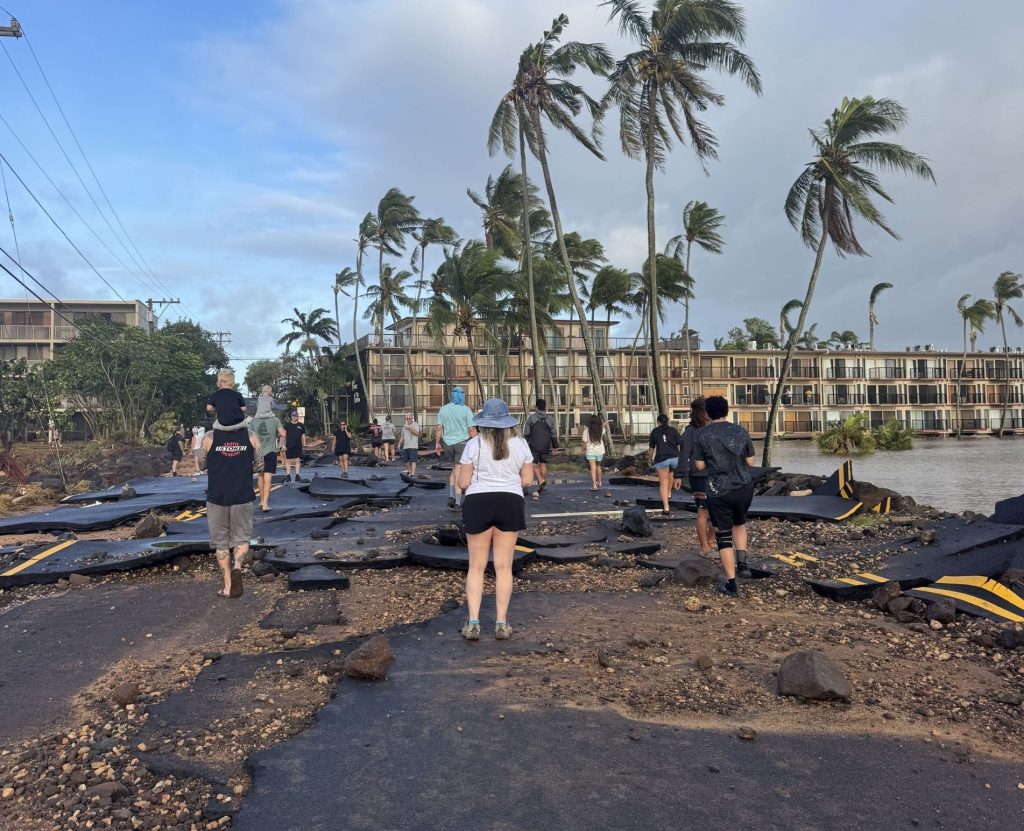
North Shore and Westside highways were impassable due to flooding and debris, with some roads buried in sand and boulders from broken seawalls that washed ashore. Nearly everyone was without power.
Although the worst fears appear to have been averted, at least one storm-related injury was reported as officials started to assess the toll on battered homes, businesses, infrastructure, utilities and government facilities.
Kauaʻi officials urged people to stay off the roads and conserve water Tuesday. High surf conditions persisted across the islands.
The county’s Emergency Management Agency chief, Elton Ushio, said early Tuesday that the county planned to send helicopters to assess damage once the sun had risen.
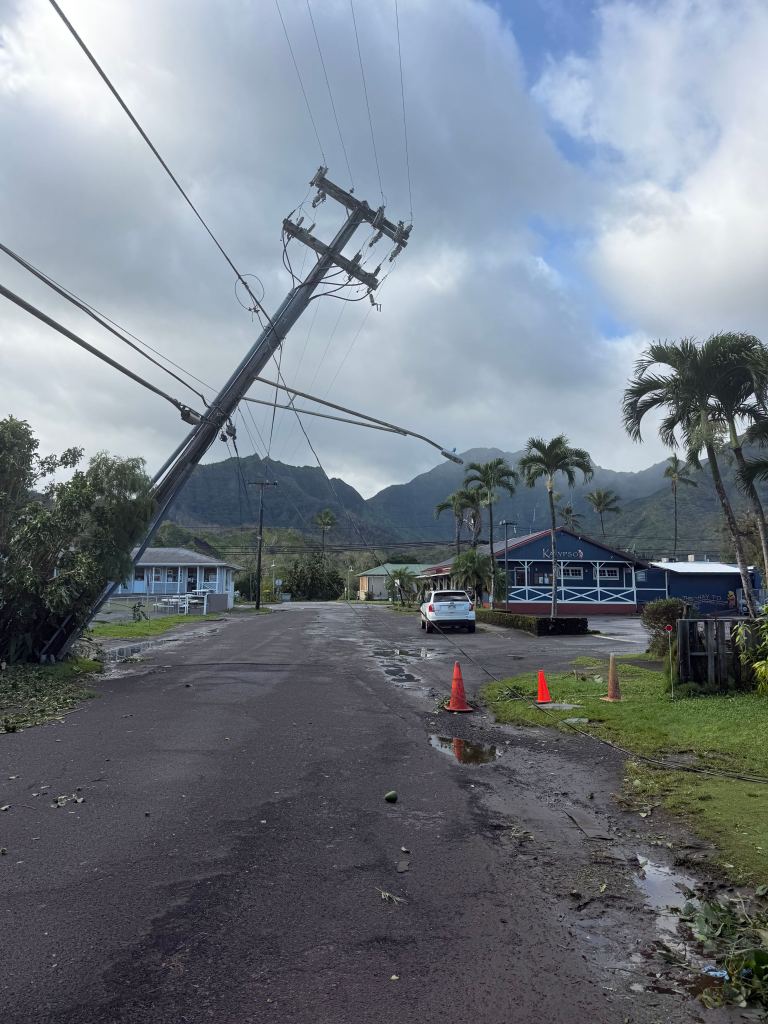
With nearly all the island in the dark — 9 out of 10 residents were reported without power — Oshio anticipated it would be a “huge restoration process” for Kauaʻi Island Utility Cooperative, the county and the state to restore infrastructure across the island.
KIUC reported Tuesday morning that 33,000 of its 36,000 members were without power. Crews were assessing 1,500 miles of transmission and distribution lines as access allowed.
“Our first priority is making sure conditions are safe for our crews, emergency responders and the public,” KIUC President and Chief Executive Officer David Bissell said in a release Tuesday morning. “We know our members want to know when their power will be restored. Right now, we need to understand the extent of the damage and what repairs are necessary before we can provide reliable restoration estimates.”
The road fronting Hanapēpē Bay was completely washed out, with giant boulders scattered across the breakwater, resident Chris Ka‘iakapu said Tuesday morning.
He said it appeared the storm surge came into Hanapēpē Stadium, hitting the county park and the soccer fields and tennis courts that the county was renovating.
“It’s completely destroyed,” Ka‘iakapu said.
In West Kauaʻi, Kaumuali‘i Highway along the ocean was majorly wiped out, said Umi Martin, a Kekaha resident and farmer.
“That road is going to be down for a long time,” he said, adding that multiple kiawe trees in the area were also uprooted.
Residents had put what equipment they had available — skid steers, excavators, backhoes — in front of their homes to prepare for the storm and had been out cleaning since the early morning, so roads are now open for the most part, he said.
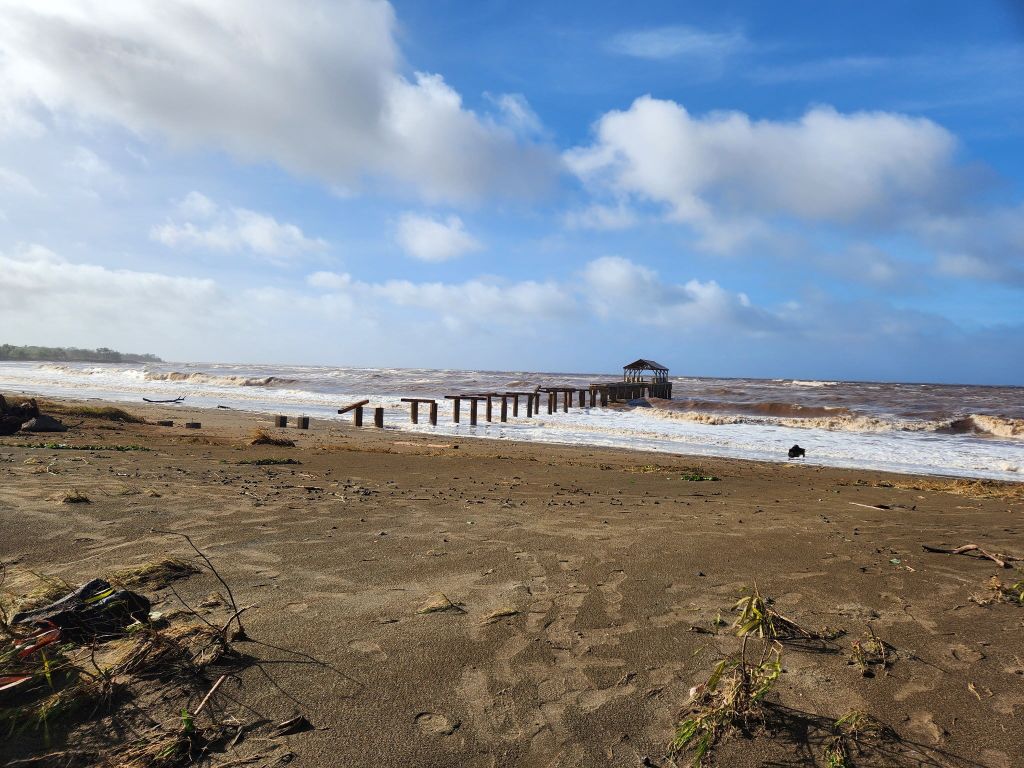
Waimea State Recreational Pier was ripped apart, Martin said. “The first half of the pier — the wooden part is all gone,” he said. “The hale and cement are still there.”
Ten miles up the road, Port Allen small boat harbor was hit hard. The state Department of Land and Natural Resources reported piers were destroyed and several vessels sunk in the harbor.
Roofs were partially torn off office buildings and other structures at Nāwiliwili small boat harbor as well, according to information from DLNR spokesperson Andrew Laurence.
Farms in Kekaha, including Kauaʻi Shrimp’s operations, “took a beating,” said Mike Faye, manager of Kekaha Agriculture Association.
“We had water come in off the ocean,” he said. “It doesn’t look good.”
Weathering The Storm
For many, Lowell’s path was a harrowing reminder of Hurricane ʻIniki in 1992 — a category 4 storm that caused an estimated $3 billion in damage. Like ʻIniki, Lowell had been passing south of Hawaiʻi but took an abrupt northward turn, heading toward the west end of the Main Hawaiian Islands.
Kauaʻi Mayor Derek Kawakami signed an emergency proclamation for Lowell Saturday as the storm approached, and the Kaua‘i Emergency Management’s Agency’s incident command center “lit up like a Christmas tree” Monday night into Tuesday morning, as Ushio described it to KHON2. It was a “very, very busy night,” he told the TV news station.
DLNR provided dam status updates for KEMA throughout the night, according to Laurence. “Although several dams on Kauaʻi had elevated water levels,” he said by email Tuesday afternoon, “all structures continue performing as expected and are now leveling off or decreasing.”
On average from Monday at 12 a.m. through the duration of the storm, the heaviest winds were recorded on Kauaʻi’s North Shore, in Kīlauea, where maximum sustained winds averaged 28 mph, while wind gusts were stiffest in Waipā, at nearly 74 mph, according to Hawaiʻi Mesonet, a network of weather data stations.
According to the National Weather Service, at 7:51 p.m. Monday at Barking Sands, winds were registered at 37 mph with gusts of 69 mph.
Lower Limahuli, near Hāʻena, took on just shy of 16 inches of rain, the most recorded on the island, while Keālia experienced the least at 3.8 inches, according to Hawaiʻi Mesonet data.
The mesonet, a University of Hawaiʻi initiative, is still being built out across the state and hasn’t got a station on the Westside of Kauaʻi yet. The initiative is still compiling a full set of data from the storm, which will include data from the National Weather Service’s RAWS network, which recorded gusts of up to 92mph in Puʻu Lua.
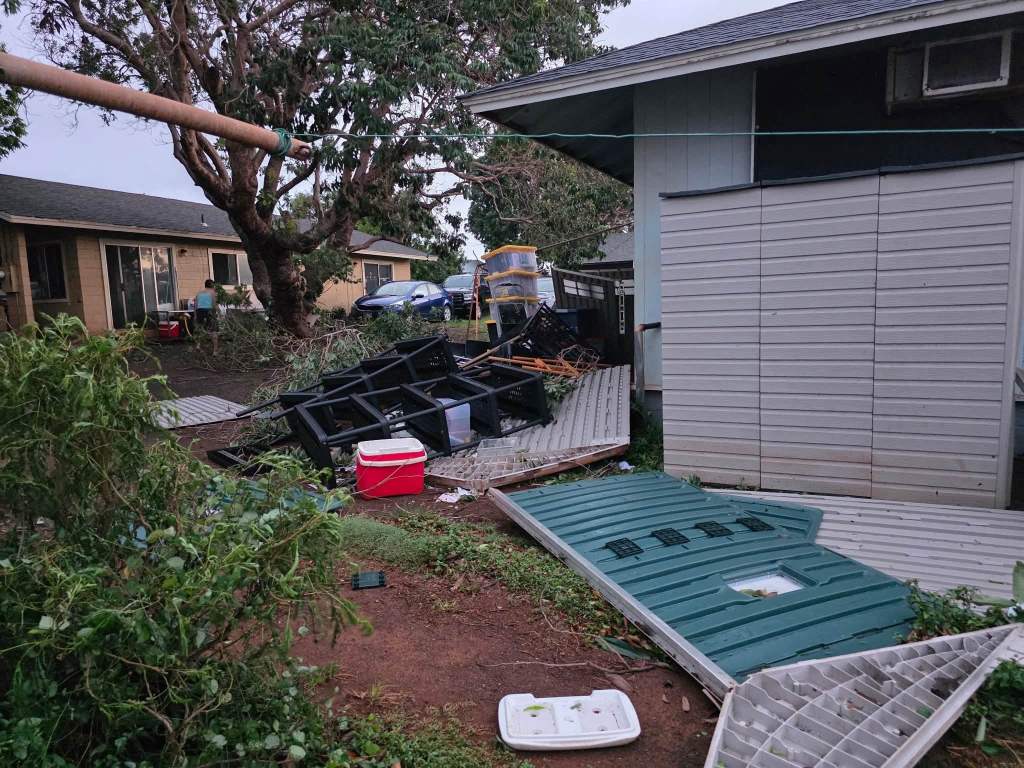
Like many on the island, Vance Pascua of Lāwaʻi lived through hurricanes ʻIniki and Iwa, when his home sustained more damage.
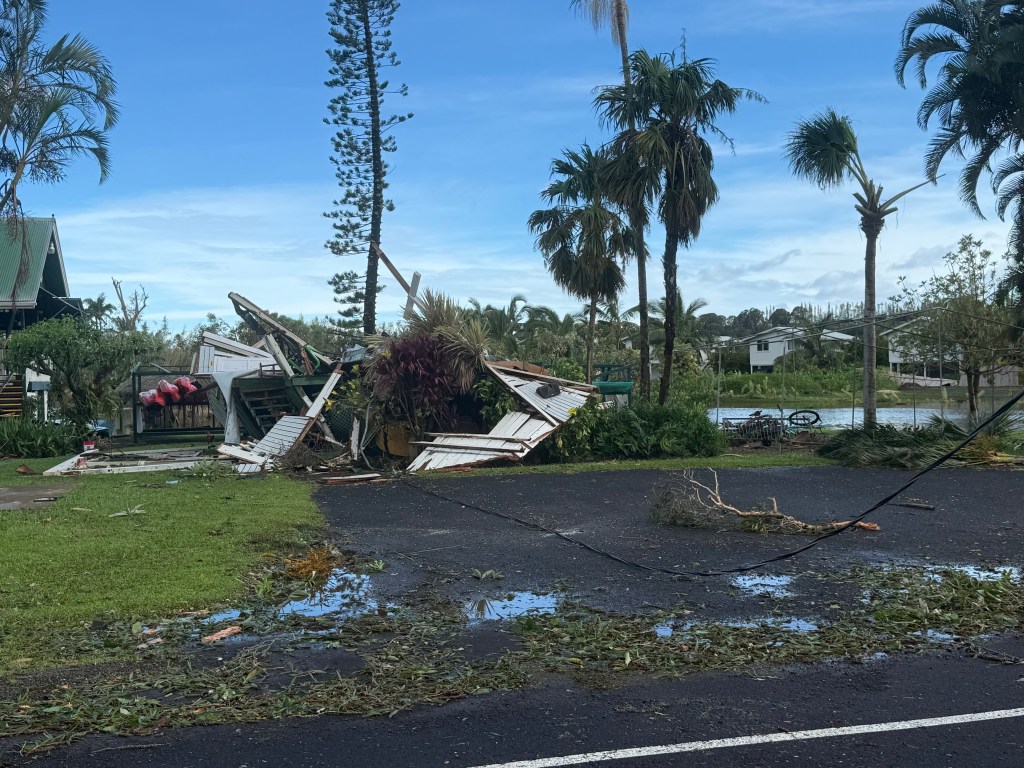
Pascua said he feels lucky to have been spared from Lowell’s worst impacts. His home was damaged in ʻIniki and Iwa, but his house and Hanapēpē property were largely spared from the impacts of Lowell’s winds, although they shredded his shed in Hanapēpē.
The first thing Pascua did Tuesday morning was call family members who are scattered around the island.
His parents in Poʻipū are safe and he was waiting to hear back from others in Kapaʻa, though “it sounds like everybody weathered the storm,” he said.
Waves Jumping Beaches
On Oʻahu’s Westside, sections of Farrington Highway were closed as waves crashed across the highway. Video on social media earlier Tuesday showed waves in Mākaha jumping over the beach and onto the highway.
The Honolulu Police Department said Tuesday morning that Farrington Highway between Kaukama Road and Princess Kahanu Avenue in Nānākuli was closed, thus cutting off Māʻili, Waiʻanae and Mākaha from the main thoroughfare that connects the rest of the island. HPD advised motorists to use alternate bypass routes like Paakea Road, which also flooded in March during back-to-back storms.
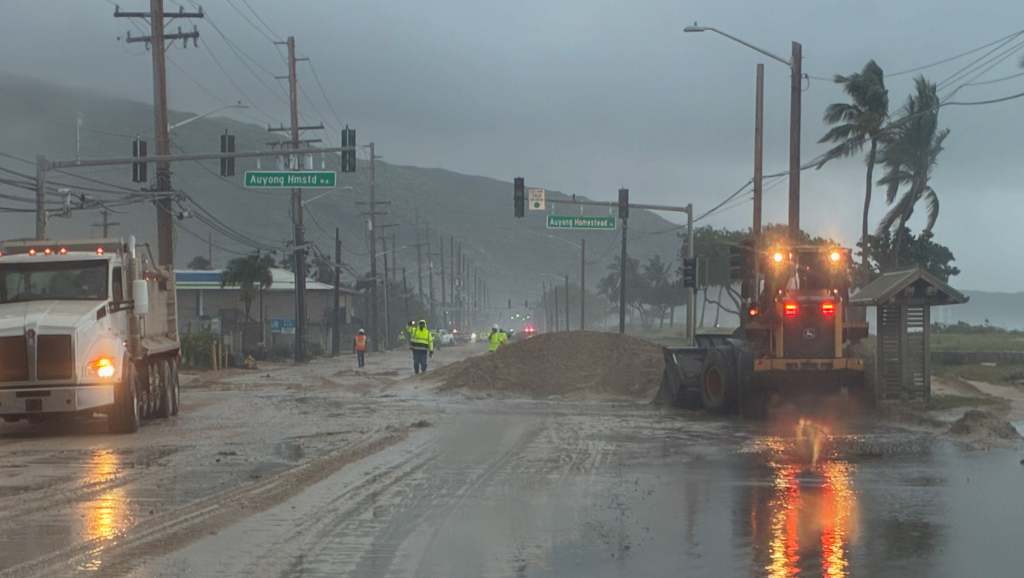
Parts of Kamehameha Highway in Windward Oʻahu flooded Sunday afternoon after water jumped over the banks of the Waiāhole and Waikāne Streams, closing the highway for several hours. Data from the U.S. Geological Survey shows both of the streams flooding around 2:30 p.m. Sunday. The highway has since been reopened and cleared of debris.
Both of the streams are prone to flooding during heavy rains. The state Department of Transportation recently cleared 2.5 square miles of waterways in the Waikāne Stream and removed about 30 tons of debris from the mouth of the Waiāhole Stream near the Waiāhole Poi Factory.
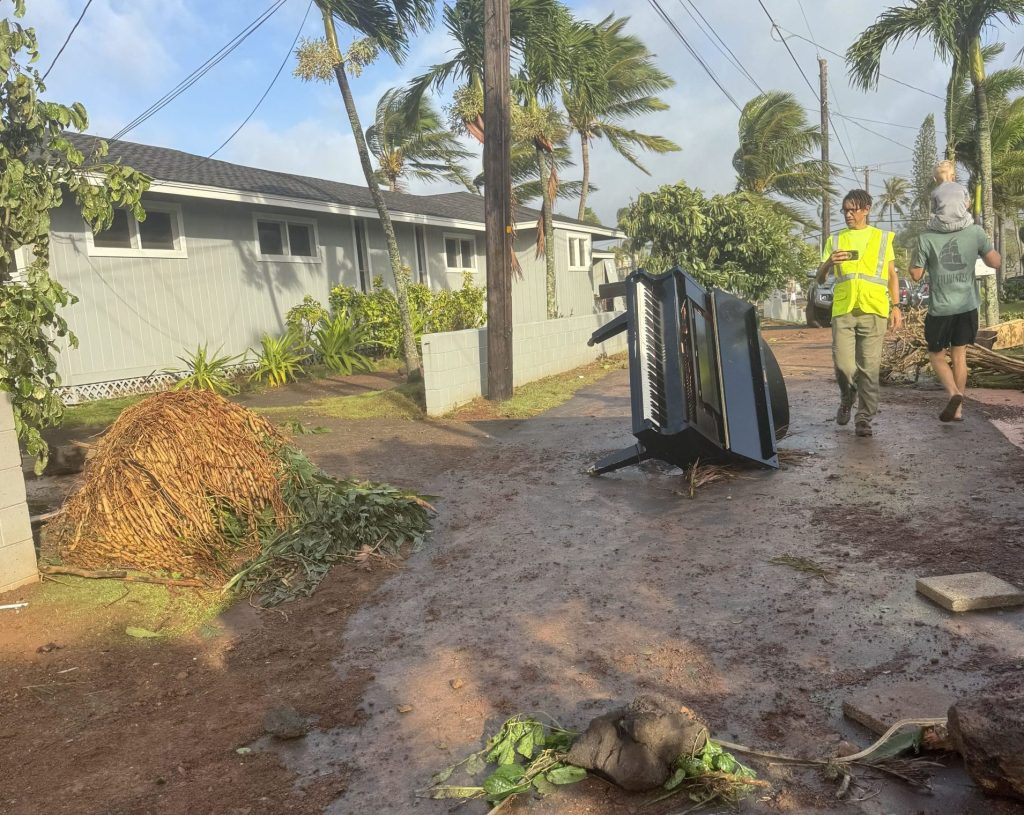
Several factors impact coastal flooding, Liam Tsamous, a meteorologist with the National Weather Service, told Civil Beat. Storm surge — which causes the overall sea level to rise — combines with both tidal shifts and waves to send damaging quantities of water inland.
In the case of Hurricane Lowell, Tsamous said, there was a high tide Monday afternoon that played a role, but “the heavy lifting was done by the surf,” as wave heights were in excess of 25 feet.
“If you have really powerful winds over the ocean blowing over a long distance, that’s called fetch,” Tsamous added. “There was a good wide fetch for the hurricane to consistently blow over a long period of time, which allowed the wave heights to get so large.”
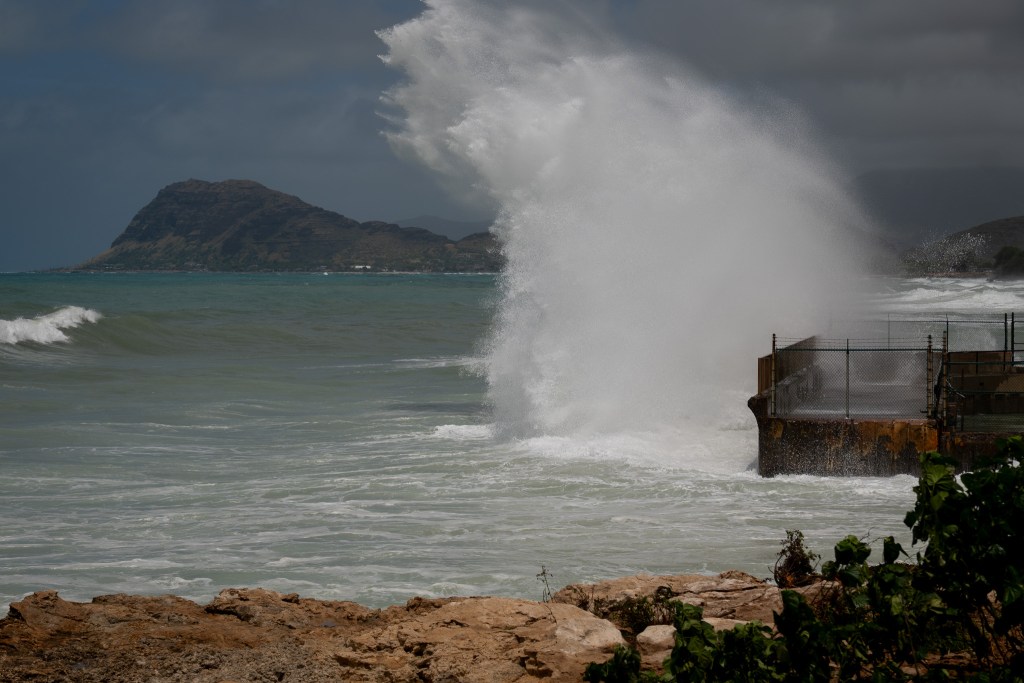
For Hawaiʻi island, swaths of which were ravaged by Hurricane Lala in August, high surf warnings were in place for all south- and west-facing shores and a high surf advisory was up for east-facing shores through Tuesday.
All state and county beach parks in West Hawai‘i, including Honaunau Boat Ramp, were closed Tuesday due to dangerous surf conditions and shoreline debris, the Hawaiʻi County Civil Defense Agency said.
In Maui County, multiple roads, particularly around Kīhei in South Maui, were closed due to debris and flooding. Officials also opened service facilities in Lahaina and Wailuku Tuesday morning for residents who needed electricity to charge their devices.
The facilities at the Lahaina Civic Center and the Velma Wayne Santos Community Center in Wailuku offered charging stations but people needed to bring their own charging cables.