

Painful Lessons From ʻIniki Help Kauaʻi Homes Weather Hurricane Lowell
Requiring hurricane clips to prevent roofs from blowing off and other updates to the building code were hard-fought victories 30 years ago. Some are searching for more safeguards as cleanup continues on the Garden Isle.
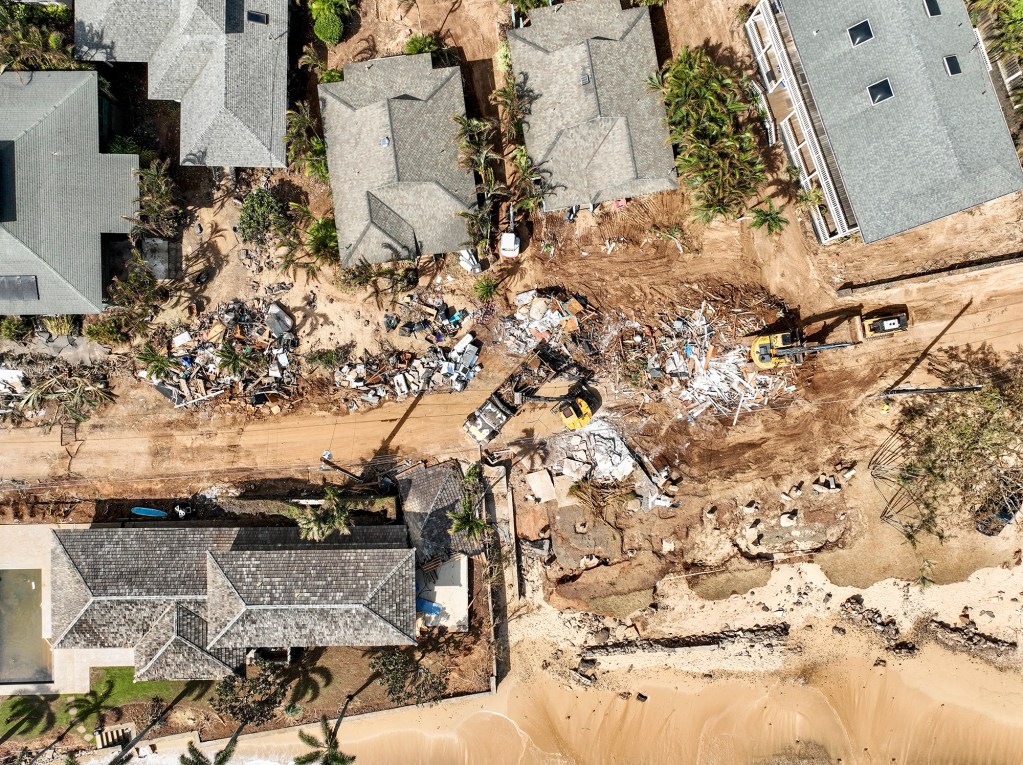
Debris piles grew quickly on Ho‘ona Road in Hurricane Lowell’s aftermath as property owners, friends and families fired up generators and chainsaws and piled ruined flooring, soggy mattresses and busted furniture along the flooded South Shore road.
It was a mess, to be sure, but almost everyone still had a roof over their heads. In fact, relatively few on Kaua‘i were displaced by the storm earlier this month. Many residents thanked lessons from Hurricane ʻIniki for that good fortune, praising the stronger building requirements that the county mandated 30 years ago.
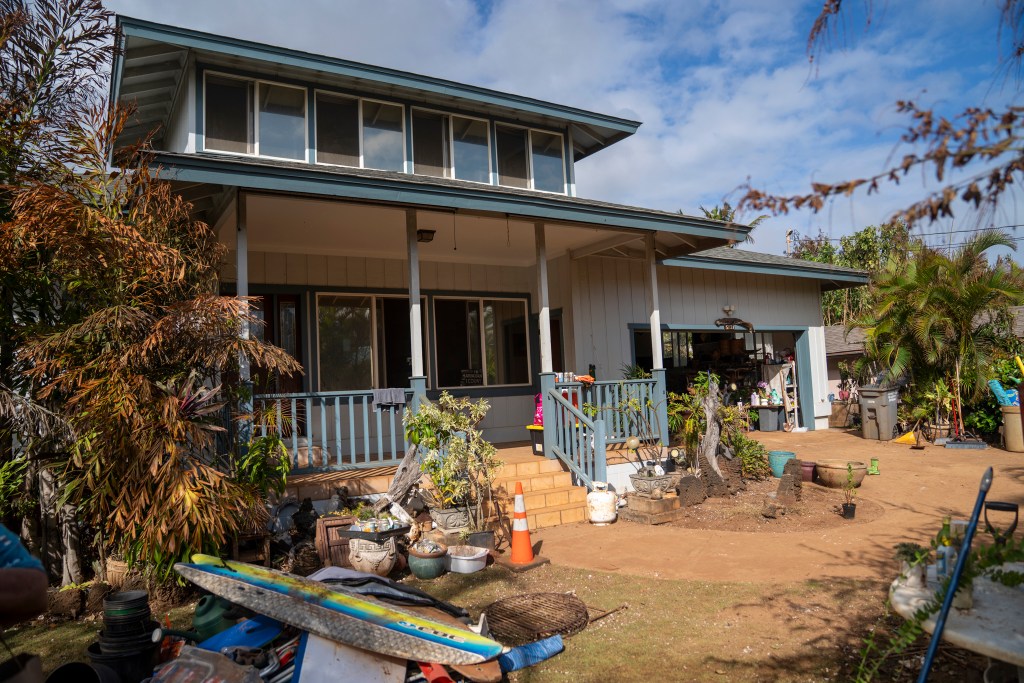
Longtime resident Julie Souza is more than familiar with storms on Ho‘ona Road. She lived there through hurricanes Dot and Nina in the 1950s and Iwa in 1982 before ʻIniki completely destroyed her home 10 years later. She rebuilt it on the same lot, which has been in the family for more than a century, set it farther back from the ocean and secured the roof to the framing with hurricane clips.
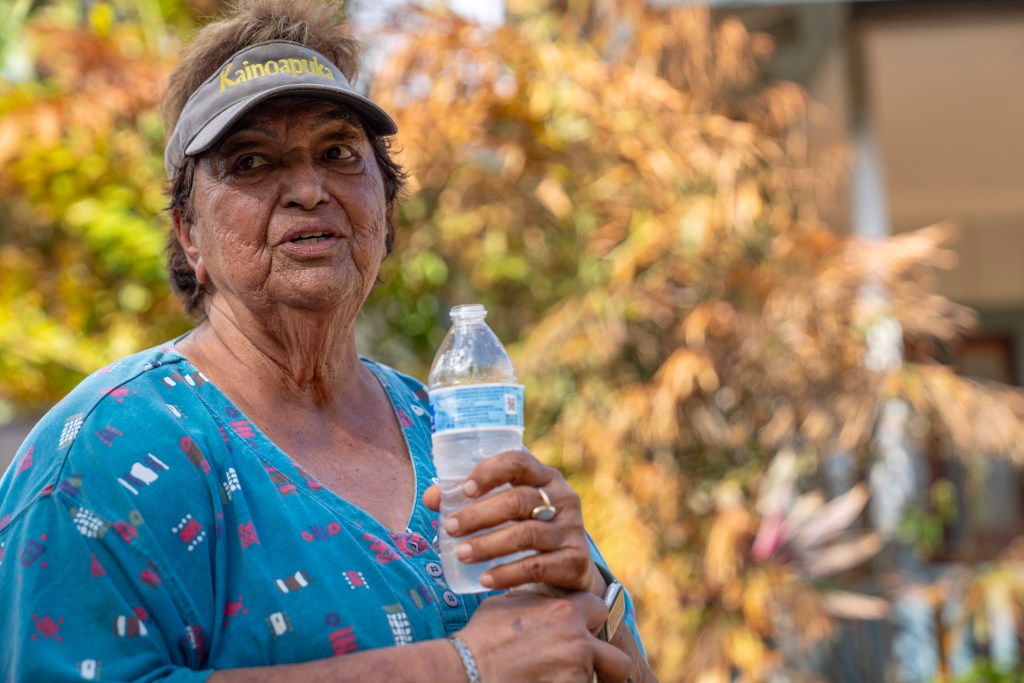
While Lowell didn’t pack the same punch as the Category 4 ʻIniki, it still brought intense winds, blasting rains and storm surges. Her home withstood it all with nary a shingle missing. The yard collected mud, crumbled bits of drywall, errant surfboards and assorted cans of cat food among other debris, but the family stayed safe and the structure of the house remained sound.

“We didn’t get water past the first step,” she said as neighbors and kids helped clean up the property earlier this month.
Islandwide, 67 homes were seriously damaged and 10 were leveled by winds, flooding and storm surges from Lowell, county officials said. The storm has motivated others to search for ways to improve their homes, looking to see where additional building codes could make them more storm-proof with the increasing likelihood of destructive weather events in the future.
“Being able to harden our structures to handle the array of different hazards that come with climate change is crucial,” Kauaʻi Planning Director Ka‘āina Hull said. He didn’t have specifics yet on what new measures homeowners could take but strengthening homes remains top of mind as the county continues assessing damage.
The state is taking steps to revive the State Building Code Council in the meantime, partly in a bid to ensure future builds across the state are as safe as possible from the growing threat of natural hazards. Officials are contending with the persistent tensions between the greater protections and the cost and speed of building or rebuilding.
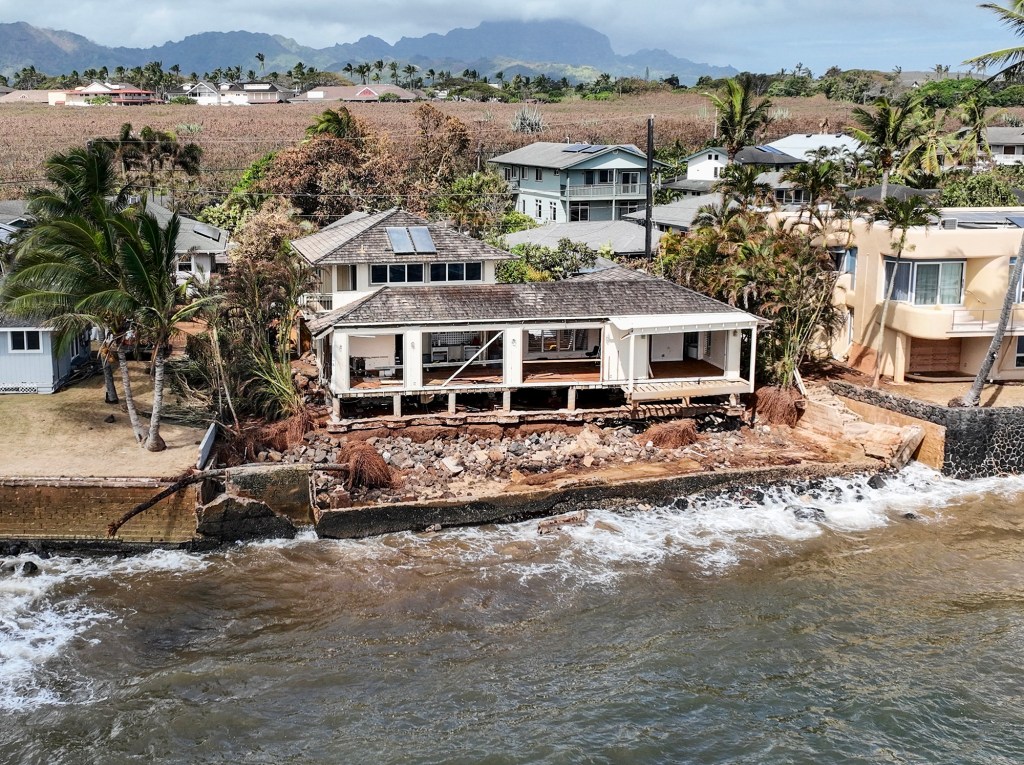
Souza, who grew up on Ho‘ona Road, said her home was largely spared from Lowell’s 20- to 30-foot waves thanks to the newer vacation rental across the street absorbing the waves’ strongest impacts. But she also credits the changes she made after ‘Iniki.
Her cousin rebuilt the family’s main house, elevating the home 2 feet off the ground and building it at the back of the property. Water in Lowell’s waves came into her yard, carrying debris, rocks and sand, but water never entered her home or garage.
“Stay away from the ocean and the ocean will leave you alone,” Souza said.
The Resistance
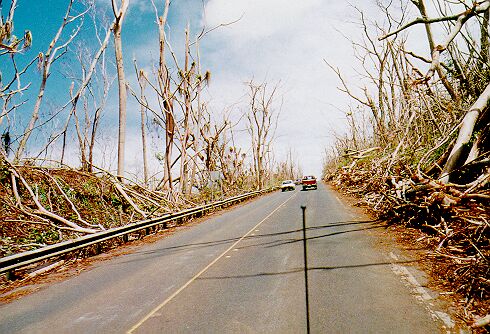
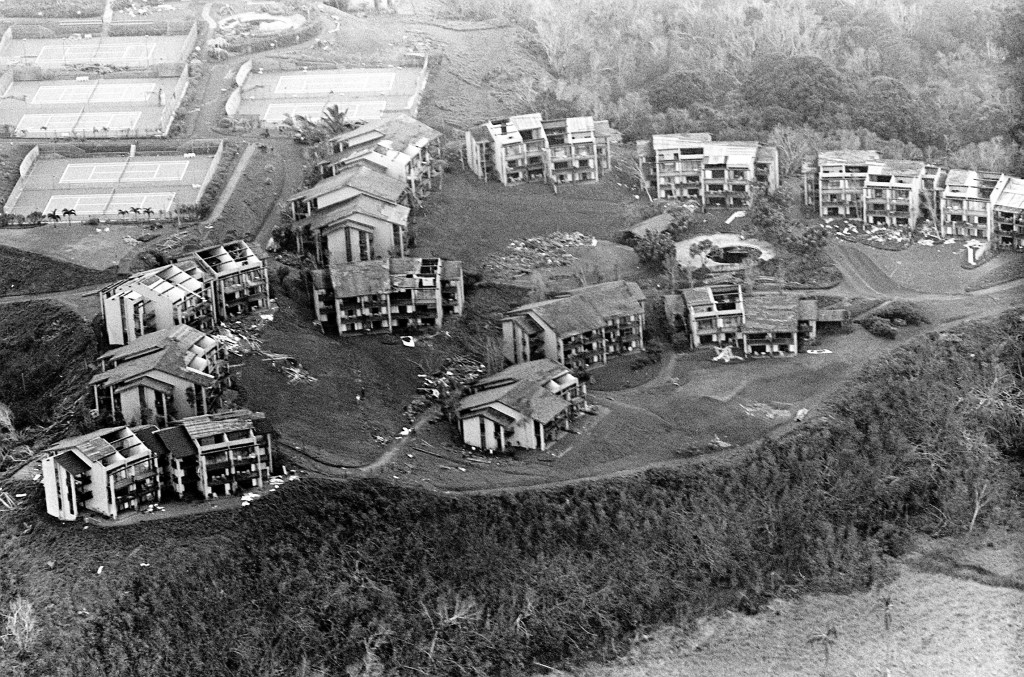
Kauaʻi County changed its building codes within a month of ʻIniki, led by then-Mayor JoAnn Yukimura and Planning Director Jeff Lacey. The pair feared hastening the island’s rebuild would only set it up for another widespread disaster, as happened post-Iwa, when the county allowed residents to rebuild under old standards.
A team of engineers found in 1992 that construction and reconstruction after Hurricane Iwa was a major culprit. The most common shortcoming was a lack of hurricane clips, which fasten roofs to the frames of homes, among other shoddy construction methods.
It came as no surprise to Arthur Chiu, an engineer investigating the damage. He had advocated for hurricane clips following Iwa. His message was ignored, making ʻIniki’s impacts “very painful.”
“There was a lot of resistance,” Yukimura said. “People were saying, ‘You want us to learn a new building code? We just have to rebuild. Just let us rebuild. Plus, it’s going to cost us more.’ The structural engineer said it was going to add 1% to the housing cost.”
It was only after council members and residents realized they may not get future federal relief for disasters that many relented, Yukimura said, agreeing to increase code requirements for rebuilds and new builds.
The other counties followed Kauaʻi’s lead, mandating the use of hurricane clips before taking requirements further, latching roofs to foundations. That automatically helps homes sustain at least Category 3 winds.
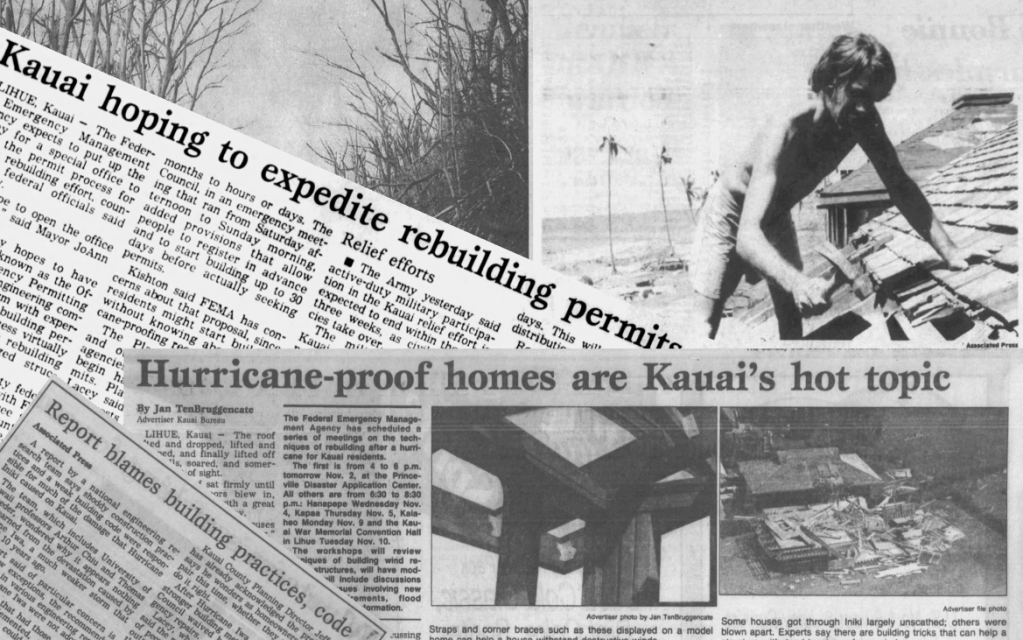
It’s just an example of how the increased requirements helped residents better weather storms and natural disasters after ʻIniki, Yukimura said. But wind is just one facet of a hurricane’s wrath, as homes like Souza’s and many across the south and west sides of the island faced pummeling waves and ocean inundation.
Dennis Hwang, who works for the University of Hawai‘i Sea Grant College, said residents and officials are often misled when considering future disasters by focusing on the biggest problem from the most recent disaster. Many are worried about storm surge now because of Lowell, he said, which was a major subject during a seminar he held by on Monday.
“But every aspect of a hurricane should be given proper attention,” said Hwang, lead author of the Homeowner’s Handbook to Prepare for Natural Hazards. “People have gotten in a lot of trouble because they will equate one system to the next.”
That was the case with hurricanes Irene and Sandy in New York, in 2011 and 2012, he said. While Staten Island residents evacuated during Irene, only for the island to be relatively unaffected, many didn’t follow evacuation orders during Sandy, which killed 24.
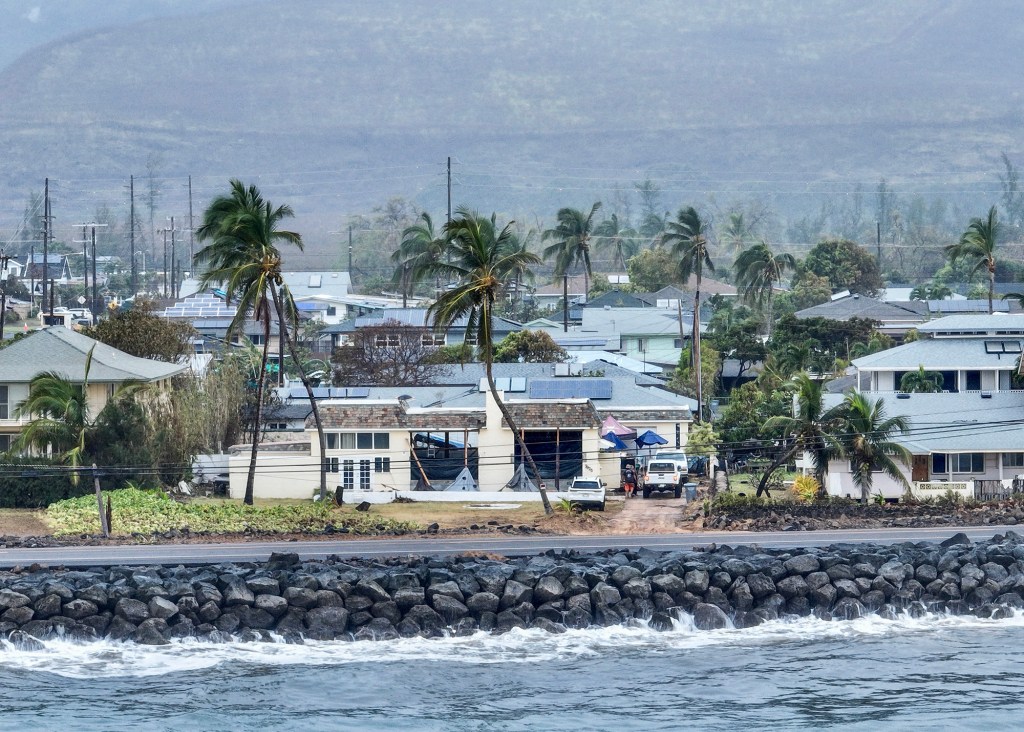
On the low-lying coastal flats of West Kaua‘i, much of Kekaha sits within flood inundation and tsunami evacuation zones. While Lowell’s storm surge didn’t hit the Westside as hard as the South Shore or North Shore, flooding was still Kekaha resident Kelsey Hesapene’s main concern.
His home sits atop a concrete foundation less than a quarter mile from the beach. The house was built in the 1970s, so it has single walls. Hurricane clips were added after ‘Iniki, he said, which helped the house withstand Lowell’s strong gusts.
Hesapene said Lowell has made him think about strengthening his house for the next hurricane, recognizing that residents have to work with nature. But changing his home to double-walled construction and raising it up a couple of feet to better withstand floodwaters would require a full rebuild. He thinks it would be worth it, but he’s considering the need to move farther inland.
Building The Code
The Kona low storms in March and hurricanes Lala and Lowell reignited concerns similar to those felt in the wake of the 2023 wildfires that razed Lahaina, killed 102 and beset different parts of the islands, as building standards came into officials’ focus alongside vegetation management.
Kauaʻi has led the state in its bid to protect itself from the perils of wildfire, and some argue there is a crossover benefit in doing so that will benefit the island from hurricanes as well. Even the natural hazards are connected, as a record-breaking El Niño season is expected to feed an especially dangerous fire season next year.
“There’s this natural dovetail between the different hazards and how we get safe for them,” said Elizabeth Pickett, Hawaiʻi Wildfire Management Organization co-executive director.
Being able to properly seal a house is incredibly important in Hawaiʻi’s often wind-driven wildfires, she said, while also important during hurricanes for perhaps more obvious reasons. Embers have been known to fly into homes after roofs are torn off, which can more easily ignite the structure.
The Kaua‘i County Council is considering a bill that would require all new homes to follow certain construction standards and landscaping rules so they can better withstand wildfires. And while Yukimura generally supports safety measures, when climate change threats get worse by the day, it’s difficult to reconcile through adaptation alone. Mitigation is also critical, she said.
“You can’t adapt forever to an ever-warming planet,” she said.
The legislation, which the wildfire management organization helped draft, has become hotly contested as contractors clash with safety experts on costs.
It’s a common thread in discussions about building regulations. The State Building Code Council has been frozen since late 2024 as part of Gov. Josh Green’s ongoing emergency proclamations on emergency housing. The council oversees four building codes that dictate home safety, with electrical, building, energy and plumbing standards.
Emergency and building professionals have raised alarms about the state’s efforts to streamline the council’s work, after attempts by lawmakers to smooth the process. But the council, which oversees the state codes – which inform county codes – has long been handicapped by lack of funding, staff and the constant push and pull of protection, price and consistency.
Some hope the State Building Code Council will resume its work in the coming months, as the state works toward using $350,000 budgeted this year to hire two staff members. It will be the first time the council will be staffed or receive any funding, despite that being its original intent when created 20 years ago.
The council’s new makeup is a result of the Simplifying Permitting for Enhanced Economic Development Task Force, which was formed in 2025, a 34-member working group charged with modernizing and streamlining Hawaiʻi’s permitting system. That includes addressing shortcomings in the code development process.
“The council operated for years through the efforts of its volunteer members,” Scott Glenn, Green’s housing chief, said in an emailed statement. “We are working to fill these positions as quickly as possible so that the SBCC can resume its work on State Building Codes in a way that allows the council to hit the ground running.”
It is especially important as county codes have missed three renewal deadlines. If they’re too out of date, federal funding for disaster relief may be rescinded.
Souza, a descendant of Antone Vindinha, the island’s first mayor, is committed to doing what it takes to stay put in her home on the South Shore. She told the Associated Press in 1992 that losing her composite shingle roof during ʻIniki – a new addition after Iwa tore off her corrugated roof – was the price of living in paradise. So if the county comes up with more requirements to improve safety after Lowell, she’ll oblige.
She’s witnessed many of her old neighbors leave her street for various reasons over the decades but is not letting five hurricanes move her away.
“I’m not going to go anywhere,” she said. “This is for my family.”


