

Hawaiʻi’s 1990s Meth Tide Swept Up These 4 People. Only 2 Survived
Over four decades, the losses piled up — prison, homelessness, illness, children taken by the state — and eventually, death. But the survivors would find sobriety.
This is part of an ongoing series exploring Hawaiʻi’s methamphetamine crisis. Read the other stories:
One day in 1990, Kēhau Kanohokula’s best friend coaxed her to go to a Maui hotel room to party with some drug dealers from Honolulu.
Kēhau was no stranger to getting high. Though only in her late teens, she’d been snorting cocaine for years. But the Honolulu dealers had something she’d never seen before, a drug you smoked through a glass pipe.
It didn’t make her euphoric right away and afterward she couldn’t sleep and didn’t want to eat. But it would soon consume her life.
Kēhau had just taken her first hit of ice. The new, smokable form of methamphetamine had taken off on Oʻahu a couple of years earlier, and by that time had filtered out to the neighbor islands.
The novel drug was about to derail lives across the state.
Among them were four young people on Oʻahu and Maui. Two were siblings. The other two, Kēhau and a young man, did not yet know each other yet, but their lives would intersect – or more precisely, collide – two decades later when they married.
In some ways, they were simply in the wrong place at the wrong time. In others, though, they were particularly prone to ice’s allure.
All had experienced childhood trauma. All were Native Hawaiian, a group disproportionately susceptible to ice. Years later, an exhaustive study of drug use released by the University of Hawaiʻi would find Native Hawaiians almost twice as likely to be currently using meth or to have used it at any time in their lives as the state population as a whole.
Over the next four decades, they would try and fail and try again at drug treatment. The consequences would pile up: children taken by the state, trucks repossessed, electricity and water shut off. Domestic violence, prison, homelessness and illness.
One of the siblings would trigger the other’s addiction, and Kēhau’s husband would trigger hers, almost as if it were a contagion. On other occasions they would try desperately to help each other. They would cut off longtime friends to avoid temptation, and feel lonely and isolated as a result.
Two would eventually find sobriety.
Two would die from their addictions.
Swept Up In A Wave Of Meth
Kēhau grew up in a two-bedroom apartment in Lahaina with her mother and father. The neighborhood wasn’t the best, but the apartment was pleasant and comfortable.
She was young and pretty and wanted to have fun with her friends. She had been sexually abused at the age of 8. But as a teenager, she was incapable of reflecting on what might be driving her desire to lose herself in drugs.
Kēhau’s boyfriends were all dealers who kept her well supplied.
“When you’ve got a pretty face, you get all the drugs you want,” she said.
Kēhau was on the cusp of a huge spike of meth use and addiction in Hawaiʻi. In the 1990s it would reach every echelon of society and grab the attention of policymakers and the media.
The number of Hawaiʻi residents who had used meth would shoot up from 3.8% in 1991 to 11.9% seven years later, in 1998. About 8,100 sought treatment for meth dependence that year, a 33% increase in just three years.
Recovering addicts at a town hall meeting in 1999 demanded more money for treatment.
That same year, Hawaiʻi was named by the federal government as one of five new High Intensity Drug Trafficking areas in response to the prevalence of meth, allowing federal anti-drug agencies to coordinate with state and local counterparts.
The public was shocked to hear about prominent people whose lives had been upended by ice. Mackey Feary, a well-known singer for the Hawaiian rock band Kalapana, had relapsed after a very public struggle with meth and received a 10-year prison sentence. In 1999, he hanged himself with bedsheets in his cell.
‘You Won’t Have A Home To Come Home To’
On Maui back in the early 1990s, ice would keep Kēhau awake for three days at a time. She’d be so jacked up that, when she tried to eat a hamburger, she found herself unable to swallow the bread.
She was living in rental cars, hotel rooms, wherever she washed up during ice binges.
Sometimes she’d just need to get away from the madness – the “go go go” as she called it – and return to the apartment where she’d grown up in Lahaina.
On one such occasion, she went into her mother’s home office and noticed a letter on her desk. Her mom apparently intended to send it to the local newspaper. It was addressed to Kēhau’s imaginary supplier.
Dear Drug Dealer, Kēhau’s mother wrote, What do you have to offer my daughter that I can’t give her? When she comes home, her eyes are dark and she sleeps for days. I don’t recognize her.
Kēhau didn’t get it. She didn’t think ice had changed her at all. It would take years for her to realize that her mother was seeing something she could not.
But it did make Kēhau cry. “And then the first thing I had to do was go get high,” she said.
| Have you or a loved one been affected by meth? Share your story. |
In 1994, when Kēhau was 19, she got arrested for drug possession and the court required her to show she was clean. But she failed to show up for the required drug testing and ended up back in jail.
Sent to a treatment program, she ran away and got caught. She’d been back in jail for several months when a sergeant told her she was still eligible for treatment and filled out the paperwork for her. But when Kēhau got there and took in the scene of people in meetings talking about sobriety, she decided she’d rather be behind bars.
Jail did not seem like a great hardship. Everybody inside knew her, including drug dealer boyfriends. Her parents were putting money in her jail account.
“It was like camp,” she said. “Everybody that you hang out with on the streets is there. It’s like ‘Chee hoo.’ That’s the insanity, that you think, ‘We’re all having fun in here,’ and we’re really not.”
She was released after about a year, moved back into her parents’ apartment, and stayed off ice for a while. Then a friend invited her to a party. She didn’t intend to smoke meth, but when the pipe came out, it just happened.
Soon after, her brother came by the family’s apartment in Lahaina and mentioned, in front of Kēhau’s father, that she never seemed to sleep.
Her father understood what that meant. He asked to talk to her alone. If she went to jail again, he said as his eyes welled with tears, he and Kēhau’s mother wouldn’t be there for her anymore.
“I won’t put money on your books,” he said. “You won’t have a home to come home to.”
So she threw away the ice she had snuck into the house. And she quit.
Two Siblings, Parallel Spirals
Bill Shoaf grew up with his twin brother Bob and little sister Kapu in Waiāhole Valley on Oʻahu. Their family had such deep roots there that a local legend had it that their great-great-great-grandparents were shapeshifters who could turn into a shark and a lizard to swim the waters around Mokoliʻi.
But now their home was saturated in drugs.
Their dad, a heavy equipment operator with Popeye muscles and a violent temper, used just about every drug in the book. He told his children that as a soldier in Vietnam, the military issued him uppers. After the war, he got hooked on meth pills. When the smokable form took hold in Hawaiʻi in the late-1980s, he switched to that.
From an early age, Bill showed signs of identifying as female. When Kapu was 3 and Bill was 7, Bill asked if he could put on her Wonder Woman underwear. “Daddy’s not going to like you in my clothes, you know,” Kapu told him.
Bill – who eventually presented as female and took on the name Lily – was the only one in the family to graduate from high school.
But Lily also had a drug problem. She started smoking ice when she was 16, the year that meth burst onto the scene in Hawaiʻi. Four years later, by the time she was 20, she had been through at least three drug rehabs.
In 1994, she fought with a security guard who caught her shoplifting at the Sears in Kāneʻohe. She got five years probation. But when she violated probation by failing to get drug treatment and meet other conditions, the judge sent her to prison for 10 years.
Kapu, four years younger and still at home, was soon going down the same road.
One day, she sat on the wall in front of their house watching her mother in a rainbow sundress walking out with her bag to catch a bus to Pearl City to get away from her father.
“I have to leave or he’s going to end up killing me,” she told Kapu.
She promised to call but Kapu didn’t hear from her for a year. That’s when an aunt picked her up and, without mentioning where they were going, drove to the women’s prison in Kailua. Her mother was serving time for prostitution.
“Shoaf, your children are here,” the prison guard shouted.
Kapu bore a striking resemblance to her mother, and it seemed to eat away at her father, who berated her for it. Her new stepmother punched her in the nose during a fight.
And so, at 13, Kapu ran away from home to Waikīkī, and hooked up with a 34-year-old boyfriend who dealt ice and kept her supplied. A series of sugar daddies put her up in apartments and paid her living expenses. She loved getting leather outfits at Bebe in the Kāhala Mall.
Barely 15, she married a man almost two decades older, who offered a sanctuary from the streets at his home in Kāneʻohe.
Still high school age, she kept house and looked after her husband’s four children, the youngest 3 years old and the oldest only a couple years younger than Kapu. Soon she was pregnant with the first of three of their own.
“I watched all my possible classmates get up in the morning, and walk past my house to the bus stop and get on the bus and go to school,” she said.
But there was one good thing about Kapu’s move to Kāneʻohe – she’d gotten sober.
It lasted for several years, until 1998, when she filed for divorce.
She relapsed – and her ex, still trying to get back together with her, started using, too. She persuaded him to get a home equity loan to fund their habits.
Her older, better-educated husband got custody of the children, and that prompted Kapu to turn even more often to the pipe.
A few years later, in 2001, she was arrested for forgery. Ensnared in the criminal justice system, over the next several years she violated probation and was convicted on new fraud offenses.
She spent eight and a half years in prison, where she would sometimes see the guard who had called out to her imprisoned mother when Kapu visited as a girl.
Now both Shoaf siblings’ ice addictions had landed them behind bars.
A Fateful Meeting
Tommy Manijo was born on Maui but grew up on Oʻahu’s North Shore. As a young boy, he witnessed his stepfather beating up his mother.
When Tommy was 10, a friend who was visiting hanged himself from a tree. Tommy found him there, but was too afraid to cut him down. It didn’t matter: The friend was already dead.
Tommy used drugs from an early age, and also started dealing – first weed, and then harder drugs, including meth when it appeared. He followed the example of his stepfather by using violence to get what he wanted.
In 1994, he was arrested for shooting into a car when he saw his girlfriend inside with another man. As that case proceeded, he was arrested again in 1996 for holding hostage the family of a Waipahu man who owed him money. It was all fueled by meth.
He got five years in the first case and 10 in the second.
In 2007, he was arrested again, this time on the North Shore of Oʻahu for stabbing a man in the ribs with a pocket knife in a drug dispute. He was convicted and sentenced to five years in 2009.
Tommy went through several rounds of drug treatment during his stints in prison, with mixed results.
When he got out of prison in 2010, his niece got in touch with a woman who ran some of the first e-cigarette businesses in Hawaiʻi to see if she would be willing to give her uncle a job. This business owner also had a history of meth addiction – Kēhau.
After getting sober, she’d started smokeshops on several islands. By then, she’d had three children with two men and bought a house in Waiʻanae. She decided to give Tommy a chance and offered him a job.
“I thought, ‘If I can change, he can change’,” she said.
Kēhau had so much faith, in fact, that in 2012, she married him.
Getting Sober
The Shoaf siblings’ repeated failures at drug treatment in the early 2000s were no fluke. Hawaiʻi officials were bemoaning the lack of effective treatment for ice addiction.
In 2004, around the time Lily was getting out of prison, those officials testified to Congress about just how difficult it was during a hearing on Hawaiʻi’s meth problem, titled the Poisoning of Paradise.
Billy Kenoi, assistant to Big Island Mayor Harry Kim who would become mayor himself four years later, said that he’d sent letters to programs and experts around the country asking what seemed to work for meth. No one really knew, he said.
“A lot of people shrug,” he said at the hearing. “They’re still not sure.”
Others at the hearing warned that the standard 30-day treatment was nowhere near long enough for meth addiction, and that in some rural parts of the state, treatment was simply unavailable.
Still, after going through pretty much every rehab program on Oʻahu, Lily in 2007 beat the odds and got sober. Her sister Kapu got out of prison six years later and was released to a halfway house, where she also got treatment and swore off ice.
Lily didn’t forget what she’d been through. She would pick up Kapu and drive to a Chinatown street known as “One Way,” a haunt for trans prostitutes. There, she would drop off clothes, food and cigarettes for her friends still living on the street.
Lily’s friends were at the intersection of two trends in meth use in Hawaiʻi. The 2022 UH study would find current and lifetime meth use to be several times higher for gay and lesbian residents than the population as a whole. And homeless people listed meth as their meth primary drug at a significantly higher rate than Hawaiʻi residents generally.
In 2013, Lily met a man on the dating site Grindr. They fell for each other and moved to a house in Waipahu but pretended to occupy separate rooms to keep their secret from the owner, who also lived there.
When that house was sold, they moved to their own apartment in Mākaha.
Lily had a job as a laborer with the city of Honolulu, spending her days on a truck emptying the trash at bus stops from downtown to the University area. She had gotten her life so much in order that she was able to buy matching black pick-ups for herself and her boyfriend.
Meth Takes Everything
Tommy and Kēhau had been married for two years when she started to see signs that he had gone back to smoking ice. He’d stay out all night and when he did come home, he’d avoid being around her.
He had been the one to cook dinner – Filipino dishes and piquant soups – but then he stopped.
Tommy insisted they check in on one of Kēhau’s smokeshops in Wahiawā every day, which made no sense to her. Why that store in particular? Afterward, he invariably wanted to swing by a friend’s house nearby in Haleʻiwa to say hi, while Kēhau waited in the car.
One time, when he came out, his jaw was shaking. Kēhau recognized the reflex. It’s what happens when an ice smoker gets high again after not using for a long time.
She finally confronted him, and he admitted he’d relapsed. “He kissed me on the forehead,” Kēhau said, and walked out of the house.
Kēhau went into their bedroom, absorbing what this would mean, when she heard what sounded like someone kicking the wall from the garage. When she got there, she found Tommy hanging by his neck. She cut him down in time to save his life and called 911.
About a month after Tommy came home from the hospital, Kēhau – furious about the turn their marriage had taken – walked outside to where Tommy was working on some cars and asked him to hook her up.
In her raw state after the suicide attempt, Kēhau saw it as a test. She’d been sober at this point for 15 years or so. If he really cared about her, he wouldn’t do it.
Tommy failed the test. He went somewhere to score some ice and brought it home to her. He had called her bluff.
“My thought at the time was, ‘Well, if you can’t beat him, join him’,” she said. “Why not?”

This round of ice addiction was far more devastating for Kēhau. When she was in her late teens and early 20s, she had little to lose. Now, she had children, a house and a business.
Meth slowly took them all.
The hardest blow was the children. After a fight with Tommy left Kēhau with a black eye, her 9-year-old daughter told her father – Kēhau’s former partner – who told a school official. Child Welfare Services took all three children and put them in a shelter for several weeks until they were released to the custody of their fathers, Kēhau’s exes.
The loss of the children curdled an already strained marriage. Tommy blamed himself and Kēhau did, too. And so he moved out.
Meth use is the backdrop of many child welfare cases. Some 40% of such confirmed abuse cases start off with allegations of the parents using drugs, and in Hawaiʻi, that most often means meth.
With the kids and her husband gone, Kēhau lost all sense of purpose, “and so I indulged in drugs even more.”
Soon, what was left of her life started to fall apart as well. The electricity and the water got cut off.
“That’s always everybody’s end result from using,” she said. “You lose everything. And while you’re using, you don’t see it as losses. You’re so numb to what’s going on in your life.”
In 2018, Kēhau was pulled over by police for false safety inspection stickers. The officer found some meth and Kēhau was headed back to jail.
One day she was talking with her cellmate about their various misadventures on the streets. They were both laughing when it suddenly hit Kēhau that this amusing conversation was happening not in a park or on a lanai, but in a cell. All she had made of her life after becoming sober was gone. Her laughter turned to tears.
Her cellie thought she’d lost her mind, but gave her a hug.
At the Woman’s Community Correctional Center in Kailua, Kēhau decided one day to go to a church service – not out of any religious feeling, just for something to do, really. It was no exalted setting with stained glass windows. A typical windowless prison room.
But when Kēhau sat down and the pastor asked if she wanted to be saved, she found herself responding “yes.”
“And in that moment, I said, ‘God, I’m going to make a commitment to you, that I’m going to serve you, and that’s it’,” she said.
When she got out after four months, she knew her relationship with Tommy would have to end. Her husband had, in effect, become her God – she even had “Tommy’s Girl” tattooed in large letters above her breasts. She had done everything he asked – and look where it got her.
Kēhau filed for divorce in 2022. “Both parties have moved on,” she wrote in her petition.
But she would continue to talk to Tommy and check in on him, even after the divorce became final a year later. In fact, she said, he never realized that they were officially pau.
The Revolving Door Of Treatment
Lily’s boyfriend was ashamed to admit that he was involved with a trans woman. He’d only be affectionate when they were someplace private. In public, he acted like he barely knew her.
Then early one morning, Lily got up to make coffee and opened her laptop to discover that the boyfriend had been exchanging intimate messages with a woman he had met going through the drive-through window at the Waiʻanae McDonald’s, where the woman worked. Lily got in touch with Kapu to tell her – make room, I’m coming to live with you.
“Love will fuck you up more than drugs ever will,” Lily wrote on her Instagram page in 2019.
Not long after Lily moved in with her, Kapu was sweeping up around the house one morning when she looked into Lily’s bedroom and noticed that she was furiously scratching. Kapu asked if she was OK.
“Yeah, I’m just tired,” Lily said.
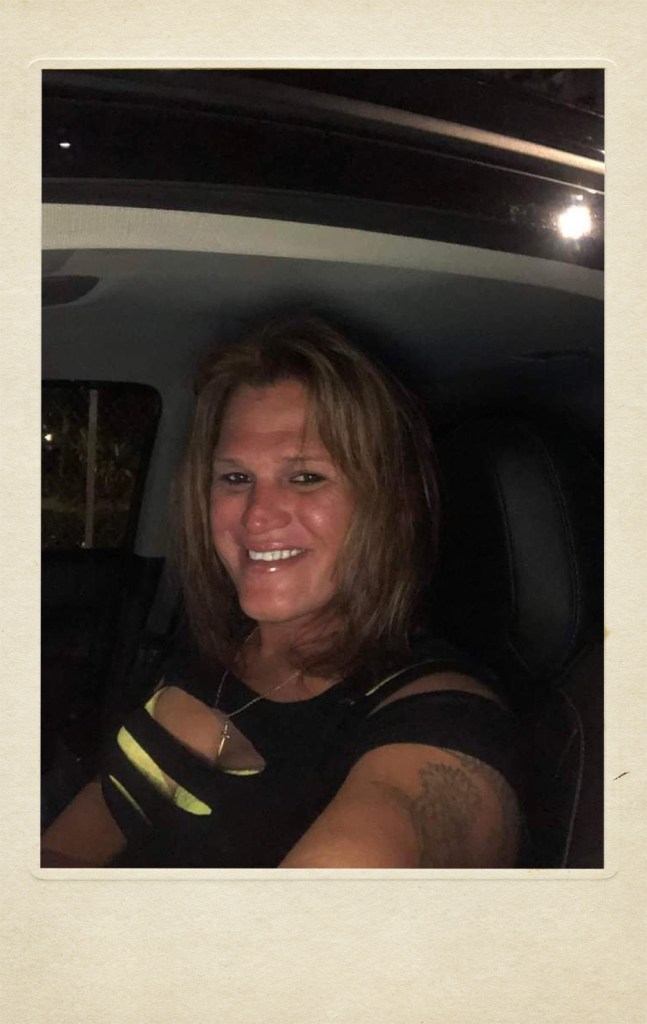
Kapu’s other sibling – Lily’s twin, Bob – mentioned to Kapu that Lily was smoking cigarettes again on the sly. Kapu knew that Lily only smoked if she was in a relationship with someone who did – or she was using.
A relapse would explain the scratching. The drug can make your skin tingle. And heavy meth users often experience the sensation of bugs crawling under their skin and scratch compulsively.
During one of their regular morning phone calls, Lily admitted to Bob that, after a decade of sobriety, she had relapsed. It turned out that she had only been pretending to go to her city job in the morning. Instead, she’d swap her work clothes and steel-toed boots for a flashy skirt and top and high heels and head to One Way in Chinatown.
When Kapu found out, she canceled a visit to their father in Texas and got Lily admitted, once more, to drug treatment. That night, while parking Lily’s black pickup, she scraped the side of the truck.
The stress of Lily’s relapse, the canceled trip and the accident led Kapu to drink wine, which made her feel woozy because of a gastric bypass operation she’d had.
Kapu’s partner, she said, led her upstairs and offered a remedy – several lines of meth. It cleared her head. But now she, too, had relapsed after six years clean.
Soon, Lily was back after completing rehab.
This put her in a minority – only 30% of people admitted to publicly funded substance use treatment in Hawaiʻi completed the program without using drugs in the 2024 fiscal year, according to the state health department. The rest either used while in treatment, got kicked out for failing to follow the rules, checked themselves out or were referred to other agencies.
But it didn’t stick. Lily soon started using again, joining the ranks of those who cycle through treatment without finding lasting sobriety. At that time, about half of those admitted to meth treatment had tried rehab before – in fact, 8% had tried five or more times.
Kapu held it together enough to still function – pay the bills, take care of her son. This seemed to slightly irritate Lily, who was accustomed from old times to partying with her sister.
Kapu would try to tidy up around the house before her son got home from school. Lily, meanwhile, would be nodding off from the heroin she used to come down off of meth.
Once when Lily became unresponsive, Kapu rummaged around for Narcan, used to revive people who have overdosed on opioids, only to find that her puppies had chewed it up. So she gave Lily a hard whack on the chest and back to wake her up.
“The first thing she said to me was ‘Fuck you,’ and I was like ‘Fuck you, too’,” Kapu said.
She didn’t want Lily to die, especially not in her house in front of her son, who was close to his aunt.
“Go down the street, go die with your friends over there,” Kapu told her in a flash of anger.
In 2023, a friend of Lily and Kapu died of a fentanyl overdose. A few months later, with the help of Kapu, Lily went back into treatment – a six-week residential program in Kailua.
Lily once again defied the odds and made it through. She got a job at Home Depot and was living in her own place. Things seemed to be going well.
‘Staying Away From Us Was The Best Thing He Did For Us’
Tommy had been told in 2017 that he was suffering from congestive heart failure.
He denied it was caused by meth. Instead, he told Kēhau, he believed his doctors were just telling him that to trick him into quitting.
He did stop for a while, but like many whose social circles are fueled by ice, he became isolated.
“He told me he got freaking lonely,” Kēhau said. “People stopped coming around, and that’s when he had to actually deal with himself.”
One hallmark of meth, compared to other drugs, is that users who quit experience a long-term reduction in the neurotransmitter dopamine, which leads to an inability to feel pleasure for months or even years.
After leaving Kēhau, Tommy stayed with a friend, but that arrangement fell apart when they stopped paying the rent and the water got shut off.
He took up with another woman and they moved with into a shipping container on the North Shore. In 2020, police raided the container and adjacent homeless encampment after complaints from neighbors about drugs and prostitution and most of the contents were confiscated.
Kēhau helped Tommy move as much as they could across the street, where Tommy camped in a tent for a while before eventually finding another place to live.
In November 2024, a freak accident involving a car engine and a blower burned Tommy’s face.
After his failed suicide a decade earlier, he had promised Kēhau he would never again try to harm himself. But following the accident, he was ready to give up.
“He called me and said, ‘I cannot keep my promise …’ By that time, he had already been exhausted, helpless, hopeless and he called me and said, ‘I’m done’,” Kēhau said.
Kēhau drove to his house and took a gun out of his hands. She drove him to the hospital and back home to Haleʻiwa again after his burns had been treated.
The next day, as they talked on the phone, Kēhau was struck by how delusional Tommy had become. He had burned his face, yes, but now he believed that during the accident his entire body had been engulfed in flames.
She told him she thought his time was coming soon and he should get right by God. He agreed.
Kēhau silenced her phone notifications and went to sleep.
In Haleʻiwa that night, after dinner with his girlfriend and some others, Tommy went to put some tools away in his garage, according to a police report. When he came back inside five minutes later, he appeared out of breath.
He went to the bathroom, and his girlfriend heard him call out. Then she and the others heard a thud. Tommy was on the bathroom floor, unconscious and not breathing. He was pronounced dead at the hospital.
A blood test later showed high levels of meth, and the medical examiner said that caused his death, with congestive heart failure a contributing factor.
The next morning, Kēhau discovered calls that had come in overnight letting her know that Tommy had died.
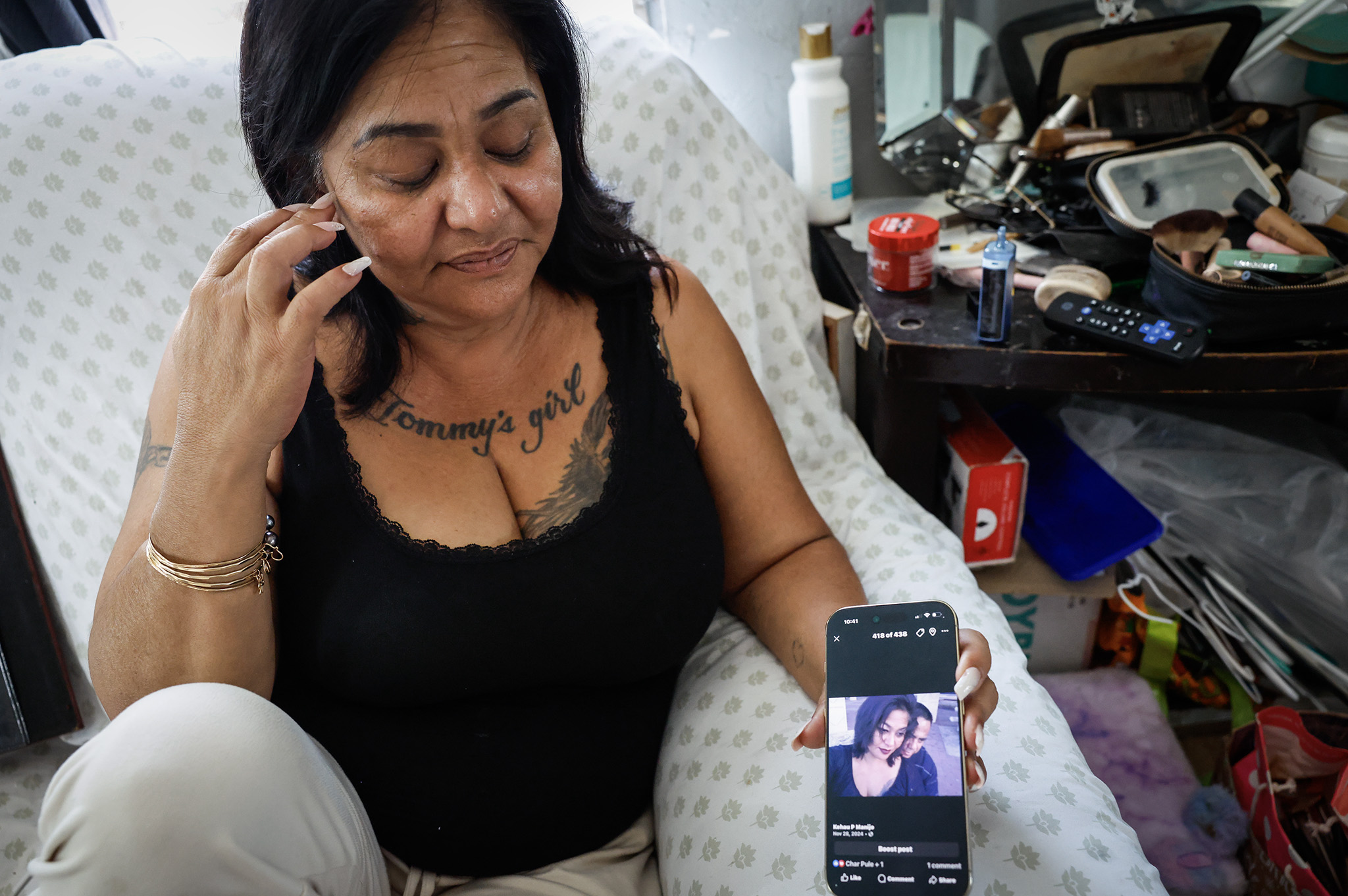
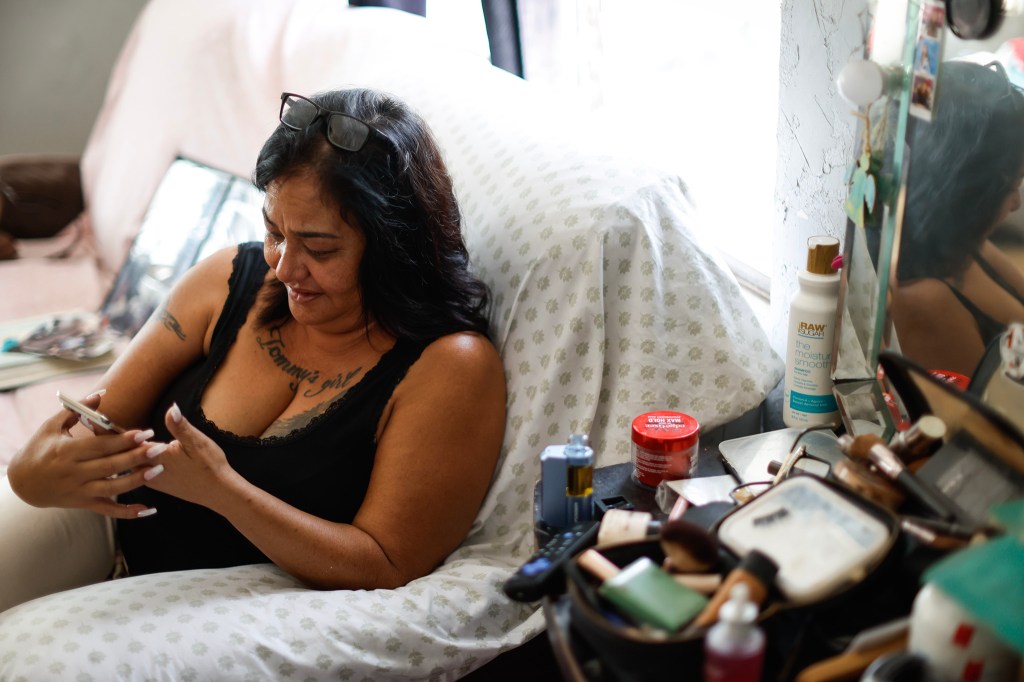
Tommy’s life had been anything but exemplary. But Kēhau knew from years of deep conversations that he was capable of being humble, loving and giving. The greatest example of that, Kēhau said, was that in the last years of his meth addiction, he kept his distance from her and her children.
“To him, staying away from us was the best thing he did for us … ,” she said. “He said, ‘Kēhau, it’s not because I don’t love you that I don’t come home. It’s because I do love you’.”
Since then, slowly, Kēhau has been reclaiming her life. Her daughter finally trusted her enough to let her watch her grandson. She’s been traveling – to Las Vegas with two of her children, Lake Tahoe with one of the people she’d sponsored in recovery, and on her own to Italy.
She even started a sober home for other recovering addicts in Waiʻanae.
“I have a life I never would have dreamed I would have,” she said, “and that’s because I stayed sober.”
‘I’m Going To Stay Sober’
Lonely in her sober life, working at Home Depot, Lily relapsed again. And now the normal chaos of addiction was escalating. In addition to meth, she was using fentanyl.
Even before relapsing, Lily had a litany of health problems – diabetes, high blood pressure and a brain hematoma suffered when she fell out of the bed of a truck. A doctor who specialized in treating trans women told her “you’ve got to stop everything because your heart is failing,” Kapu said.
Lily was ready to give rehab yet another try, and made an appointment to talk to admissions staff at a treatment center one afternoon in December 2024. Right after learning she had been accepted into the program, she met a friend at a cavernous, below-ground concrete structure on School Street overlooking the H1, known as “The Bunker.”
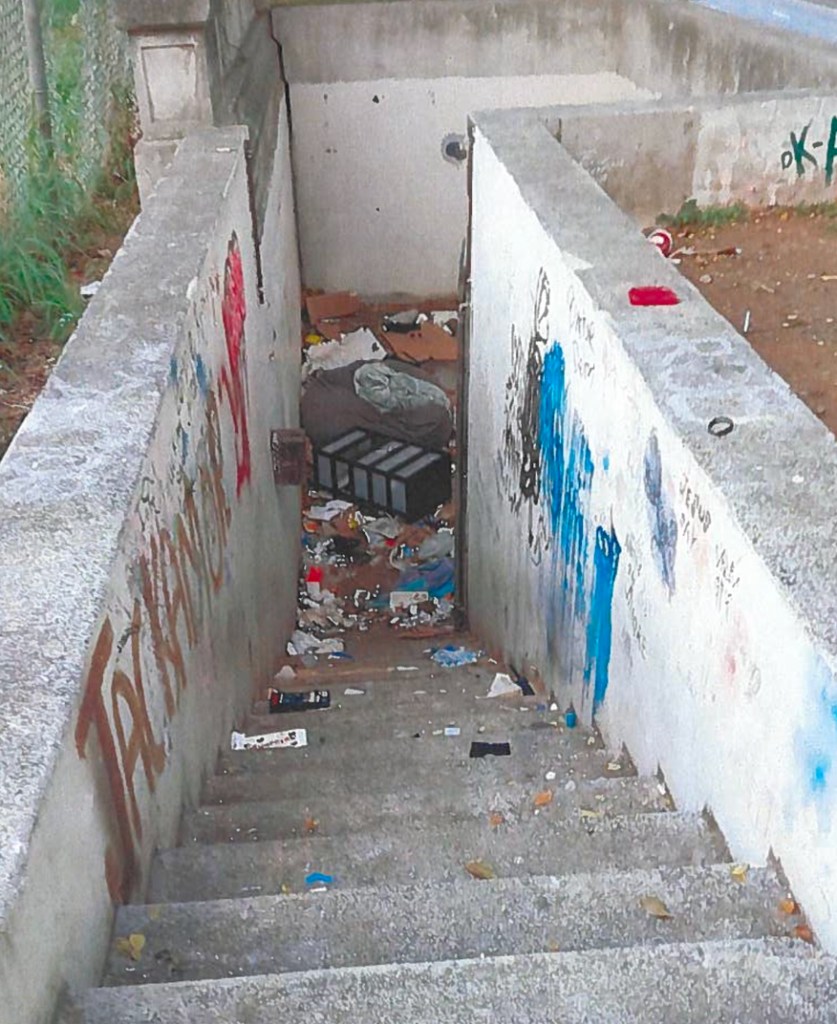
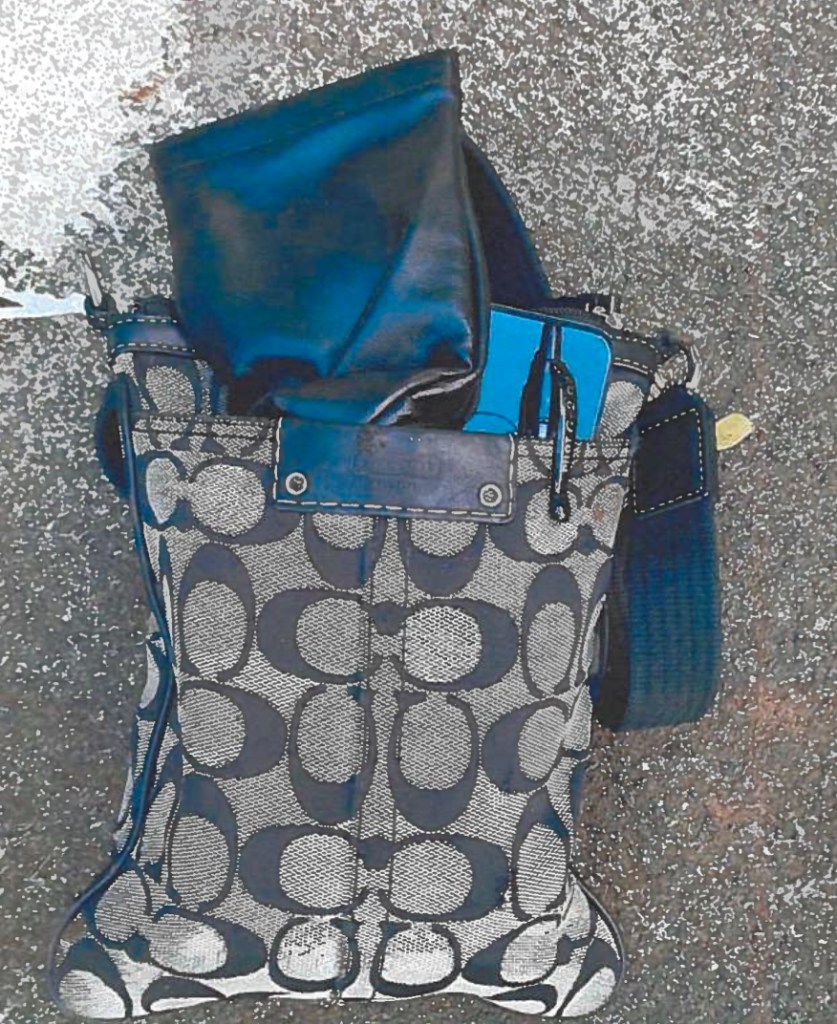
Lily was found with another woman at the bottom of a structure overlooking the H1 known as “The Bunker.” (Source: HPD Police Report)
A short time later, an anonymous 911 caller reported two unresponsive people in The Bunker. Emergency responders gave them both Narcan. But Lily died there, slumped at the base of the stairs going into the structure and surrounded by the detritus of drug use. The other woman was transported to the hospital, where she later also died.
The coroner ruled that Lily had succumbed to a mixture of meth and fentanyl, an increasingly common combination. At least 17 of 100 recent Honolulu deaths in 2024 and 2025, reviewed by Civil Beat, involved both ice and fentanyl. Some meth users take fentanyl to help come down from the high, while others ingest it thinking it’s pure ice.
Kapu was shopping at the Goodwill store on Waiʻalae Avenue looking for a frame for a photo of their dad, who had died several months earlier. The family was holding a memorial service on his birthday in a few days. Lily was supposed to give the eulogy.
Kapu’s phone rang. It was her partner, who had just heard from Lily’s twin Bob that Lily was dead. Kapu felt like she herself had died.
“I think if I didn’t have my kid, I probably would have willed myself to die,” she said.
That night, Kapu got up at 4 a.m. to use the bathroom. She sat on the edge of her bed and started crying, when she suddenly sensed Lily sitting next to her, rubbing her arm.
“I’m sorry, Kapu,” Lily said. “It was an accident.”
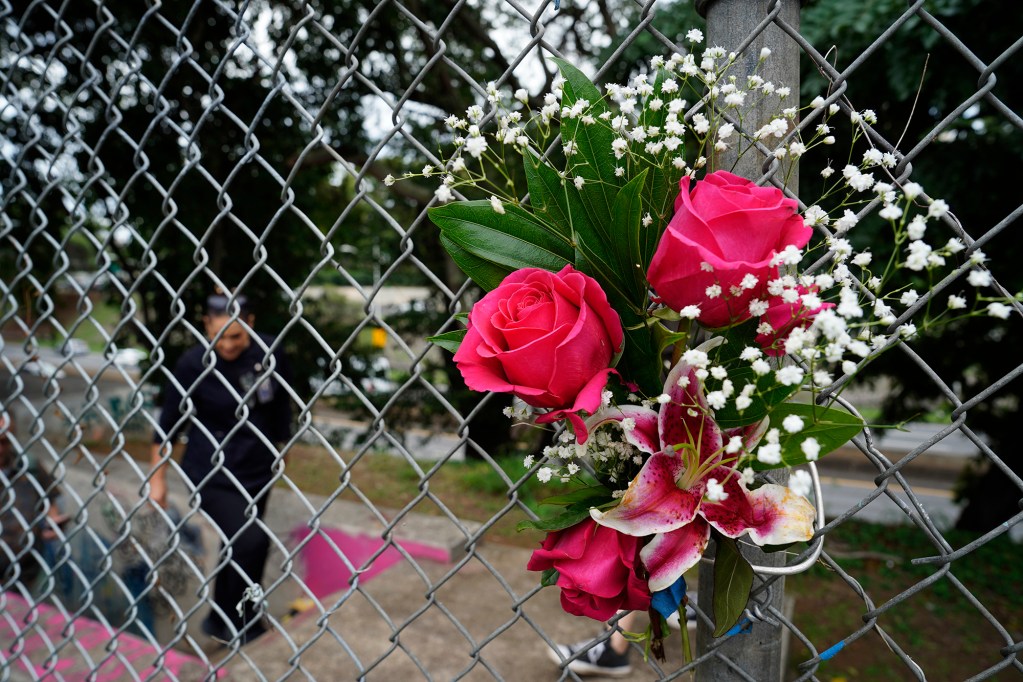

Despite serious health problems of her own related to alcohol and meth, Kapu kept using. She was high at Lily’s memorial, and made a scene, at one point pouring a cup of ice on her partner’s head and telling him to get out.
Then, one night in April, it all became too much.
“Everybody’s laughing and having a grand old time in my house, while I’m sitting there, ha ha ha,” she said, “but inside I’m like, ‘How do I get out of this? How do I make this stop? … Please don’t let me die by the pipe.”
Lying in bed that night, Kapu thought, “God, if you’re really there, just hear me, I don’t like die this way, but I don’t see no way out. But if you heal me one more time, I’m not gonna hit that pipe no more … Heal me one more time, like you did before when I was 15.”
To maintain her fragile sobriety, Kapu swam with her dog in the mornings and evenings at Waikīkī Walls, trying not to think about sharks.
On a day in June – two months into sobriety – she sat in her garage with another dog, Junior, left behind by a friend who fled to Seattle to escape her own ice habit. Kapu had advised her to just leave everything in her apartment and go, and promised to send Junior on a plane later, which she did
Another friend walked by to see how Kapu was doing. She keeps a very tight circle of sober friends – her surviving brother and a few others – to avoid slipping back into her old ways.
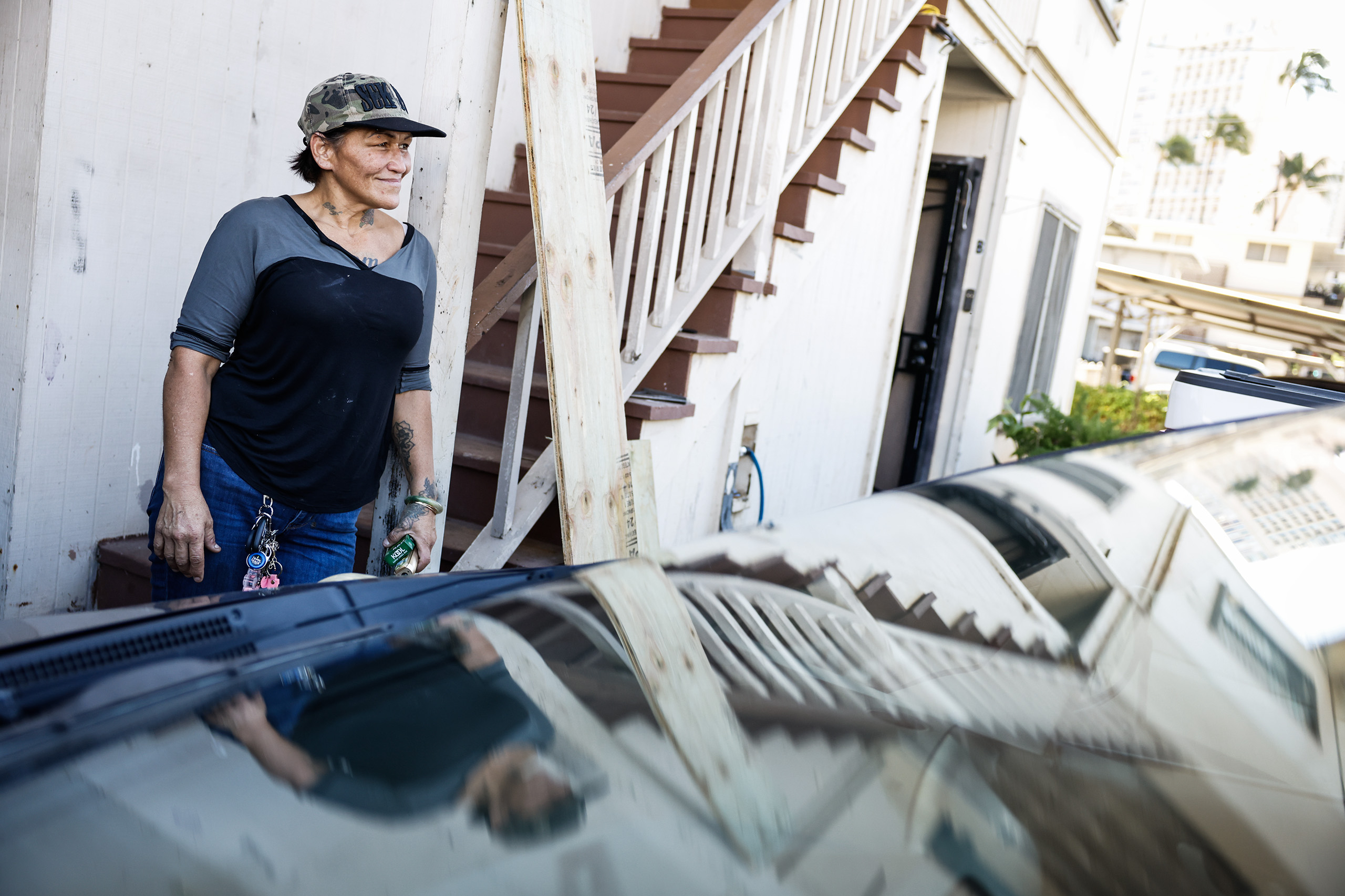
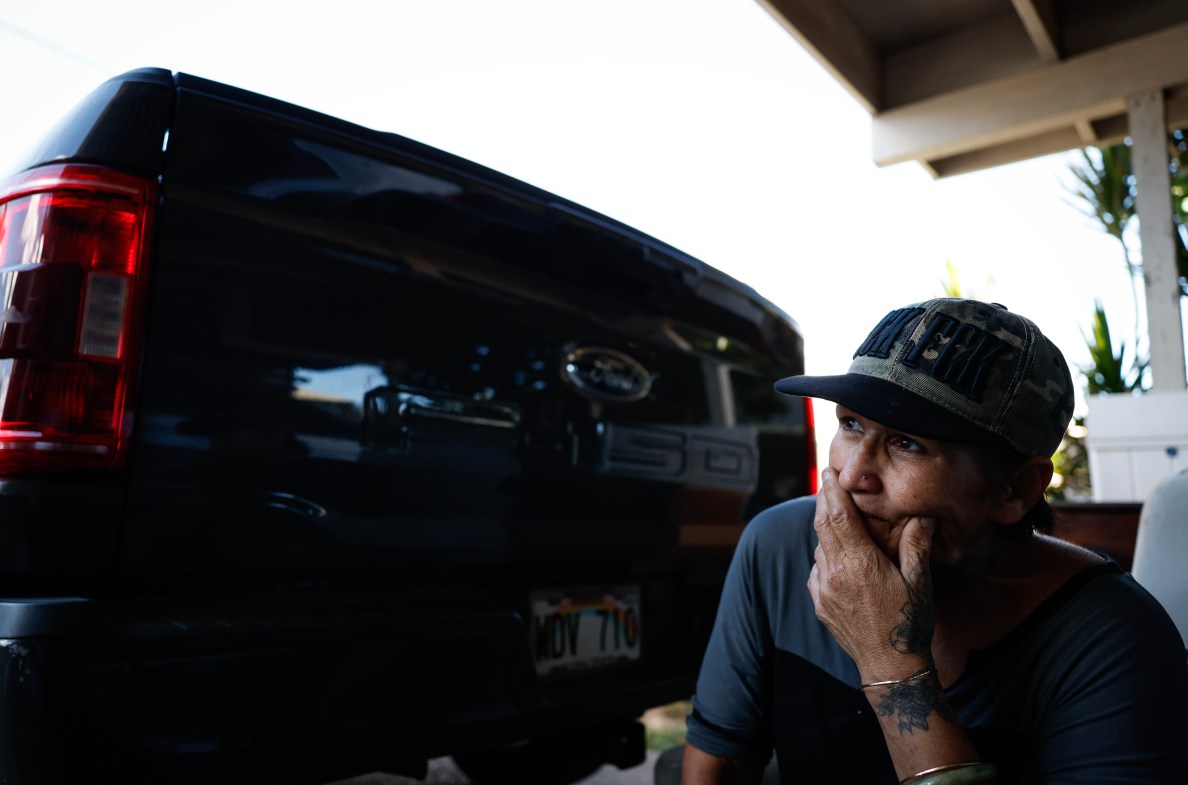
Kapu is still haunted by the thought that, if she had only been sober herself, she could have done more to help Lily. But maintaining her sobriety now is one way to give meaning to all that’s happened.
“For the rest of my life, I will live with that guilt for not stopping when she needed me to stop,” she said. “But you know what? In order for her not to die in vain, I’m going to stay sober.”
Can’t see the form below? Answer here.
