

Hawaiʻi’s Ed Case Wants Dems To Take On Trump — Cautiously
All but assured another term, the congressman is campaigning and plotting a future where Democrats “come up with actual solutions.”
U.S. Rep. Ed Case might be a shoo-in for reelection come Nov. 3, but you’ll still see him standing alone on the side of the road sign-waving and tossing out shakas to passing motorists from Kapolei to Hawaiʻi Kai. That’s because 40 years ago he lost his first election for state Legislature by just 36 votes, a number that still haunts him today.
Case considered it one of the best campaigns he’d ever run, but on Election Day 1986 he opted not to do what most other politicians do in the islands – smile and wave at voters as they head to the polls. He’s convinced that was ultimately the difference in the race.
“We knew we were very close and I just made a fatal mistake in deciding not to sign-wave,” Case said. “I’m pretty sure that if I had sign-waved on Election Day, 36 people would have thought to vote for me on their way to the polls.”
Since then Case, who’s seeking his fifth consecutive term representing Hawaiʻi’s 1st Congressional District and seventh full term overall, has never missed an opportunity to wave to his constituents on Election Day.

He’ll do it again this year even though most Hawaiʻi voters cast their ballots by mail.
“I’m superstitious about taking anything for granted or any voter granted,” Case said. “I just believe you got to run all the way through the tape.”
Case doesn’t have much to worry about this time around. After handily defeating Hawaiʻi State Sen. Jarrett Keohokalole in the August Democratic primary, Case only faces token opposition in next month’s general election.
His Republican opponent is Adriel Lam, a retired U.S. Army officer who has run unsuccessfully for state and federal office, including in 2024 when he lost the Republican primary by a wide margin to Bob McDermott, a former state legislator who went on to lose to incumbent U.S. Sen. Mazie Hirono. Lam was unopposed in this year’s primary.
Lam told Civil Beat he supports President Donald Trump’s proposal to pay a $5,000 dividend to every adult U.S. citizen should Republicans retain control of Congress after the election, although there’s no formal plan to do so and polling has shown voters are skeptical the president will follow through.
Lam and Case agree on some issues – such as Hawaiʻi’s strategic importance to U.S. security and relationships with Asia – but differ on many others.
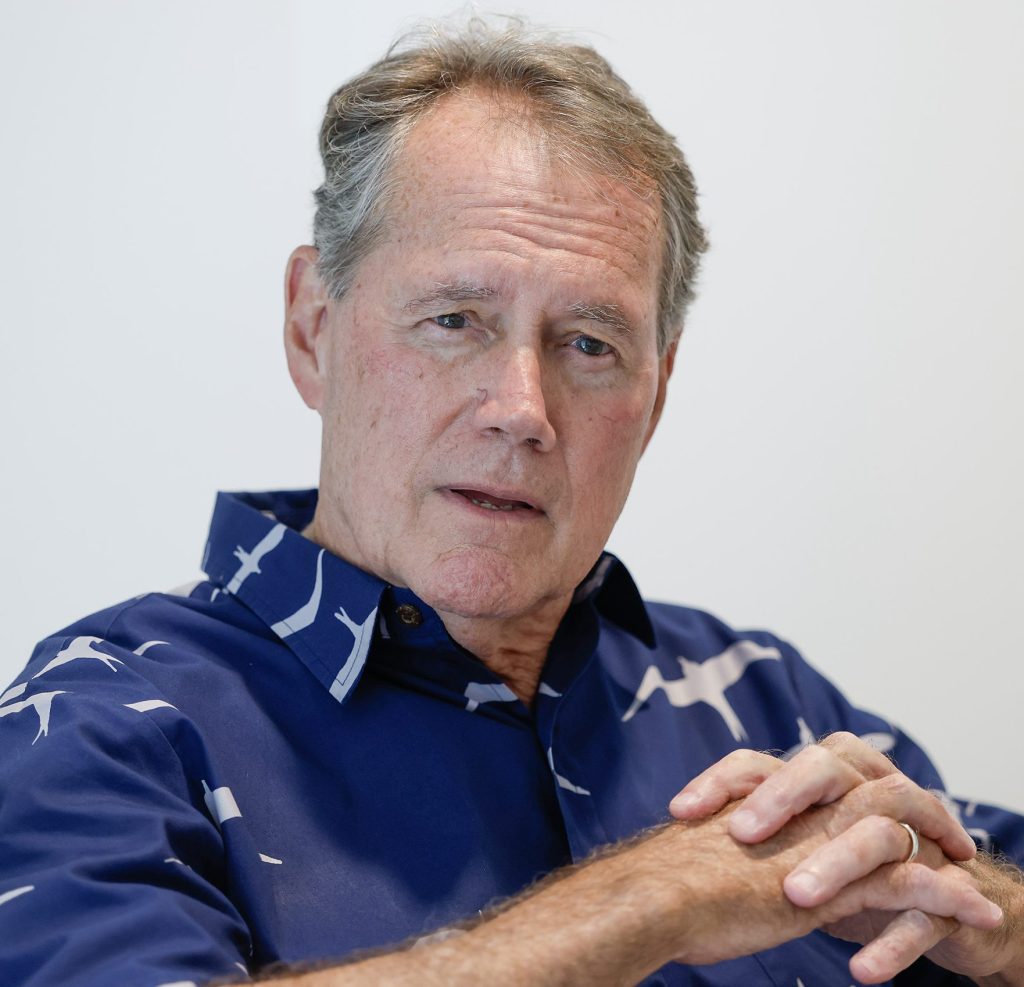
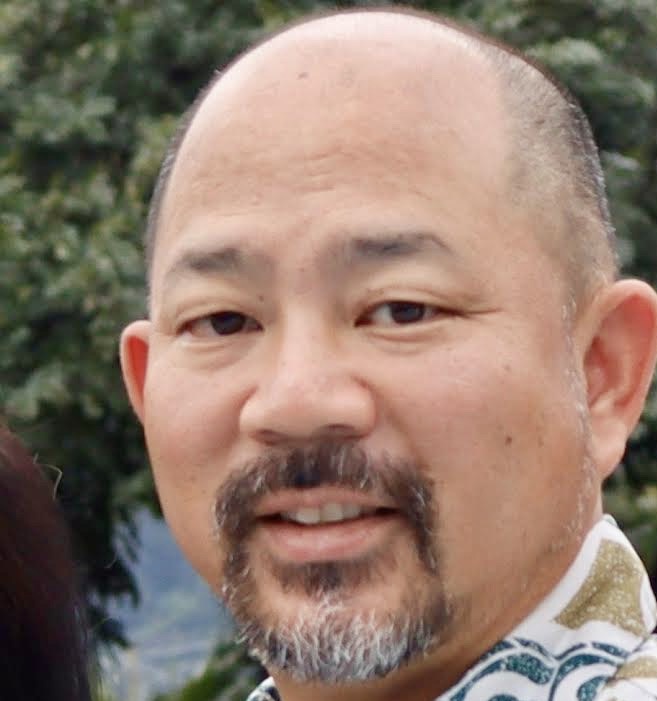
Whereas Case supports aggressive action to address climate change, Lam told Civil Beat that “we’ve wasted too much energy on 100-year climate dogma rather than focusing on the immediate weather and storm cycles.”
Case has been critical of the Trump administration’s immigration crackdowns involving ICE agents. Lam sees illegal immigration as a threat to national security, claiming there has been “mass placement” of 50,000 illegal immigrants to Hawaiʻi.
Case faces an additional challenge from Nathan Berning, a nonpartisan, anti-abortion activist who qualified for the election despite not living in Hawaiʻi. Berning has described himself as a single-issue candidate whose main goal is to show voters images of mutilated fetuses to help bolster his message. He told Civil Beat that he has “no illusions of winning.”
Bringing Back Billions For Hawaiʻi
Presuming Case wins reelection, bringing federal dollars back to the islands will remain his top priority, he said. Case often touts his position on the House Appropriations Committee as a key reason voters should cast their ballots for him.
He estimates there is at least $7 billion in non-military spending that comes to Hawaiʻi each year, much of which he said he has a direct hand in allocating, whether it’s supporting the National Oceanic and Atmospheric Administration or reallocating funding for Native Hawaiian programs cut by the Trump administration.
“The bottom line is, there are billions of dollars coming into Hawaii every single year from the federal government,” Case said, “and I’m involved in all of that directly or indirectly.”

Calculating the exact amount of money Case is responsible for is challenging given the way congressional budgets are crafted and approved. But one way to measure his effectiveness is through earmarks.
Since 2021, Case has secured 74 earmarks worth about $325 million, including those passed by the House Appropriations Committee for fiscal year 2027 still awaiting approval by the full Congress
Some of those earmarks he worked on with other members of Hawaiʻi’s congressional delegation, such as $142 million for a water treatment facility at Red Hill, while others he won on his own, including $2 million for repairs at Aloha Tower and $1 million to help the City and County of Honolulu convert former university classrooms into an emergency shelter and low income housing.
A recent analysis by CQ Roll Call found that in fiscal year 2027 Case ranked in the top five among Democrats in securing earmarks, although the nearly $17 million he received paled in comparison to his colleagues in the majority, the top 25 of whom won total funding ranging from $44 million to $188 million.
Democrats Can’t Go ‘Hog Wild’
Case, 74, has ambitious goals over the next two years. Working with the bipartisan Problem Solvers Caucus, he recently introduced gerrymandering reform legislation that seeks to reduce partisan influence in congressional redistricting and tamp down on the political arms race reshaping electoral maps across the country.
He’d also like to address the federal deficit, seek bipartisan solutions for immigration reform and address Social Security, which is projected to become insolvent by 2032 and result in retirees seeing significant cuts in their benefits.
Each item on this agenda, he said, would likely require working across party lines.
“Some members of my party think that participation in the Problem Solvers is not appropriate,” Case said. “But I think they’re dead wrong. You have to have some space where you actually try to solve problems on a bipartisan basis.”
Still, Case said he’s looking forward to the possibility of Democrats winning back control of Congress come November. Right now Democrats are projected to win the majority in the House and possibly the Senate, a scenario that would give the party a check on Trump and his administration during his final two years in office.
But he warned that Democrats must use their new found power responsibly. He pointed to what happened after the 2018 wave election brought some of the Democratic Party’s most progressive and outspoken voices to Congress. Some of his colleagues went “hog wild” pushing legislation and ideologies that didn’t align with most of mainstream America, he said, and their power didn’t last long.
“Inside two elections we had given the majority away again,” Case said. “I’m going to try to make sure that doesn’t happen. We need to come up with actual solutions that are widely supported.”
That doesn’t mean abandoning Congress’s oversight authority and letting Trump off the hook.
Case anticipates Democrats launching numerous congressional inquiries into the administration and using their bully pulpit to amplify their message. He would even support impeachment again, he said, but only if the facts called for it after a thorough investigation that is not slapdash or performative.
Consistency Even In Chaos
A Democratic majority would be good for Hawaiʻi, Case said, because it would allow Congress to push back against efforts to cut or restrict federal funding, such as those targeting Native Hawaiian programs. He also said a flip in the majority could increase the number of dollars flowing back to the islands.
For instance, Case said some museum-related programs he had previously used for earmarks were no longer open under Republicans, which limited his ability to seek funding for places such as Bishop Museum and ʻIolani Palace. If Democrats win, he expects that to change.
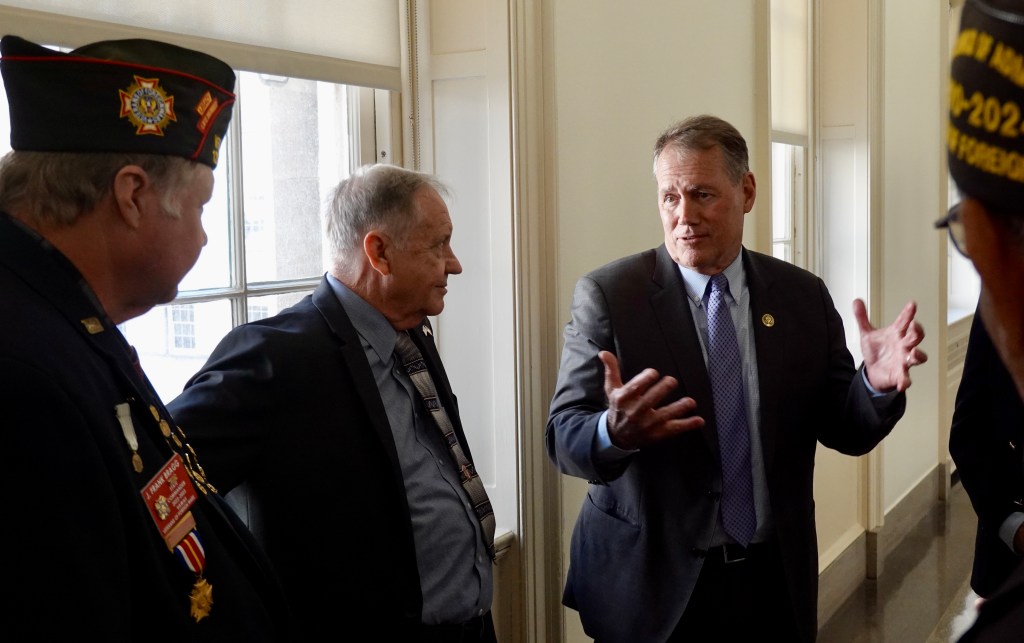
Still, Case warned that a shift in political fortune won’t undo everything. Trump remains in the White House and even if Democrats retake the Senate, their majority likely won’t allow them to pass any bill they want without at least some Republican buy-in.
Regardless of the outcome in November, Case said his constituents should look for him to provide consistent, steady representation in Washington — even if they don’t always agree with him on every issue.
“I don’t expect that I’m going to be a different person or focus on different things,” he said. “I feel that I have been on the right track, and I’m going to try to stay on that track.”
That includes standing outside and waving to voters on Nov. 3 even if they’ve already made their decision.

