It’s The Wild, Wild West For Groundwater Management In Waikōloa
A housing development slated for West Hawaiʻi could provide much needed workforce housing. It could also put more stress on a limited freshwater supply.
When the developers behind Waikōloa Green went to the Hawaiʻi County Council’s Legislative Approvals and Acquisitions Committee last month to request a zoning change for 700 acres south of Waikōloa Village, they were prepared for some pushback.
They knew there was concern about adding 400 apartments and 300 single-family homes in an arid, windy town with significant wildfire risk and an insufficient number of escape routes. But developers Daniel Popkin and Jon Yoshimura had argued before the Leeward Planning Commission that those concerns shouldn’t prevent them from adding much-needed housing — 20% of it affordable — near the island’s biggest resorts, and the project sailed through the commission with a 5-0 vote.
What Popkin and Yoshimura didn’t prepare for, however, was the council meeting’s focus on water.
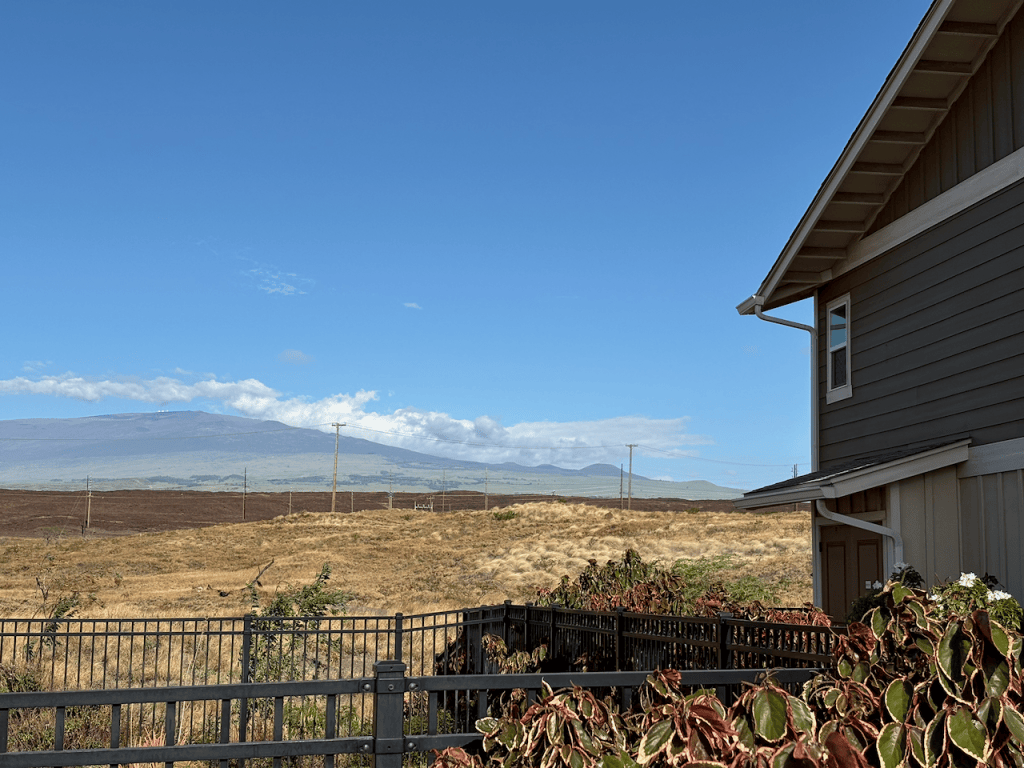
Popkin, who is based in New Jersey, and Yoshimura, a former state senator and Honolulu City Council member based on O‘ahu, bought the land in 2022, and have branded the plan as a green development. They envision the project complete with a clubhouse, small-scale farming, a food hub for local producers and a solar array.
For this they need a great deal of water. Waikōloa Green received a will-serve letter from Hawaiʻi Water Service, the company that runs eight wells in the area, indicating that it would provide the development’s residents with as much as 1.29 million gallons a day.
But the ability to pump water doesn’t guarantee that there will be enough water to pump without depleting the environment or getting in the way of traditional and cultural uses — two important facets of Hawaii’s public trust doctrine. For that reason, the recent meetings have also shed light on the broader state of groundwater in West Hawaiʻi, where other developments have been greenlit in recent years but remain unbuilt — and where an absence of robust state regulation may soon lead to more demand for water than the region’s aquifers can sustainability provide.
The resorts nearby are using millions of gallons of potable water to keep their golf courses and landscaping alive in the middle of a lava field, and the Waimea aquifer — the source of the water for Waikōloa Village — is already very close to hitting its sustainable yield.
Five of the nine council members voted against bills 186 and 187 — the companion measures that would allow the development to move forward — at the committee stage, including Matt Kaneali‘i-Kleinfelder, Jennifer Kagiwada, Heather Kimball, Holeka Inaba and Rebecca Villegas. James Hustace, Michelle Galimba and Dennis Onishi voted in favor, and Ashley Kierkiewicz was absent.
Villegas, for one, was motivated to oppose the bills after learning about the lack of water in the region. She said what remains after the current wells have been pumped at capacity “does not leave us in a place to provide safe, healthy drinking water, especially water necessary in times of a fire.”
Popkin and Yoshimura didn’t respond to Civil Beat’s request for comment.
The two bills are scheduled to advance to the full council for two more meetings beginning Wednesday. But the developers, who have revised their water use once and agreed to multiple amendments to make the bills more palatable, may revise their proposal and bring it back to the committee.
A Housing Emergency
Council members are facing a difficult decision on an island where the only affordable housing is hours away from the main source of jobs.

Hustace, who represents Waikōloa Village, told Civil Beat that he hopes to find a way to add development that improves quality of life for residents and reduces drive time and cost for thousands of people who commute to the resorts every day.
The long commutes are adding to transportation costs, impacting family life and affecting overall workforce instability, he said. “Our job is really to figure out how housing can move forward responsibly, while requiring development to really address the impacts that it creates,” he said.
Galimba, whose district hosts many of those workers, said she wants to see fewer of them have to commute on dangerous, windy roads from Ocean View and other parts of South Kona and Ka’u.
“The affordability crisis and the housing crisis — not just on this island, and not just in this state — is so intense that I just want to encourage people to build houses,” she said. She she sees the will-serve letter as sufficient evidence of the developers’ access to water, and the long-term health of the aquifer as beyond the council’s role.
The developers have revised the development’s estimated water use from 1.2 million down to 362,000 gallons a day. They have said multiple times that they don’t see water availability as an impediment at this stage, even for the larger lots that will be zoned for agriculture. If it comes to it, Popkin said in the Sept. 1 meeting, they would look into recycled water, desalination or whatever else it takes to move the development forward.
“We can get the water,” he said. “It’s just a matter of how much it will cost.”
Sustainable Yield
The sustainable yield for the Waimea aquifer — a number set by the state based on 44% of the estimated rain and fog drip falling in the area — is currently 16 million gallons a day.
Just a few days before the Sept. 1 meeting, Environment Hawaiʻi published an article describing the aquifer as “severely stressed,” and pointed to the fact that the existing water uses already added up to nearly 90% of the aquifer’s sustainable yield. That 90% number is important because when an aquifer hits that threshold, the state Commission on Water Resource Management can use it as a criteria to decide whether to start managing the water more closely in one of its designated management areas. Designating the aquifer that way would require all users to apply for additional permits. So far there are no such management areas on the Big Island.

In that first meeting, community and council members asked hard questions of the developers and decided they needed more time to familiarize themselves with the water issues. When they met for a second time on Sept. 14 they brought in Jonathan Scheuer, a state-level expert on water law and policy and the author of the book Water and Power in West Maui.
Scheuer pointed to the fact that Hawai‘i County hasn’t updated its water use and development plan since 2010. When CWRM reviewed that plan in 2015, they noted that both the Waimea and Keauhou aquifer systems needed attention because they were close to hitting the threshold for sustainable use.
“They said, ‘Hey, we think we see a problem ahead,’ and they said, ‘You know what? We should do demand-side conservation programs. We should identify areas where potable water consumption can be reduced or replaced,’” he said. The council at the time developed a plan to do that, and separated the Keahou and Waimea plans.
The National Park Service at the Kaloko-Honokōhau National Historical Park, located in a dry coastal region to the south of Waikōloa, submitted a petition to the commission requesting that the Keauhou aquifer be designated as a groundwater management area.
At the time, Scheuer, who was a consultant to the national park, said the Department of Water Supply and multiple business interests in the area actively resisted designation. “The Department of Water Supply effectively rallied community support against designation when they announced they would not issue any new water meters in Keauhou if the Water Commission designated the area,” he told Civil Beat.
Later, the commission created a pilot adaptive management plan instead — an attempt at finding a middle ground that some critics say lacks teeth. In written testimony earlier this month, the Waikōloa Green developers said they support making Waimea the next area for this approach.
No visible progress has been made in the meantime toward creating a management plan for the Waimea aquifer since 2015.
The U.S. Geological Survey released data recently on how climate change stands to impact recharge rates in Hawai‘i. It found that in the best case scenario, by the end of the century, the Waimea aquifer has one third less recharge. In the worst case scenario it will have 55% less recharge.
In their latest written testimony, Waikōloa Green’s developers said the 16 million gallons a day number is “likely conservative” and pointed to additional sources of recharge that are not counted by CMRM.
That may be the case, but there’s also more pumping ahead. In addition to the water that’s currently being pumped from the aquifer, there has been water committed to other developments that have yet to come online. Several large resorts have unbuilt projects that have already been approved.
Theres’ the Kumu Hou project, which will provide over 1,300 new timeshares and homes near the Waikōloa resorts, as well as Ouli Farms, a high-end development that will allow its residents to live amidst a handful of small-scale farms located above the Mauna Kea resort. The Department of Hawaiian Home Lands also has a number of projects on its docket in the area for which it has already had the water allocated.
“The idea is somebody has written a lot of checks, and they haven’t all been cashed from the account,” Scheuer said of the outstanding water credits. “So you can’t just look at the account balance right now and say we’re good.”
During the third council meeting, on Oct. 6, the council members invited Ciara Kahahane, deputy director of the Commission on Water Resource Management, to share data on the quantity of water currently being pumped from the Waimea aquifer. Kahahane said the total reported pumping from the Waimea aquifer system on a 12-month moving average is 90.4% of the sustainable yield. The inclusion of several unreported wells could bring that number up over 91%, she added.
Communication Breakdown
The lack of a current water use and development plan for the Waimea aquifer has often left CWRM in the dark about how much development the county is approving and how it affects the aquifer, Kahahane said. Having such a plan, she added, “would better enable the commission and this county to determine what authorized planned use for Waimea actually is.”
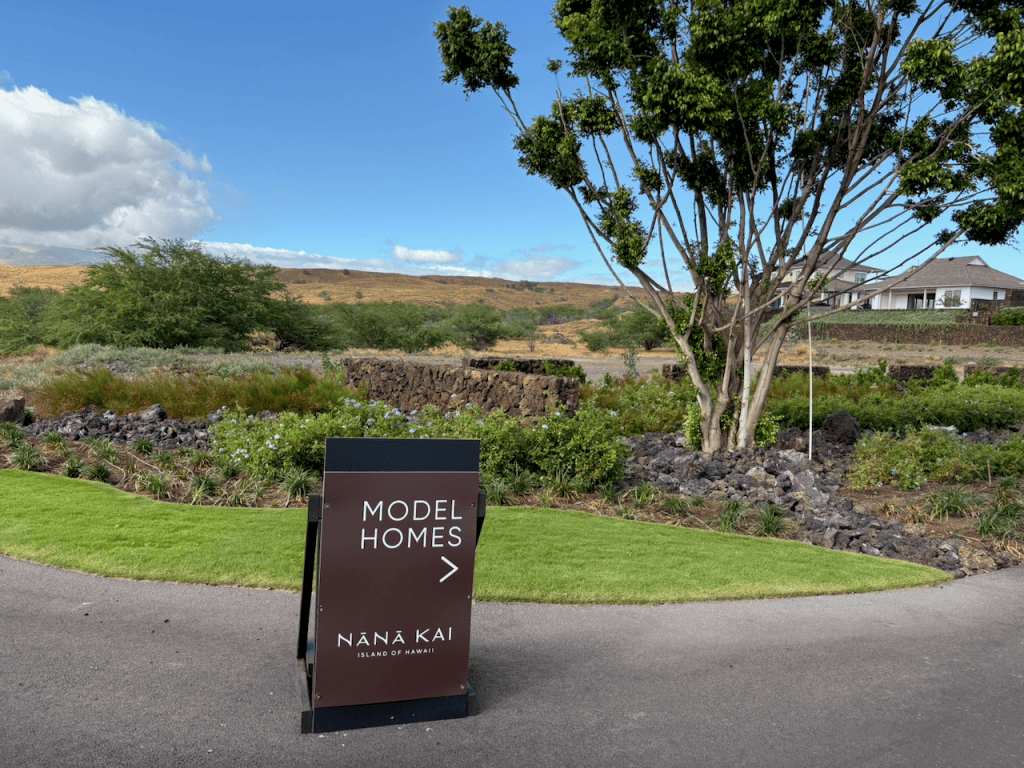
“We can provide on our side water resource information like current withdrawals, sustainable yield and any reservations for the Department of Hawaiian Home Lands that exist within the aquifer,” she said, “but in large part we require the county’s assistance to identify developments that are to be served by groundwater.”
Villegas told Civil Beat she has been asking the Department of Water Supply for a “big connected spreadsheet with all these numbers. There are developments that are just sitting on water units, but we don’t know what those are. How can we make educated decisions?”

The question of whether the state should manage the aquifers on the Big Island is a loaded one, given what happened with the Keauhou aquifer, but several council members support the idea of designating one or more water management areas in the county.
“If we are legitimately reaching these thresholds in our aquifers where we need to consider stronger management, that’s the direction we need to go,” Hustace said.
“It’s time,” Villegas said. However slow or fast it goes, at least it’ll be established … to support the science, the technology, the infrastructure improvements, and help communities mitigate what we are facing with climate change.”
It might be challenging to add to the existing list without more investment from the state. CWRM has been slow to process such water permits in West Maui, where designation happened over four years ago, in part due to the agency’s limited staff and resources.
In the case of Waikōloa Green, Popkin and Yoshimura have told the Hawai‘i Tribune Herald that they “remain committed to finding a path forward.”
As four council members prepare to step down at the end of the year and a new crop will take the reins, it’s unclear what form that path will take.
In the short term, Hawai‘i Water Service is implementing a mandatory conservation advisory for all Waikōloa customers to reduce non-essential water use by 25% as they repair multiple wells. In a place that receives an average of just 13 inches of rain a year, where lawns are scarce, it’s unlikely anyone was surprised by the request.