

Kaua‘i Shrimp Seeks State Bailout After Hurricane Damage
The company plans to close Saturday but its parent company is leaving the door open to restarting operations if the Agribusiness Development Corp. agrees to help by waiving fees and reducing rent.
State officials are weighing whether taxpayer money should be used to help one of Hawaiʻi’s largest commercial shrimp operations recover after the Kauaʻi ponds suffered extensive damage from Hurricane Lowell.
The Category 2 storm battered Kaua‘i Shrimp’s ponds and facilities last month, causing nearly $4.8 million in damages and lost shrimp production, according to its parent company Aloun Farms. The farm, which plans to close Saturday, had been operating for nearly 30 years on the Mānā Plain west of Kekaha.
Aloun Farms has asked the state Agribusiness Development Corp. for $1.85 million in waived fees and reduced rent for three years to help it restore the shrimp farm ponds as well as other agricultural acreage. Last Thursday, the agency deferred that request to allow for more discussion.

“We do take this seriously and we want to do this as transparently as possible,” ADC Chair Jayson Watts said at the meeting. He said there are still a lot of questions that need to be answered and that he’d like more time for the board to look into the request.
Read more: Kaua‘i Shrimp: Harvesting Pounds From Ponds To Help Feed Hawai‘i
Local chefs and agricultural experts say Kaua‘i Shrimp’s closure doesn’t bode well for local aquaculture and food production both on the Garden Isle and Hawai‘i overall.
“We don’t have many (local shrimp) producers, and this is just another shot in the leg that makes us stumble even further,” said Todd Low, aquaculture and livestock support services manager with the Hawai‘i Department of Agriculture and Biosecurity.
Extensive Farm Damage
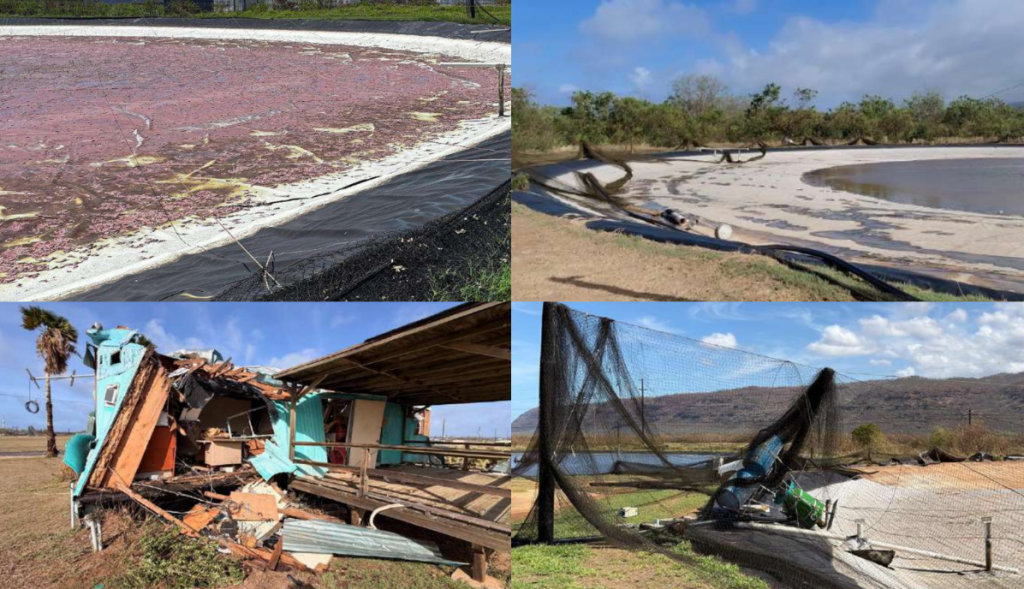
Hurricane Lowell’s strong winds tore down bird netting and support poles, crumpled pond liners, displaced equipment, and caused the farm’s office trailer, nutrition center and other structures to collapse. Alec Sou, president and general manager of Aloun Farms, told ADC that the damages amount to roughly $4.37 million in replacement costs.
The farm also lost 80,000 pounds of live shrimp — a loss of roughly $408,000. After the storm, some of the shrimp, many of which were near or at harvest size, were found along pond embankments and access roads. Some shrimp died due to a four-day power outage because electricity is needed to aerate the ponds.
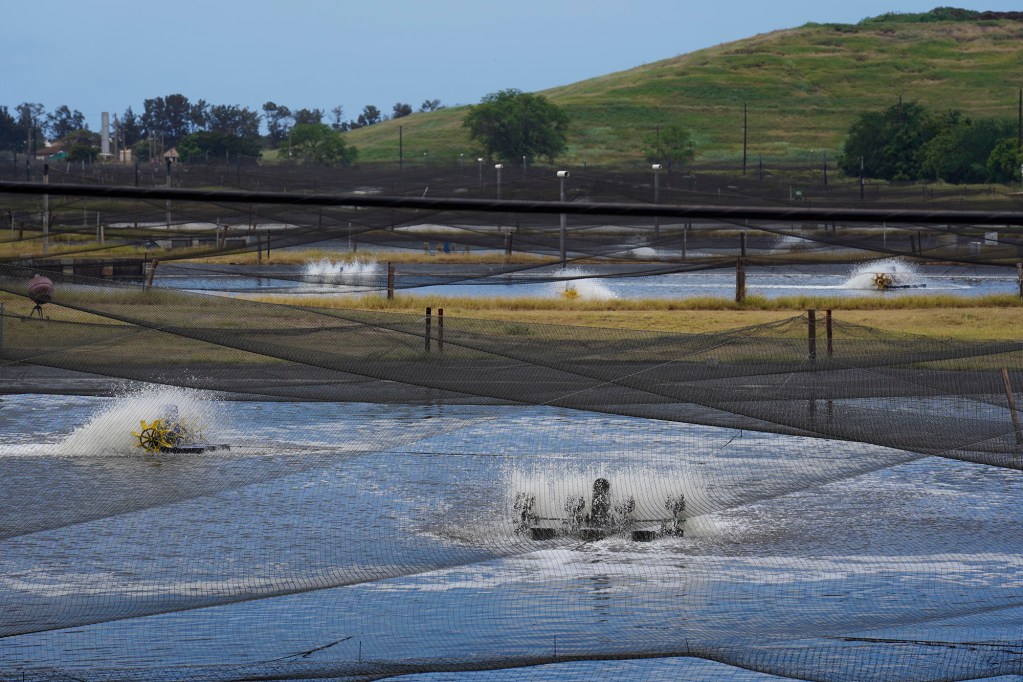
Kaua‘i Shrimp announced two weeks after the storm that it would be closing its doors.
Mike Faye, manager of the Kekaha Agriculture Association, said he hopes Kaua‘i Shrimp’s decision to close isn’t permanent and that it can find a path forward, especially given how much investment has gone into its farming facility over the decades and that it has such a strong brand. The association is a cooperative made up of ADC’s West Kaua‘i tenants and manages the plantation-era infrastructure in the region.
“The worst thing that could happen is they just walk away and we have this tremendous investment that is rapidly going to deteriorate,” he said. “That’s the fear that I have.”
Shrimp farming is a tough business because local operators must compete with prices of imported shrimp from Asia and other places while dealing with Hawai‘i’s overall high cost of doing business. Aquaculture is also risky because it relies heavily on electricity and requires back-up power, Low said.
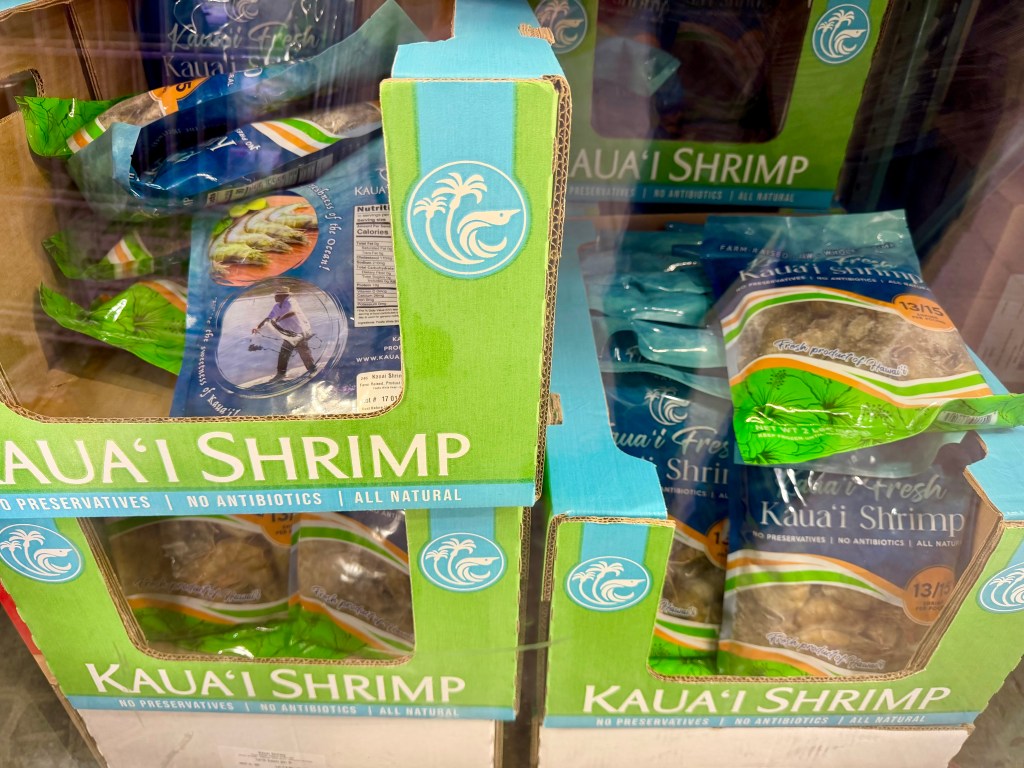
Mark Arriola, executive chef of Living Foods in Po‘ipū, said he’s been proud to have Kaua‘i Shrimp on the menu. He’s been buying Kaua‘i Shrimp since 2010, beginning when he worked at Merriman’s Fish House in Po‘ipū. Originally from Texas’ shrimping community of Corpus Christi, he said it’s been important to him to source local ingredients.
He’s been loading up on Kaua‘i Shrimp since it announced its closure. He and his team aren’t sure what they’ll do about their shrimp menu items once that stock runs out. He thinks the loss of Kaua‘i Shrimp will open the market to lesser quality shrimp.
“It’s just an all-around kind of bummer,” he said.
Recovery Funding Request
Sou told ADC his company’s request for $1.85 million in waived fees and reduced rent, plus forgiveness of past-due rent and other fees, would help it preserve the area’s aquaculture and agricultural assets. Aloun leases nearly 144 acres for the shrimp farm and 531 acres for its crop farming.
Aloun Kaua‘i Farming “cannot carry that rebuilding burden alone while continuing to pay the full land and shared infrastructure charges,” Sou wrote to ADC earlier this month.
The shrimp farm’s four wells that feed the ponds and its Hanapēpē packing facility survived the storm. Combined with its feed inventory, those elements could support a restart of pond operations, in stages.
In a September document shared with ADC, Sou said the state should allow the company to sublicense individual ponds or groups of ponds to independent aquaculture operators.

Aloun also estimates $2.13 million in lost crops. Much of that consists of red seedless watermelon, pumpkins, honeydew and zucchini. It does not yet have estimates for damaged equipment and facilities and how it had to use generators to power pump stations to irrigate its fields.
Sou, during testimony at ADC’s Thursday meeting, said 85% of the $1.85 million in requested relief would help it incrementally put more acres into crop production. The company was already planning to grow on an additional 1,000 acres. But he said the company has a choice to not do that if the relief request is not approved.
“Without the state support, we will walk,” he said in his testimony, referring to the 1,000 acres the company planned to bring into production. “It doesn’t make sense.”
Sou and Grant Kunishima, who oversees Aloun’s Kaua‘i operations, did not respond to Civil Beat’s requests for comment.
Four testifiers at ADC’s Thursday meeting had concerns about Aloun’s request. Some said ADC’s funds should be used to support infrastructure improvements that benefit all tenants, while others had concerns about how fulfilling Aloun’s request would affect ADC’s ability to maintain its West Kaua‘i infrastructure.
Kylie Wager Cruz, senior attorney at Earthjustice, was concerned about the fish kills that occurred at the shrimp farm in 2016, 2019 and 2026. Huge fish die-offs occurred after runoff from the aquaculture facility caused low oxygen levels in the nearshore waters.
The shrimp farm also has faced violations of its pollutant discharge permit for nine out of the last 12 quarters. Cruz added that the farm shouldn’t be in a tsunami inundation zone, near the beach or the Kawai‘ele Waterbird Sanctuary, or next to the landfill.
“We were extremely concerned to hear that Aloun Farm wants this relief so that they can rehabilitate and revive the shrimp farm,” she said. “We just don’t think this is the right place or the right time.”
She added that there are plenty of other farmers who are not behind on their rent and other fees, who have been affected by the hurricane and could use some relief.
ADC has created a group of five board members to explore tenant relief policies and procedures related to disasters.

