

Supreme Court Orders Hawaiʻi Elections Commission Back To Work
The unanimous decision ends a nearly five-month impasse and comes just days before the general election.
The Hawaiʻi Supreme Court on Friday sided with two members of the state Elections Commission that the agency should be allowed to meet again publicly — something it has not done since June.
The court rejected arguments from the Office of Elections, which the commission oversees, that only a chair or a majority of commissioners could convene a meeting.
Writing for the unanimous opinion in Cushnie and McKay v. Nago, Associate Justice Todd Eddins wrote, “The statute could not be plainer. The Office’s job here is support. The Office ‘shall provide staff support to the elections commission, as requested by the elections commission.'”
Commissioners Ralph Cushnie and Tamara McKay had pushed the Elections Office for months to allow the commission to meet. But they say they were repeatedly met with resistance by the office. The commissioners lacked each other’s phone numbers and email addresses and so had to relay messages to other commissioners through the office.
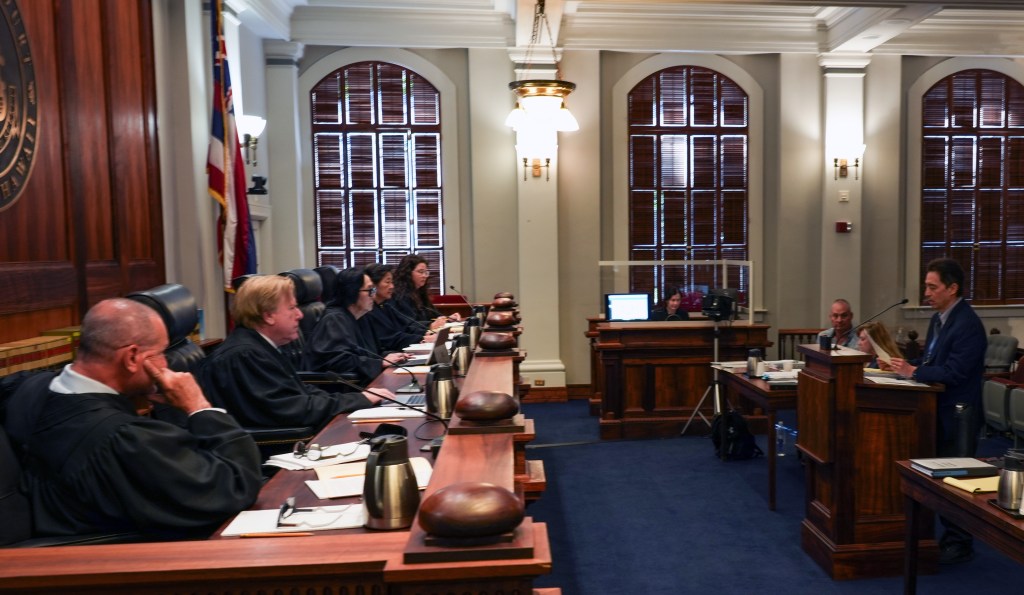
In its opinion, the court pointed to what it described as the underlying problem that prevented a meeting from happening — that “the very agency the Commission oversees decides whether the Commission may meet.”
“Each condition the Office sets on a meeting foils the public business the legislature entrusted to the Commission,” Eddins wrote. “A Commission kept from meeting shuts the public out as surely as one that meets secretly. Either way, the people see nothing.”
The ruling described the commission’s duties as significant and “wide-ranging. It investigates and holds hearings on election violations and complaints. After each general election, it evaluates the chief election officer’s performance.”
That officer, Scott Nago, was the Nago named in the lawsuit.
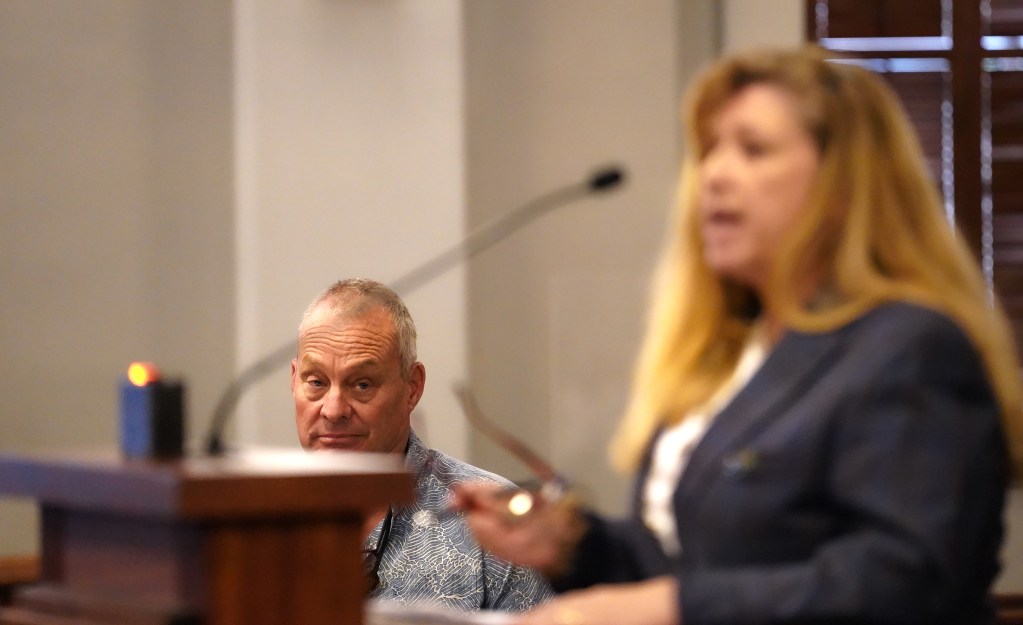
The nine-member commission has been without a chair since June 30, even as numerous controversies have swirled, including threats by the Trump administration and questions about election integrity. The other eight commissioners are split 4-4 politically.
Eddins said that when the commissioners again convene, their first item of business should be to elect a chair pro tem. The court specified that five votes would be sufficient to elect a chair, whereas it previously was in question whether six would be necessary.
The court’s ruling concluded by citing the Aloha Spirit, which is part of state law:
“Among its qualities are lōkahi, unity expressed with harmony, and ʻoluʻolu, agreeableness expressed with pleasantness. The Office of Elections and the Elections Commission serve one public and one end. Elections the people can trust. That trust is earned when the two work together in harmony, in the open.”
Nago did not respond to inquiries Friday, but Cushnie and McKay issued a joint statement.
They say they have asked the Elections Office to issue a notice for a meeting Nov. 12, noting that by then commissioners will have gone through both the 2026 primary and general election without a single commission meeting.
“During that time, complaints have waited without a Commission meeting to hear them,” they stated. “Commissioners have been unable to question, as a body, how a tied House race came to be decided by drawing from a basket, which a method the Supreme Court later held should have gone through public rule-making, or how two voters received ballots for the wrong district.”
At the Nov. 12 meeting, commissioners will elect a temporary chair and set the agenda for the commission’s next meeting, Cushnie and McKay said.

