How Much Water Will The Future Maui Data Center Use? The Military Won’t Say
The nearly $100 million facility received special exemptions that skirted the traditional oversight provided by the county.
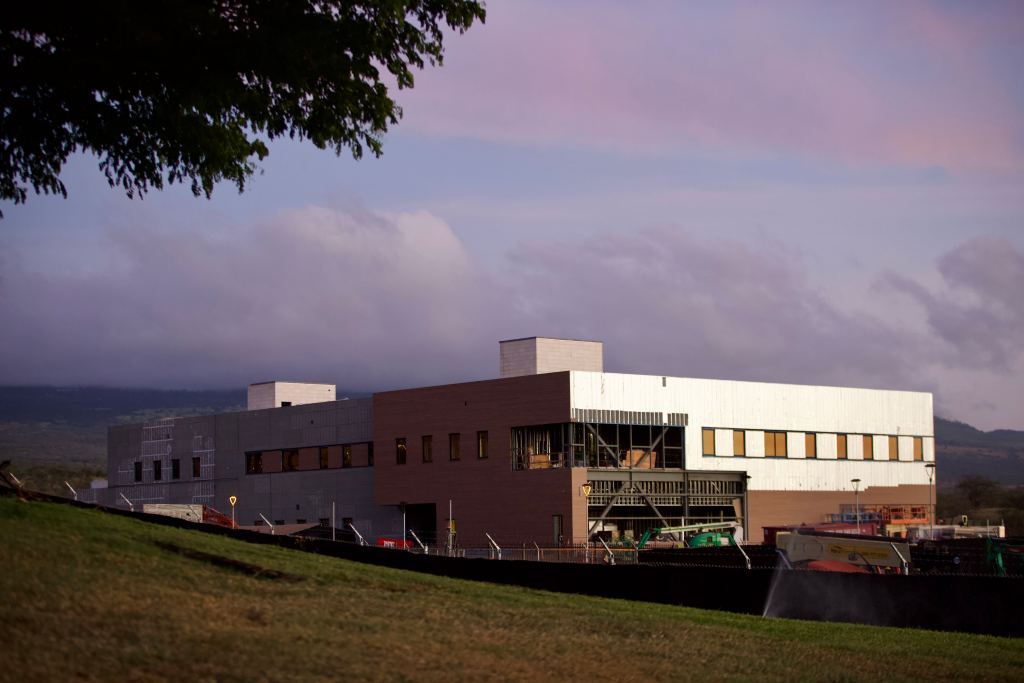
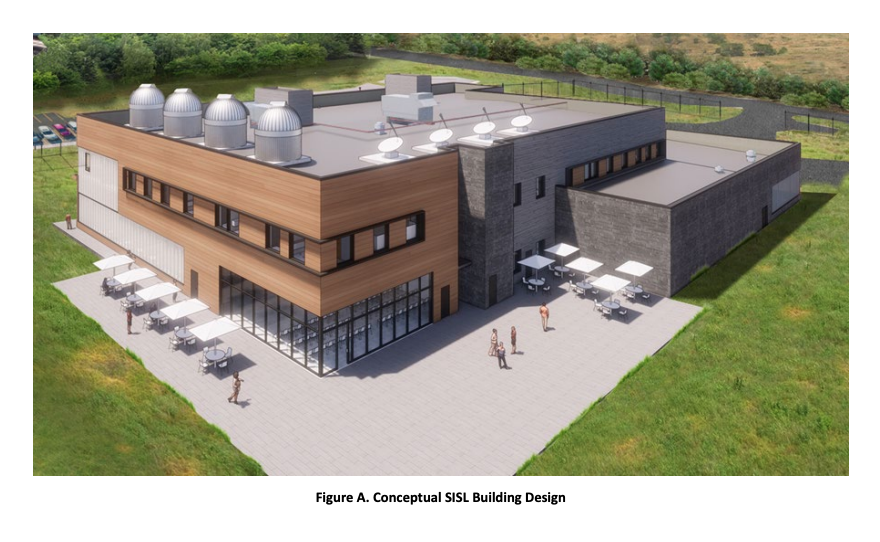
The U.S. Air Force and U.S. Space Force have maintained that the 56,000-square-foot laboratory and data center under construction in Kīhei is not expected to be a significant added strain on the region’s infrastructure.
But federal officials still won’t say how much water the project is expected to use.
The nearly $100 million facility at Līpoa, the mixed-used development formerly known as the Maui Research and Technology Park, is intended to consolidate some of the military’s operations on the island into one location. It is being engineered to meet high federal energy and water-efficiency benchmarks, according to a 2022 environmental assessment.
However, no specific details about the facility’s projected water usage have been made public, nor has that information been shared with county officials who make decisions about whether to approve applications for new construction projects in the area. Those decisions are based, in part, on where and to what extent the island’s water infrastructure can handle new development.
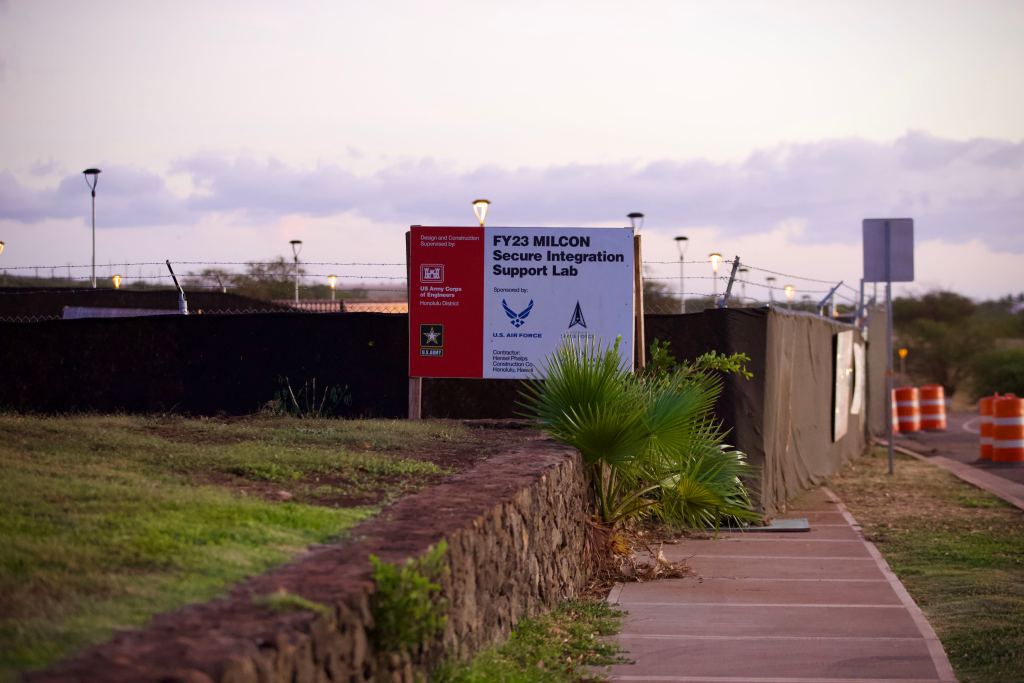
Typically, plans for new development would prompt the Maui Department of Water Supply to reevaluate the subdivision’s water meter reservation and adjust it as necessary, according to a department statement provided Monday by county spokesperson Lila Lawrence. The military’s data center project was granted a federal exemption, so the department has not reviewed the subdivision since December 2022 — when there were no proposed buildings or other permit plans — and the water meter reservation was determined based on the lot’s square footage, according to the department.
Water is already limited in South Maui, which receives almost all of its water from the ʻĪao and Waiheʻe aquifers in Central Maui. The Central-South Maui water system has for years been operating dangerously close to capacity, and Kīhei residents are often subjected to water conservation advisories due to dry conditions and issues related to the region’s aging infrastructure. Projects like the nearly 1,000-unit Ledcor South Maui Properties, the 652-unit Mākena Mauka project and the 1,150-unit Honua‘ula project — also known as Wailea 670 — have come under fire in part because of concerns about the availability of potable water.
Given those challenges, no building project’s anticipated water consumption should be hidden from the public, said Hina Kneubuhl, an organizer with Protect Haleakalā, a collective of Hawaiian cultural practitioners, environmentalists, community leaders and others working to protect culturally significant landscapes.
“I’m tired of these kinds of things being opaque. It’s not fair,” she said. “We’re living on an island with limited water and power resources. How is it just or fair to keep those kinds of figures from the public, and how can County Council members or the Planning Commission or anybody involved in making decisions make an informed decision without that kind of information?”
Kelly King, who was recently elected to represent South Maui on the Maui County Council, said her decision-making related to future development projects would absolutely be affected by whether she has access to information about the military facility’s water consumption.
“But I think that we shouldn’t just sit back and wait for information that may not be forthcoming. I think we need to actually call them into the chambers,” she said. “They need to come clean and tell us what they are doing.”
She added, “The scrutiny for all the development is going to get much, much more detailed, I think, and the community is going to want more answers before the council makes any more moves.”
When asked directly about the Kīhei project’s anticipated water usage, a spokesperson for the U.S. Space Force provided an emailed response from department representatives that did not include specific figures. Instead, representatives shared information about some of the water efficiency measures planned for the new facility.
In its environmental assessment, Air Force officials did not consider the project’s impact on future development that had not already been approved, and it only considered developments in the neighboring community.
Department of Land and Natural Resources spokesperson Andrew Laurence said the DLNR administrators and staff who submitted comments on the project’s environmental review four years ago are no longer with the agency, he said, “so we can’t speak to the reviews that were conducted in 2022.”
At least some of the new facility’s hardware will be cooled using a permanently sealed system that continuously recirculates the same water, and there is projected to be a minimal increase in water demand compared to the military’s current leased facility in Kīhei, according to information provided by U.S. Space Force spokesperson Bradley Sturk.
“This slight difference is solely due to additional standard restroom space required to consolidate personnel from multiple commercial leased buildings into a single building,” according to the department statement emailed by Sturk.

There are expected to be short-term minor adverse effects on potable water use during construction and early phases of the project, but demand for potable water use is not expected to result from consolidating military operations at the new facility — called the Secure Integration Support Laboratory, or SISL — according to the statement.
Despite the community’s focus on the data center portion of the project, Space Force officials have emphasized that the planned facility is predominantly an “administrative, research and collaborative workspace — not a commercial or high-density data center.”
“The Department of the Air Force and the U.S. Space Force remain deeply committed to the Maui community. The broader Space Force enterprise currently contributes an estimated $30 million annually to the local economy and invests heavily in local STEM education pipelines,” according to the statement provided by Sturk. “Built to federal sustainability standards, the facility will house existing island personnel while operating within the typical power and water profile of a standard commercial office.”
The facility’s projected electrical load is approximately 750 kilowatts, compared to 450 kilowatts at the existing leased facility in Kīhei, according to the statement. To offset grid demand, officials have budgeted for a 200-kilowatt solar power system to be constructed in fiscal year 2028.
Space Force operations in Kīhei and Kahului are on track to consolidate into the new facility throughout 2027, and the SISL is expected to be fully operational in 2028, according to the statement. By consolidating functions from multiple older commercial lease facilities into one modern, permanent facility, the SISL is designed to have a neutral-to-positive impact on Maui’s resources, the statement says.
Kīhei’s Newest High-Performance Computing System
Maui County Council member Tom Cook, who represents South Maui, said in a statement late last month that there have been high-performance computing and space tracking operations at the Maui High Performance Computing Center at Līpoa for many years, and a new high-performance computing system is expected to use artificial intelligence and machine learning to support missions in the Indo-Pacific region.
Cook and his executive assistant attended a ribbon-cutting ceremony in August for the new system — a partnership between the U.S. Space Force and University of Hawaiʻi employees — during which he observed the center’s computing facilities firsthand and learned about some of its existing and planned sustainability measures, according to the statement.
“Residents have the right to question projects on Maui, require transparency, and raise concerns about our water, environment, and future,” said Cook, who lost his recent reelection bid to King, but will continue to represent the community through the end of the year. “As an elected official, I recognize my responsibility to seek accurate information and share it with the public, especially in times of uncertainty and misinformation, to foster meaningful discussions grounded in facts.”
He noted that while a draft environmental assessment anticipated that consolidating the Air Force’s Maui operations would eventually reduce overall water and energy consumption across those operations over the facility’s life, it does not provide a detailed total water-consumption figure.
Cook did not respond to requests for comment on Monday.
Kneubuhl said it was enraging to see officials repeatedly avoid directly answering her and others’ requests for specific information about the SISL’s anticipated water and power usage.
“There’s a lot of that kind of placating going on with responses that are vague and unspecific, and we’re just supposed to continue to trust and take their word for it. But in reality, there’s no reason for us to trust them,” she said. “I feel frustrated. I feel not heard, and I feel not cared about. I feel like all these things should have transparency around them and the fact that we have to demand that is crazy.”
Environmentalists, Native Hawaiian advocates and other Maui residents like Kneubhul have also raised concerns about federal officials’ transparency regarding the South Maui project’s connection to controversial telescopes that the military is seeking to build near the top of Haleakalā’s 10,000-foot summit.
In the statement provided by Sturk, the military maintained that while the telescopes would be operated from the new facility in Kīhei, the two projects are separate and have “different locations, purposes, and timelines.”
“The SISL is not the establishment of a new mission presence on Maui, nor does it increase Haleakalā Summit activity,” the statement says, adding that the proposed telescopes could be operated with or without the new facility in South Maui. “The projects are separate and distinct.”
The Kīhei facility’s anticipated water and power consumption would not be affected by the additional proposed telescopes, according to the statement.