

This Kāneʻohe Couple Hopes To Resolve Permit Issues Before They Die
The homeowners say the permit department is MIA, and they’re worried how an outstanding issue could impact their kids’ inheritance.
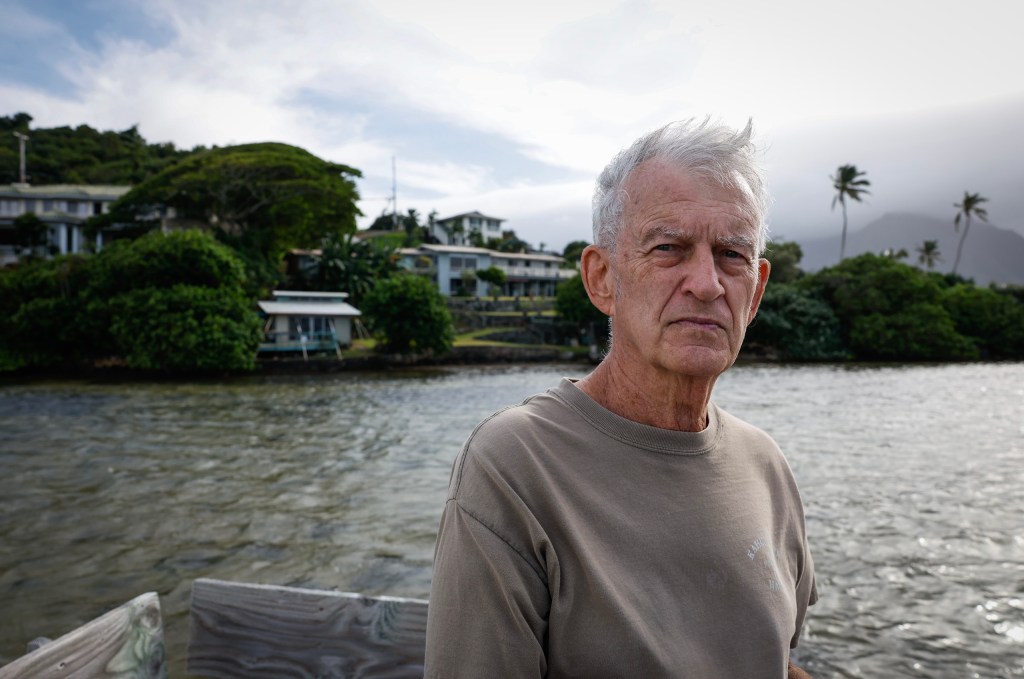
Dick and Noreen Van Horn, both 86, just wanted to resolve some minor permit issues with their family property so they could pass it on to their children. But that endeavor has turned into a two-and-a-half year waiting game with the Honolulu permitting department.
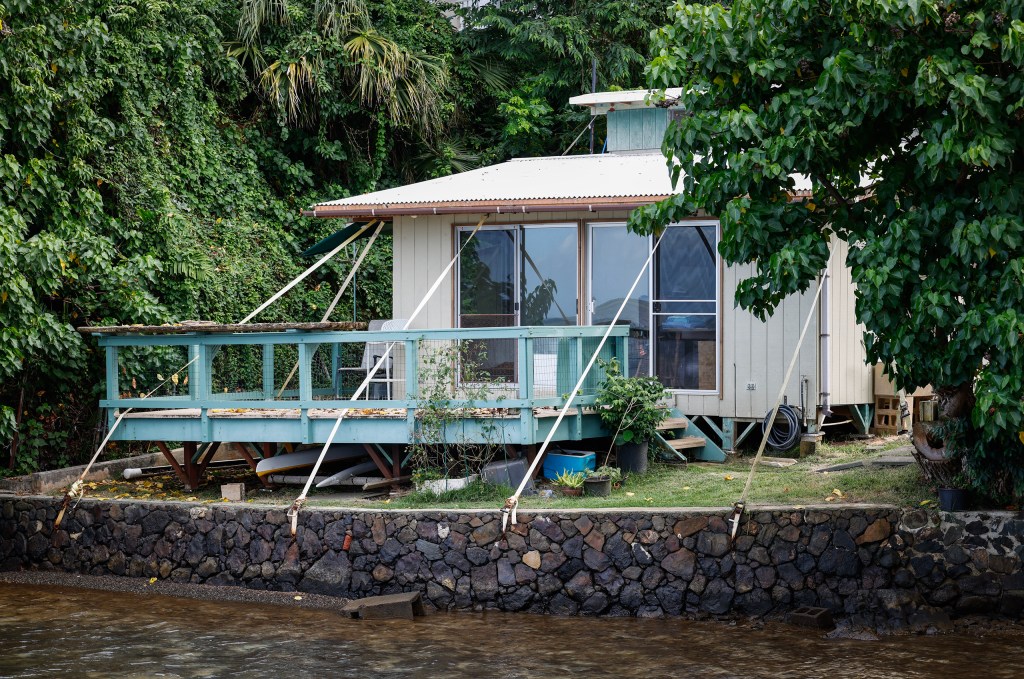
The dispute centers on a deck they installed in 1984 at their property along the Kāneʻohe Bay shoreline. Forty years later, the Honolulu Department of Planning and Permitting said it was unauthorized, and the homeowners needed to demolish it. The couple requested a contested case hearing to resolve the disagreement, but a hearing date never came. Now the case is in limbo.
“We started all this crap to sort the stuff out so we can leave it to our kids,” he said, but the couple is still waiting and say they’re being met with silence from DPP about the status of the appeal. “At 86, we get the impression SMA is waiting for us to pass.”
The violation notice came in response to Van Horn’s request for “after-the-fact” permits for minor modifications made over the years during routine maintenance, like concrete stairways and retaining walls. All that work, other than the deck, was approved.
The DPP directive to tear down the deck was issued on April 29, 2024, and the Van Horns filed a petition with the department right after. That should have triggered a process leading to a hearing date.
But the system is backlogged. There are currently 18 pending cases, including two dating back to 2018 and seven from 2019. The Van Horns are one of seven pending cases from 2024, according to department spokesman Davis Pitner.
DPP is using a contracted hearings officer “who is working through the pending caseload,” Pitner said.
Pitner said on Thursday that DPP has been in contact with Van Horn and is working to schedule his hearing.
Dick Van Horn said that’s not the case. According to him, the last contact he had with the department was via email three or four months ago. His other attempts at contact have ended up landing with DPP staff who are unable to help, he said.
Kealiʻi Lopez, state director for AARP, said the couple is taking positive steps to pass property onto their children without complications.
This was particularly important for Hawaiʻi residents who have stayed in their own homes, given how much property ends up in the hands of people who don’t live here. “I know that the DPP is backlogged overall,” she said, “but I would hope that this type of issue with a family home could be dealt with by a different group within DPP.”
“As people get older, we don’t know when their time will come,” Lopez said. “So to the extent it’s possible, issues like this should be resolved in a timely manner.”
In an ironic twist, Dick Van Horn is a retired architect and civil engineer who was directly involved in drawing up the laws that have now ensnared him and his wife. The matter has been dragging on so long that he renewed his Hawaii architecture license at 85 so that the permit drawings he submitted with the appeal remain valid.
The Special Management Area Minor Permit System, dating from 1975, is the framework the DPP uses to limit the impact of development on Oʻahu’s shoreline and coastal environment.
Obtaining an SMA permit is required for any work valued at less than $500,000 that potentially impacts the designated coastal zone on Oʻahu. Those permits require the approval of DPP Director Dawn Takeuchi Apuna. Larger shoreline projects exceeding $500,000 require a full environmental assessment, community consultation and the sign-off of the Honolulu City Council.
Van Horn said the SMA system was set up to manage new construction — not to resolve retrospective issues from decades before.
“I think for some reason they’ve gotten away from any serious objectives,” he said, “and are just trying to find fault.”
The DPP’s valuation of all the work that was submitted under Van Horn’s application in 2024 was $34,000.
Owners Tried To Follow Rules
The lead up to the yet-to-be scheduled contested hearing began in 2022 when the Van Horns were preparing to transfer their Kāneʻohe property into a family trust. Van Horn said he had originally reached out to DPP for advice.
“The entire purpose of this permit exercise was to confirm our property was up to current building code,” he said, and make sure DPP’s public record is accurate.
The couple bought the 25,000 sq. ft. property in 1983. The Lilipuna Road home looks directly out onto Moku o Loʻe, or Coconut Island.
The next year, Van Horn made a modification that is now at the center of the holdup.
“The entire purpose of this permit exercise was to confirm our property was up to current building code.”
Homeowner Dick Van Horn
Van Horn made a 40-foot addition to a deck that had already been built next to their ʻohana unit which is located close to the property seawall. The extension was made so the deck reached a doorway on the unit that had been installed as a secondary safety exit, as required by building code.
The deck and the land under it was at that time owned by DLNR, and Van Horn didn’t obtain a county permit for the addition. He didn’t believe one was needed. County law doesn’t require a permit for construction of external storage areas less than 120 sq. ft.
That whole issue was resolved in July 2004 when DLNR sold the deck and the land to the Van Horns. DPP acknowledged the transfer from DLNR deal when the map of the subdivision was redrawn in 2005.
“We have been waiting for two years for a hearing addressing issues that in my and DLNR’s opinion are already resolved,” he said.

No Timeline For Hearing
The deck again became a problem when the Van Horns applied for retroactive building permits to update the public record of the property in March 2024.
“Prior to the issuance of a building permit for the Approved Project, the unauthorized wood deck and railing additions to the Lower Dwelling must be demolished and removed,” DPP’s April 2024 response read.
Appeals of the DPP director’s decisions cost $400 and have to be filed within 30 days or face dismissal under Honolulu’s administrative rules.
But the subchapter says nothing about how soon a hearing will be scheduled, only that notice of the hearing would be sent no less than 15 days beforehand.
The quasi-judicial procedure is run by a hearing officer who sets the dates for pre-hearing conferences and contested case hearings. They can also determine whether it’s necessary to conduct a hearing at all, or whether it’s possible to resolve the issue through mediation.
Van Horn has expressed his willingness to engage in mediation in the hope of avoiding a formal hearing.
Aside from mediation, the Van Horns’ appeal against the decision will only succeed if the hearing officer determines the director’s action was “based upon an erroneous finding of material fact,” amounts to “arbitrary or capricious decision-making,” or is a “manifest abuse of discretion,” the rules say.
To Van Horn, it feels like the city is “almost desperate to find fault.”
“Our entire effort over the last 40 years,” he said, “has been to maintain the property and bring it up to current building code.”

