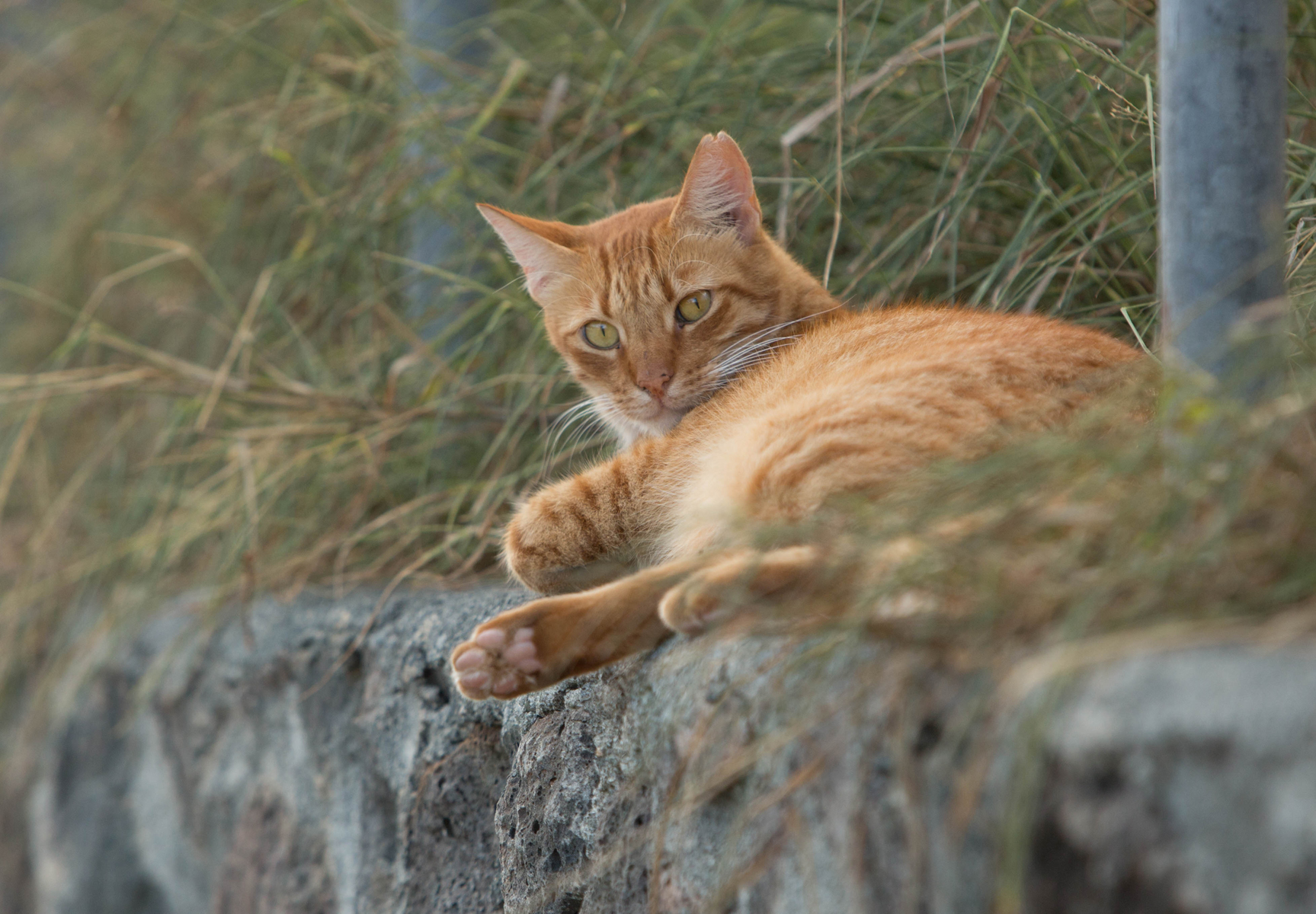
My colleague Nathan Eagle recently wrote about the threat of toxoplasmosis from cat feces to endangered seals in the islands.
A Civil Beat editorial then raised the uncomfortable notion that feral cat colonies in Hawaii may need to be culled (i.e., killed) should a “trap-neuter-return” approach prove insufficient.
A new book, “Cat Wars: The Devastating Consequences of a Cuddly Killer,” goes further, examining the “threats free-ranging cats pose to biodiversity and public health throughout the world.”
Here’s an excerpt from the book’s summary:
[blockquote]
In 1894, a lighthouse keeper named David Lyall arrived on Stephens Island off New Zealand with a cat named Tibbles.
In just over a year, the Stephens Island Wren, a rare bird endemic to the island, was rendered extinct.
Mounting scientific evidence confirms what many conservationists have suspected for some time — that in the United States alone, free-ranging cats are killing birds and other animals by the billions.
[/blockquote]
The book’s authors propose solutions “that foresee a time when wildlife and humans are no longer vulnerable to the impacts of free-ranging cats.”