Hawai‘i Island’s Next General Plan Splits County Council
The council wants to approve the county’s next long-term guiding document before the November election brings new members on board.
The Hawaiʻi County Council is split over a document that will steer development for the island and its growing population of 200,000 residents over the next 20 years.
Members have been pushing competing visions forward with the goal of approving a new General Plan before the election in November brings in at least four fresh faces. For months, they have been divided over two plans: the 310-page General Plan 2045, created by the Planning Department; and a 72-pager known as General Plan 2026 written by council member Ashley Kierkiewicz.
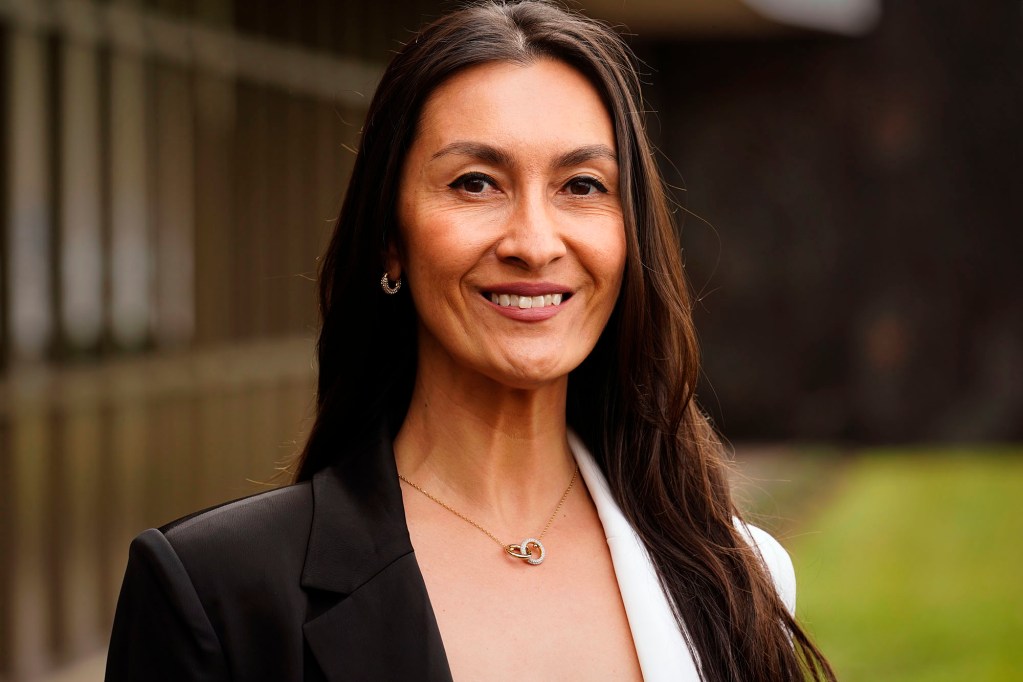
Kierkiewicz said her plan offers a simplified version and was an attempt to ensure it is actually implementable. Others, including the county’s planning director and council members, called it a complete rewrite and raised concerns that it did not undergo an extensive public comment period.
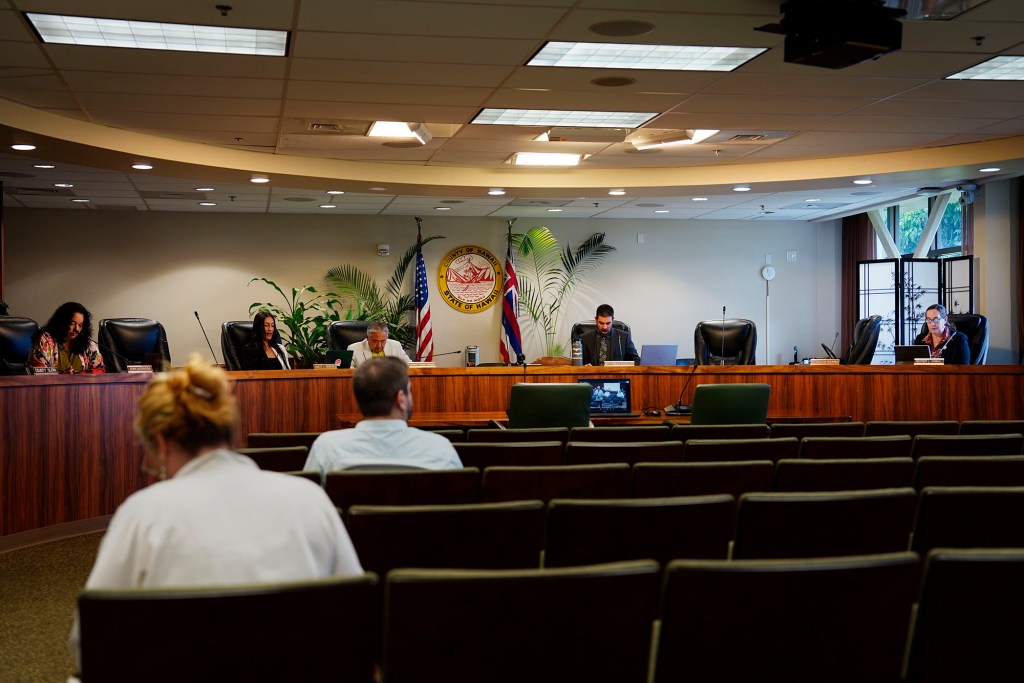
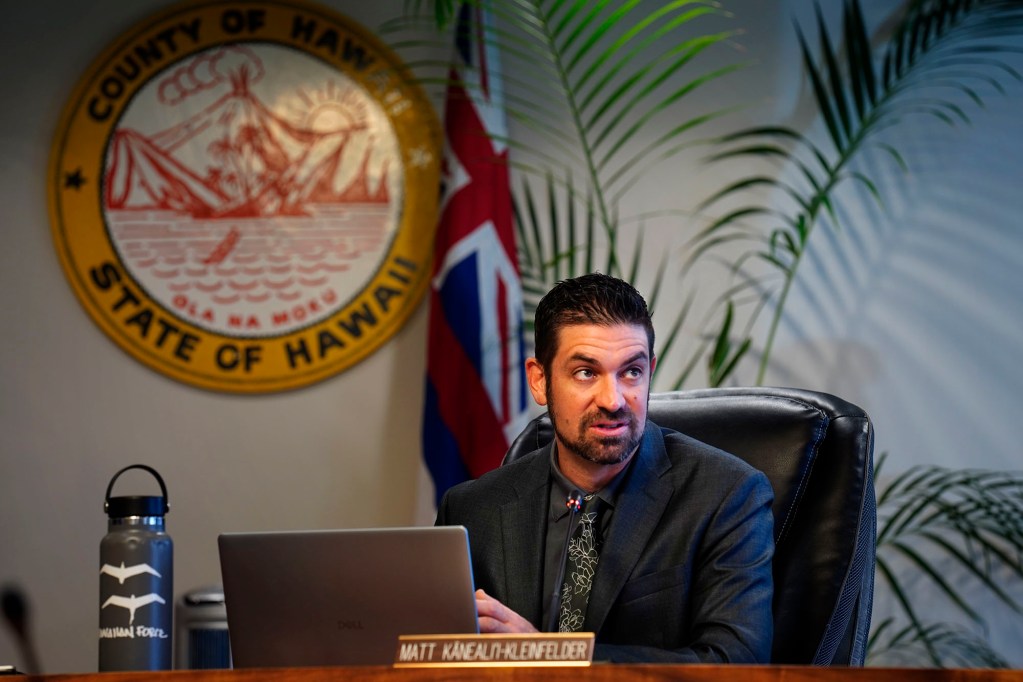
The looming election has created a sense of urgency to pass something before the council experiences significant turnover. Council members Kierkiewicz, Matt Kaneali’i-Kleinfelder and Rebecca Villegas are terming out and Michelle Galimba is not seeking reelection to another two-year term.
“I’m not going to entertain the idea of us not passing something this term,” Council Chair Holeka Inaba told Civil Beat. He said a majority of the current council has gone through the general plan process over the last five years and wants to see a plan approved before they are out of office.
The Planning Department began its comprehensive review of the county’s current 2005 plan in 2015. The department submitted its latest version of the guiding document on land use, planning, development and public services to the council last year. The council voted 5-4 in committee earlier this month to advance it to the full council, over objections from the chair and mayor.
General Plan 2045 primarily focuses on sustainable development, addressing climate change and creating a diverse, regenerative economy. It discusses strategies for decreasing vehicle reliance, reducing the county’s carbon footprint to net zero by 2045 and increasing renewable energy. It advocates for preserving rural character and focusing development in urban centers.
Objectives and policies include adopting an ahupuaʻa framework — a traditional Native Hawaiian land management system — to preserve the health of watersheds, not allowing new resort zoning development along the makai side of Aliʻi Drive and developing community-based food system assessments and monitoring local food production and consumption.
But almost half the council and Mayor Kimo Alameda had concerns over General Plan 2045, calling it too overarching and unorganized. Council members James Hustace, Dennis “Fresh” Onishi, Kierkiewicz and Inaba voted against passing General Plan 2045.
Kierkiewicz said her plan attempted to create clearer directives for departments while maintaining the broad brush policies that a general plan should contain.
“I don’t know if we have the human infrastructure, the capacity or bandwidth to do everything that the (2045) plan is being asked of us,” she told Civil Beat.
‘Unorganized’
In a letter to the council last summer, Alameda said the General Plan 2045 created in part by his own administration was too specific and prescriptive for a high-level planning document and that the plan should be more flexible. The general plan risked being bogged down by excessive details, he said.

“By planning too far into the future, we reduce our ability to respond effectively to an ever-evolving world,” Alameda told the council.
The mayor pointed to other counties in the state as examples to support his claims, saying they offered a more flexible framework. The 2045 plan is far longer than Honolulu’s 67-page general plan and Maui County’s 110-page plan. Kauaʻi is the only county that has a longer plan at over 500 pages.
Kierkiewicz said inspiration to create her amended version came from comments from her colleagues and the mayor’s letter.
“I’ve also seen during my time on the council just how hard it is for the county to implement essential services that are mandated in the charter,” she said. “How do we operationalize this?”
Inaba shared similar concerns. The council chair called the plan “unorganized” and said it isn’t written in a cohesive and logical manner to be effectively utilized. He voted against passing the 2045 plan in committee.
“The general plan (2045) is only as useful as perhaps the maps, because there’s no way to know if the policies and the goals are being met,” he said.

Kierkiewicz said the policies and objectives in a general plan should be utilized during decision-making. The plan’s maps designate land use and zoning across the island. Keeping objectives, policies and actions general is key to ensure they can be easily understood and implemented, she said.
General Plan 2045 has duplicate language, word salads, too many policies and actions and is too long for anyone to want to read it, she said.
“I don’t want them to sit on the shelf, I want them to be actively used,” she said, adding that it isn’t clear whether the policies and actions in the current 2005 plan have been implemented or tracked.
Her last-minute effort to amend the plan drew sharp criticism, splitting the council over which to adopt. Members Heather Kimball, Jennifer Kagiwada, Kaneali‘i-Kleinfelder, Villegas and Galimba voted in favor of the Planning Department’s plan.
Members who voted to pass General Plan 2045 still expressed concerns over it, such as errors in maps, and said amendments would be needed later.
Complete Rewrite
While Kierkiewicz says her plan took directly from the General 2045 plan, many said she completely rewrote it.
Kaneali‘i-Kleinfelder said it was a gut and replace, and Planning Director Jeff Darrow said it was a complete rewrite.
“I do not consider this as an amendment to the proposed Draft General Plan 2045, but a complete rewrite and consider it as a new draft plan,” Darrow told the council. He said it failed to meet requirements for input from the public and government agencies. He did not respond to a request for comment.
Kierkiewicz maintains that her plan is an amended version, something the county charter allows her to do. But members of the public accused her of breaking the Sunshine Law and failing to undergo the public process the 2005 general plan outlines for the creation of a new plan.
Kierkiewicz said she hoped to have community meetings to get input on her plan and to send it to the planning commissions for further review. She wasn’t expecting the council to take a vote last week, she said.
Kaneali‘i-Kleinfelder said it was best to pass something before the council turnover in the election this fall, and said he was concerned with the document’s length and the cost of the process, pegged at $1.7 million. A new general plan is long overdue, he said.
“It’s probably best if we just pass it and get it done and the new body can review it as a living document,” he told Civil Beat.
Inaba said he expects to see continuous revisions to the plan once the council can initiate amendments.
But Kierkiewicz said the upcoming election and the annual reviews of the proposed operating budget for next fiscal year have exhausted and distracted the council. She said she’s worried people won’t take the general plan seriously unless it’s cleaned up.
“Don’t we owe it to the community and future generations to put forward the best possible plan that the majority of the council and the community can get behind?” she said.
The county’s current 396-page 2005 general plan hasn’t been operationalized, Kierkiewicz said, and she worries the 2045 plan will have the same fate. The 2005 plan is just as detailed as the 2045 plan, and many actions in the current plan haven’t been implemented.
Building a second access road for Waikōloa Village was one action that has not been implemented from the 2005 plan.
“We can’t even hold ourselves accountable to this law that we created which is sad,” she said. “And then the (2045) plan wants to do more. How do we track all that? Who’s responsible?”
The general plan will be heard by the full council in the coming weeks, where it will undergo two readings before being passed to the mayor for final approval.