

Hot Races For Congress, Lieutenant Governor Top Hawaiʻi Primary
Large fields of candidates are also vying to be mayor of Maui and Kauaʻi and to fill open seats in the Legislature.
More than 300 people have filed to run for public office in this year’s elections. The filing period closed Tuesday afternoon.
Voters will have a number of candidates to choose from in several key races. They include competitive races for the U.S. Congress, lieutenant governor and two county mayors this year.
About a half dozen open seats in the Hawaiʻi Legislature have also drawn a number of candidates.
And there are several rematches of note, including a Honolulu City Council contest pitting incumbent Tommy Waters once again against former council member Trevor Ozawa. When they last faced each other, Waters narrowly beat Ozawa in a 2019 special election.
The marquee races involve the 1st Congressional District covering urban Oʻahu and the mayors races in Kauaʻi and Maui counties.
U.S. Rep. Ed Case, who has held the CD1 seat since 2019 (and represented the 2nd Congressional District from 2002 to 2007), faces state Sen. Jarrett Keohokalole in the Democratic primary.
The race was considered Case’s to lose until a third prominent Democrat, Rep. Della Au Belatti, decided last week to run for lieutenant governor instead. Keohokalole and Belatti generally appeal to more progressive voters than moderate and conservative voters that have favored Case. Several lesser known Democratic and GOP candidates along with nonpartisan and third party candidates are also in the running for CD1.
Seeking to be Kauaʻi mayor is Bernard Carvalho Jr., a former mayor and current Kauaʻi County councilman. Carvalho faces fellow council members Mel Rapozo and Felicia Cowden and several others in the nonpartisan contest. Kauaʻi Mayor Derek Kawakami is completing his second and final term in office and is running for lieutenant governor.
The battle for Maui mayor features incumbent Richard Bissen, Maui County Council member Yuki Lei Sugimura and several others. The county has been in recovery since the devastating wildfires of August 2023 and in debate over converting short-term rentals to address a severe affordable housing shortage.
The top two finishers in the Maui and Kauaʻi mayoral primaries will advance to a general election runoff Nov. 3.
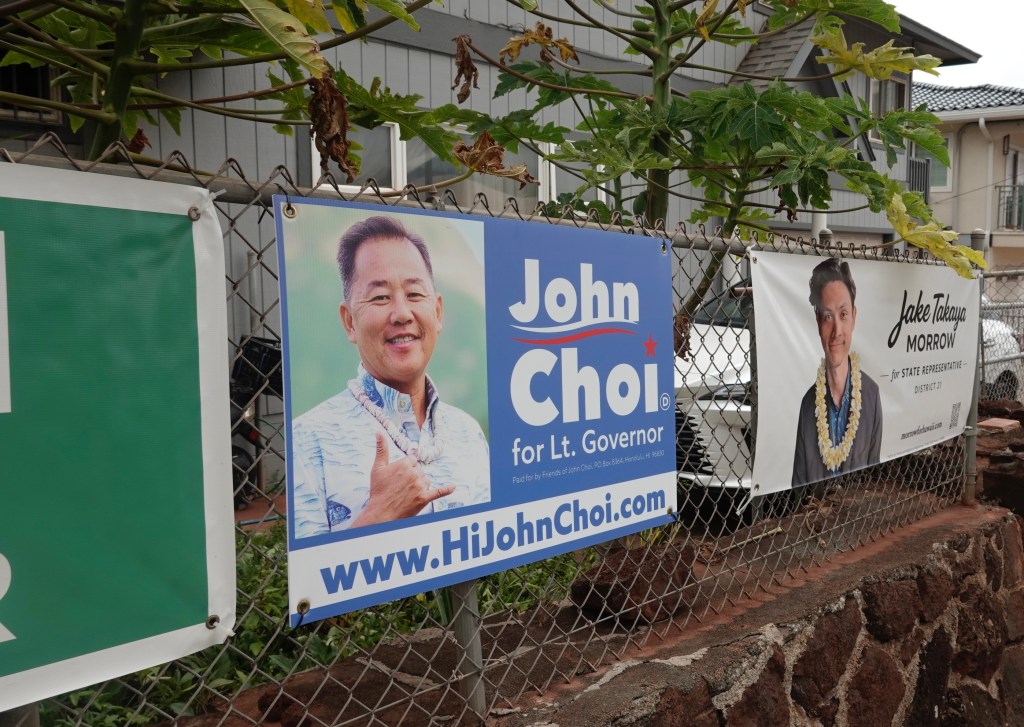
The other major competitive race is the Democratic primary for lieutenant governor. It pits Kawakami against Belatti, Honolulu attorney John Choi and one other Democrat, Sam Puletasi.
Makai Freitas, who was elected the new chair of the Democratic Party of Hawaiʻi on Saturday, says Dems are feeling optimistic about the 2026 elections.
“What encourages me most is the number of Democrats across Hawaiʻi who have stepped forward to serve their communities,” he said in an email Tuesday. “From statewide races to legislative contests, people are answering the call to public service because they care about Hawaiʻi’s future. Competitive primary elections are a healthy sign that people are engaged and invested in the future of our state.”
Shirlene Ostrov, chair of the Republican Party of Hawaiʻi, is similarly striking a hopeful posture.
“I am encouraged by the number of good people from our party who have stepped forward from all over the islands to serve our communities,” she said in a text Tuesday. “Many of these candidates have deep roots in Hawaiʻi — raising families here, running businesses, volunteering in their communities and experiencing the same challenges that everyday loocal families face.”
New Openings At The Legislature
More than 100 seats are on the ballot this August, including the state’s top elected post.
Gov. Josh Green will face three opponents in the Democratic primary, but they are not well-known. They are Duke Bourgoin, Lauren Kapoliahi‘iaka Shim and George (Teva) Lucas-Tadeo.
Gary Cordery, a builder and contractor on Oʻahu who has advocated for conservative positions at public forums, is the best-known candidate in the Republican primary. Four members of the GOP are running for LG.
U.S. Rep. Jill Tokuda has drawn three challengers in the Democratic primary for the 2nd Congressional District, including a longshot contender who was arrested late last month for terroristic threatening.
State Sen. Brenton Awa is unopposed in the Republican primary for CD2, which represents the parts of Oʻahu outside of urban Honolulu and all the neighbor islands.
Retirements, government appointments and the desire to gain higher office have left many seats in the Legislature wide open. They include the Senate District 13 seat on Oʻahu held by Karl Rhoads and the House District 26 seat held by Belatti.
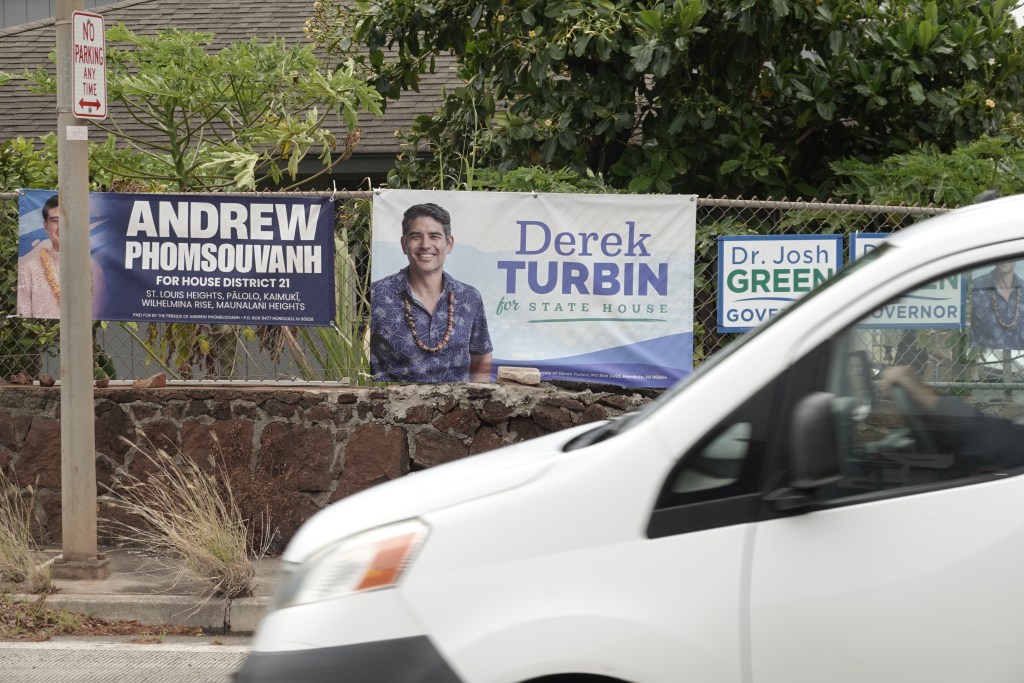
Rep. Jackson Sayama is also giving up his House seat to challenge Sen. Les Ihara in District 10, which inspired five Democrats to chase after the House District 21 seat on Oʻahu.
Five of the nine Office of Hawaiian Affairs trustees — Keoni Souza, Brickwood Galuteria, John Waiheʻe IV, Hulu Lindsey and Kalei Akaka — are pursuing reelection, and each has drawn challengers. Trustee wannabes include Hinaleimoana Wong, a prominent kumu hula known as Kumu Hina, and Shelby Pikachu Billionaire, a political gadfly who pops up at numerous community meetings.
OHA seats are nonpartisan and are considered statewide offices.
Other familiar names attempting political comebacks are John Mizuno, Green’s former housing czar who hopes to win back his former Kalihi House District 29 seat from Ikaika Hussey; Lei Ahu Isa, a former OHA trustee and House rep running for state Senate; Ikaika Anderson, a former Honolulu City Council chair, is also running for OHA; BJ Penn, a mixed-martial arts fighter who ran for governor in 2022 and is running for Hawaii County Council; and Bu Laia Hill (real name: Shawn K. Hill), a comedian who is running as a nonpartisan candidate for governor.
In the county councils, four of Honolulu’s nine seats are up this year. All seven members of the council on Kauaʻi are up, as are all nine of the council members in Maui and Hawaiʻi counties. In many of those races, the incumbents are on the ballot.
The deadline to file to run for office this year was 4:30 p.m. Tuesday. All told, 310 men and women are running this year, a figure greater than the 279 that ran in 2024. That figure, however, does not include the 12 candidates for president and vice president on the ballot that year.
In the 2022 primary, 394 candidates sought office. But the comparison is not precisely apples to apples, as that election featured all 25 state Senate races because of the reapportionment that comes every 10 years.
A full list of candidates is available on the Office of Elections homepage.

