

Belatti Drops Bid For Congress To Run For Lieutenant Governor
The Hawaiʻi state representative said the political landscape shifted once Lt. Gov. Sylvia Luke opted not to run for reelection while facing criminal investigation.
Democratic state Rep. Della Au Belatti announced Thursday that she’s giving up her bid for Congress to run for lieutenant governor, an abrupt change of heart she attributes at least in part to the race being flipped upside down by an ongoing criminal investigation into Hawaiʻi public officials.
Belatti said she made her decision after Lt. Gov. Sylvia Luke said last month she would not seek reelection amid a Hawaiʻi Attorney General bribery investigation involving $35,000 supposedly given to an influential lawmaker in 2022. Luke has since been named a target of that investigation and has taken an unpaid leave of absence.
“When Lt. Gov. Sylvia Luke suspended her campaign, I would have never anticipated that,” Belatti said. “There was a fundamental shift in the political landscape and so I think good leaders adapt to that.”
Belatti, who has served nearly 20 years in the Hawaiʻi House, also pointed to the recent passage of Senate Bill 2471, which uses a novel approach to curb the influence of dark money and corporate investments in local elections, as an inspiration for remaining in state politics rather than moving to Washington.
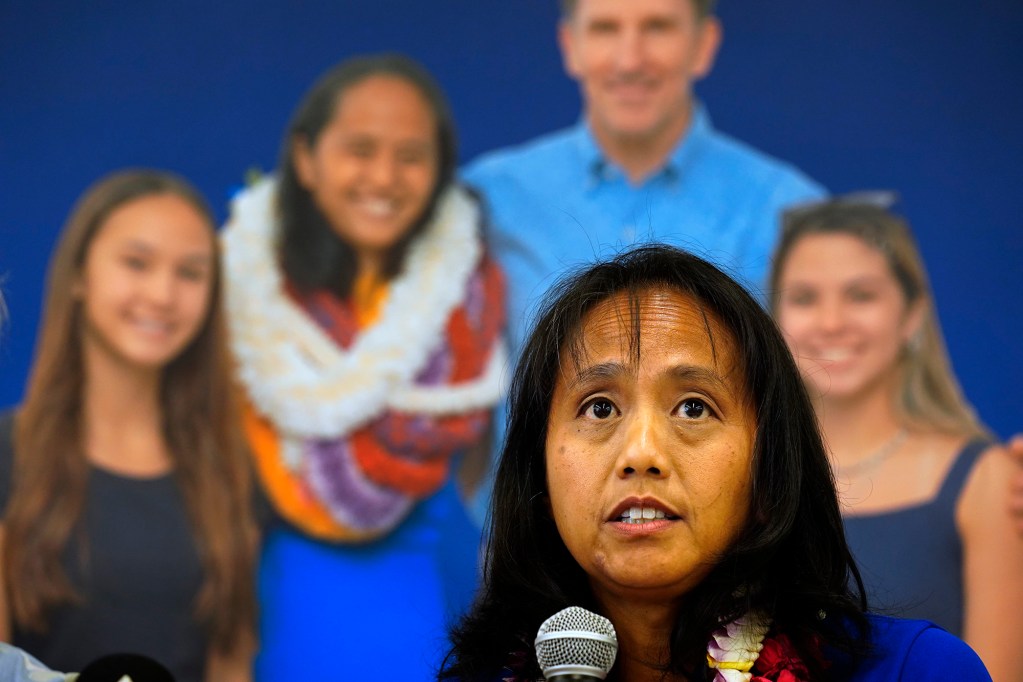
Even though the lieutenant governor’s office is generally seen as a figurehead position with very little power, Belatti feels she can make more headway inside the executive branch pushing other similar good government and anti-corruption measures in the islands than she can in the nation’s capital, where she would be one of just 535 members of Congress.
“Leadership is needed at the state and here at home,” she said. “I will be an independent, critical thinker within the administration if I’m so lucky to be able to be elected, and that’s going to be how I am different.”
Belatti’s decision, which comes less than a week before the candidate filing deadline, alters the dynamic of two high-profile races in Hawaiʻi.
Her entry into the lieutenant governor’s race means she’ll be facing off against Kauaʻi Mayor Derek Kawakami, who announced his intentions in March when Luke was under scrutiny, but was still a candidate. Kawakami has been the presumed frontrunner in the race and already has the support of the richest super PAC in the islands, For A Better Tomorrow, which is linked to the Hawaiʻi carpenters union and the pro-development Pacific Resource Partnership.
For her part, Belatti, whose day job includes working as a lawyer for Honolulu civil rights attorney Eric Seitz, has vowed not to take money from corporate PACs and said she is currently exploring whether to publicly fund her campaign for lieutenant governor. She delivered a similar message while running for Congress and was trying to position herself as a grassroots advocate for working people.
By dropping out of the race for Hawaiʻi’s First Congressional District, which is currently held by U.S. Rep. Ed Case, Belatti has cleared the primary field for fellow state lawmaker, Sen. Jarrett Keohokalole, to mount a more viable challenge rather than having votes split in a three-way contest.
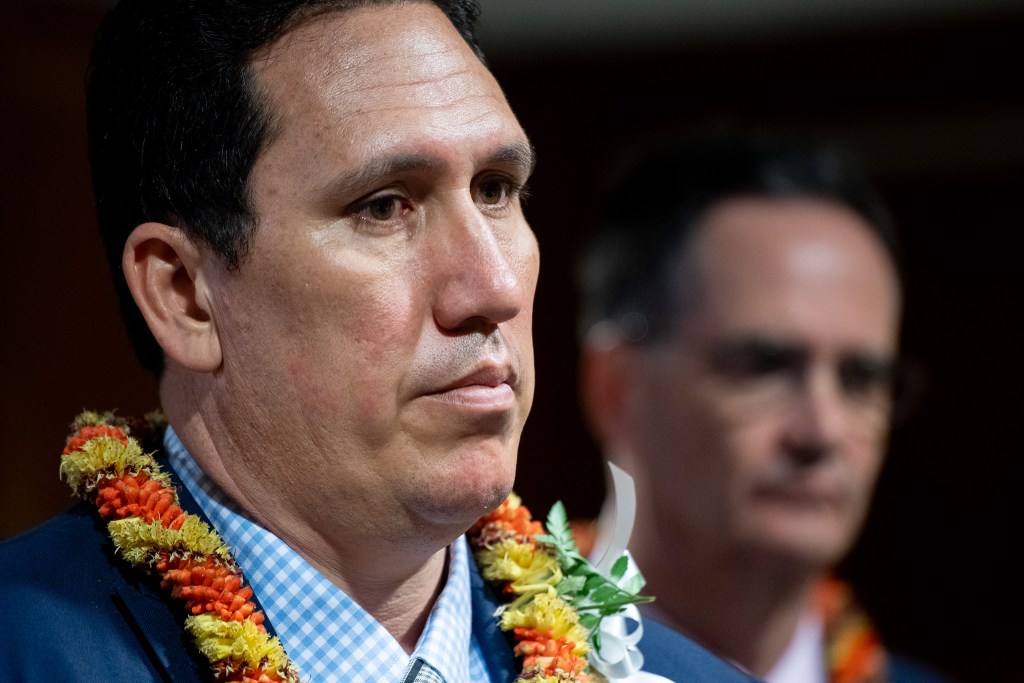
So far, Keohokalole has already garnered the support of several labor unions, received the endorsement of former Hawaiʻi Gov. Neil Abercrombie and raised hundreds of thousands of dollars from high-profile donors, including previous top aides and advisors to the late U.S. Sen. Dan Inouye, prominent island lobbyists and key business interests, including Alexander & Baldwin and Matson.
He had openly acknowledged that it would be harder to win in a crowded primary.
Beth Fukumoto, a former state lawmaker who teaches at the Harvard Kennedy School of Government, said Belatti’s pivot makes sense, especially given her struggles to break through in the race against Case and Keohokalole. Unlike Keohokalole, Belatti struggled to raise money.
While that might still be the case, Fukumoto said, she has a message that could resonate with local voters, especially given Kawakami’s support from special interests.
“She has a really good opportunity to change the conversation, and I think it being a local race people will be paying more attention,” Fukumoto said. “We don’t always pay that close attention to who we’re sending to Washington because the issues sometimes feel farther away. But especially because of what’s been going on lately here, I think people are going to be paying much more attention. So if she really wants to talk about corruption and change and all that, this is probably a better platform for that.”

