

Bird Rescuers ‘Desperately’ Seek Kauai Honeycreepers As The Species Faces Extinction
Crews are in the remote forest seeking three ‘akikiki birds, part of a last-ditch attempt to protect them from the mosquito-borne illness that’s devastated their numbers.
A team of Kauai-based rescuers has embarked on a 10-day trip to a remote part of the island in what state officials described as a “desperate,” last-ditch search for three imperiled ‘akikiki honeycreepers, with the native bird now poised to go extinct as early as next year.
The team, made up of staff from the Kauai Forest Bird Recovery Project, the state’s Division of Forestry and Wildlife and the University of Hawai‘i Pacific Cooperative Studies Unit, aims to find at least two of the critically endangered Hawaiian honeycreepers in its forest habitat, according to a press release.
The rescuers hope to capture two banded ‘akikiki – a male named Carrot and another bird named Abbot whose sex hasn’t been determined – as well as an un-banded female bird named Na Pua, in hopes of bringing the animals to the Maui Bird Conservation Center, the release stated.
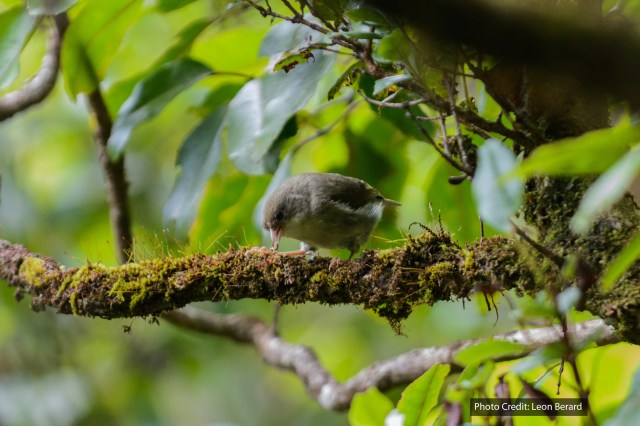
Officials hope to boost the population through captive breeding at the Maui center and, eventually, release them back into the wild.
The ‘akikiki, like other honeycreeper species native to the islands, has seen its numbers decimated in recent years, with the mosquito-borne avian malaria the prime culprit. Researchers say man made climate change has enabled the mosquitos to reach deeper and higher into the birds’ natural habitat.
The ‘akikiki’s numbers have plunged in recent years, and the species’ outlook already looked grim prior to this latest trip. Biologists monitoring the area found that the population of more than 70 birds recorded in 2015 had declined to just five in 2021, according to the Department of Land and Natural Resources.
Meanwhile, survey teams have been trapping mosquitos around the neighbor islands to collect data for a potential project to eventually introduce “incompatible” male mosquitos and curb the insect’s population.
“The only thing more devastating than the sudden disappearance of ‘akikiki over the last few years is realizing that the exact same thing is coming for the rest of Hawaiian honeycreepers in the very near future,” Justin Hite, the KFBRP Field Supervisor, said in the release.
Hite encouraged the public to support efforts to release the incompatible male mosquitos as a way to protect the native birds.

