Court Rules In Favor Of Hawaii In ‘Mosquito Birth Control’ Case
A judge granted summary judgment to the state and other defendants, thereby averting a trial.
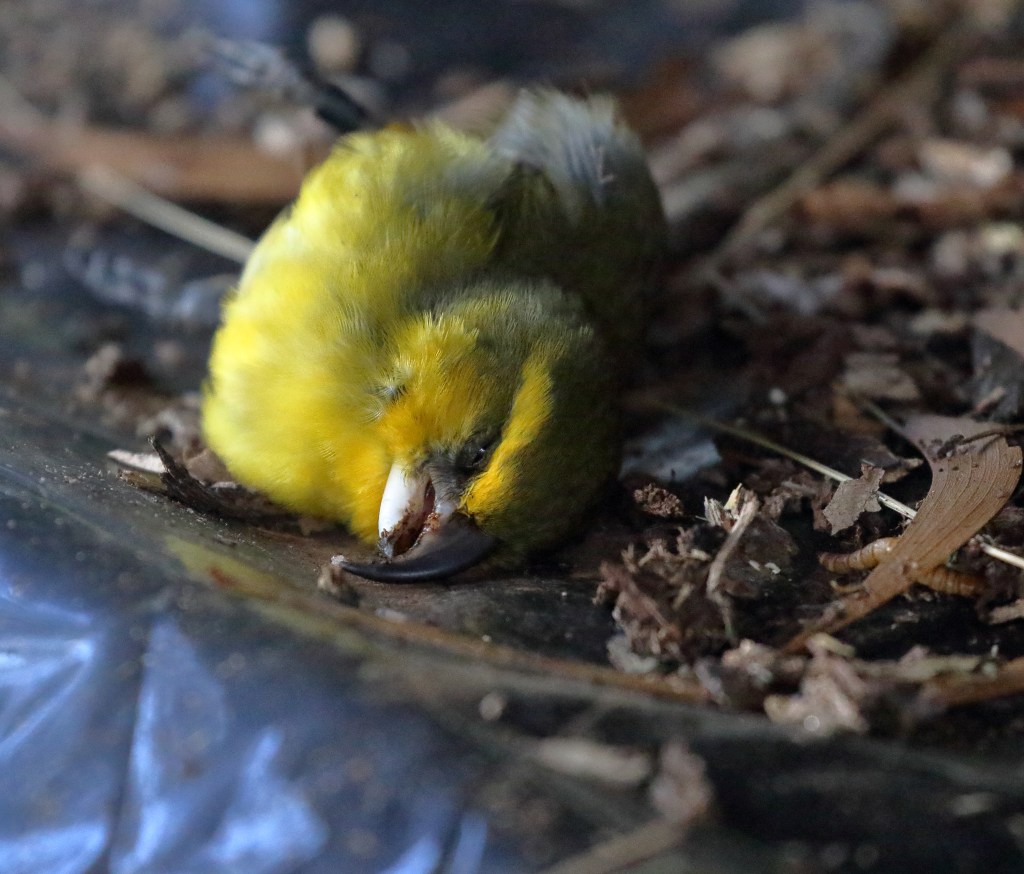
A judge has ruled in favor of a plan to intervene in avian malaria’s death march to save Hawaii’s endangered native forest bird species.
Circuit Judge John Tonaki granted summary judgment to state conservationists leading an ambitious plan to save Hawaii’s imperiled honeycreepers by attempting to crash the disease-carrying mosquito population. This means the judge decided there is no need for a trial because the undisputed facts of the case make clear that the state would prevail over the plaintiff, the Maui-based group Hawaii Unites.
Hawaii Unites had claimed that the state Board of Land and Natural Resources wrongly approved the project’s final environmental assessment.
However, Tonaki said in his order that many of the alleged issues raised by the advocacy group were addressed in the final environmental assessment, and that “some of the potential impacts of the project were raised as mere possibilities.”
He continued, “There is no genuine issue of material fact relating to whether the DLNR and BLNR complied with the requirements under the Hawaii Environmental Policy Act.”
The ruling is a victory for the state Department of Land and Natural Resources and its nonprofit partners the American Bird Conservancy and the Center for Biological Diversity. These groups are working together to pioneer landscape-scale mosquito control for conservation to address avian malaria, which is driving steep declines and extinctions in native forest bird populations.
The project targets Maui, followed by Kauai, as starting gates because these islands host some of the birds at highest risk of being lost forever.
Often called “mosquito birth control,” the conservation tool would suppress mosquitoes in Hawaii’s mountainous terrain to inhibit the invasive insect’s ability to produce fertile offspring, which pose a fatal threat to the birds.
BLNR Chair Dawn Chang described the judge’s ruling in a prepared statement as a “victory for our endangered forest birds,” and touted the state-led mosquito suppression project as the “most effective and safe technique available” to save native forest bird species.