

Gabbard, Case Vote To Decriminalize Marijuana
The House bill, which faces an uphill Senate vote, would also expunge pending and past pot convictions.
Hawaii’s two U.S. representatives were in the majority Friday in a 228-164 vote approving the Marijuana Opportunity, Reinvestment, and Expungement Act.
The bill would decriminalize marijuana at the federal level by removing it from the Controlled Substances Act.
Schedule I drugs are defined “as drugs with no currently accepted medical use and a high potential for abuse” and include heroin, LSD, Ecstasy and peyote.
The measure would also retroactively apply to prior and pending convictions for pakalolo.
The MORE Act, which was introduced by Rep. Jerry Nadler of New York, was co-introduced by Tulsi Gabbard, a fellow Democrat.
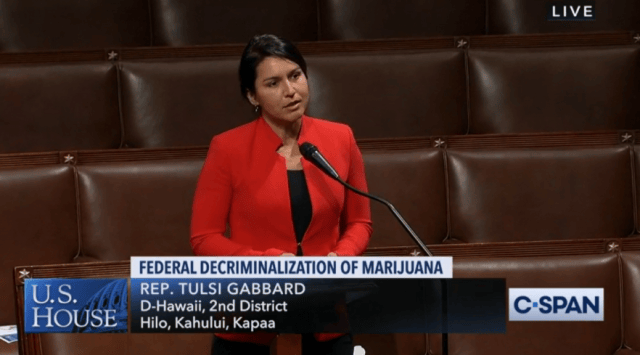
“Finally,” Gabbard said on the House floor in remarks later distributed in a press release. “This is a historic moment that so many here and across the country have been working towards to take this step to end America’s destructive and costly war on drugs that has turned everyday Americans into criminals and torn families apart ruining so many people’s lives.”
Democrat Ed Case of Hawaii also voted in favor of the bill, which now goes on to the GOP-controlled Senate where its prospects are dim, according to news reports.
The bill also “creates pathways for ownership opportunities in the emerging industry,” says NBC News, allowing veterans to obtain medical cannabis recommendations from Veteran Affairs doctors, “and establishes funding sources to reinvest in communities disproportionately affected by the war on drugs.”
Friday’s vote “was the first time a full chamber of Congress has taken up the issue of federally decriminalizing cannabis.”
Five Republicans voted with 222 Democrats in approving the bill, while 158 GOP members voted against it along with six Democrats. Thirty-eight members did not vote.

