Maui Council To Take Up Bill Phasing Out Vacation Rentals This Summer
The council’s housing committee chair says she’ll put it on the agenda after county budget deliberations.
Maui Mayor Richard Bissen’s plan to convert thousands of temporary vacation rentals into long-term housing for locals may start moving forward again as soon as next month.
Maui County Council member Tasha Kama announced in a release Thursday that she intends to have the housing and land use committee she chairs take up the proposal after the council finishes its deliberations of the county budget for the upcoming fiscal year, which starts July 1.
“The earliest possible consideration by the committee would occur in mid-May or early June,” she said in the release.
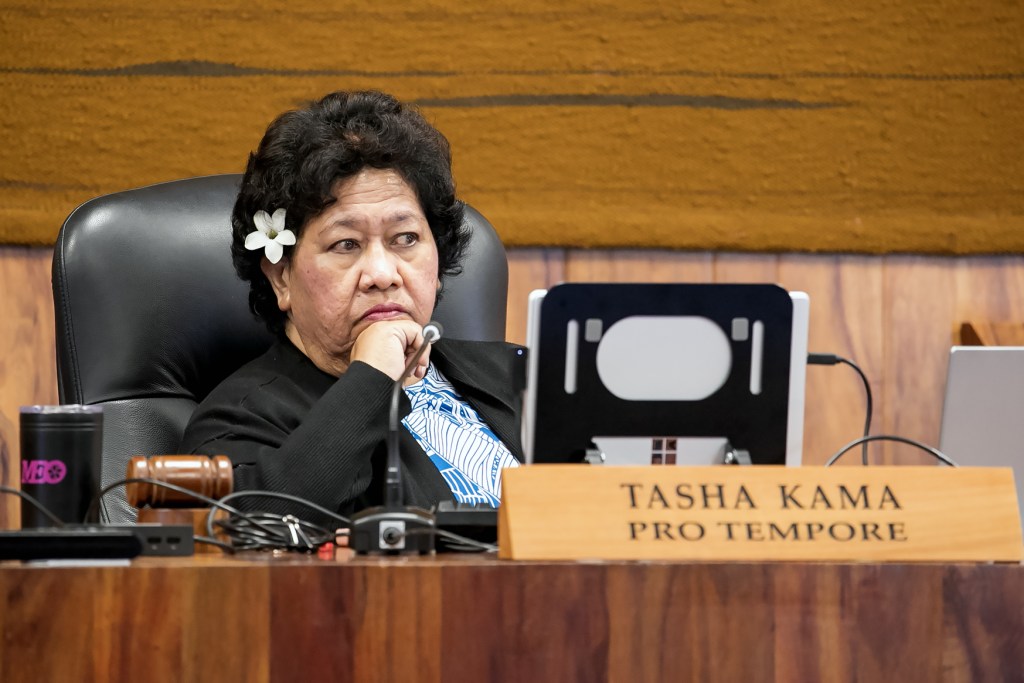
“Given the high level of public interest in this policy issue,” she said she hoped to schedule committee meetings in the evening when more people would be available to testify.
Bissen unveiled his plan in May, responding to a longstanding housing crisis that was exacerbated by the wildfires that devastated Maui in August 2023. As proposed, the exemptions that allow many apartment-zoned rentals to operate as short-term rentals would expire for properties in West Maui on July 1, 2025, and on Jan. 1, 2026 for units in the rest of the county.
But the Maui County Council — which would need to approve the plan in order for it to be implemented — has gone months without putting the proposal on its agenda, making that timeline increasingly unlikely. Council Chair Alice Lee has said members wanted more information on how the plan could potentially affect the local economy and housing market.
On Monday, the University of Hawaiʻi Economic Research Organization released a study that found that the effects of the mayor’s proposal would be mixed. While the plan would likely lower housing costs and improve affordability, it would also potentially hurt Maui’s tourism-dependent economy, prompt layoffs and result in a drastic decrease in tax revenue, according to the study.
“While the UHERO report has been recently released, council needs additional information to make a good policy decision,” Kama said. She was concerned many of the units that would be converted into long-term housing as a result of the mayor’s proposal are too expensive or not suited for the needs of Maui residents.
The affected properties are known as the Minatoya list, named after former county attorney Richard Minatoya, whose 2001 legal opinion is the reason more than 7,000 condos and other apartment-zoned units have been allowed to operate as vacation rentals.
Civil Beat’s coverage of Maui County is supported in part by a grant from the Nuestro Futuro Foundation.