

Plan To Dump Treated Water Into Halawa Stream Is Safe, DOH Says
DOH says the pumping and filtration plan will help prevent the contamination from spreading further in the aquifer.
Within days, the Navy will begin pumping millions of gallons of fuel-contaminated water out of the Red Hill well, cleaning it through two giant filters and discharging it into the Halawa Stream.
It’s a process the Hawaii Department of Health said on Friday should be safe for public health and the environment.

Matt Kurano, an environmental health specialist with DOH, said the community should not expect to see any oil sheen, smell any fuel or observe any fish kills. If anyone does observe that, they should contact the health department, but he says it’s “highly unlikely.”
“The Department of Health permit does not allow for pollution into the stream,” he said.
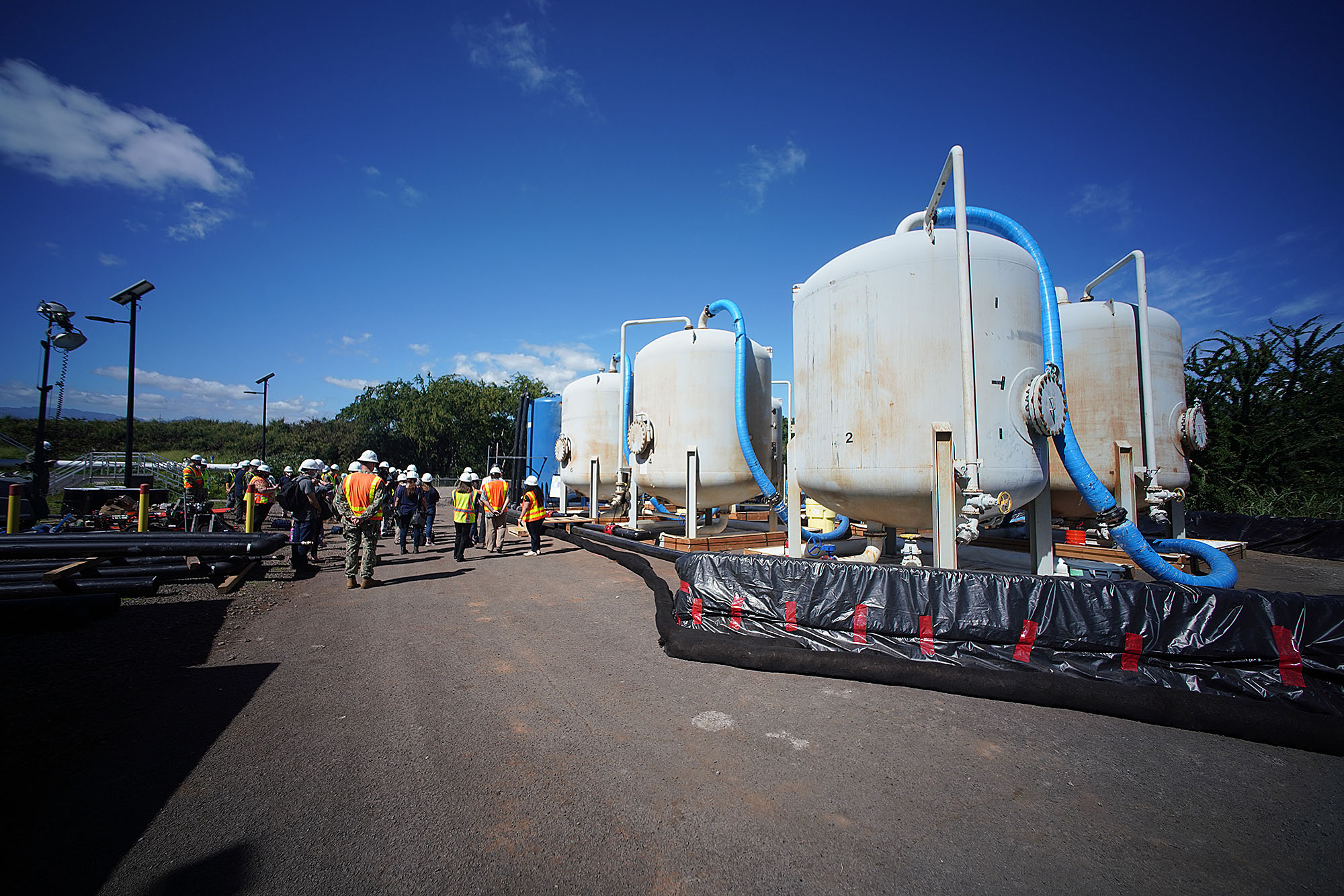
The fuel-tainted water will travel twice through a granular activated carbon filtration, or GAC, system, and continuous testing will ensure it is safe to discharge, officials with the Navy and DOH said during a media tour on Friday. Water samples taken at three points in the filtration system can yield results on hydrocarbon levels within an hour, they said.
The plan, outlined in an over 200-page report, was developed by the Interagency Drinking Water System Team made up of DOH, the EPA, the Army and the Navy.
The Red Hill shaft, which is the source of the contamination that impacted the Pearl Harbor area’s 93,000 water users, has been shuttered since Nov. 28.
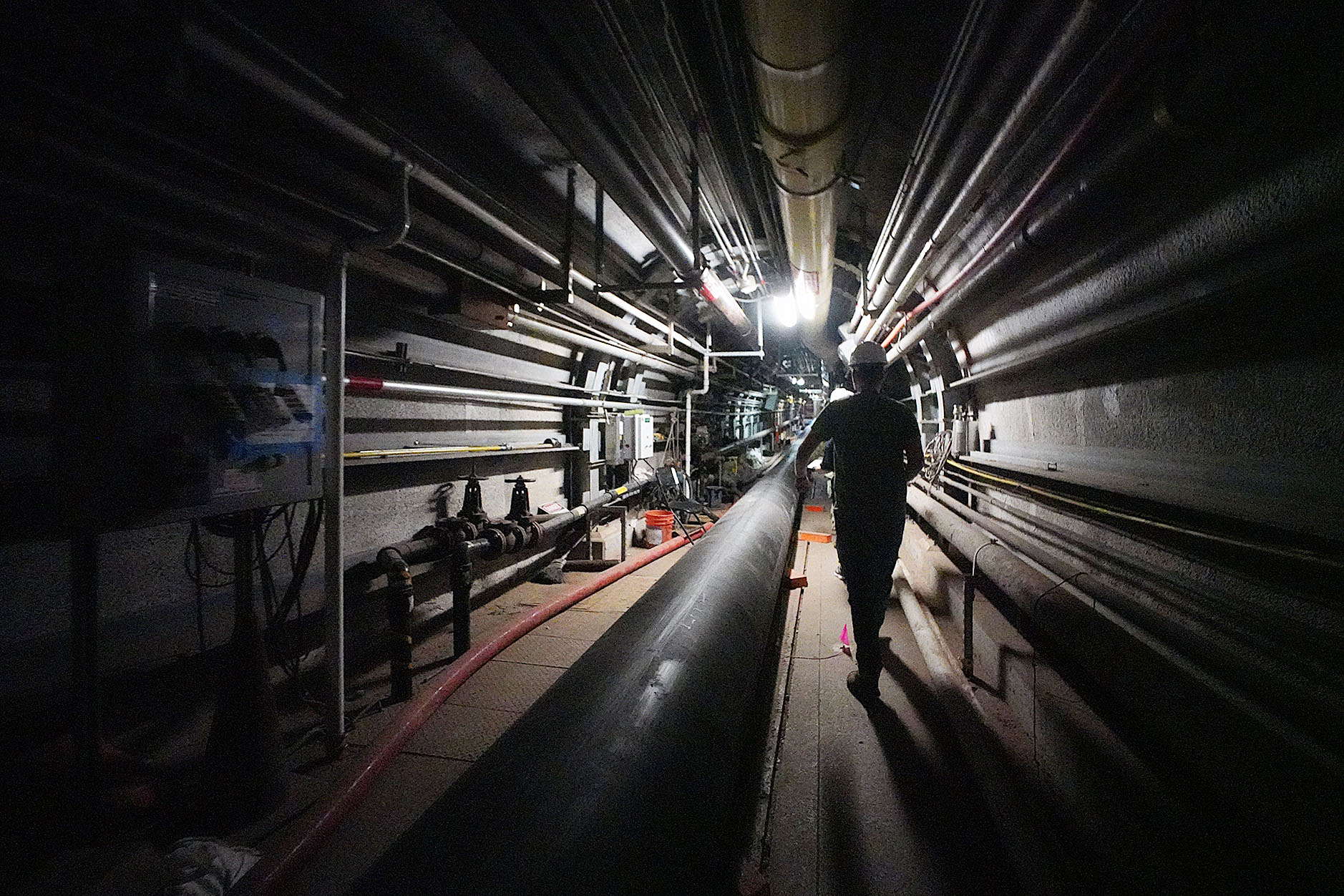
During the tour, Lt. Commander Travis Myers said the Navy has retrofitted the Red Hill shaft pump room to prevent any more of the tainted water from entering the distribution system. Instead, it will be diverted to pipes that run through the facility’s lower access tunnel, then to the aboveground filtration system and finally to the Halawa Stream.
Kurano acknowledged that some community members have expressed concern about the dumping of water from Red Hill into the stream. DOH maintains a level of “health skepticism” when considering impacts to water resources, Kurano said, but he noted there is an urgent need to remove the fuel from the well.
“I think it’s very intuitive for people to understand that the first thing you do when you spill something is to try to collect it up as much as you can before it gets anywhere else,” he said.
It’s unclear how long the remediation project will take. Officials did not offer a time estimate.

