Scientists Eradicate Seabird-Killing Ants at Johnston Atoll
The U.S. Fish and Wildlife Service announced that its successful eradication effort marks the first time yellow crazy ants have been removed from such a large area in the U.S.
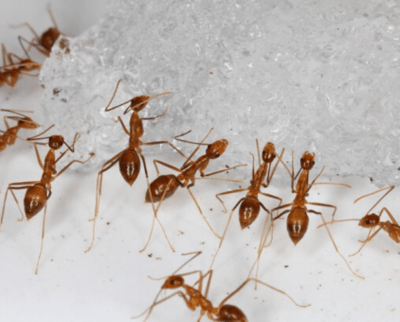
Scientists announced this week that yellow crazy ants, an invasive species that has threatened ground nesting seabirds for more than a decade, have been eradicated from Johnston Atoll, a vital seabird nesting place in the Pacific Remote Islands Marine National Monument.
Located south of the main Hawaiian Islands, tiny Johnston Atoll is a refuge for tens of thousands of seabirds, including the world’s largest colony of red-tailed tropicbirds and more than a dozen other species.
It is the only seabird habitat in over 570,000 square miles of open ocean.
Since 2010, a population of invasive yellow crazy ants had been causing seabird blindness and death by spraying formic acid on chicks and adults. Ant infestation had also put the entire red-tailed tropicbird colony at risk by reducing the species’ nesting grounds by 70 acres.
The U.S. Fish and Wildlife Service announced that its successful eradication effort marks the first time yellow crazy ants have been removed from such a large area in the U.S.
Eradication efforts partly relied on bait treatment crews that hand-searched the island for yellow crazy ants.
Two conservation detection dogs trained to sniff out the ants were also brought to the refuge last December. Finding none, the conservation effort has been deemed a success.