State To Offer New Option For Rural Residents Struggling To Access Health Care
Living on Hawaii’s least populated islands means specialized medical care is not readily available, a growing challenge as the number of air carriers servicing Molokaʻi and Lānaʻi has dropped.
State health regulators are one step closer to launching a pilot program to provide medical flights to Molokaʻi and Lānaʻi residents who often struggle to access care.
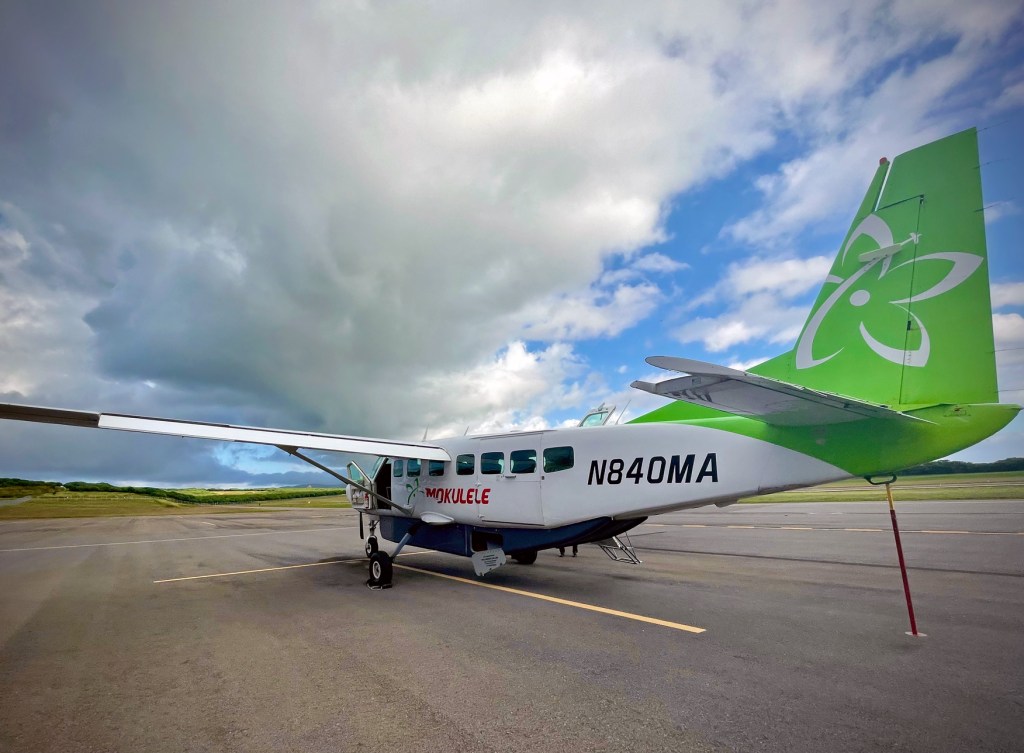
The Hawaiʻi Department of Health awarded contracts to Pulama Ka Heke, a Molokaʻi nonprofit health care hui, and Lānaʻi Kinaole, a Lānaʻi home health care agency, to run the Essential Rural Medical Air Transport pilot program. State lawmakers last year appropriated $2 million to fund the program, which aims to help residents reach big city medical centers in Honolulu and on Maui.
Residents of Molokai and Lanai rely on airline travel for emergency and even routine medical care. Boarding a plane is essential to see a dermatologist or cardiologist. Lanai residents must also fly for colonoscopies, mammograms, any kind of surgery — even an ankle fracture.
Women can’t give birth on Lanai, a 140-square mile isle with roughly 3,000 residents. On Molokai, which has a population of about 7,000 residents, only low-risk patients who forgo an epidural can deliver a child.
This has for generations been the norm, a widely accepted way of life on islands with more dirt roads than paved ones. But then the pandemic hit, slashing flights.
Today residents on Molokaʻi and Lānaʻi have fewer air travel options and, many people say, more frequent flight disruptions, including canceled flights and long delays.
The pilot program will support air travel for patients who need medical services not available on Moloka‘i and Lāna‘i. The program does not include emergency medical flights but the DOH said in a press release that it’s working separately to boost the state’s air ambulance capacity.
Civil Beat’s community health coverage is supported by the Atherton Family Foundation, Swayne Family Fund of Hawai‘i Community Foundation, the Cooke Foundation and Papa Ola Lōkahi.