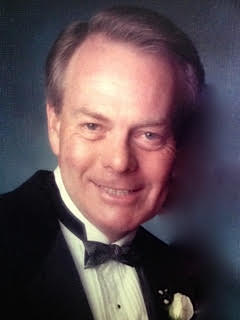
Halewia resident Elizabeth Richardson remembers the first time her late husband Donald started to show signs of something strange.
They were at a gathering in Maui in the mid-1990s and he was surrounded by a circle of long-time friends when he started saying things that didn’t make sense.
To an outsider, it might not have been that noticeable, but among his close acquaintances from California, it was obvious. They looked at her for some type of explanation, but she didn’t have one. She only knew something was definitely wrong.
Elizabeth had just returned to the islands from helping a close friend take care of her husband who had terminal Alzheimer’s disease. Unfortunately, Elizabeth knew the signs all too well, and thought Donald, a Stanford University graduate who ran the family business for many years, might be next.
For a while, they managed. After moving to Oahu permanently, she and Donald kept up with their active lives, and although she noticed he was changing, she knew there really wasn’t much that they could do about it, other than trust his doctors to figure out what was going on.
Within a year of his first noticeable symptoms, Donald was diagnosed with Alzheimer’s. He was only in his mid-50s, and doctors were initially aggressive with medications to try to stabilize his memory. But the opposite happened: He became acutely agitated, hard to control, even aggressive at times, acting out in bizarre ways.
Eventually this led to an involuntary stay at a mental hospital, where even more medications were given. His behavior worsened, and he was placed in the locked ward of a care home, shuffling back and forth to the hospital, getting progressively worse.
Elizabeth was beside herself. The mother of two adult daughters, she didn’t know what else could be done to help her husband, and neither did they. In desperation, she took her husband to a specialist in California.
Within the first 10 minutes of hearing her story, the doctor diagnosed her husband with “diffuse Lewy body disease,” something no one in Elizabeth’s family had ever heard of. The specialist explained that it’s often mistaken for Alzheimer’s or even Parkinson’s disease.
But it has one classic feature that is often overlooked: Agitation — often extreme — in response to the usual medications that are given for memory loss.
Finally, it all began to make sense. Donald was being treated for the wrong diagnosis, overmedicated by well-intentioned but uninformed medical professionals, and although it would not change his prognosis, at least Elizabeth and her daughters had an explanation for their loved one’s behavior.
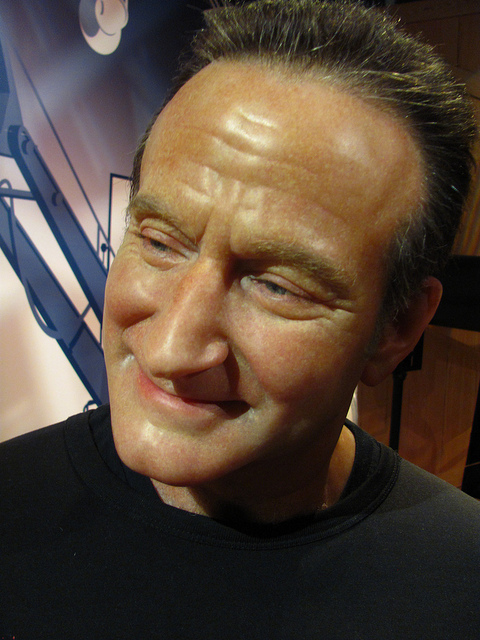
Ever since, Elizabeth has tried to educate people about Lewy body disease, a malady many people had never heard of, at least not until the death of comedian Robin Williams.
The media initially reported that he had been diagnosed with Parkinson’s disease, which affected him to the point where he had taken his own life. But it didn’t really fit. Most people with Parkinson’s aren’t suicidal.
Prior episodes of depression or even bipolar disorder were theorized, but nothing could be proven without a doubt.
But recently, his widow reported that Williams did not have Parkinson’s disease, and that on autopsy he was found to have Lewy body disease instead. This could account for his behavior instability, just as it was most likely the cause of Donald Richardson’s agitation and confusion, especially when he was on medications that were supposed to be calming.
So what is Lewy body disease and how does it lead to misdiagnosis?
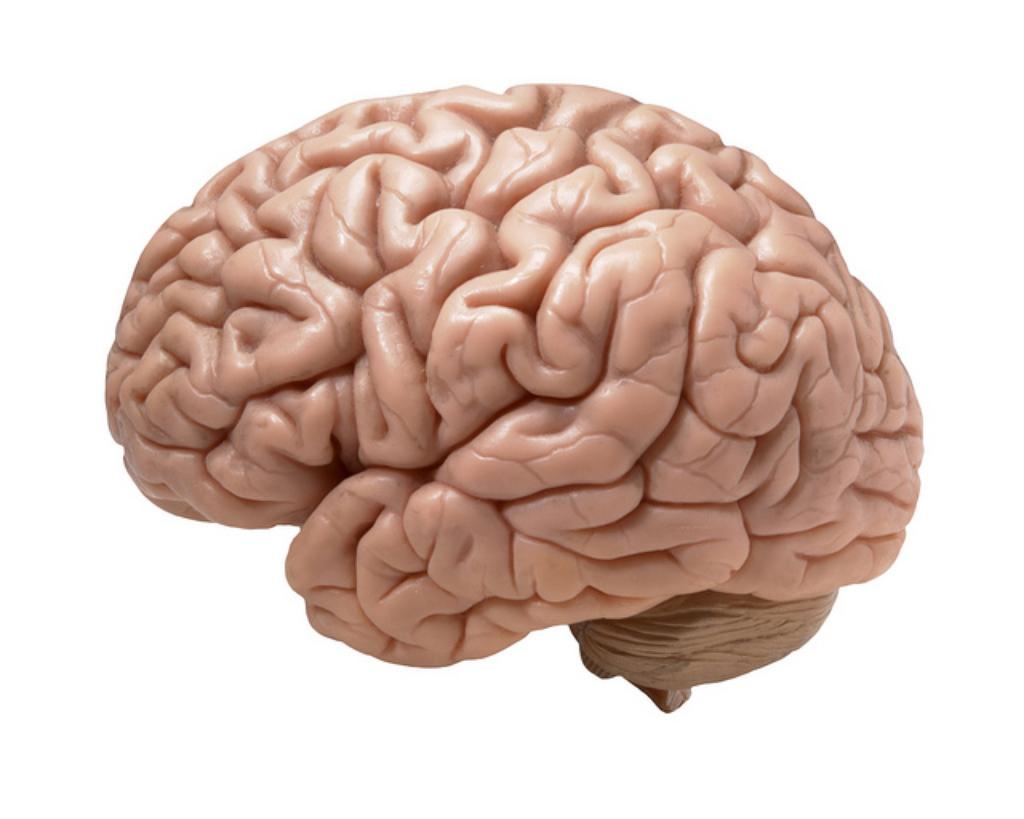
Lewy bodies are misfolded proteins that deposit in the brain. For those with Parkinson’s, the proteins deposit in limited areas, but in diffuse Lewy body disease, the deposits are widespread. Symptoms include dementia, thus leading to the common diagnosis of Alzheimer’s.
After all, 80 percent of all dementia is Alzheimer’s disease, so statistically, doctors are most likely to be correct when diagnosing patients. Especially since there is no definitive test to confirm Alzheimer’s, just a clinical picture of symptoms that lead to the diagnosis, and thus the treatment.
Researchers are looking to find more concrete ways to distinguish the different forms of dementia.
Dr. Kore Liow of Hawaii Pacific Neuroscience has lectured many times on how critical it is that testing be done to first rule out reversible causes of dementia, such as increased pressure in the brain, and second, to find the type of dementia that is present, such as the less common Lewy body disease, which can frequently be missed otherwise.
Although it’s the second-most common form of dementia, Alzheimer’s-related dementia is four times more likely.
Further confusing the issue, Lewy bodies are present in the brains of Alzheimer’s patients too. But the response of patients with Lewy body disease can be dramatically different than those with other forms of dementia.
Hallucinations, delusions, aggression and even acute psychosis are hallmarks of Lewy body disease and less often seen with the other forms of dementia.
What can be done to increase awareness of Lewy body disease?
For Elizabeth Richardson, it’s all about being an advocate for loved ones if they are diagnosed with any type of memory problems. The medical world has advanced since her husband’s time and although she lost him in 2005 at age 71, she’s committed to getting his story out there and letting other people know that although doctors are often well-intentioned, sometimes even they get it wrong.