

‘Why Us?’ Homicide Detective Wondered As He Was Assigned To Mailbox Case
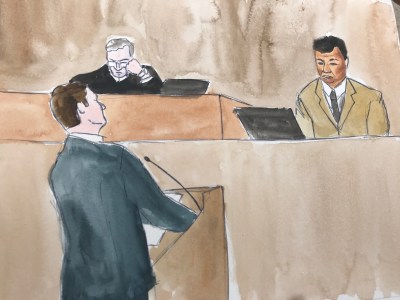
Testifying during Day 2 of the Kealoha trial, Dru Akagi said he thought it was a “conflict” to take on a theft case in which his boss the police chief was an alleged victim.
Honolulu homicide detectives Dru Akagi and Greg McCormick received a surprising assignment on a June day six years ago: investigate the theft of the police chief’s mailbox.
For Akagi, the first thought that came to mind was, “Why us?”
Akagi was called to U.S. District Court on Thursday to testify in the criminal trial of Louis and Katherine Kealoha, who are accused along with three HPD officers of framing Gerard Puana for the theft of the mailbox on June 21, 2013.
At the time, Louis Kealoha was Honolulu’s police chief and his wife, Katherine, was a city prosecutor.
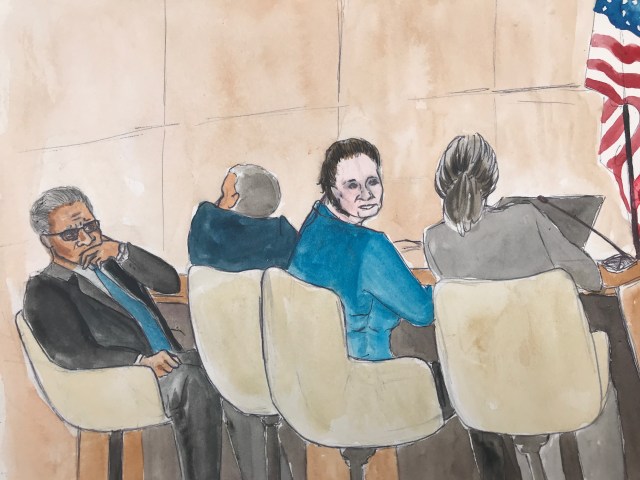
Attorneys for the U.S. Justice Department say the Kealohas wanted to frame Puana, Katherine’s uncle, because a lawsuit he and his mother filed against her had the potential of uncovering a series of financial crimes that paid for a lavish lifestyle that went beyond their public servant means.
Akagi was accompanied to the courtroom Thursday by his attorney, Michael Green, who sat in the audience during much his client’s testimony.
Assistant U.S. Attorney Colin McDonald questioned Akagi about his reaction to being told to investigate the theft of the chief’s mailbox.
“Did you identify any potential problems with investigating this particular case?” McDonald asked.
“I did see it as a conflict with it being the chief’s mailbox,” Akagi responded.
“And why was that a conflict?” McDonald questioned.
“We would be the investigative body for doing the chief’s investigation,” Akagi said. He said he worried if HPD and its officers could be considered “impartial.”
‘She Viewed It Once And Said That’s My Uncle’
Akagi said the first day he got the assignment his boss, Lt. Walter Calistro, told him to talk to Derek Hahn, who is one of the co-defendants in the case.
At the time, Hahn was a lieutenant in the Criminal Intelligence Unit, a secretive division of officers trained to do surveillance who are hand-picked by the chief.
Akagi said Hahn told him Puana was a person of interest in the case in part because the chief was having “problems” with his wife’s uncle.
Akagi testified about CIU’s heavy involvement in the case, from giving him clips of surveillance footage showing the theft to asking him to investigate a supposed break-in at the Kealohas’ home during which someone smashed the tail light of one of their cars.
The Kealohas tried to blame Puana for the smashed tail light, but Akagi said he found no evidence Puana was the culprit.
Prosecutors have argued that this alleged burglary was another attempted frame job.
Akagi said he was unable to identify Gerard Puana in the surveillance video, which he described as “grainy and average” in quality.
Instead he said he relied on statements from Officer Minh-Hung “Bobby” Nguyen of the CIU and Katherine Kealoha to make the positive identification.
Nguyen, another co-defendant in the case, was once married to Kealoha’s niece. He used to live on the Kealohas’ property in Kahala and was heavily involved in both the mailbox and burglary investigations.
Akagi said Katherine Kealoha identified her uncle in an instant when she viewed the surveillance video in front of him at HPD headquarters.
“She viewed it once and said that’s my uncle,” Akagi said.
“Did she give you any reasons why that was her uncle?” McDonald asked.
“No.”
Get the latest updates
 Keep track of the trial as it plays out over the next several weeks with Civil Beat’s guide to the case.
Click here for a timeline, cast of characters, ongoing trial coverage and extra features to keep you up to date on developments.
Akagi said he had no reason not to believe Kealoha when she said the man in the surveillance video was her uncle.
He also made it clear that he planned to pass the case along to the U.S. Postal Service inspector when he was done with his investigation because he believed from the beginning it was a federal case and not anything he or his partner should be involved in.
It was the postal inspector who ultimately pursued criminal charges against Puana at the urging of the local U.S. Attorney’s Office.
That case was ultimately dismissed after a mistrial and concerns were raised that Puana was the victim of a frame job.
When defense attorneys questioned Akagi they pressed him about the investigation and whether it was completely out of the ordinary for the CIU to be involved given the fact the chief and his wife, a high-ranking city prosecutor, were the alleged victims.
They also asked if anyone tried to stop Akagi from reporting his findings to the postal inspector, to which he said, “no.”
“Did you cover up for anyone or protect anyone during your investigation?” Louis Kealoha’s lawyer, Rustam Barbee, asked.
“No,” Akagi said.
“No supervisor told you to do this or do that?” Barbee said.
“No.”
‘No Doubt’ It Wasn’t Puana In Video
Akagi wasn’t the only witness called Thursday who said they didn’t recognize the man in the surveillance video.
Gerard Puana’s sister, Charlotte Malott, said she had “no doubt” the man in the video was not her brother.
For one, she said the man taking the Kealohas’ mailbox looked younger and more athletic than her 50-something sibling.
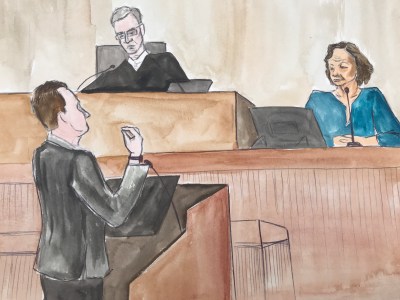
But what also stuck out was the fact that the man was wearing a baseball hat at night. That just wasn’t something Puana did, she said.
“Gerard has used a hat, but it’s generally when it’s sunny outside,” Malott said. “He really liked his hair so that wasn’t something that he wore frequently.”
Malott also testified about a 2011 incident in which Puana went to jail after an argument with a neighbor over parking. She said her niece, Katherine Kealoha, told her not to visit her brother or talk to him.
Puana ultimately spent more than 60 days behind bars until Molette said she went to bail him out.

