Kauai Residents Want Next County Budget To Address Housing, Disaster Preparedness, Environment
The public can weigh in on county spending priorities at six listening sessions scheduled islandwide through early March.
Kauai County Council Chair Mel Rapozo is on a six-stop listening tour with some of his colleagues to learn what the public hopes to get out of the 2025 budget ahead of council deliberations about next year’s overall spending plan.
Mayor Derek Kawakami has a March 15 deadline to submit his proposed budget to the council for fiscal year 2025, which begins July 1. The seven-member council will then get to work on its version based on that.
The budget planning process for 2025 comes as the island confronts a longstanding affordable housing crisis that’s only grown worse in recent years, county-wide hiring troubles that threaten some departments’ abilities to provide timely services and a bulging Kekaha landfill that’s approaching maximum capacity.
“I want to get your voice on the table,” Councilman Bernard Carvalho said Monday night at a town hall-style meeting at the Kilauea Neighborhood Center.
Fiscal year 2024’s $398 million spending plan for Kauai County prioritized the nuts and bolts of government services over flashy new investments. It included a $311 million operating budget and $87 million for capital improvements, including projects to address long-deferred maintenance and a bump in payments to reduce the county’s debt.
Last year’s budget also brought a bit of financial relief to some resident homeowners. The spending plan decreased the homestead property tax rate by 15% and lowered the residential property tax rate by 10%.
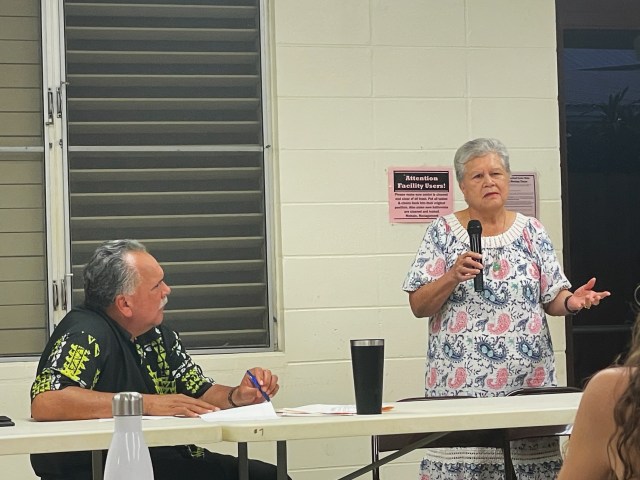
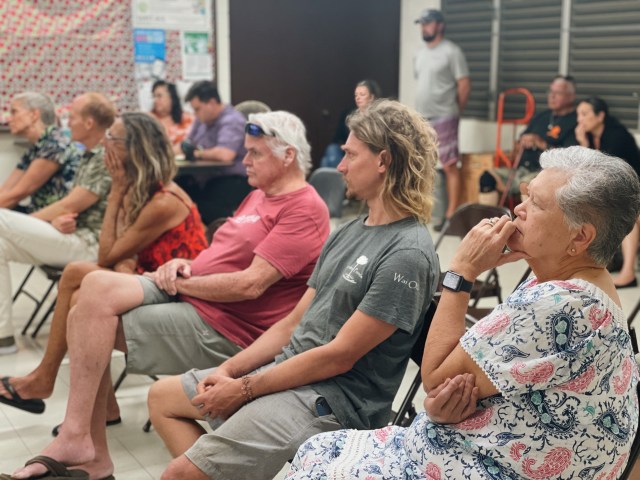
Standing in for Rapozo, Carvalho facilitated a 90-minute listening session, which was video recorded for other council members to review. The councilman took notes as nearly two dozen residents took turns offering suggestions and airing grievances. About 40 people attended the meeting.
On the heels of the deadly Lahaina fire, Kilauea resident Haunani Pacheco expressed fresh anxieties about the county’s disaster warning system and the lack of alternate roads in and out of vulnerable communities, such as Hanalei and Kilauea town. She also emphasized the need for county officials to do a better job of publicizing its disaster evacuation plans.
“The plan is only as good as how you let us know what the plan is,” Pacheco said. “You can have all the plans you want but unless we know what to do, it’s worthless.”
Gary Smith of Kilauea lamented the neglected state of the Kilauea Neighborhood Center gymnasium.
Yoshi L’Hote, executive director of the nonprofit Aina Hookupu O Kilauea agricultural center, raised the issue of rising property taxes as land values increase — a trend he said is making homeownership unaffordable for some.
“It really seems to be designed to remove people from the property they own,” he said.
Stefan Swanepoel, president of the Princeville II Community Association, proposed a liaison or oversight committee to serve as an intermediary between the North Shore community and county government. This board or person, he said, could agitate progress on community projects and track government accountability.
“I think the general frustration is that things don’t always happen at the speed they should happen,” Swanepoel said.
Other concerns included: the hefty price tag on residential cesspool conversation, troublesome water quality issues at Moloaa Stream, preserving beach access, clearing roadside invasive plants and trees, the suspension of public bus service on Sundays and the proliferation of unpermitted firework displays on holidays.
Carvalho did not share his own budget priorities or address criticisms and suggestions directly. But he assured speakers that the council will get back to residents who posed questions.
“I hope you understand that your voices will be heard and we’ll come back again and see what we can follow up on in certain areas,” the councilman, a former mayor, said.
Councilwoman Felicia Cowden, who lives in Kilauea, attended the meeting as a spectator. County Housing Director Adam Roversi was also present.
The Kilauea town hall was the second stop on the council’s budget tour, following a meeting at the Hanalei Neighborhood Center last Thursday night.
The listening tour continues on Feb. 26 at Council Chambers in Lihue. Public hearings on the budget will be held March 1 at the Kapaa Neighborhood Center, March 4 at the Kalaheo Neighborhood Center and March 11 at the Kekaha Neighborhood Center. All of the meetings are scheduled from 5:30 p.m. to 7 p.m.