

Not Guilty: Ex-Honolulu Prosecutor Keith Kaneshiro, Businessman Dennis Mitsunaga And Others Walk In Bribery Case
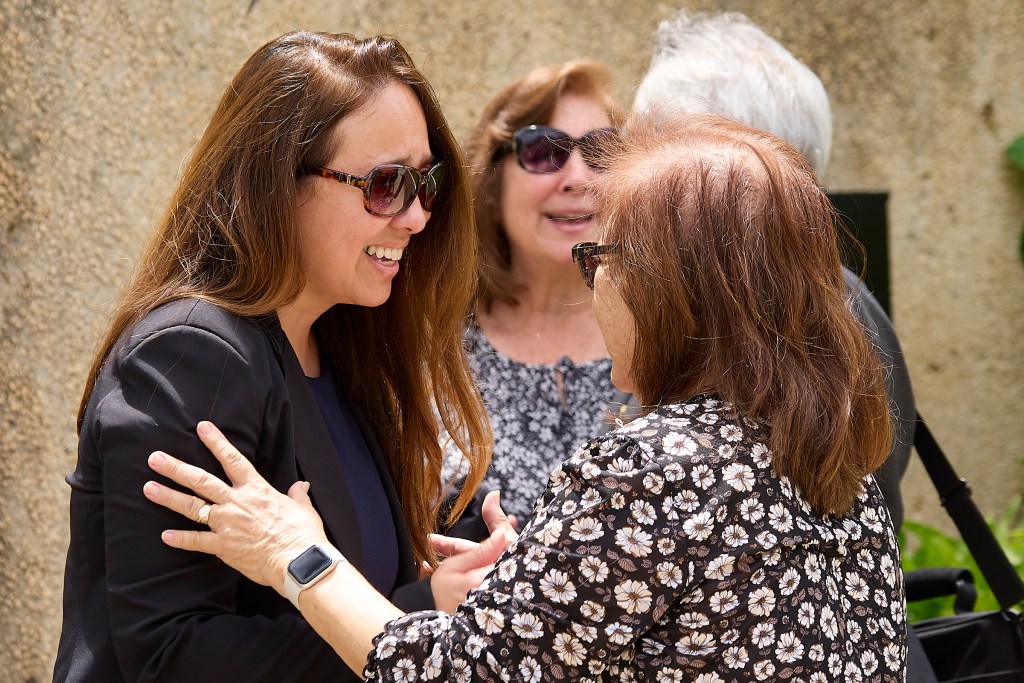
Tearful defendants and their attorneys embraced after the clerk read the verdict.
Honolulu’s former elected prosecutor, an island businessman and his company’s associates have been found not guilty in an alleged pay-for-prosecution scheme that the feds said threatened to put a woman in prison on bogus theft charges.
After a two-month trial, a jury found on Friday that longtime Honolulu prosecuting attorney Keith Kaneshiro did not conspire with Dennis Mitsunaga, the former CEO of a prominent engineering firm, Mitsunaga & Associates Inc., and several company employees to arrange for the prosecution of Laurel Mau, a former Mitsunaga employee.

Prosecutors said Mitsunaga’s company sought to use the criminal justice system to exact revenge on Mau for suing her former employer, and Kaneshiro benefitted from some $50,000 in campaign donations.
The feds said this was accomplished with the assistance of then-Mitsunaga & Associates executive vice president and COO Aaron Fujii, senior vice president Chad McDonald and secretary Terri Ann Otani, as well as attorney Sheri Tanaka, all of whom were also acquitted on Friday. The defendants were facing possible fines and up to 15 years in prison on two separate conspiracy counts.
Throughout the trial, the defense maintained that the donations were a constitutionally protected form of political support and that their pursuit of Mau was based on a good faith belief that she had stolen from the company.
After the verdict was read, some defendants and their attorneys broke down in tears and the gallery, full of their loves ones, erupted in applause.
In remarks outside the courthouse, Kaneshiro criticized federal prosecutors for putting him and his co-defendants “under a cloud of suspicion” for years.
“The trial took two months. Two months. The jury came back in a day and a half,” he said. “What does it say about the government’s evidence and its investigation? I feel vindicated. But how am I going to get back my reputation?”
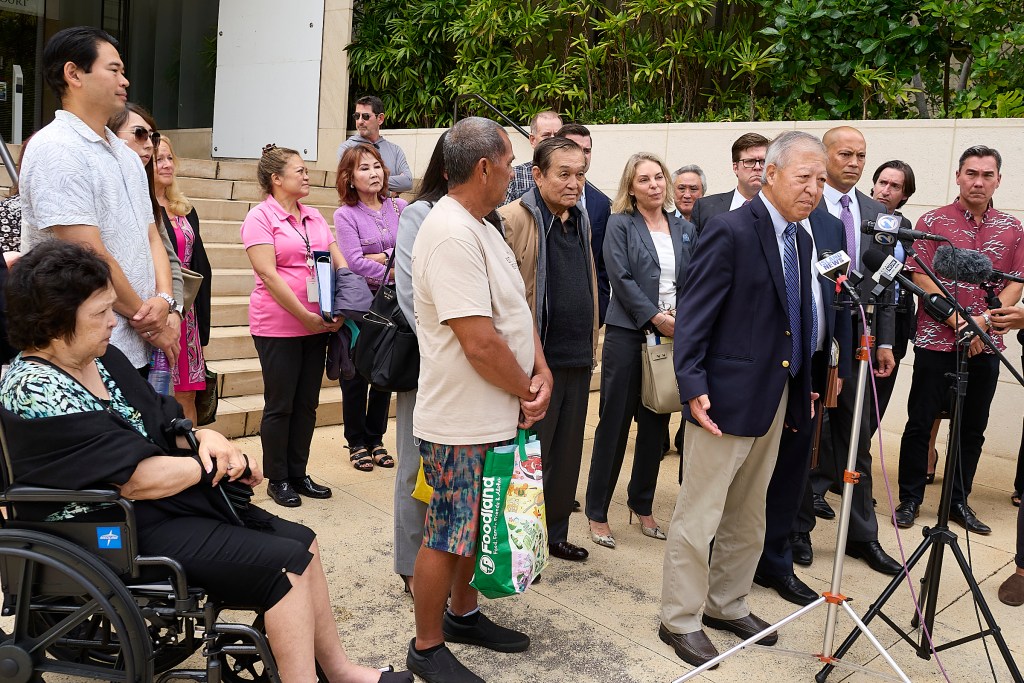
Asked if he will run for office again, Kaneshiro didn’t answer. But Mitsunaga, who was standing nearby, slapped him on the back and said he should.
“I’ll support you,” Mitsunaga said to laughter from co-defendants, their attorneys and families. “No campaign donations.”
Mitsunaga could still face charges of witness tampering and obstruction of justice for his alleged efforts to change the testimony of one of the trial witnesses. A grand jury has been convened on that matter, and Mitsunaga has been in custody for weeks, but charges have not been announced. His attorney, Nina Marino, declined to comment on the matter on Friday afternoon.
Mitsunaga was released from custody after the verdict was read.
“I’m glad to be out of that cold cell,” he said.
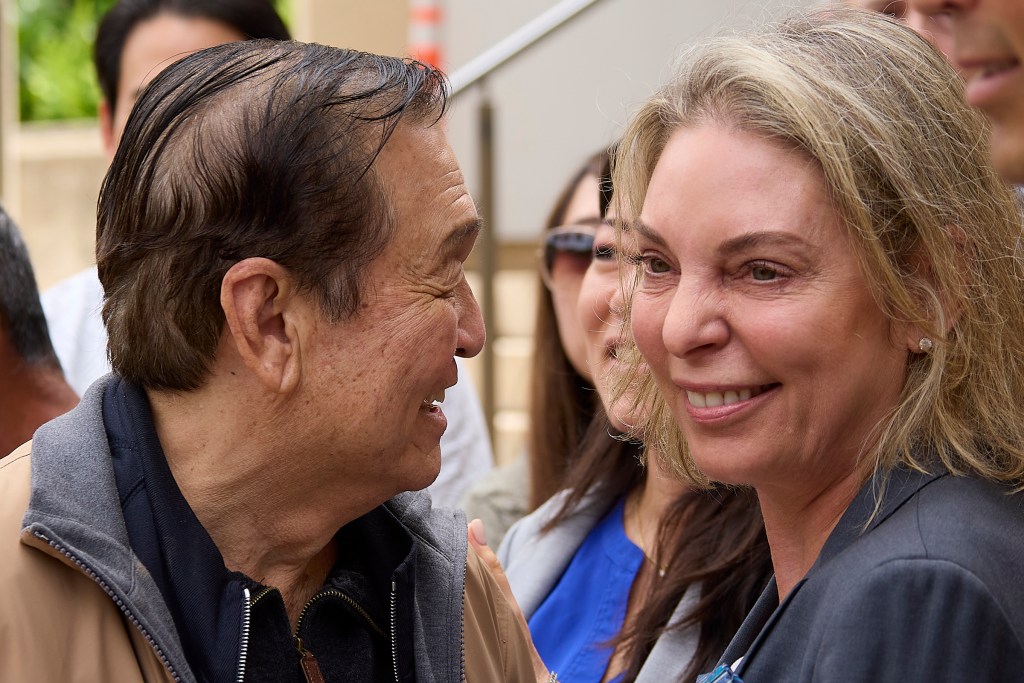
Mitsunaga, 82, has long been accused of using money to influence island politicians for his own benefit and has been investigated over the years. But the federal case was the first time he was charged with a crime.
The trial highlighted the largess of his political giving. The businessman and his associates donated more than $1 million to candidates between 2006 and 2021, evidence showed. At the same time, Mitsunaga’s firm has benefitted handsomely from government contracts, receiving work worth at least $49 million since 2011 alone.
Documents and evidence showed at least some of the Mitsunaga group’s campaign contributions were illegal straw donations made in the names of people who didn’t actually provide the money.
And subcontractors who rely on Mitsunaga for work testified that they felt obligated to donate at Mitsunaga’s behest to, as one witness put it, stay on the firm’s “good side.” Prosecutors noted that Mitsunaga’s team “bundled” these kinds of checks to Kaneshiro so that the prosecutor would know who was behind it.
In Mitsunaga’s defense, Marino noted that the money donated to Kaneshiro represented less than 5% of the Mitsunaga team’s political giving in recent years. On Friday afternoon, she said the case was an example of “government overreach.” Mitsunaga said the case has impacted his business.
The case is a noteworthy loss for the San Diego-based prosecution team led by Assistant U.S. Attorney Michael Wheat, who has been investigating corruption in Honolulu for more than a decade.
In 2019, Wheat successfully prosecuted the largest corruption case in Hawaii history. Former deputy prosecutor Katherine Kealoha, her husband Honolulu Police Chief Louis Kelaoha and two Honolulu police officers were convicted and imprisoned for framing an innocent man — Katherine’s uncle.

The Kealoha case spawned a separate indictment against three city officials who, the feds say, improperly circumvented the Honolulu City Council in granting Louis Kealoha a $250,000 retirement payout.
The trial for those officials — former city attorney Donna Leong, former managing director Roy Amemiya and former police commission chair Max Sword — has been continuously delayed but is currently scheduled to begin in March 2025.
Wheat declined to comment after the verdict on Friday.
Outside the courthouse, Kaneshiro criticized Wheat’s team and invited the media to investigate them.
“Why don’t you folks investigate how much money the federal government is paying by sending these special prosecutors from the mainland to come to Hawaii and to go after Hawaii citizens?” he said. “Not only this trial, but the whole years these guys have been investigating, coming here, flying here, staying at our hotels at the taxpayers’ expense.”
Jury Unconvinced After Weeks Of Testimony
First elected in 1989, Kaneshiro, 75, held the job throughout the 1990s and again in the 2010s. He was identified as a target in the conspiracy investigation in 2018 and took paid administrative leave until his term ran out in 2021.
Over the last two months, a jury heard the case against Kaneshiro, Mitsunaga and his associates in meticulous detail.
Through the questioning of witnesses and introduction of dozens of documents, prosecutors painted a picture of executives who were determined to retaliate against Mau after learning she planned to sue the company and were willing to spend money through an established political donation apparatus to put her in prison.
The defense argued Mitsunaga’s team had a good faith basis to believe Mau had stolen from the company and that political contributions — even if made to gain access to an elected official — are legal and legitimate.
Defense attorneys also emphasized there was no explicit evidence of a quid pro quo.
Prosecutors countered that the facts speak for themselves.
“An agreement is not necessarily going to be in writing,” said Assistant U.S. Attorney Joseph Orabona in closing remarks this week. “Look at the actions. They speak louder than words.”
Beginning in the mid-1990s, Mau was an architect at Mitsunaga’s company for about 15 years, but she was fired without explanation in November 2011 amid a dispute with Mitsunaga about her performance.
The company then repeatedly contested Mau’s claims for unemployment benefits. The firm accused Mau of doing unauthorized side jobs on company time and using company resources.
According to Mau, she had permission to do work on the side if the value was less than $15,000, and she wasn’t paid for most of the approximately 40 side jobs she did during her employment. Mau’s alleged authorization to do this wasn’t documented, but neither was permission for her colleagues who also worked side jobs. Some of her side jobs were done for Mitsunaga himself and his daughter Lois, she testified.
Mau claimed she made up her work time on nights and weekends, but there was no evidence to prove that. The company’s timekeeping system wasn’t designed to capture hours outside the normal 40-hour workweek.

Despite multiple appeals by Mitsunaga’s firm, Mau was granted her unemployment benefits.
Mau then decided to sue Mitsunaga & Associates for sex and age discrimination. Within 30 days of learning of the impending suit, Fujii filed a police report accusing Mau of theft from the company related to her supposedly illicit side jobs.
Defense attorneys noted that one of Mau’s side jobs had prompted the client, attorney Stanford Masui, to sue Mau and the company, even though the company was not involved in the work.
Fujii’s police report didn’t go anywhere. So Mitsunaga’s team went to the Honolulu prosecutor’s office. Then-Honolulu councilwoman Ann Kobayashi, a personal friend of Otani, brokered a meeting that occurred in October 2012.
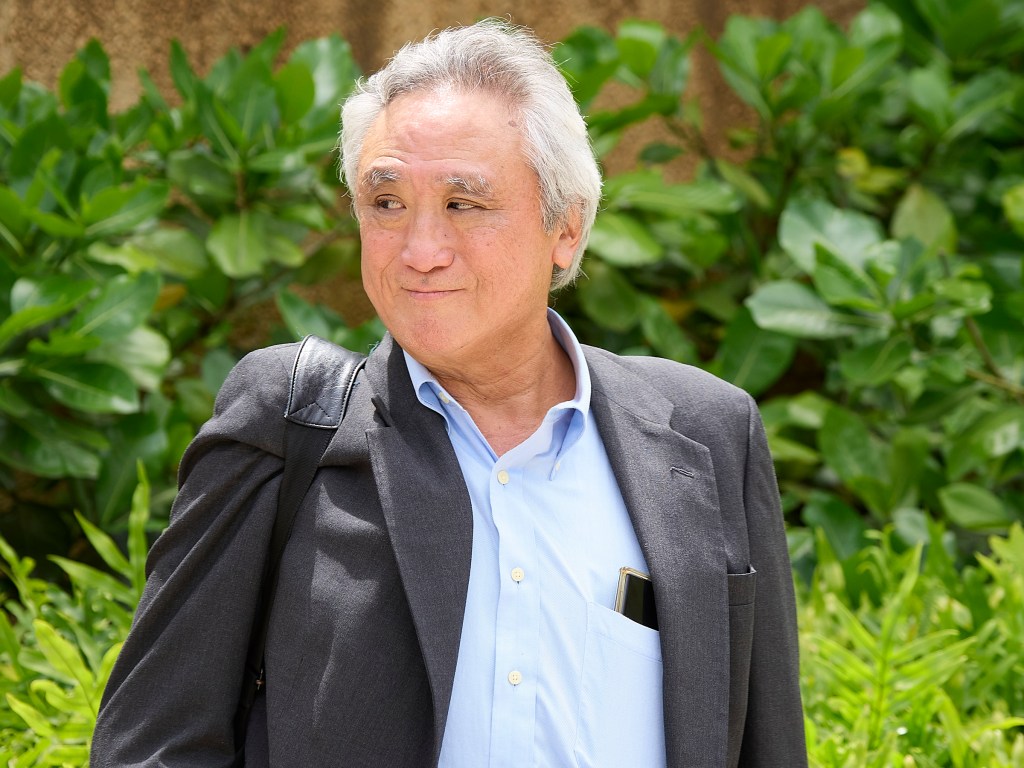
And so began what prosecutors called an unusual “courtship” between Mitsunaga, Kaneshiro and their employees.
At Kaneshiro’s request, two experienced prosecutor’s office employees, Dwight Nadamoto and Christopher Van Marter, looked into Mitsunaga’s complaints and found no basis for a criminal case. But instead of dropping the matter, the case was reassigned to a new attorney in the office, Jacob Delaplane.
The firm’s lawyer, Sheri Tanaka, gave Delaplane reams of civil lawsuit records which he turned into theft charges via a felony information — a charging mechanism that sidesteps a grand jury. Meanwhile, Mitsunaga and those connected to him began directing tens of thousands of dollars to Kaneshiro’s campaign despite never having done so before. Their donations would eventually amount to 40% of Kaneshiro’s entire campaign haul from 2012 through 2016.
Several donations were made close together, which defendants Fujii, McDonald and Otani were unable or unwilling to explain during grand jury testimony that was played for the jury. Some of the donations were fraudulently made in the names of Otani’s sister and niece, evidence showed, which were likely violations of state campaign finance law. But Otani has not faced state charges.

During the trial, Delaplane acknowledged that there was no independent law enforcement investigation into Tanaka’s claims. And an investigator he worked with, Vernon Branco, admitted on the stand that a declaration outlining his supposed investigation into the matter was written by Delaplane and he had “no idea” where the information came from.
The lack of scrutiny was problematic, according to federal prosecutors, because the documents Mitsunaga’s company provided cherry-picked and skewed information to paint Mau in the most negative light possible. Delaplane testified he felt some of the evidence struck him as “thin.”
The defense argued that there was no evidence that Kaneshiro ever pressured Delaplane or anyone else to pursue the case.
But according to Orabona, Delaplane and Chasid Sapolu, another prosecutor who later picked up the case, knew that Kaneshiro controlled their jobs and did what was expected of them.
“When the boss comes a knockin’, you better deliver,” he said. “You can’t tell him no.”
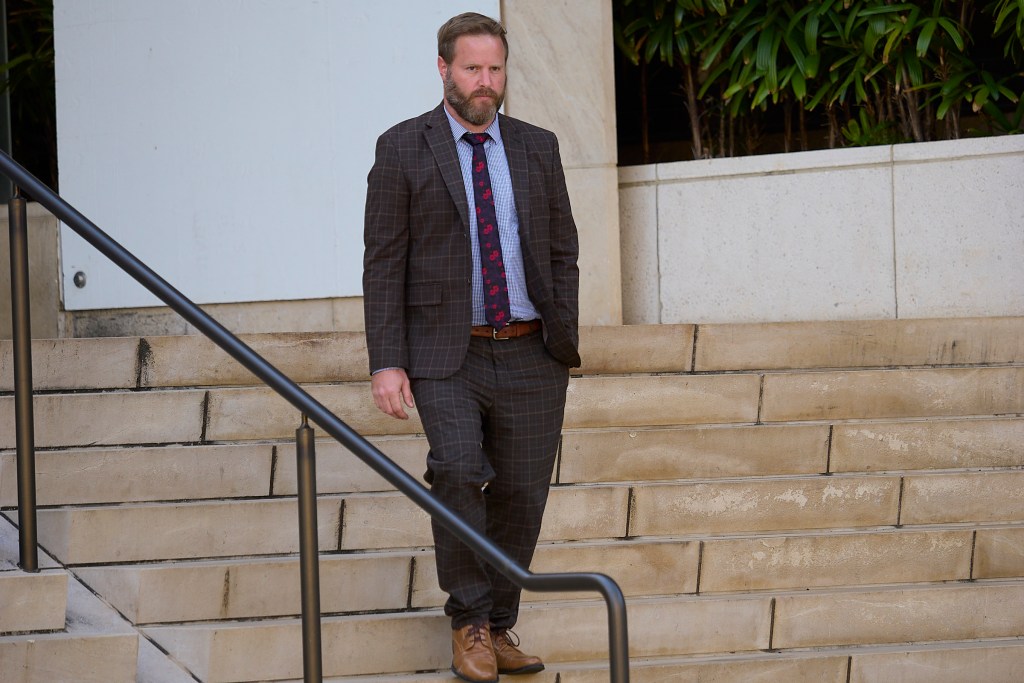
Even if the allegations against Mau were true, Orabona said, the idea that anyone should face criminal charges over a workplace dispute is outrageous.
“Nobody should be prosecuted for violating an employee handbook of a company they work for,” he said.
In 2017, state court judge Karen Nakasone threw out the charges against Mau and lambasted the prosecution’s reliance on information “orchestrated” by Mitsunaga & Associates. Civil Beat reporter Nick Grube testified in the trial that after Nakasone’s ruling, Tanaka told him that Mitsunaga’s company “really didn’t have any involvement whatsoever.”
Kaneshiro subsequently sought to appeal the dismissal, but his appellate division refused to pursue it.
Aside from the theft prosecution, Mitsunaga’s team also tried to get Mau in trouble with tax authorities. In August 2014, Otani filed a complaint to the state tax office accusing Mau of tax evasion and fraud. Mau was put under investigation but was ultimately cleared.
On Friday afternoon, Tommy Otake, McDonald’s attorney, said the jurors heard all the evidence and made the right call.
“Calling something corrupt in Hawaii when it’s not does just as much to harm the public’s faith in the government as corruption itself,” he said. “And that’s what happened here. And we just ask that these federal prosecutors from the mainland be more responsible.”
Defense Attacked Case As ‘Speculation’
Throughout the trial and during closing arguments, attorneys for the Mitsunaga defendants sought to depict their clients as professionals who genuinely believed Mau had stolen from the company and who just so happened to have made lawful campaign contributions to Kaneshiro.
And Kaneshiro’s attorney said probable cause existed to charge Mau with theft but that his client never pressured anyone to prosecute her.
Tanaka’s attorney Crystal Glendon said prosecutors had tried to turn “everyday interactions” into something “sinister.”

“When you have a good faith belief that you’re a crime victim, there is nothing wrong with going with law enforcement,” she told the jury. “Don’t let the government twist the aloha spirit into something nefarious.”
Glendon also accused the government of weaponizing people’s families. During the trial, witness Rudy Alivado testified that Tanaka had coached him to lie in 2014 for Mitsunaga’s benefit. But Glendon said he only made that claim after prosecutors put his daughter, Shannon Alivado, on the trial witness list.
“Sheri Tanaka didn’t do any of what they’re saying,” Glendon said.
Otake hit on several themes before the jury began deliberations. He emphasized that to convict, they must be “firmly convinced” of the defendants’ guilt. And for the government to have proven a quid pro quo, there has to be “no uncertainty about the terms of the agreement,” he said.
“There is no evidence of any conspiracy in this case, direct or circumstantial,” he said. “Speculation upon speculation equals not guilty.”
He said jurors should focus on what he called “the triangle of truth,” or three factors he claimed explain the prosecution of Mau: Kobayshi’s introduction, Tanaka’s persistent followup with Kaneshiro’s office and Tanaka’s burgeoning friendship with Kaneshiro’s executive assistant, Carol Nakamura.
Earlier in the trial, the jury had reviewed fawning emails between Tanaka and Nakamura. Tanaka even invited Nakamura to her baby’s first birthday party, Otake said.
“Their friendship leads to access and attention,” Otake said. “It’s human, it’s real. You can see this happening.”
Otake rejected the idea that campaign contributions, which by nature are a matter of public record, could be bribes.
“People don’t bribe people and brag about it, or share it publicly,” he said. “That offends logic, reason and common sense.”
On Friday afternoon, Tanaka said the prosecution was “completely wrong.”
“We’re so very grateful that justice was served today and we each get to go home with our families and friends,” she said.

