

Kawaakoa Is On A Mission To Make The Homeless Population On Holomua Road Part Of The Solution
The county has restricted travel and parking, but a volunteer outreach coordinator says they have nowhere to go.
Just before sunset Wednesday, Moʻi Kawaakoa walked along Holomua Road in Paia asking people living in tents, beat-up cars and under tarps how they are doing and if they need clothes.
Since starting Holomua Outreach in November, the Native Hawaiian also has set up a water station and resources hub, organized cleanups and answered “SOS calls” to help the homeless community that varies in size from 20 to 50 adults and pets — and includes her father and younger sister.
She said her efforts started with “baby steps” and now are moving quicker, ever since an alarming number of fires along the 3-mile road earlier this year resulted in the Maui County Council unanimously passing a measure on June 7 that could force the people to move.
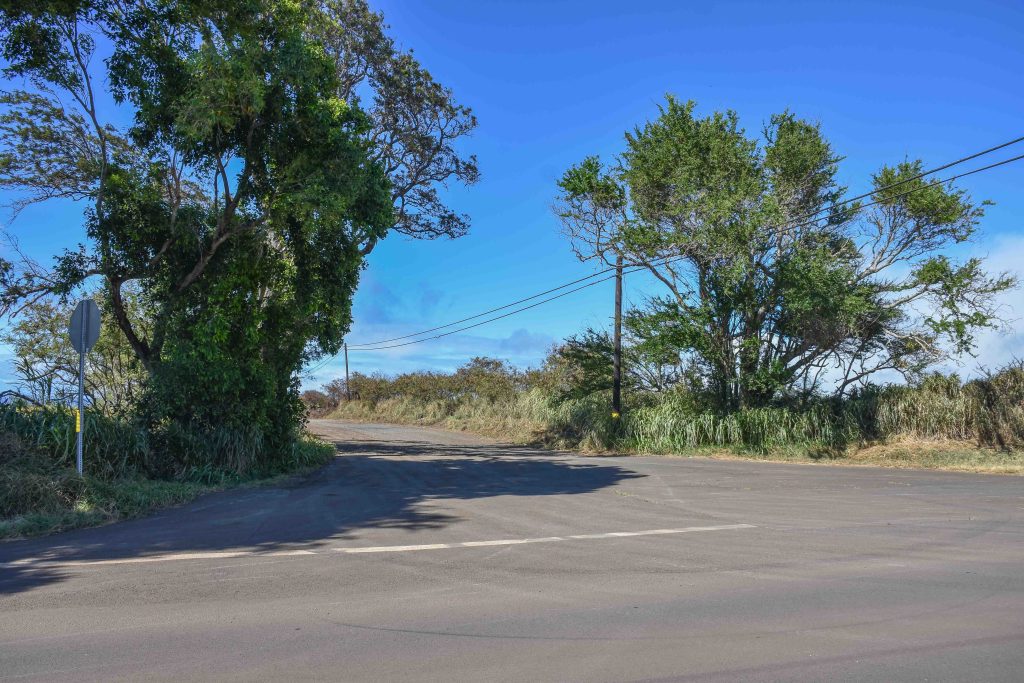
It is now illegal 24/7 to park or drive on the upper, rocky portion of Holomua Road. And on the lower paved portion — where the homeless community lives between Hana Highway and the old Maui High School — the prohibition on parking and driving runs daily from 7 p.m. to 7 a.m. Exceptions are for emergency vehicles and people who work or conduct business at the high school property.
There was a public outcry to do something after Maui firefighters said in a public meeting in early April that due to prevailing winds, and the surrounding open land, a fire that gets out of control from the road could spread quickly and present a major threat to Paia Town. There were nearly 40 fires along Holomua from January through April, and the fire department said Friday there have been more fires since then.
So far, the new ordinance is not being strictly enforced. The Maui Police Department said in an email Thursday there will be “no sweeps” of the camps.
No gates have been put up yet to prevent traffic on the upper portion of the road, which begins at the intersection with Baldwin Avenue. And no signs have been put up anywhere along the road about the restrictions.
“This ordinance allows the county to use their existing mechanisms to remove vehicles and limit traffic as necessary,” the police department said in a statement. “The purpose is to ensure we don’t have continuous fires as they pose a risk as we enter fire season.”
While walking the road, Kawaakoa said she is angry at council member Nohelani U’u-Hodgins, who represents the area, for introducing the ordinance without having a place to relocate the homeless community. But as a result, progress has been made.
“She fast-tracked everything that I’m working towards,” Kawaakoa said. “I’m pretty good at reacting, activating and organizing. So bring it on. I can prove to you what real boots-on-the-ground work looks like.”
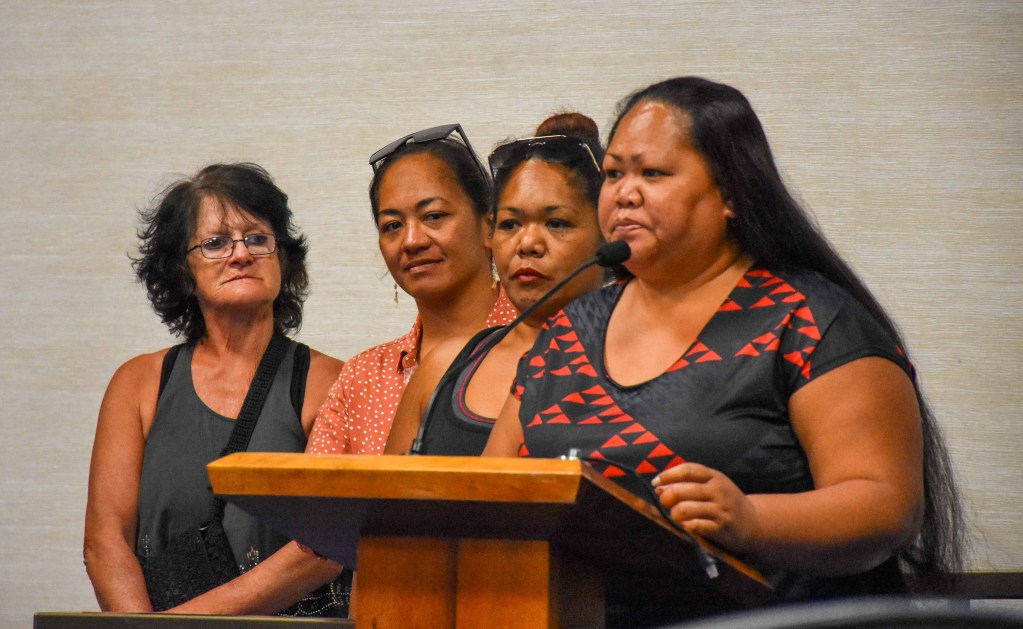
In a presentation Tuesday, Kawaakoa told the council she understood the public’s concerns. Then she outlined what was being done to support the people who live on the road to become part of the solution of preventing fires, keeping the area as clean as possible, and discouraging criminal activity.

Just a few months ago, the road was littered with more than 50 abandoned vehicles and heaps of trash, including appliances and other bulky items illegally dumped by people who do not live along the road.
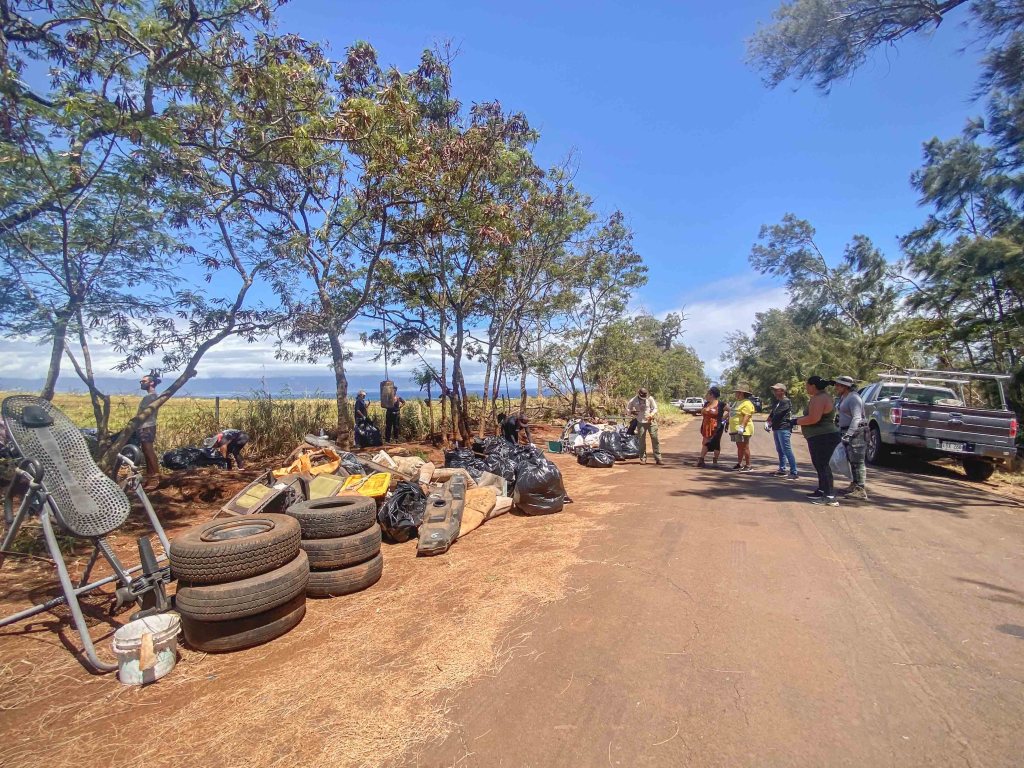
Drive down the road now, and it is much cleaner. Most of the abandoned vehicles are gone after MPD tagged them and the county had them towed away. For the trash, Kawaakoa organized two community cleanups that not only spruced up the area but showed that people care.
The first one in May was small, but the second one on Father’s Day had about 40 volunteers, with many members of the homeless community participating and cleaning up around their own camps.
“Once we get these other (abandoned) cars out of the way, it should be nice because there is an understanding now that if everybody does what they should do here, and I support them, the community will sort of back off until we can get them into a good place,” Kawaakoa said.
And that is her long-term goal: to help people be able to move into stable housing and never return to Holomua Road.
But first, she has to deal with the problems. While responsible parties of most of the fires are not known, including “teenage males throwing firecrackers out of speeding cars” and people intentionally setting stolen cars and even a boat ablaze, Kawaakoa said people cooking and trying to keep warm also are concerns, especially with the often-windy conditions.
Kawaakoa told the council she has been trying to emulate some of California’s grassroots wildfire mitigation efforts of providing fire extinguishers, water jugs and propane for cooking to the homeless.
Ne’u Fau, who has been living with his girlfriend along the road for about two months, said he wants no fires. He teared up talking about four members of his extended family who died in a car while trying to escape the Lahaina blaze.
Kawaakoa also is working with the homeless community to try to help cut down on the criminal activity, which has included outsiders bringing stolen vehicles to the area to serve as a “chop shop.”
Danny Benn, who lives in his car, said: “This is a volatile place. There will be a lot of people and a lot of action, and then it will kind of dissipate. Now, it’s been fairly mellow, but it only takes a couple rowdies to make the whole street go (expletive) crazy.”
That is what Kawaakoa is trying to prevent.
“Everybody knows everybody here,” said Kawaakoa, who works as an administrative support assistant for Maui Rapid Response and does the outreach in her spare time.
“A lot of that has stopped because we started organizing and letting everybody know that the people going to the Paia budget meetings are (angry) and you guys need to keep it down.”
While there have been no sweeps, people worry they soon will be forced to move, including Kawaakoa’s sister Tania Kawaakoa, who was among a group of people who had been living in a field near Paia Town in 2021 when a fire broke out and were forced to relocate.
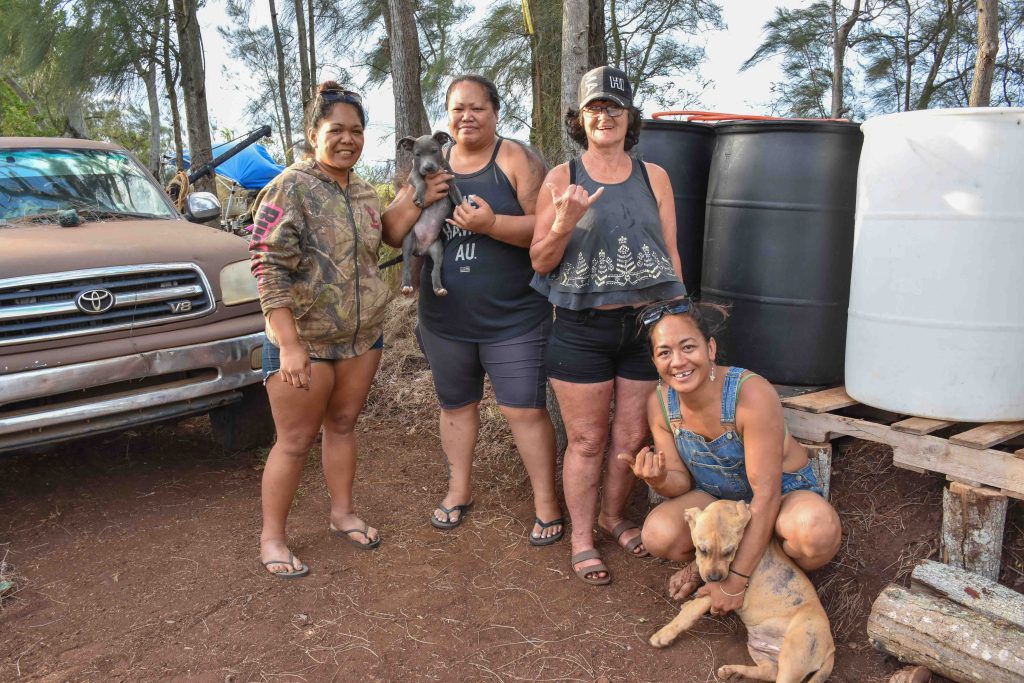
She lives with her boyfriend and runs the resources hub that includes donated items of canned food, rice, pasta, wipes, forks, toilet paper, hygiene kits and first aid supplies. There are also three large plastic containers where people can get water. There is no electricity, running water or bathroom facilities.
Homeless people living there also said representatives of Mahi Pono, owners of the large private property on each side of the road, were telling them in April they were going to have to move. So far, that hasn’t happened.
“I don’t believe they should have to suffer when they have been working so hard to be part of the solution,” Kawaakoa told the council.
Her outreach began with consistent donations. The next step was showing up when needed, which has meant answering “SOS calls.” Recently, she was called to help with a person’s dog that had been hit by a car, raising $300 for the vet bill and pain medication.
“Most of the time, they’re worried about how they’re going to survive,” Kawaakoa said. “And this is when we step in. When we provide basic needs, we’re able to build trust so the community can focus less on survival and focus more on recovery.”
While washing her clothes in a bucket, 60-year-old Tracy Shaffer said she wishes she didn’t have to live in the hodgepodge of wooden pallets and tarps held together by bungee cords.
“Sometimes I stand in the middle of the road and yell: ‘God, I’m mad at you. Why do you do this?’”

Shaffer said she has been homeless for about two years after being unable to pay rent following a moped accident that has left her with a fuzzy memory and a big scar on her head. She briefly stayed at Mental Health Kokua, but said the place wasn’t for her because she wasn’t crazy. She survives with the help of federal food assistance, odd cleaning jobs, and the love of her dogs Baby and Girly.
But despite the occasional centipede that crawls into her makeshift home, she said she feels safe and worries about being forced to leave, saying: “I have no place else to go.”
Every person living along the road has their own story and struggles, including some with addictions to drugs, including fentanyl. Benn said he keeps Narcan, a life-saving spray for an opioid overdose. But recently, he said did not find out a person living on the road was overdosing until it was too late to save him.
Kawaakoa took Shaffer, her sister and another homeless person to the council meeting to provide faces to the community that many people turn a blind-eye to.
“I wanted them to know to give us a chance,” Shaffer said Wednesday. “Don’t look down on us because we’re homeless. They have a roof over their head, and I wish I had a roof over my head, but I don’t.”
Civil Beat’s coverage of Maui County is supported in part by a grant from the Nuestro Futuro Foundation.

