

This Mililani Company Packages Salt From The Mainland And Sells It As Hawaiian. Is That Cheating?
Hawaii’s commercial salt producers say bulk salt shipped in from elsewhere and sold as ‘Made in Hawaii’ is hurting their business.
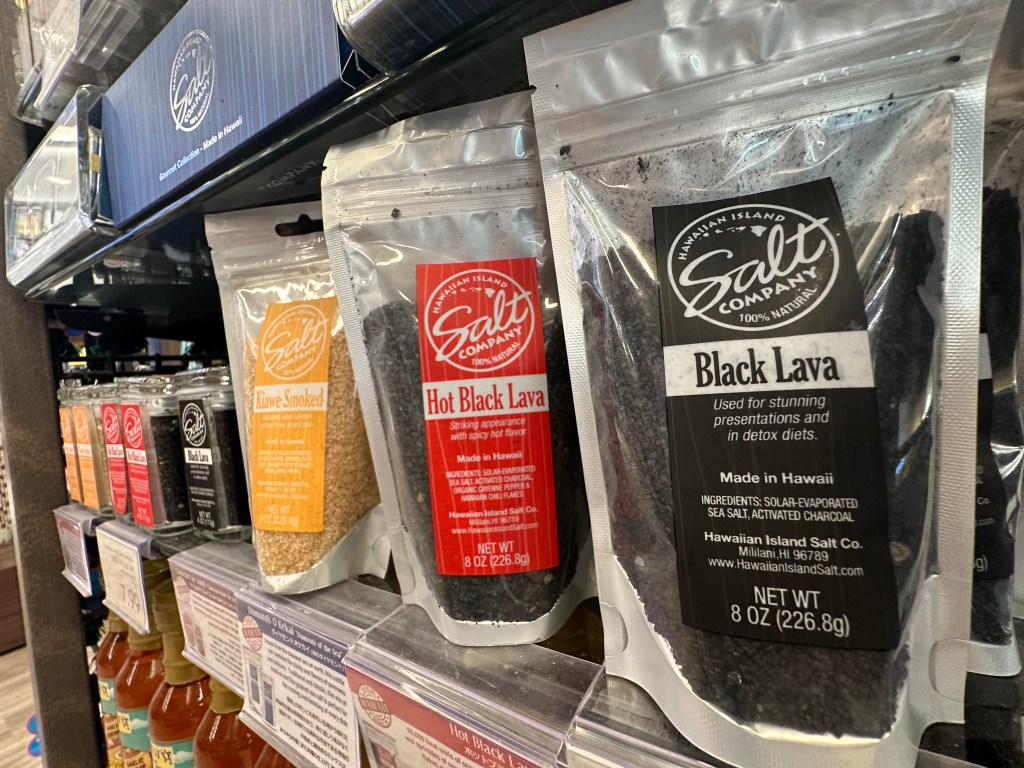
On a shelf of the ABC Store on Kalakaua Avenue across from Kuhio Beach, amid the T-shirts, beer and sunscreen, are bags of sea salt emblazoned with the phrase “Made in Hawaii.” There’s black salt for “detox diets,” Kiawe-smoked salt to add “outdoor flavor to any dish,” and hot black “with spicy hot flavor.”
But there’s one thing that might not be clear about Hawaiian Island Salt Co.’s product, given its packaging: the salt doesn’t necessarily come from Hawaii, the company says.
Jay Garcia, president of Hawaiian Island Salt Co.’s parent company, The Islander Group, said although The Islander Group considers the salt to be made at its facility in Mililani, the company actually ships in the salt in bulk – at least some via the Houston-based giant Sysco Corp.
The salt isn’t necessarily produced in Hawaii, Garcia said, “It’s just packaged” here.
The “Made in Hawaii” designation, he said, “doesn’t necessarily mean where it’s grown.”
Competitors who produce sea salt in the islands from Pacific Ocean water and Hawaiian sunshine are crying foul. Their complaints echo critics of everything from coffee and macadamia nuts to beer, potato chips and energy drinks that have used Hawaiian imagery and names to sell food products not actually made in the islands.
Lawmakers in 2023 tightened labeling standards for Kona coffee, after more than a decade of battles between small farmers and large coffee roasters.
Now local salt producers are speaking out, saying the state has the tools to help them but chooses not to.
George Joseph, the owner of Hawaii Kai Salts on Molokai, says the state’s “Hawaii-Processed Products” law requires goods to meet certain standards to be called “Made in Hawaii.” He questions whether The Islander Group’s products are doing that.
“They have the right to sell the salt,” Joseph said. “Just don’t put ‘Made in Hawaii.’”
Sandra Gibson, owner of Sea Salts of Hawaii, agrees. She said several companies sell salt in supermarkets and elsewhere with packaging that implies the salt is Hawaiian. But, she said, the Islander Group crossed a line by labeling bags as “Made in Hawaii.”
“It’s misleading,” said Gibson, who owns a 7-acre farm on the Big Island, which produces about 40,000 pounds of Hawaiian sea salt annually. “It’s really cheating people.”
But the law is not so simple, says Rick Cohen, who enforces the Hawaii-Processed Products statute as chief of the Department of Agriculture’s Measurement Standards Branch. In general, he said, applying the law requires a fact-intensive analysis.
The statute says food products can be called “Made in Hawaii” if just 51% of the wholesale value of the commodity is added by manufacture, processing, or production in Hawaii.
That means with enough expense and labor dedicated to processing and packaging, items from elsewhere can easily be called “Made In Hawaii,” Cohen said.
“You could do it very easily,” he said.
For his part, Garcia says The Islander Group is doing what the department requires.
“They set the standards, and we follow them,” he said.

Salt might seem like an unlikely subject for a business feud. But salt has long been central to commerce, a precious commodity that was once literally worth its weight in gold. As the online World History Encyclopedia explains, salt was so valuable for food preservation and nutrition in antiquity that North African traders were able to exchange salt for gold dust in West African commercial centers like Timbuktu.
In fact, the salt-gold trade is often cited as the motivation for North African Berber traders to domesticate the camel, which was needed to carry blocks of salt across the Sahara Desert to the salt-starved trade centers.
Salt these days is less valuable but still a steady source of revenue for salt producers. According to a 2024 report by the U.S. Geological Survey, domestic vacuum salt used for food in 2023 sold in bulk for $220 per ton, or about 1/2 cent per ounce.
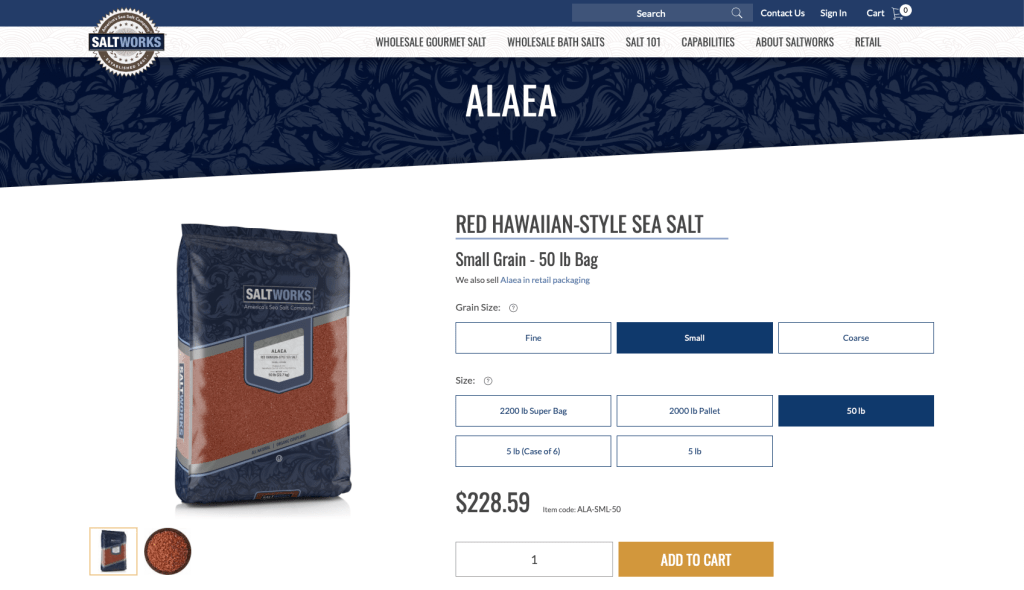
Gourmet salts can command higher prices. The online purveyor Saltworks of Woodinville, Washington, sells “’Alaea’ Red Hawaiian-Style Sea Salt” made of sea salt mixed with red clay, for $228.59 for a 50-pound bag, or 29 cents per ounce. An 8-ounce bag of The Islander Group’s salt these days sells at the ABC Store for $9.99, or more than $1 per ounce.
While The Islander Group doesn’t produce its salt, Garcia says its does put work into packaging it.
In addition, he said, the company buys some of its salt in pallets from Molokai-based Pacifica Hawaii Salt. However, it is not clear that the Molokai company is still in operation. The phone number on its website has been assigned to another user, its Hawaii business registrations are out of date and the company did not respond to emails sent to three company addresses.
Regardless, Garcia said the salt business is a small part of The Island Group’s operations, which involves distributing more than 10,000 items, including things like Energizer batteries, Pilot pens and WD-40, to more than 1,000 retailers, including Safeway, Costco and Walmart, as well as ABC Stores.
By contrast, Joseph and Gibson produce salt on commercial-scale farms on Molokai and the Big Island. It’s technically challenging, requiring sensitivities to sunlight and temperature similar to wine-making. And both salt farms have Native Hawaiian salt makers helping oversee production.

In addition, unlike other commercial salt producers, Joseph and Gibson have both qualified to use Hawaii’s “Made In Hawaii with Aloha” trademark, which shows that the companies have been certified as complying with the Made in Hawaii statute.
Still, Joseph and Gibson say it’s hard to make money when big players like Saltworks are selling 1-ton pallets of “Hawaiian-style” salt at cut rates. Such salt doesn’t bear the Made in Hawaii with Aloha logo, but that doesn’t to matter to customers
The only way Gibson survives, she said, is by supplementing her salt business with tours of her salt farm.
Joseph boosts his revenue by selling some product lines that don’t meet the 51% value added requirement to be called Made in Hawaii, and he says he doesn’t put the Made in Hawaii with Aloha logo on those products.
Meanwhile, Gibson and Joseph are competing in stores with companies that imply through their packaging that they’re made in the islands, or claim outright that they’re made here. The competition is even worse online, she says.
“When you go online, it’s a complete free-for-all,” Gibson said.

